








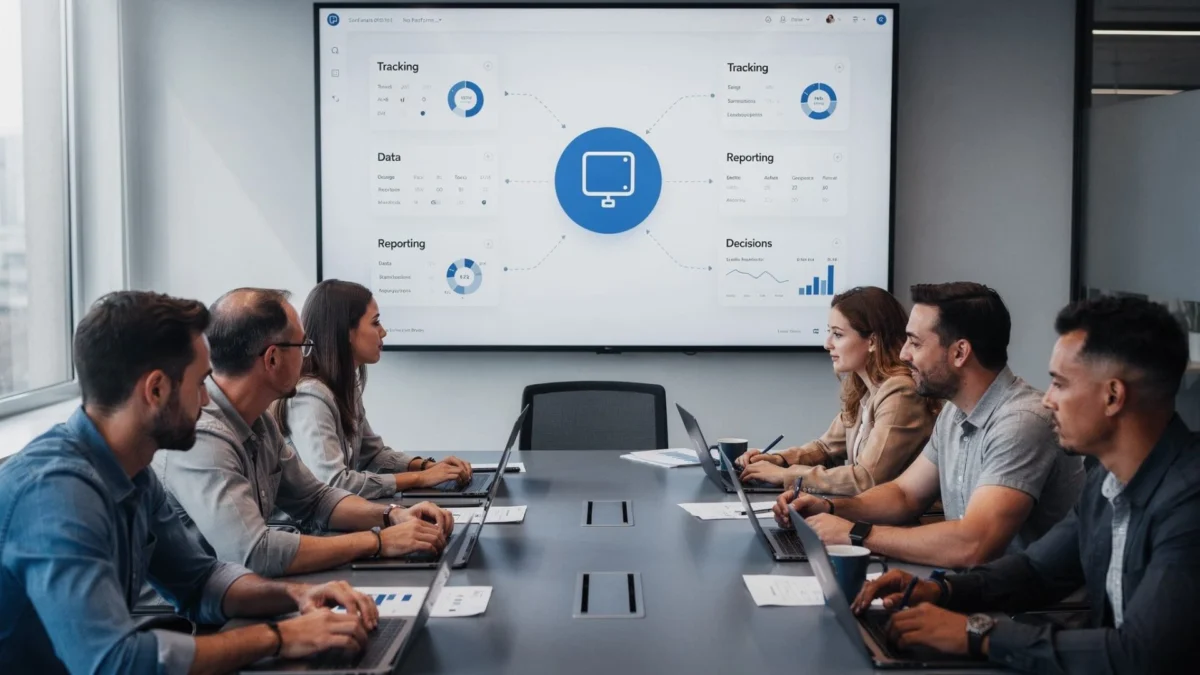
In the world of big tech, there is a recurring, predictable lifecycle. It begins with the promise of simplicity: tools improve, integrations become frictionless, and the burden of choice is lifted from the user. However, this ease of use often acts as a trojan horse. Eventually, the company providing the tracking, the reporting, and the decision-making AI begins to prioritize its own growth metrics over those of its clients.
We have witnessed this pattern across CRM, marketing automation, and productivity software. Today, the partner marketing industry finds itself at this exact precipice. The recent strategic alliance between Impact.com and Rakuten—two titans of the affiliate landscape—has created a powerhouse that bundles tracking, attribution, managed services, and proprietary AI into a single, cohesive stack. As this "walled garden" approach gains momentum, brand managers and agency heads are forced to make a pivotal decision: prioritize short-term operational convenience or long-term architectural autonomy.
The Chronology of Consolidation
The shift toward ecosystem-based marketing is not an overnight development but the result of an aggressive trend toward market consolidation that has accelerated throughout 2024.
- Early 2024: Awin rolls out "Ava," its AI-driven assistant, across more than twenty countries, signaling the industry-wide pivot toward embedded generative AI.
- May 6, 2024: Rakuten Advertising launches "Mirai," marketed as the first advanced AI optimization agent specifically designed for the affiliate space.
- Mid-May 2024: Impact.com formally aligns with Rakuten. This partnership creates an unprecedented bundling of consumer purchase data—leveraging Rakuten’s massive user base—with Impact’s established tracking infrastructure.
- Late May 2024: AppDirect finalizes its acquisition of PartnerStack, further signaling that the "platform-as-a-service" model is the new battleground for venture capital and market share.
These moves represent more than just corporate synergy; they represent a fundamental disagreement on the future of marketing infrastructure. While giants like Impact and Rakuten are moving toward total vertical integration, independent platforms like Everflow and Tapfiliate are placing a counter-bet: that brands will eventually reject one-size-fits-all AI in favor of bespoke, data-sovereign solutions.
The Case for the Walled Garden
The "bundle" strategy is a response to a genuine pain point in the industry: fragmentation. For years, brand managers have been forced to stitch together a disparate tech stack consisting of a tracking provider, a managed-services agency, an attribution vendor, and multiple, siloed reporting dashboards.
David Yovanno, CEO of Impact.com, articulated the rationale for this consolidation in May: "Partnerships are fundamentally reshaping how businesses grow… As this shift accelerates, brands need more than fragmented tools. They need a unified approach that brings together technology, data, and partner relationships."
For mid-market brands with lean operations, this proposition is compelling. The bundle removes the integration burden. By embedding AI directly into the platform, the vendor handles the complexity, allowing the brand to bypass the need for expensive developer hours or specialized data science teams. When combined with Rakuten’s vast repository of first-party consumer behavior data—which competitors can model but rarely replicate—the value proposition for the "all-in-one" stack is objectively strong in the short term.
The Architectural Counter-Movement
In contrast to the bundled approach, independent infrastructure providers are betting on a future defined by flexibility. They argue that as AI matures, businesses will want to build models around their own unique customer data and goals rather than being constrained by the "black box" of a platform-native AI.
Platforms such as Everflow and Tapfiliate are actively integrating Model Context Protocol (MCP) support. By treating their platforms as open infrastructure rather than closed ecosystems, they allow brands to connect their CRM, billing, and analytics directly to their own custom AI agents.
TUNE has maintained a similarly principled stance, advocating for a clear separation between platform services and agency services. The argument here is simple: if the platform is also your AI agent and your managed-service provider, who is the system actually optimized for? By keeping these layers distinct, brands retain the ability to swap components as their needs evolve, preventing the dreaded "vendor lock-in" that has crippled many businesses in the SaaS era.
Implications for Agencies and OPMs
For agencies and Outsourced Program Management (OPM) firms, the rise of the walled garden is a double-edged sword. On one hand, the consolidation of tools can streamline workflows. On the other, it creates an existential threat regarding visibility and client ownership.
The primary concern, whispered in private agency channels, is that Rakuten’s business development team—now sitting in close proximity to Impact’s client base—may view that access as an opportunity to bypass the agency and prospect directly to the brand. While Rakuten has stated that agency relationships will "stay intact," they have provided little in the way of structural safeguards.
Furthermore, there is the long-term threat of "agentic AI." Currently, an experienced affiliate manager provides value through strategic judgment, publisher negotiation, and contextual analysis—skills that AI struggles to replicate. However, within a five-year window, AI agents trained on vast, platform-wide data sets will likely be able to automate these functions. Agencies that do not explicitly differentiate their value from the platform’s "bundled" AI risk being rendered obsolete by 2028.
Strategic Decision Matrix: What Should Brands Do?
For any brand currently evaluating its partner marketing trajectory, the next twelve months represent a "decision window." The architecture chosen today will likely define the program’s capabilities through the end of the decade.
The Case for the Bundle (The CFO Perspective)
If your organization lacks an internal data team and your marketing operations are stretched thin, the bundled model is the logical choice. It provides immediate, out-of-the-box functionality. The cost of "integration debt" is outweighed by the speed of deployment. If the goal is a standardized, predictable program, the walled garden is an effective, albeit restrictive, solution.
The Case for Open Infrastructure (The CTO/CMO Perspective)
For enterprise-level brands that prioritize data ownership, the calculus flips. If your brand has an in-flight AI strategy, dedicated data engineers, and multiple agency partners, buying into a walled garden is a strategic mistake. By choosing an open infrastructure, you maintain the flexibility to integrate your own CRM data, utilize bespoke AI models, and own the customer journey from start to finish. While the upfront costs and deployment timelines are higher, the long-term compound interest of owning your data stack is substantial.
The Outlier: A Third Way?
It is important to note that the binary of "Bundle vs. Open" is not absolute. CJ Affiliate serves as a critical data point in this evolution. While they operate as a bundle (network, platform, and services), they have maintained an open API posture, including public developer portals and support for third-party MCP servers. By avoiding aggressive vertical-integration acquisitions and instead focusing on commerce-media surfaces like CTV and podcasts, CJ demonstrates that a platform can provide managed services while remaining interoperable.
Conclusion: The Long View
The history of B2B software is littered with companies that focused too heavily on dashboard features, only to be overtaken by the companies that owned the ecosystem. Partner marketing has officially reached that stage of maturation.
As we move toward 2026, the question is no longer "which platform has the best features?" but "who owns the ecosystem that I am building my business upon?" Brands must be wary of the convenience trap. Before renewing a contract, every brand manager should ask: Is this platform providing value, or am I merely paying a premium for a layer that will eventually restrict my ability to innovate? The AI tidal wave is coming; the brands that survive will be those that prioritize their own agility over the ease of a pre-packaged, closed-loop solution.