









In a discovery that highlights the fragility of modern hardware security, researchers at ESET have identified 11 legacy UEFI shim bootloaders—all version 0.9 or older—that harbor critical vulnerabilities. These forgotten binaries, which were once intended to facilitate secure Linux installations, now serve as a gateway for attackers to bypass UEFI Secure Boot on virtually any UEFI-based machine that trusts the Microsoft Corporation UEFI CA 2011 certificate.
The presence of these vulnerable shims poses a significant threat across all operating systems. By exploiting these legacy loaders, threat actors can execute untrusted, malicious code during the most sensitive phase of the system startup process. This allows for the deployment of sophisticated UEFI bootkits—such as BlackLotus, Bootkitty, and HybridPetya—that persist even after the operating system has loaded, effectively rendering traditional anti-malware and OS-level security measures toothless.
The Anatomy of the Threat: Why Old Code Remains Dangerous
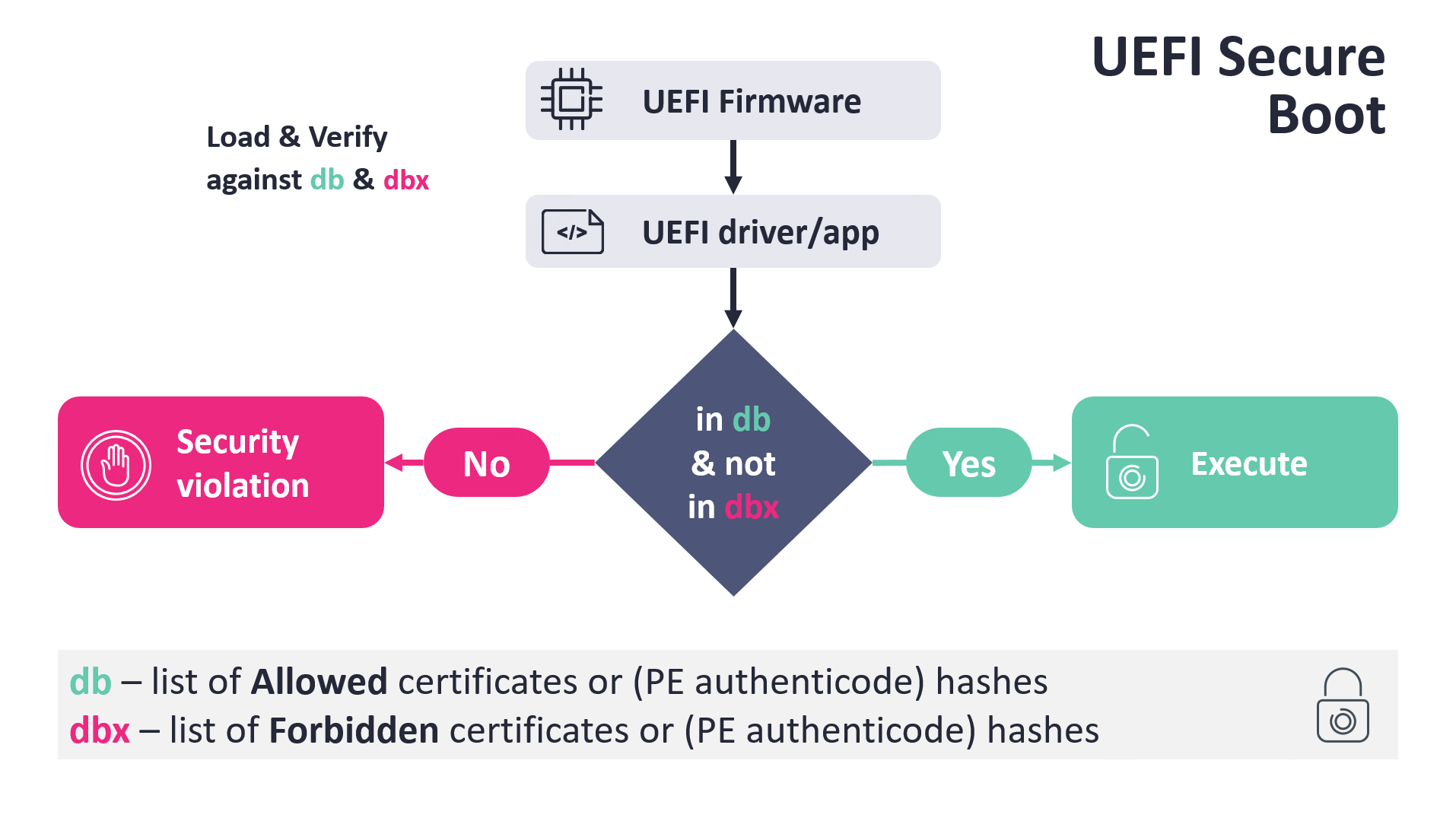
The core of the issue lies in the design of UEFI Secure Boot. To ensure compatibility, most hardware manufacturers enroll Microsoft’s third-party UEFI Certificate Authority (CA) in their firmware’s db (allowed signatures) database. Consequently, any bootloader signed by Microsoft is inherently trusted by the system.

While many of these 11 shims have been "forgotten" by the public eye, they remain cryptographically signed by Microsoft, meaning modern firmware still considers them valid. ESET researchers emphasize that this is not a singular bug but a structural failure. Attackers do not need to discover new exploits; they simply need to "bring their own" vulnerable, yet signed, shim to a target system. Once the attacker replaces the legitimate bootloader with one of these older, vulnerable versions, the system treats it as a trusted component.
The Vulnerability Lifecycle
The danger is compounded by the fact that these shims act as "trust anchors" for secondary bootloaders, most commonly GRUB 2. Many of these associated secondary loaders are equally outdated and riddled with their own historical vulnerabilities, such as the infamous BootHole (CVE-2020-10713). Because the shim validates the secondary loader against an embedded certificate, it creates a chain of trust that leads directly into a compromised environment.
Furthermore, these older shims lack modern security mitigations. They do not enforce the Secure Boot Advanced Targeting (SBAT) protocol or maintain proper MOK (Machine Owner Key) denylist enforcement, effectively creating a "security time machine" where modern revocation protections are simply ignored.
Chronology: From Disclosure to Patching
The discovery process was a meticulous exercise in vulnerability coordination. ESET researchers began by analyzing legacy UEFI software packages, ranging from specialized PC-diagnostics tools to obscure Linux distributions from the early 2010s.
- February 2026: ESET formally reported the discovery of the 11 vulnerable shim bootloaders to CERT/CC. This initiated a coordinated disclosure process involving multiple vendors and Microsoft.
- Spring 2026: Throughout the disclosure window, vendors worked to identify the impact on their specific products. The process was noted for its transparency and cooperation.
- June 9, 2026: As part of the regularly scheduled "Patch Tuesday" updates, Microsoft issued a
dbxupdate. This update added the Authenticode hashes of the 11 identified shims to the UEFI revocation list, effectively blocking them from being executed on systems that have received the patch.
Supporting Data: Understanding the Trust Chain
To grasp the severity of this incident, one must understand the UEFI boot flow. When a computer powers on, the UEFI firmware checks the bootloader’s digital signature against the db database. If the signature is valid and the hash is not in the dbx (revocation) list, execution proceeds.
The Role of SBAT and MOK
Because Linux distributions often release updates faster than Microsoft can sign them, the "shim" was invented. It is a minimal, signed first-stage loader that trusts a secondary, vendor-specific certificate.
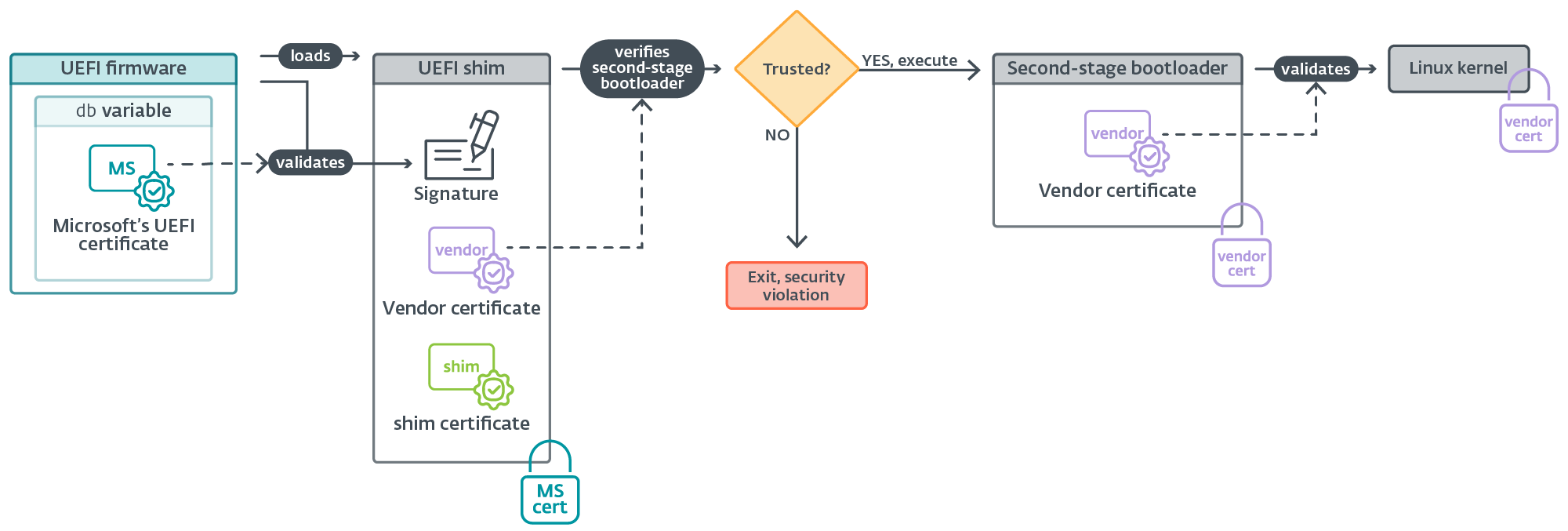
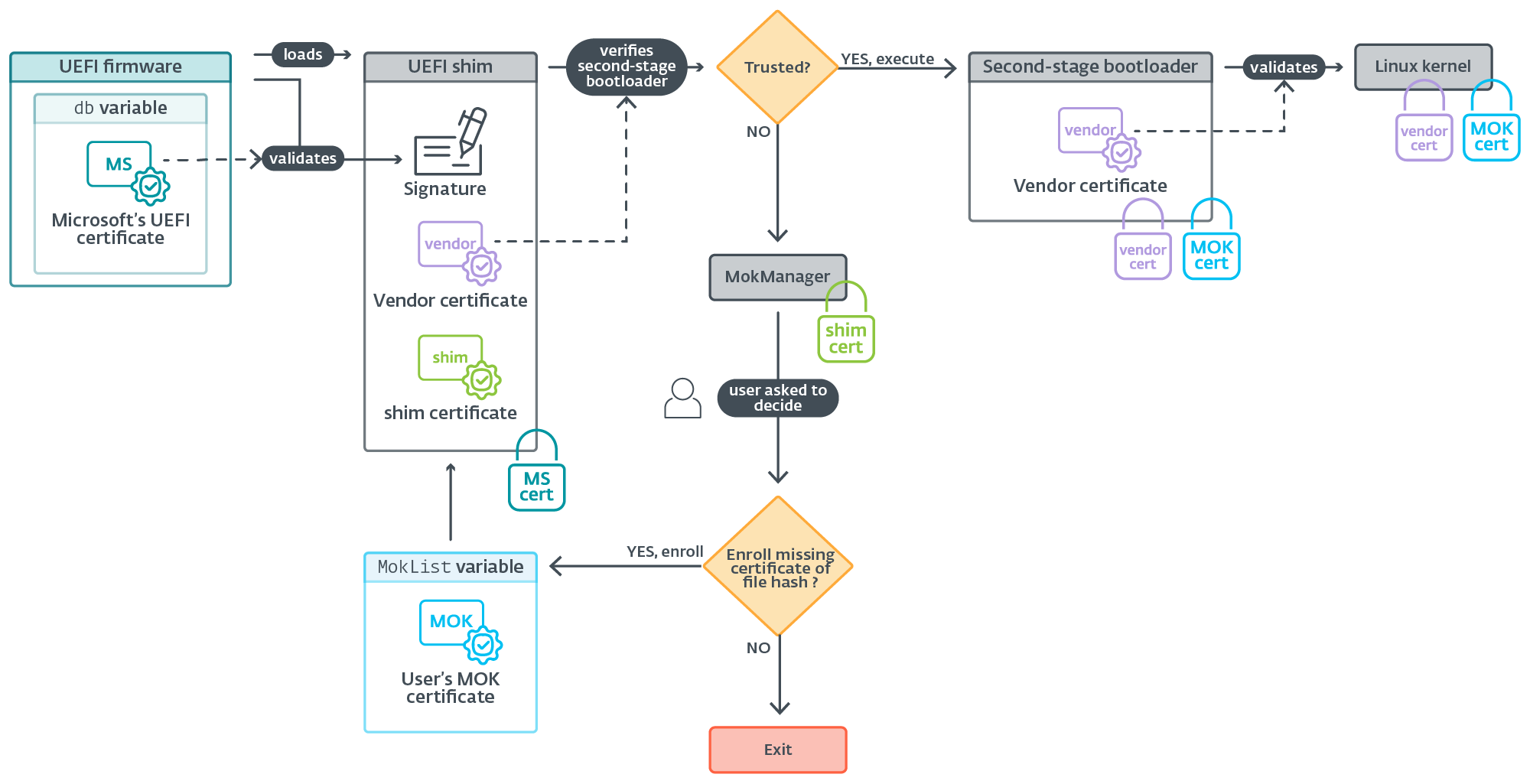
- Machine Owner Key (MOK): This mechanism allows users to manage their own keys, creating an "allowlist" for custom drivers or kernels. However, as ESET discovered, older shims do not properly check the
MokListX(the MOK-based forbidden list). An attacker can bypass modern MOK-based revocations by downgrading to a shim that is unaware of these lists. - Secure Boot Advanced Targeting (SBAT): Introduced to mitigate the storage limitations of the
dbxlist, SBAT uses generation numbers to revoke entire classes of bootloaders. Shims built before version 15.3 do not support SBAT, rendering them immune to this form of revocation. They will happily load a GRUB 2 binary that has been officially marked as malicious by the rest of the ecosystem.
Implications for the Ecosystem
The implications of this research are far-reaching. It challenges the assumption that digital signatures are a "forever" guarantee of security.
The Expiration Paradox
One might ask: "If the Microsoft Corporation UEFI CA 2011 certificate has expired, why are these binaries still a problem?"
The reality is that UEFI firmware does not inherently honor certificate expiration dates in the same way a web browser does. If a certificate is in the db database, the firmware assumes it is valid unless it has been explicitly revoked via a hash in the dbx. This has allowed legacy, vulnerable code to remain "trusted" long after the certificates used to sign them have officially expired.
The Visibility Crisis
Perhaps the most alarming implication is the "dark pool" of signed UEFI binaries. While the shim-review process implemented in 2017 has brought much-needed transparency to the ecosystem, binaries signed before this period exist in a state of historical obscurity. There is no comprehensive, public catalog of every bootloader ever signed by the Microsoft UEFI CA. As ESET notes: "What has not been fully and transparently catalogued cannot be effectively retired."
Official Response and Mitigation
The industry response has been swift, primarily through the issuance of the June 2026 dbx updates. Microsoft and its partners have demonstrated that they are capable of large-scale revocations, but this is a reactive measure.
Recommendations for Defenders
- Update Firmware: Organizations must ensure that all UEFI systems have applied the latest
dbxupdates. This is critical for Windows-based machines, where these updates are pushed through Windows Update. - Audit Linux Systems: For Linux environments, administrators should utilize the
uefi-dbx-auditscript to ensure that their systems have correctly imported the latest revocation lists from the Linux Vendor Firmware Service (LVFS). - Monitor for Persistence: Security teams should look for unauthorized modifications to the EFI System Partition (ESP) and be wary of any bootloader configurations that deviate from standard vendor-provided images.
Conclusion: The Path Forward
The "forgotten shims" discovery is a clarion call for improved transparency in hardware supply chain security. While the immediate threat has been mitigated by the June 2026 patches, the incident serves as a stark reminder that the security of the boot process is only as strong as its weakest link.
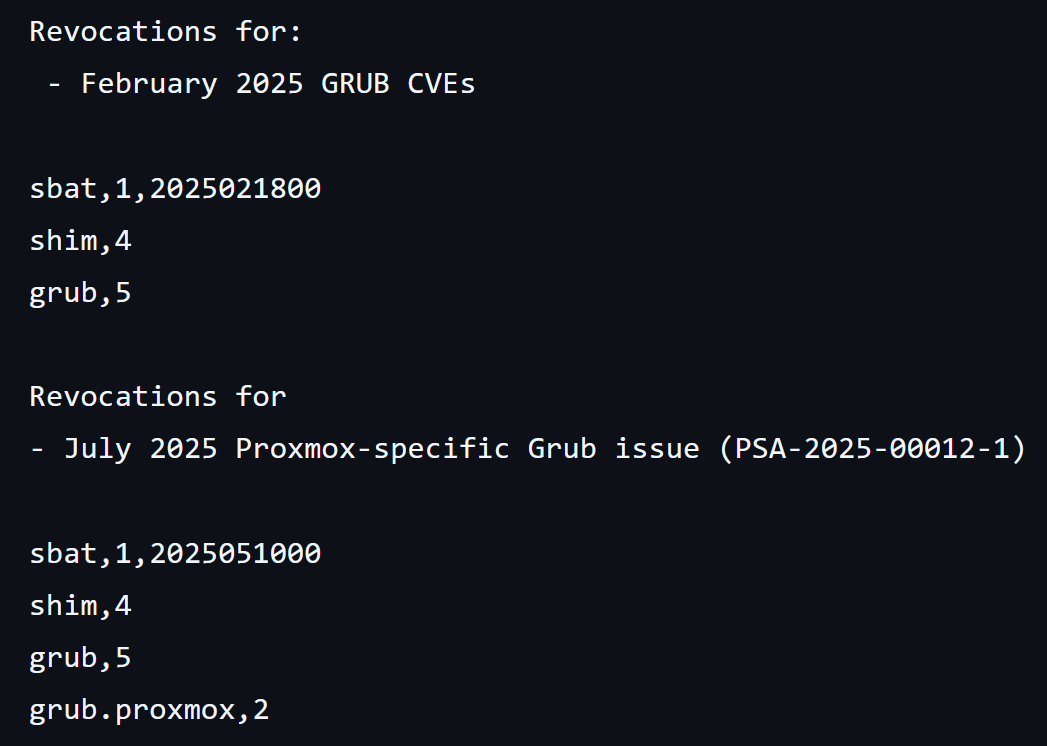
Moving forward, the industry must prioritize a more robust revocation strategy. Relying on manual, hash-based dbx updates is a fragile solution that consumes precious NVRAM storage and relies on a constant, reactive cycle of discovery and patching. The future of UEFI security lies in the widespread adoption of version-based revocation mechanisms like SBAT, which provide a more scalable and resilient framework for maintaining the integrity of the boot chain.
For now, the lesson is clear: in the world of UEFI security, old code never truly dies—it just waits to be rediscovered. Organizations must remain vigilant, treating the bootloader not just as a piece of system software, but as the foundational security perimeter that it is.