







The JavaScript ecosystem is currently experiencing a period of intense consolidation and performance-driven optimization. From Anthropic’s aggressive latency reduction in their flagship AI applications to the rise of all-encompassing meta-frameworks like Vite+, developers are witnessing a shift toward "unified" tooling and extreme efficiency. This report analyzes the recent breakthroughs in frontend architecture, the performance engineering behind modern AI apps, and the ongoing movement to streamline the developer experience.
Main Facts: The Acceleration of the Web
The most striking development in the current landscape is the focus on "perceived performance." As applications become more complex, the cost of abstraction has hit a tipping point.
Anthropic’s Performance Sprint
Anthropic recently documented a two-week engineering sprint that fundamentally transformed the performance of the Claude web interface. By identifying and surgically removing bottlenecks, the team reduced the p75 "time-to-typeable" metric from a sluggish 3.1 seconds to an impressive 0.55 seconds. This was not a rewrite, but a series of high-impact optimizations.

The findings were revealing:
- Regex Path Traps: The team discovered that specific uses of em dashes were triggering a "slow path" in the V8 engine’s regex parser, causing unnecessary overhead.
- The Reload Tax: A legacy
location.reload()call, buried deep in the codebase, was inadvertently causing half a million hidden page reloads daily, devastating the user experience.
The Rise of Vite+
VoidZero, the organization behind the Vite ecosystem, has officially released Vite+ 1.0. This tool represents a major pivot toward "tooling consolidation." By providing a single CLI (vp), Vite+ aims to manage the entire JavaScript lifecycle—from package management and linting to builds and testing—all configured through a singular vite.config.ts file. For teams fatigued by managing disparate configuration files for ESLint, Vitest, and tsup, this represents a significant reduction in operational friction.
Chronology: A Season of Unification
The current trends are part of a broader trajectory that began in early 2024, focusing on the intersection of AI integration and web performance.

- Q1-Q2 2026: The industry began a massive pivot toward "agentic" development. Expo and other mobile frameworks began integrating AI agents to handle automated testing and deployment, effectively accelerating mobile shipping cycles to match web velocity.
- August 2026: Evan You and the Cloudflare-backed VoidZero team intensified their focus on the Oxc React Compiler and Vitest 5, signaling a move toward stable, high-performance tooling that operates at the speed of Rust.
- September 2026: The release of Vite+ 1.0 marked the culmination of this integration effort, bringing a "one-tool-to-rule-them-all" approach to the mainstream.
- Late September 2026: The industry saw a flurry of optimizations, including GitHub’s public documentation on moving away from CSS-in-JS to improve site performance, and the release of advanced performance budgeting tools like "Size Limit."
Supporting Data: The Mechanics of Efficiency
The drive for performance is not merely about writing "cleaner" code; it is about understanding how the V8 engine interacts with JavaScript at a memory level.
Optimizing Objects with null Prototypes
Matteo Collina, a prominent voice in the Node.js ecosystem, recently highlighted a critical V8 behavior: objects created with Object.create(null) or __proto__: null often fall into "dictionary mode." In V8, dictionary mode is a memory-heavy, slow-access state. Collina’s research demonstrates that by creating a plain object first and then stripping the prototype, developers can preserve "fast properties," significantly reducing memory overhead in high-throughput applications.
Moving Off CSS-in-JS
GitHub’s recent engineering blog provides empirical evidence that CSS-in-JS—while popular for its developer experience—carries a heavy runtime cost. By shifting toward native CSS and standardized utility classes, GitHub was able to reduce the execution time of their frontend, proving that "standardized" web technologies often outperform even the most sophisticated abstraction layers.

Size Limit and Budgeting
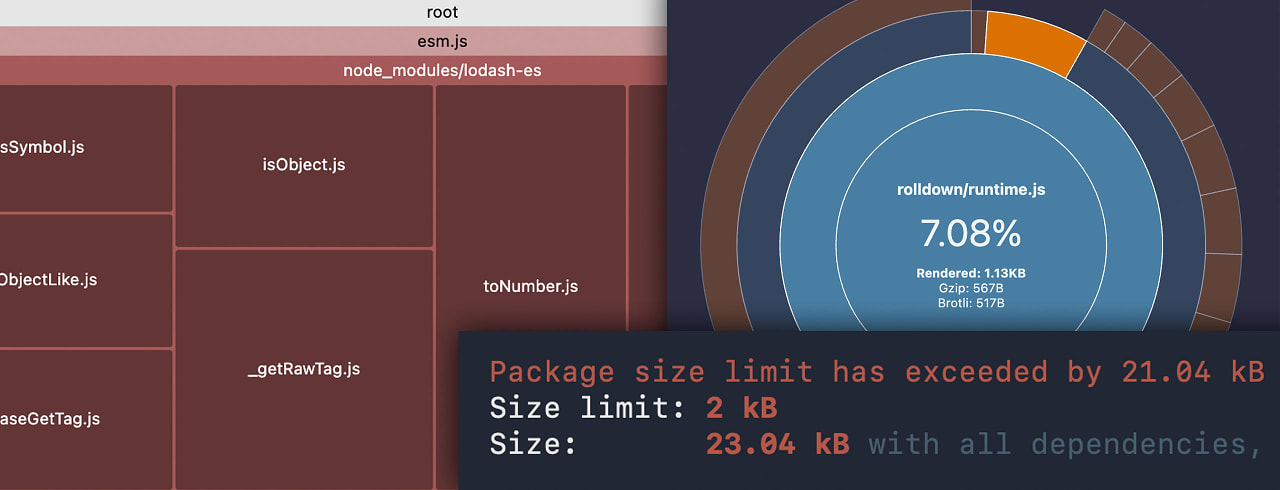
Andrey Sitnik’s Size Limit has become a staple for performance-conscious teams. The tool allows developers to define a "budget" for their bundles. If a pull request adds even a few kilobytes that push the bundle over the limit, the CI pipeline fails. This programmatic approach to performance ensures that speed is treated as a feature, not an afterthought.
Official Responses and Perspectives
The Grand Unifying Architecture
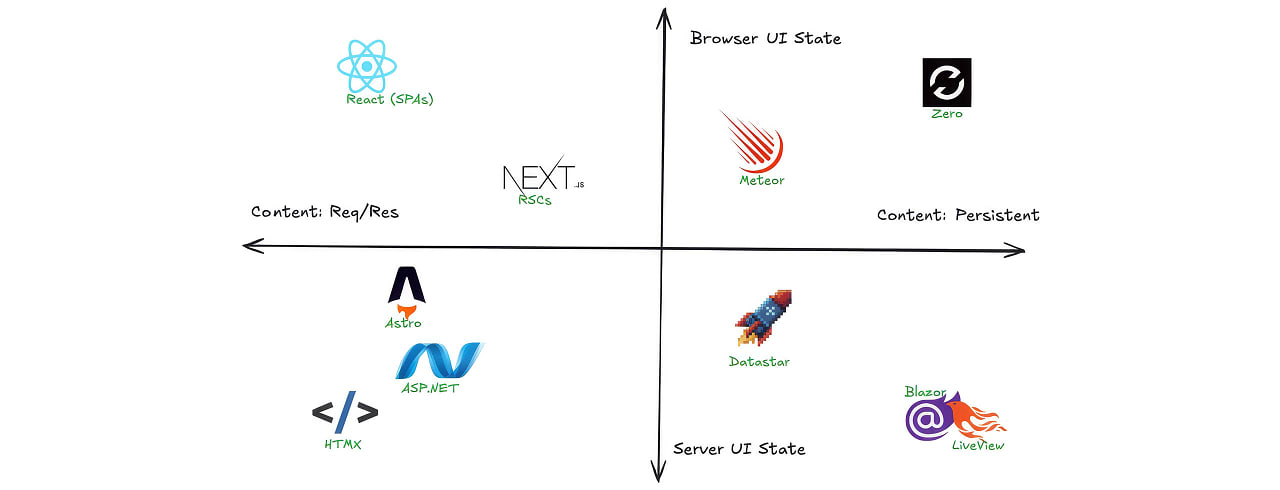
Ryan Carniato, the creator of SolidJS, has posited a provocative theory: the current "war" between HTMX, React, and LiveView is a misunderstanding of their underlying architecture. Carniato argues that all these frameworks perform the same three essential tasks: managing navigation, delivering content, and ensuring instant UI feedback. The differences lie purely in where these tasks occur (client vs. server). With Solid 2.0, the team is attempting to build a framework that is agnostic to these boundaries, allowing developers to choose the split that fits their specific use case.
The Agentic Future
The consensus among industry leaders is that the future of mobile and web development is "agentic." As AI agents increasingly take over the heavy lifting of writing boilerplate code and running E2E tests, the role of the developer is shifting toward system architecture. As noted by the developers at Expo, the ability to have an AI agent write, test, and ship code in real-time is no longer a prototype; it is the new standard for agile teams.
Implications: What This Means for the Future
1. The Death of Configuration Fatigue
The success of Vite+ suggests that the community is tired of managing dozens of individual dependencies. We are moving toward a future where "meta-tooling" manages the complexity for us. For enterprise teams, this means lower onboarding times and fewer "dependency hell" scenarios.
2. Performance as a Hard Constraint
With the rise of performance budgeting tools like Size Limit, and the public sharing of "gotchas" like the V8 regex performance path, performance engineering is becoming a core competency for all frontend developers. It is no longer enough to build features; they must be performant by design.
3. The Shift to "Native"
The trend of moving away from CSS-in-JS and optimizing low-level object creation indicates that the industry is circling back to native web capabilities. The performance cost of high-level abstractions is increasingly viewed as a technical debt that must be paid back, leading to a "renaissance" of vanilla JavaScript and CSS, powered by better build tools.
4. AI-Integrated Testing
The emergence of testing platforms like Meticulous, which use AI to create deterministic, evolving E2E tests, is removing the most tedious aspect of frontend development: writing and maintaining test suites. As these tools become more robust, the "developer effort" required to maintain a production-grade application will drop, likely resulting in higher-quality software being shipped at a faster cadence.
Conclusion: A New Era of Engineering
The current state of JavaScript is characterized by a mature realization: that the speed of our tools dictates the speed of our innovation. By consolidating the toolchain (Vite+), automating the quality assurance process (Meticulous), and obsessing over runtime performance (Anthropic, GitHub), the developer community is building a more resilient, faster, and more unified web.
As we look toward 2027, the focus will undoubtedly remain on these three pillars: Automation (via AI agents), Consolidation (via all-in-one CLI tools), and Optimization (via deep-dive performance engineering). Developers who lean into these shifts, treating performance as a first-class citizen of the architecture, will be the ones defining the next generation of digital experiences. The irony of using em dashes to break a regex parser may be a minor footnote, but it serves as a powerful reminder: in software engineering, the smallest details often have the largest impact.