










New Delhi — In what could mark one of the most significant shifts in India’s indirect taxation architecture since its inception, the Goods and Services Tax (GST) Council is set to deliberate on a sweeping proposal to decriminalize various tax offences. At the heart of this proposed reform is the complete removal of pre-prosecution arrest powers currently vested in tax authorities.
However, as federal and state representatives converge in New Delhi for the 57th GST Council meeting, the path forward is far from unanimous. At least five major Indian states have raised strong objections, arguing that stripping taxmen of coercive powers risks rendering the indirect tax regime "toothless" and vulnerable to sophisticated financial fraud.
Main Facts: The Shift From Deterrence to Financial Recovery
The primary agenda before the GST Council centers on overhauling how tax evasion and financial compliance are managed across the country. For months, the Union government has evaluated structural adjustments designed to boost investor sentiment, alleviate the anxieties of the corporate sector, and curb perceived overreach by enforcement agencies.
Under the blueprint slated for debate:
- Removal of Pre-Prosecution Arrests: The proposal seeks to eliminate the authority of tax officials to arrest individuals prior to formal prosecution.
- Redefining Enforcement Priorities: The underlying philosophy of the reform shifts enforcement from "deterrence through custody" to "recovery through financial tracking." The state aims to resolve tax disputes primarily through civil consequences—namely tax recovery, delayed-payment interest, and monetary penalties.
- Higher Threshold for Prosecution: Criminal prosecution would be preserved only for severe, high-value violations, with the threshold proposed to be raised significantly from the current ₹1 crore to ₹5 crore.
Despite these business-friendly objectives, the proposal has encountered stiff resistance from several state administrations concerned about losing critical leverage against habitual tax evaders.
Chronology: Path to the 57th GST Council Meeting
The debate over GST arrest powers and decriminalization has evolved through a structured series of administrative consultations over the past year:
- Late 2025 – Mid 2026: Over an eight-to-nine-month window, the Centre and state finance departments engage in extensive discussions, including three major national coordination meetings. Officials examine international best practices and domestic compliance data to assess the impact of criminal provisions under the GST framework.
- Early October 2026: Reports surface indicating that the Centre is actively preparing a formal proposal to strip tax authorities of pre-prosecution arrest powers to improve the ease of doing business.
- Days Prior to the Council Meeting: The 57th GST Council meeting is temporarily deferred by a day. Union government officials utilize this extra time to hold intensive consultations with GST chief commissioners across various zones, attempting to iron out residual disagreements regarding the "no-arrest" proposal.
- The Council Convenes: State and central representatives gather in New Delhi to debate the final framework of the reforms, balancing the need to protect corporate investments against the imperative of maintaining robust revenue collection mechanisms.
Supporting Data and State-Level Reservations
While the Centre champions a civil-first recovery model, regional administrative concerns have exposed deep divisions among participating stakeholders. Maharashtra, Gujarat, Uttar Pradesh, Karnataka, and Andhra Pradesh have emerged as the primary dissenting voices, expressing clear reservations during preparatory inter-governmental meetings.
Why States Are Concerned
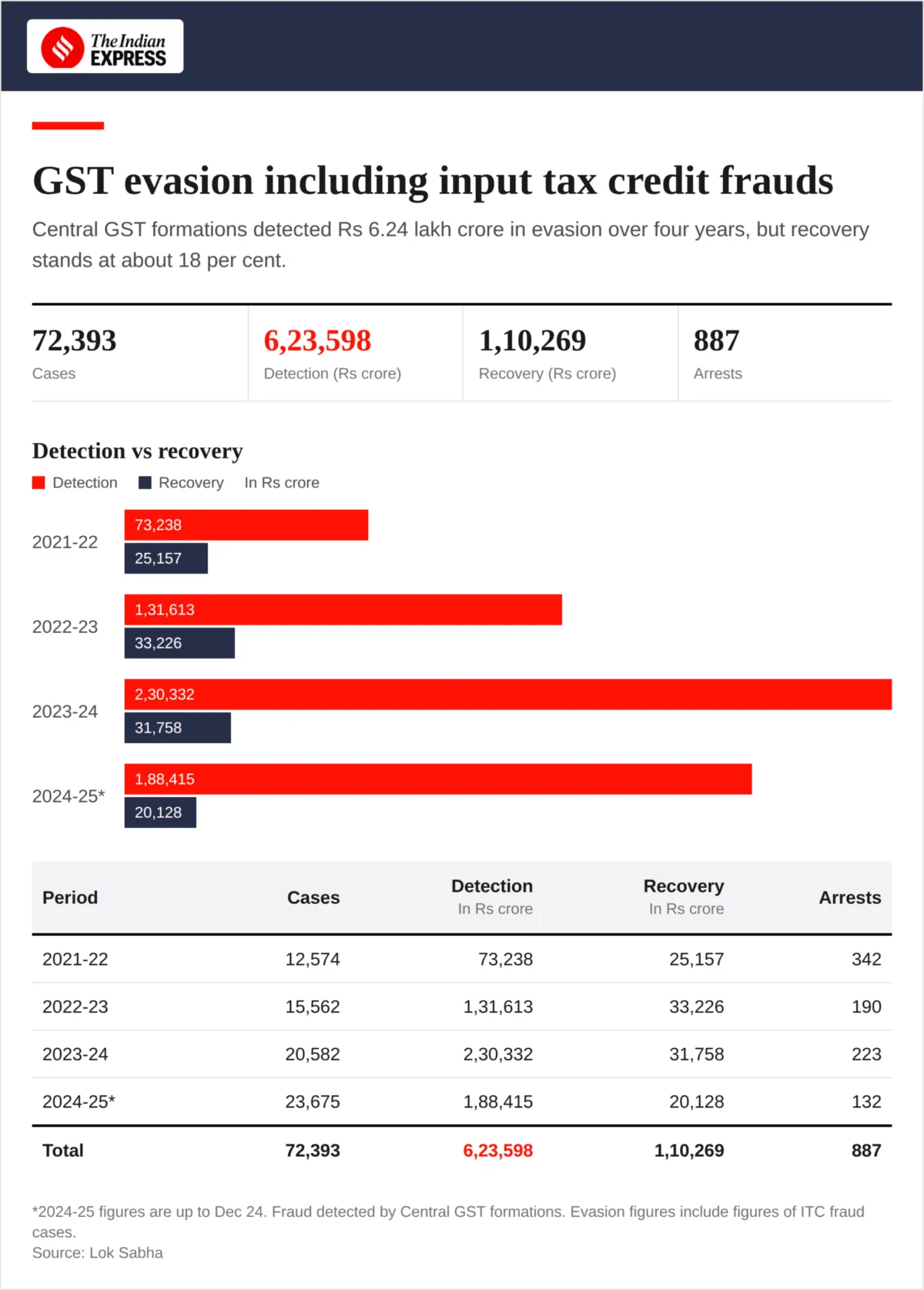
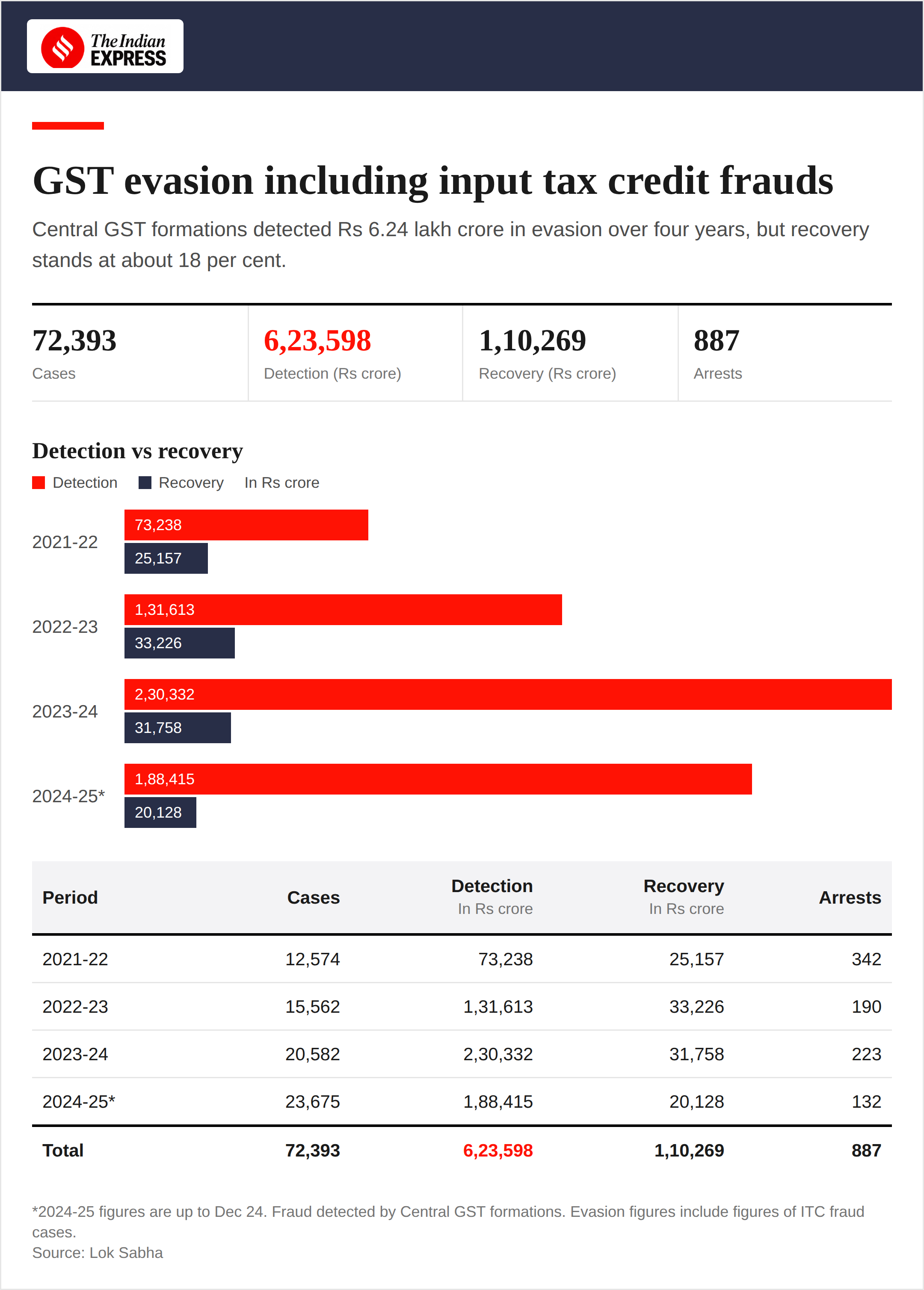
State officials argue that financial penalties alone may prove inadequate against organized fraud syndicates that routinely establish shell companies, generate fake invoices, and siphon off massive amounts of input tax credit (ITC).
- The Traceability Challenge: Several state representatives noted that without the immediate investigative leverage provided by swift questioning and detention powers, tracking elusive fraudsters—who often operate across multiple jurisdictions using fictitious identities—becomes exponentially difficult.
- The "Toothless" Regime Fear: A state minister, speaking anonymously to reporters, emphasized that while routine administrative errors or minor delays should never invite criminal penalization, completely dismantling coercive mechanisms compromises the state’s capacity to deter major financial crimes.
- The "Civil Arrest" Compromise: To bridge the gap between absolute immunity from arrest and sweeping pre-prosecution detention powers, several states have floated a middle-ground solution: introducing a graded framework that permits a restricted form of "civil arrest" exclusively reserved for catastrophic violations.
Official Responses and Strategic Intent
Proponents of the reform within the Union government maintain that the current system’s heavy reliance on criminal provisions has occasionally created an environment of apprehension among legitimate business owners and foreign investors.
The Focus on Data and Detection
According to senior government officials familiar with the deliberations, the strategic intent behind the proposed amendments is to modernize tax administration by relying heavily on advanced data analytics, e-way bills, electronic invoicing, and automated audit trails rather than physical intimidation.
"The idea is to focus on detection and not deterrence," a senior official noted during briefings leading up to the meeting. "The proposal is to remove pre-prosecution arrests, and the Council will debate it… Keeping in mind the criticism regarding threats of criminalisation, the Council will take a final call on the form that the arrest powers should take."
Officials emphasize that under the revised architecture, the state’s primary remedy against non-compliance will remain financial. By raising the threshold for criminal prosecution to ₹5 crore, authorities intend to direct judicial and investigative resources exclusively toward high-profile economic offenders rather than entangled taxpayers dealing with genuine accounting disputes.
Implications for Businesses, Taxpayers, and the Economy
The outcome of the 57th GST Council meeting carries profound implications for the Indian economic landscape, balancing competing priorities of fiscal security and commercial liberty.
1. Boost to Investor Sentiment and Ease of Doing Business
For India’s corporate sector, startups, and Micro, Small, and Medium Enterprises (MSMEs), the removal of pre-prosecution arrest powers would represent a massive regulatory relief. For years, industry bodies have voiced concerns over the discretionary powers wielded by field officers, arguing that the threat of sudden detention dampens entrepreneurial risk-taking. Aligning tax enforcement more closely with civil dispute resolution mechanisms would foster a more predictable and confident investment climate.
2. Safeguarding State Revenues
Conversely, fiscal conservatives and state revenue departments must navigate the risk of short-term compliance dips. If the transition from deterrence-based enforcement to civil recovery is not managed carefully—or if the proposed "civil arrest" safety valves are entirely discarded—states worry that unscrupulous operators might exploit the legal vacuum to delay litigation indefinitely while shielding illicit gains.
3. The Evolving Role of Tax Authorities
Should the Council adopt the proposed changes, tax administration in India will undergo a cultural shift. Enforcement officers will increasingly transition from investigative police-style agents into sophisticated financial auditors relying on digital intelligence, forensic accounting, and systemic data reconciliation to protect the national exchequer.
As discussions conclude inside the Council chamber, the final consensus will determine whether India’s indirect tax regime successfully pivots toward a modern, trust-based compliance model or retains targeted statutory safeguards demanded by its constituent states.



