










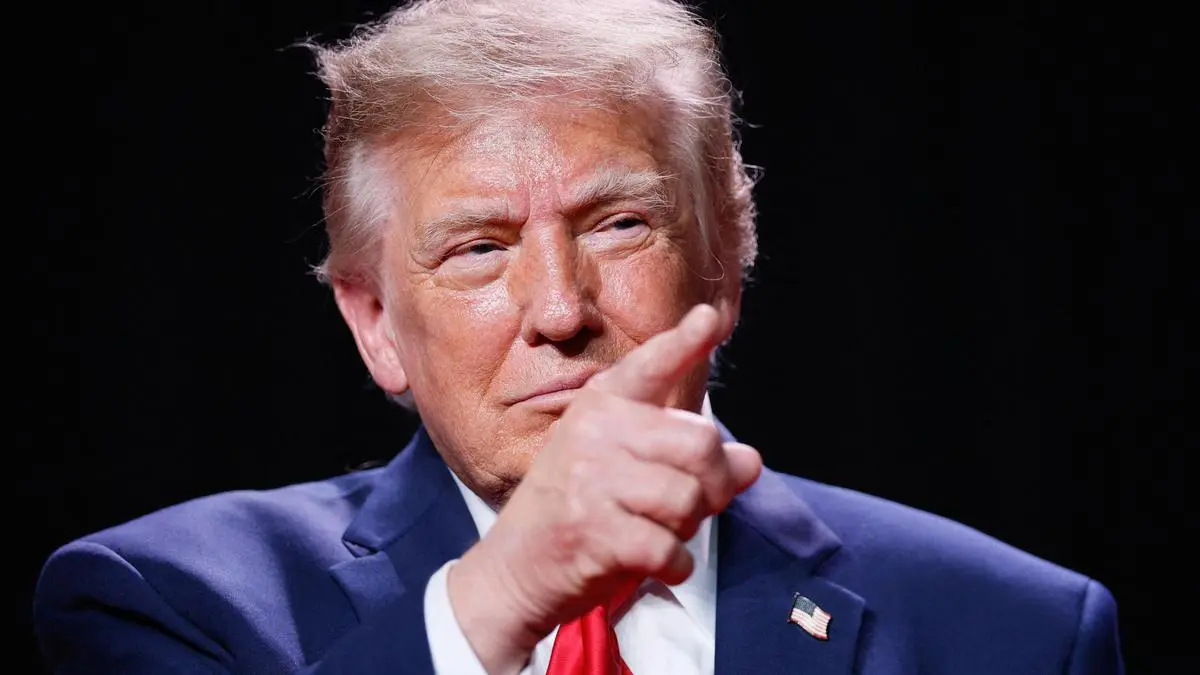
WASHINGTON, D.C. — In an extraordinary display of confidence ahead of the Norwegian Nobel Committee’s annual announcement, President Donald Trump has asserted that he is the most deserving candidate for the Nobel Peace Prize, citing his administration’s role in "settling" eight distinct global wars. Speaking from the Oval Office on Wednesday, October 7, 2026, the President suggested that any decision by the committee to overlook his efforts would be a "great discredit" to the institution itself.
The President’s remarks come at a critical juncture in his second term, as the international community watches closely to see if the Norwegian Nobel Committee will break from tradition to honor a leader whose foreign policy has been defined by a transactional approach to diplomacy, the aggressive use of economic sanctions, and a profound skepticism of multilateral alliances.
The Case for the Prize: Presidential Claims and Diplomatic Strategy
President Trump’s argument for the accolade rests on what he characterizes as an unprecedented track record of conflict resolution. During his address to reporters, Trump framed his foreign policy as a radical departure from his predecessors, emphasizing that he has achieved outcomes that were previously thought impossible.
"I’ve done stuff that nobody else has ever done," Trump stated. "I’m not bragging; I’m just telling you the facts. No president has probably ever settled any wars. I settled eight wars."
The President’s assertion centers on his unique methodology: the weaponization of trade policy. By leveraging tariffs as a primary diplomatic tool, Trump claims to have coerced hostile nations into de-escalating tensions and abandoning military ambitions. According to the President, the threat of economic isolation has acted as a powerful deterrent, preventing potential conflicts before they could spiral into full-scale regional wars.
When pressed for specifics on which eight conflicts he claims to have resolved, the White House has pointed to a series of bilateral agreements and ceasefires brokered over the last two years. While the administration views these as definitive "settlements," international analysts often describe them as fragile truces, noting that the underlying geopolitical frictions remain largely unresolved.
Chronology of an Unconventional Foreign Policy
The trajectory of President Trump’s second term has been marked by a series of high-stakes diplomatic maneuvers that have reshaped the global landscape.
- Early 2026: As the U.S.-Iran conflict entered its eighth month, tensions reached a boiling point in the Strait of Hormuz. President Trump engaged in what he termed "maximum leverage diplomacy," combining naval deployments with a sweeping tariff regime on Iranian trade partners.
- Spring 2026: Following months of economic strain, the administration announced a "de-escalation framework," which the White House cites as one of the eight resolved conflicts.
- Summer 2026: The President turned his attention to Latin American stability, hosting Venezuelan opposition leader and 2025 Nobel Peace Prize laureate Maria Corina Machado. During this meeting, the President claims, the symbolic transfer of the prize occurred.
- October 2026: Ahead of the Nobel announcement, the President intensified his campaign for the award, contrasting his record with that of former President Barack Obama, who was famously awarded the prize in 2009.
Comparisons and Controversy: The Shadow of 2009
A recurring theme in the President’s rhetoric is a sharp critique of his predecessor, Barack Obama. Trump’s remarks on Wednesday were particularly pointed, characterizing the 2009 Nobel Peace Prize as an unearned honor.
"Look, Obama got it, and he didn’t do anything," Trump remarked. "He still doesn’t know what he got it for. He got it when he got elected, right at the beginning, and he had no idea why he got it."
This comparison highlights the fundamental tension in the Nobel Committee’s decision-making process. Historically, the committee has sought to reward both established achievements and aspirational peace-building efforts. President Trump’s critique suggests a preference for a strictly meritocratic, results-based evaluation—a perspective that resonates with his base but remains highly contentious among international relations scholars who emphasize the importance of diplomatic process, human rights, and the stability of international institutions.
The Machado Handover: A Symbolic Gesture
The President also referenced the unique circumstances surrounding last year’s Nobel laureate, Maria Corina Machado. According to Trump, the Venezuelan activist, who was recognized for her efforts in promoting democratic transition in her country, expressed that the award more rightfully belonged to the U.S. President.

"Last time they gave it to a young lady who’s a fabulous person, and she said she didn’t deserve it, that I deserved it, and she gave it to me," Trump said. "I was very honored to receive it indirectly. Last time by the recipient, who said nobody in history deserves it more than President Trump."
This anecdote serves as a cornerstone of the President’s narrative: that his influence extends beyond traditional statecraft and into the personal recognition of global freedom fighters. However, critics argue that the administration’s focus on such symbolic gestures detracts from the complex, often messy reality of the conflicts in question.
Official Responses and International Reaction
The Norwegian Nobel Committee maintains a strict policy of silence regarding its deliberations, which are conducted behind closed doors. Nevertheless, the President’s vocal campaigning has generated significant buzz in Oslo.
International observers remain divided. Supporters of the President, particularly in the Republican Party, argue that the "Peace through Strength" doctrine has effectively curtailed global aggression. They point to the hostage releases and the cooling of tensions in the Middle East as tangible evidence of the President’s success.
Conversely, skeptics and international human rights organizations have expressed concern over the President’s rhetoric. Many worry that the normalization of tariffs as a tool for peace-building sets a dangerous precedent, potentially leading to global trade wars that could have long-term destabilizing effects on the world economy. Furthermore, critics point out that the ongoing U.S.-Iran conflict, while currently in a state of suspended animation, demonstrates the volatility of the President’s "settlements."
Implications for Global Diplomacy
As the world awaits the announcement on Friday, the implications of a potential win—or a snub—are profound.
Should the Nobel Committee award the prize to President Trump, it would mark a seismic shift in the committee’s priorities, signaling an embrace of nationalist, results-oriented diplomacy over the traditional focus on international cooperation and humanitarianism. It would undoubtedly be framed as a victory for the "America First" movement, potentially emboldening other populist leaders globally.
If the committee chooses not to honor the President, the reaction from the White House is expected to be swift and critical. The President has already set the stage by labeling a potential rejection as a "discredit" to the committee, suggesting that he will use any perceived slight to further paint international institutions as biased or obsolete.
Ultimately, the President’s quest for the Nobel Peace Prize is more than a desire for personal accolades; it is a battle for the definition of "peace" itself. Whether peace is defined as the absence of active kinetic conflict through the exercise of raw power, or as the cultivation of stable, rules-based international norms, remains the central debate of the 2026 Nobel season.
As the Freeman Coliseum rally in San Antonio underscored, the President’s domestic support remains undeterred by the controversy. For his followers, the Nobel Prize is not just a medal; it is the final validation of a four-year effort to rewrite the rules of global engagement. For the rest of the world, the upcoming announcement represents a pivotal moment in determining the future direction of international diplomacy.



