










Main Facts
The landscape of software engineering is undergoing its most radical transformation since the invention of the compiler. What began as simple predictive text for programmers has rapidly matured into fully autonomous coding agents capable of end-to-end development workflows. Today, developers are no longer just writing code—they are managing fleets of AI systems that plan, architect, write, test, debug, and deploy software in real time.
As the industry grapples with this paradigm shift, the central question for builders, enterprises, and investors is simple: What comes next?
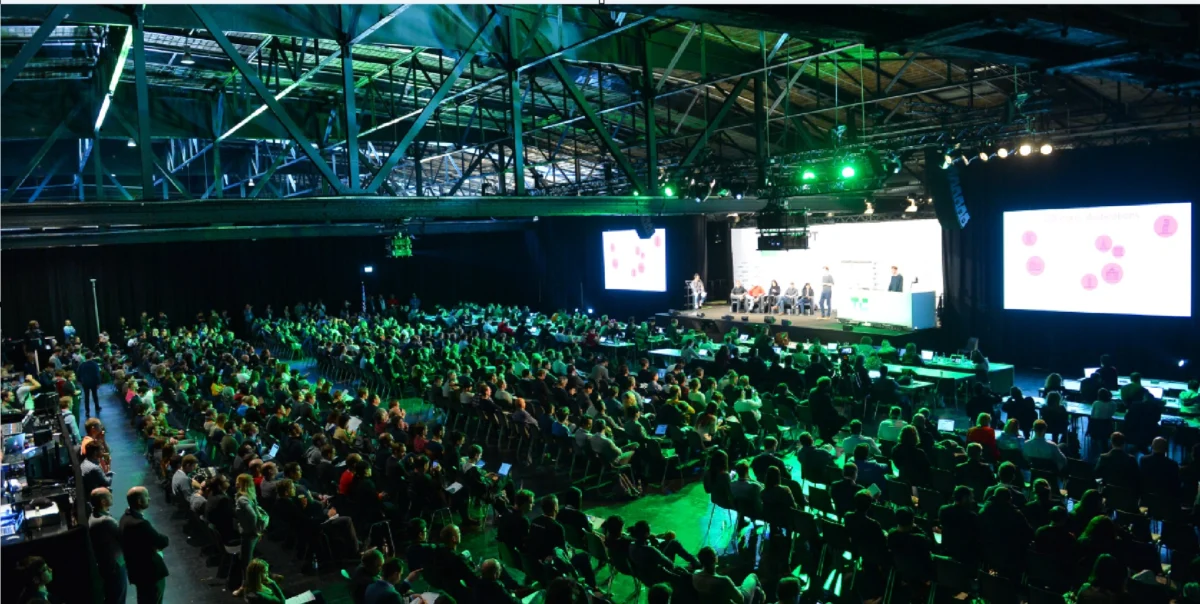
The definitive answers will take center stage at TechCrunch Disrupt 2026, scheduled for October 13–15 at the Moscone West Convention Center in San Francisco. Bringing together more than 250 industry-leading speakers and over 200 conference sessions spread across six dynamic stages, the premier technology showcase will explore how artificial intelligence is rewriting the rules of software development, enterprise architecture, and global tech innovation.
For professionals looking to stay ahead of the curve, registration is currently open. Attendees can receive an exclusive 25% discount by using the promo code INFOWORLD25 when purchasing Attendee, Founder, or Investor passes.
Chronology: The Evolution of AI in Software Development
To understand where the industry is heading at TechCrunch Disrupt 2026, it is necessary to trace how quickly artificial intelligence has integrated into the software development lifecycle (SDLC) over recent years.
Phase 1: Code Completion and Boilerplate Prediction
The first wave of software engineering AI arrived in the form of intelligent autocomplete tools. Powered by early large language models (LLMs), these systems analyzed the context of an open file to predict upcoming lines of code, repetitive boilerplate, and standard functions. While immensely helpful for reducing keystrokes and accelerating mundane syntax writing, these tools remained reactive. They waited for the human programmer to lead, filling in the blanks line by line.
Phase 2: Natural Language Generation and Conversational Refactoring
As model capabilities expanded, generative AI took center stage. Developers could suddenly write natural language prompts—such as "Write a Python script to parse this JSON payload and upload it to an S3 bucket"—and watch functional code appear in seconds. This phase introduced conversational developer interfaces, allowing engineers to highlight legacy code, ask an AI to explain it, or request automated refactoring for readability and efficiency.
Phase 3: Autonomous Coding Agents and Closed-Loop Iteration
Today, the industry has crossed into the era of the coding agent. Unlike passive assistants or single-shot generators, modern agents operate in closed feedback loops. They can analyze an entire repository, propose architectural improvements, compile the code, execute test suites, analyze error logs, and autonomously iterate until the code passes all checks.
Modern coding agents can tackle complex development workflows entirely on their own—planning features, writing test-driven development (TDD) suites, performing code reviews, and debugging edge cases while chatting with the developer asynchronously.
Supporting Data and Industry Lineup
TechCrunch Disrupt 2026 will capture the bleeding edge of this evolution, backed by an unprecedented lineup of tech giants, high-growth startups, and visionary founders.
Over the course of three jam-packed days at Moscone West, participants will gain deep technical insights into how generative AI and autonomous agents are transforming:
- Software Engineering & Developer Tools: How teams build, test, and ship products faster.
- Enterprise Architecture & SaaS: The structural changes required to support AI-native workflows.
- Information Security: Securing code generated at scale and defending against AI-augmented vulnerabilities.
- Cloud Infrastructure: Optimizing compute and data pipelines for heavy model execution.
- Cross-Industry Innovation: Real-world AI deployments in finance, healthcare, manufacturing, and beyond.
A Star-Studded Speaker Roster
The 2026 event features executives, lead researchers, and founders from the most influential companies shaping the technological landscape, including:
- Amazon
- Anthropic
- Atlassian
- Databricks
- Flock
- Glean
- NVIDIA
- Okta
- OpenAI
- Replit
- Runware
- Together AI
Inside Anthropic’s Fleets of Coding Agents
One of the most anticipated sessions at Disrupt 2026 will pull back the curtain on how frontier AI labs utilize their own technology. Anthropic technical staff members Steve Androulakis and Sachin Malhotra will take the stage to discuss how Anthropic deploys fleets of coding agents in its internal software engineering workflows.
This masterclass will offer attendees practical, real-world patterns for:
- Effectively delegating complex tasks to autonomous agent fleets.
- Establishing rigorous review frameworks for agent-generated outputs.
- Implementing robust recovery mechanisms when agents hallucinate, fail tests, or drift from architectural goals.
Official Perspectives and Industry Responses
The rapid rise of autonomous coding agents has elicited mixed reactions of excitement and caution across the software engineering community. Industry leaders at past and present forums emphasize that while AI is automating repetitive execution, it is fundamentally elevating the strategic value of human engineers.
“We are moving past the era where a developer’s primary value is measured by lines of code written per day,” notes a leading enterprise software architect. “The bottleneck has shifted from syntax creation to problem definition, system design, and verification. AI handles the heavy lifting of implementation, freeing engineers to focus on architectural integrity, user experience, and business logic.”
At the same time, venture capitalists and startup founders view events like TechCrunch Disrupt as vital crucibles for the next generation of enterprise tooling. With the Startup Battlefield showcasing the world’s most promising early-stage companies, Disrupt serves as an incubator where foundational AI breakthroughs meet commercial execution. Investors are keenly watching how developer tooling startups solve trust, compliance, and multi-agent coordination—challenges that will define the enterprise software market for the next decade.
Implications for the Future of Tech Workplaces
The transition from human-driven coding to agent-managed workflows carries profound implications for the global workforce, enterprise security, and the future of technology education.
1. Redefining the Developer Role
As autonomous agents take over routine debugging, test writing, and feature scaffolding, the role of the software engineer is evolving into something akin to a technical director or lead architect. Junior developers must learn how to prompt, supervise, and audit AI agents effectively, ensuring that velocity does not come at the expense of maintainability or technical debt.
2. The Scaling of Enterprise Productivity
Organizations that successfully integrate fleets of coding agents into their engineering pipelines are reporting exponential gains in output. Features that once took weeks to prototype and test can now be spun up in hours. However, this velocity introduces new management challenges: how to review millions of lines of AI-generated code, maintain institutional knowledge, and prevent systemic vulnerabilities from propagating silently through automated pull requests.
3. Security and Governance in the Age of Autonomous Agents
With agents possessing the autonomy to write, compile, and commit code, security frameworks must adapt. Enterprises are rushing to implement policy guardrails that restrict what agents can touch, ensuring that compliance checks, cryptographic verification, and human-in-the-loop sign-offs remain mandatory before production deployment.
Secure Your Place at TechCrunch Disrupt 2026
The trajectory of artificial intelligence in software engineering is accelerating faster than ever before. Understanding where the technology stands today—and where it is heading tomorrow—is essential for anyone building in the tech ecosystem.
Whether you are a startup founder looking to pitch your breakthrough idea, an investor searching for the next big infrastructure play, or an engineer trying to master agentic workflows, TechCrunch Disrupt 2026 is the ultimate destination.
Join the conversation in San Francisco from October 13–15, 2026, at Moscone West.
Don’t miss out on your chance to connect with peers, exchange ideas, and explore the innovations shaping the future of software. Register for TechCrunch Disrupt 2026 today and use promo code INFOWORLD25 to save 25% on Attendee, Founder, and Investor passes.



