By Patrick O’Rourke
Published October 15, 2026
Main Facts
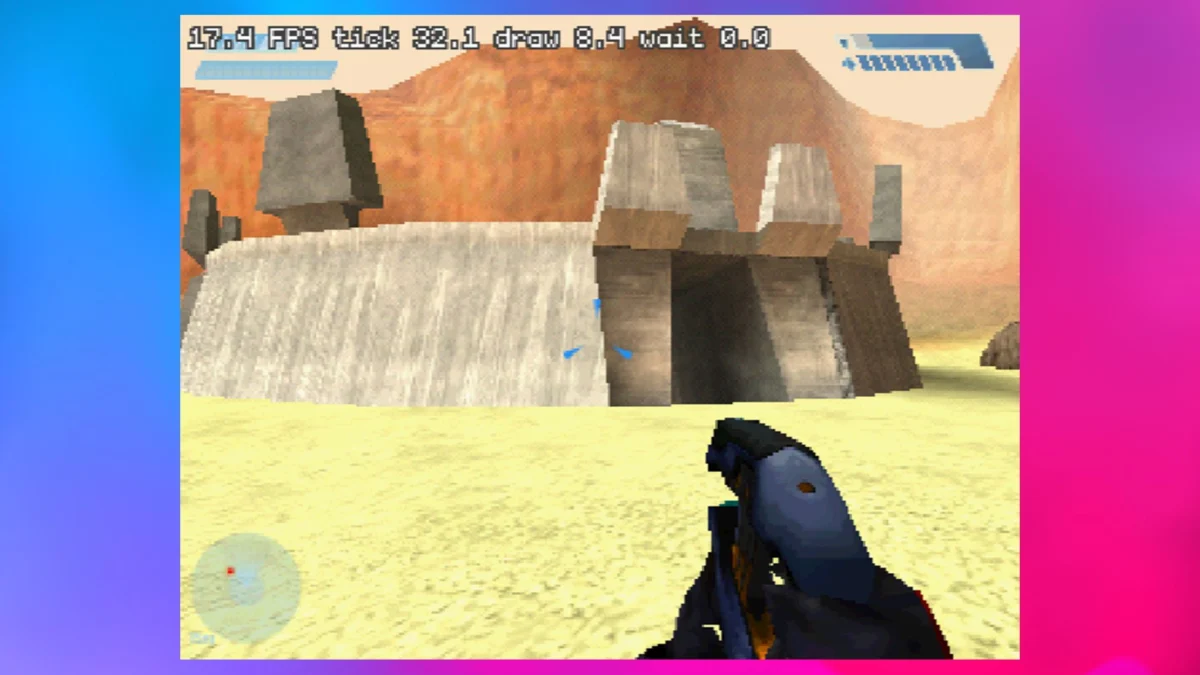
In the rapidly expanding and increasingly surreal universe of retro game decompilation and recompilation, developers continue to push the boundaries of hardware emulation and legacy software architecture. The latest project to capture the attention of the retro-gaming community is perhaps the most bizarre yet: Halo 64, an unofficial, fully playable port of Bungie’s genre-defining first-person shooter Halo: Combat Evolved designed specifically to run on the Nintendo 64.
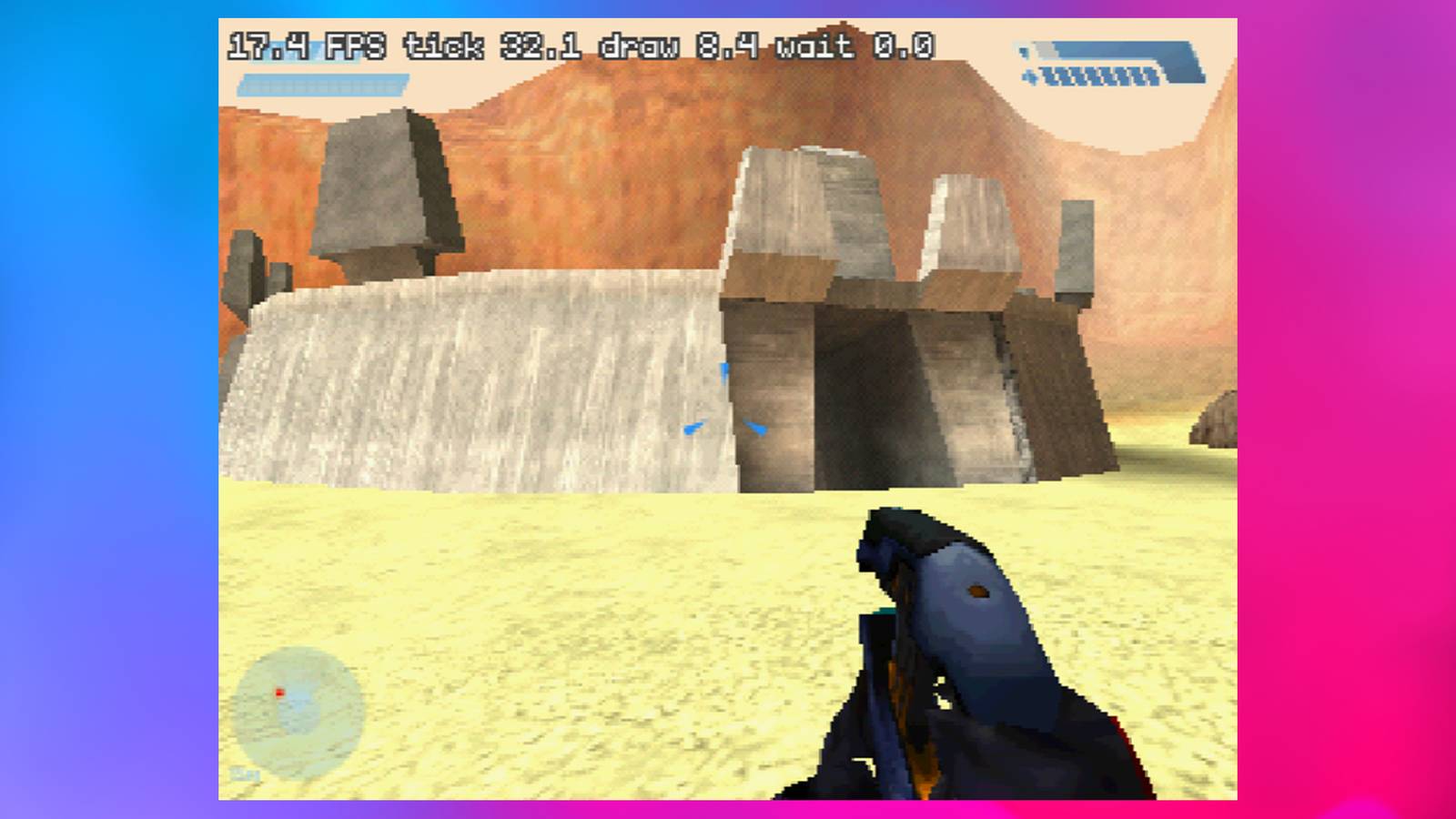
Developed by programmer and enthusiast Jack Tulli, Halo 64 reimagines the iconic 2001 Xbox launch title through the lens of late-1990s Nintendo hardware limitations. Complete with the N64’s signature blocky geometry, lower-polygon character models, heavy texture warping, and distinctive screen-space aliasing, the project looks like a lost relic from an alternate timeline.
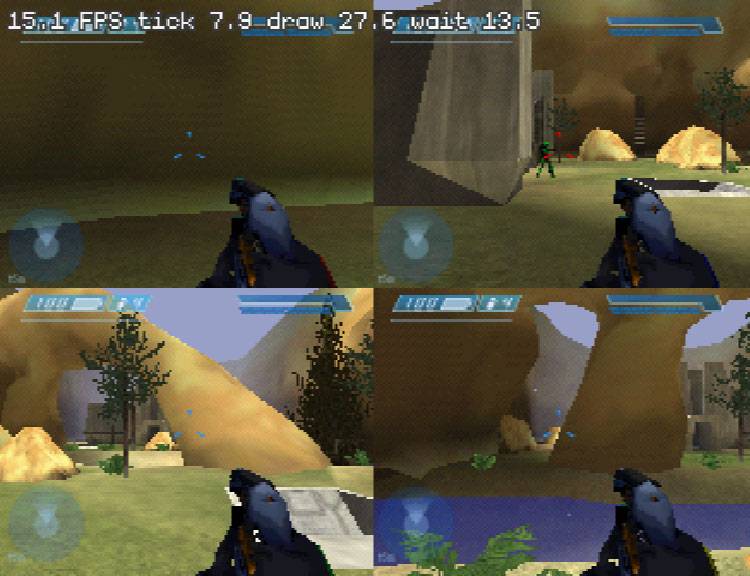
Rather than attempting to reconstruct the sprawling, resource-intensive single-player campaign, Halo 64 focuses its efforts on a robust multiplayer and cooperative experience. The title supports up to four players locally via split-screen, features a wave-based "Firefight" mode, and remarkably includes customizable computer-controlled bots—a feature entirely absent from the original Xbox release. Built utilizing assets, physics data, and mechanics derived from the broader halo-ce-universal decompilation framework, Halo 64 compiles original game logic directly for the N64’s VR4300 CPU, supported by a newly engineered custom renderer.
Chronology
The journey toward bringing Microsoft’s flagship sci-fi franchise onto a classic Nintendo platform is part of a broader, recent wave of open-source software engineering milestones:
- November 2001: Bungie releases Halo: Combat Evolved alongside Microsoft’s debut home console, the original Xbox, revolutionizing console first-person shooters and setting a new standard for online and split-screen multiplayer mechanics.
- Early 2020s: The retro gaming community accelerates its focus on game "decompilation," reverse-engineering binary code back into human-readable source code to enable native ports on modern and legacy platforms (such as Super Mario 64 and The Legend of Zelda: Ocarina of Time PC ports).
- Mid-2024 to 2025: Projects like the halo-ce-universal (OpenCE) initiative gain momentum, successfully breaking down the foundational architecture of Halo: Combat Evolved so that community developers can port the engine to alternative operating systems, including Windows, Linux, Android, and web browsers.
- October 2026: Developer Jack Tulli publishes Halo 64 on GitHub. Utilizing modern AI-assisted coding tools alongside traditional software optimization, Tulli bridges the gap between mid-generation Xbox assets and late-90s Nintendo cartridge architecture, releasing a working build to the public.
Supporting Data
Porting a title designed for a 733MHz Intel Pentium III-based console with 64MB of RAM down to a machine running a 93.75MHz NEC VR4300 64-bit RISC CPU with a mere 4MB (or 8MB with the Expansion Pak) of Rambus DRAM is a staggering computational challenge.
- Map Adaptation: Halo 64 successfully scales down and optimizes 13 classic multiplayer maps from the original game. Fans can play across iconic arenas including Blood Gulch, Battle Creek, Sidewinder, Wizard, and Hang ’em High.
- Game Modes: The port does not compromise on variety, delivering classic multiplayer configurations such as Slayer, Team Slayer, Slayer Pro, Capture the Flag, and King of the Hill.
- Hardware Compatibility: The project runs natively via N64 emulators capable of handling enhanced rendering plugins, or via flash carts on original N64 hardware equipped with expanded memory configurations. Like most modern recompilation projects, players must supply their own legitimate game assets (ROM/disc images) to extract textures, audio, and map geometry.
- The AI Factor: A notable element in the development cycle of Halo 64 is the integration of AI-assisted coding tools, specifically Large Language Models (LLMs) like Claude, which assisted in streamlining the daunting task of translating modern C/C++ logic structures into code optimized for the N64’s idiosyncratic memory management layout.
Official Responses and Industry Context
Major console manufacturers and intellectual property holders have historically maintained a complex relationship with community-driven decompilation projects. While companies like Nintendo and Microsoft fiercely protect their copyrighted codebases, the legal landscape surrounding recompilations—which often require the end-user to supply legally obtained assets from a purchased copy of the game—inhabits a unique grey area.
To date, neither Microsoft nor Bungie has issued official public statements or legal takedown notices regarding Halo 64. Industry analysts attribute this relative leniency to the project’s nature as a non-commercial, highly technical novelty rather than a direct commercial competitor to modern releases like Halo Infinite or the Master Chief Collection.

Furthermore, the gaming industry has observed a sharp uptick in cross-platform porting initiatives. In related port news, a wave of Nintendo Switch titles has begun seeing unofficial native PC and alternative-OS ports, spearheaded by community efforts to bring games like The Legend of Zelda: Link’s Awakening remake to Windows. These movements highlight a growing sentiment among hardware hobbyists: that software should be liberated from proprietary hardware restrictions once its commercial lifecycle has concluded.
Implications
The release of Halo 64 is far more than a humorous internet meme or a novelty tech demo; it represents a profound milestone in software preservation, community-driven engineering, and the democratization of game development.
1. The Blur Between Original and Fan-Made Hardware
For decades, console generations were strictly isolated by architectural barriers. An Xbox game belonged on the Xbox; a Nintendo game belonged on the Nintendo. Projects like Halo 64—alongside inverse efforts like running Super Mario 64 on the PlayStation or Dreamcast—shatter these historical boundaries. They demonstrate that with enough community ingenuity, open-source decompilation frameworks, and modern tools, software can transcend its original hardware constraints.
2. The Acceleration of "Vibe Coding" and AI Assistance
The integration of AI models into complex software engineering tasks, as seen in the development of Halo 64, signals a new era for indie and hobbyist development. Projects that once required massive teams of specialized systems programmers can now be conceptualized, prototyped, and executed by solo developers leveraging LLMs to translate logic across vastly different instruction sets. This drastically lowers the barrier to entry for retro-engineering feats that were previously deemed impossible.
3. The Future of Digital Preservation
As official storefronts close, online servers shut down, and physical media degrades, the video game industry faces an unprecedented preservation crisis. While corporate entities often struggle or decline to port classic titles to modern hardware, the open-source community is increasingly stepping in to fill the void. By breaking games down into universal, modular codebases through decompilation, enthusiasts are ensuring that video game history remains interactive, modifiable, and playable for generations to come—even if that means playing Microsoft’s flagship shooter on a controller designed for a Nintendo console in 1996.