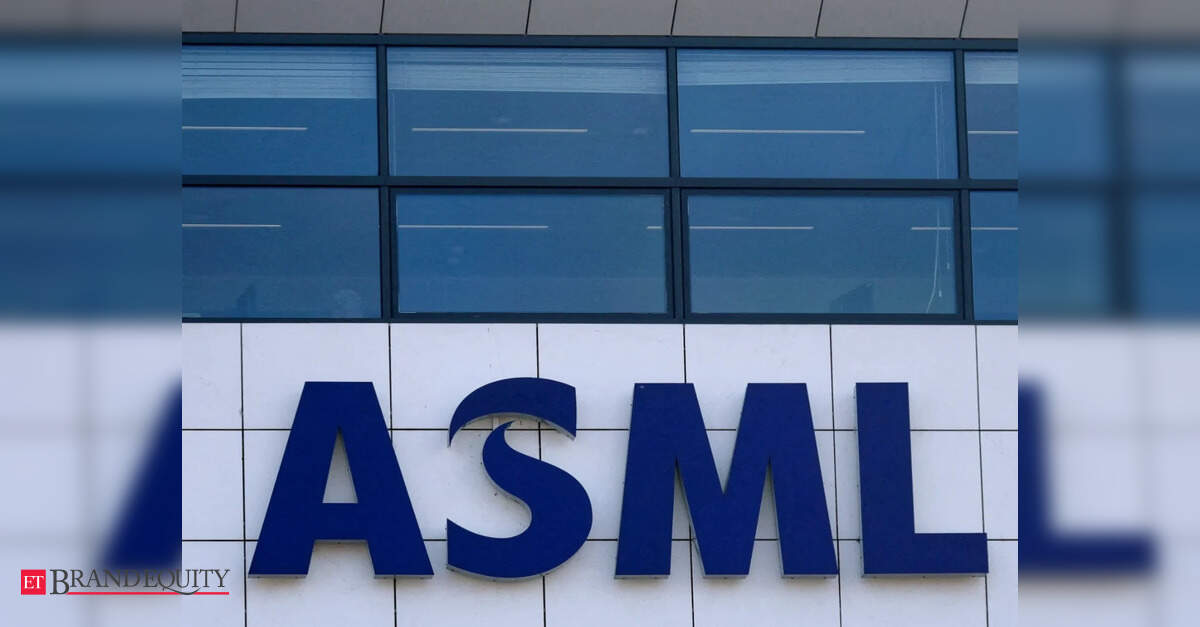
In the hyper-accelerated landscape of the global semiconductor industry, one company stands as the ultimate arbiter of progress: ASML Holding NV. As the world’s sole provider of Extreme Ultraviolet (EUV) lithography machines—the multi-million-dollar behemoths required to print the most advanced microchips—ASML’s production capacity has become the de facto ceiling for the growth of artificial intelligence.
In a recent disclosure that underscores both the company’s dominance and the immense pressure placed upon it by the AI revolution, ASML has confirmed that demand for its lithography equipment is now so robust that it is projected to outstrip supply well into 2027 and 2028. As tech giants and foundries scramble to secure the hardware necessary to build the next generation of AI accelerators, ASML is finding itself at the center of a structural supply crisis that the industry is only beginning to grapple with.
Main Facts: A Supply-Demand Mismatch
The core of the issue lies in the sheer complexity of ASML’s technology. These machines, which use light to etch circuits at the nanometer scale, are among the most sophisticated pieces of engineering ever devised. Because production cannot be scaled overnight, the current "AI gold rush" has created a backlog that extends years into the future.
ASML has reported that it will be unable to fully satisfy the insatiable appetite of its customer base through 2028. While the company has been proactively planning for growth, the velocity of AI adoption—driven by the likes of NVIDIA, TSMC, Intel, and Samsung—has forced a recalibration of their output goals.
For the fourth quarter of 2026, ASML has provided a bullish forecast, projecting sales between EUR 14.2 billion and EUR 15.2 billion (approximately USD 15.9 billion to USD 17.0 billion). This outlook comfortably surpasses the consensus estimates of analysts polled by LSEG, who had pegged the figure at EUR 14.19 billion. Perhaps more impressively, the company is maintaining a robust gross margin of around 57%, signaling that despite the supply constraints, the premium nature of their technology remains highly lucrative.
Chronology: The Escalation of Orders
To understand the current bottleneck, one must look at the rapid evolution of ASML’s order books over the past eighteen months.
- Early 2024: ASML began signaling that while the broader semiconductor market was experiencing a cyclical recovery, the AI segment was behaving in a non-cyclical, hyper-growth fashion.
- July 2024: Recognizing the shift in customer behavior, ASML publicly announced a strategic initiative to boost its manufacturing capacity by 30% in 2027, followed by another 30% expansion in 2028. At the time, this was considered an ambitious roadmap.
- Late 2024 (Present): The narrative has shifted from "meeting demand" to "managing a queue." CEO Christophe Fouquet has noted that the discourse with top-tier clients has moved entirely beyond the 2027 horizon.
- The Current Reality: The company is currently fielding significant order intake for 2028, with "strong interest" from major manufacturers to secure delivery slots for 2029 and even 2030. This shift marks a transition from just-in-time procurement to long-term strategic hoarding of capital equipment.
Supporting Data: Why the 2026–2030 Window Matters
The financial data provided by ASML is not merely a set of numbers; it is a barometer for the global digital economy. The projected gross margin of 57% is particularly telling. In manufacturing, such margins are typically reserved for software or specialized services. That ASML can command these margins while under pressure to expand production suggests that customers are not only willing to wait for the machines but are also willing to pay a premium to secure them.
Furthermore, the scale of the Q4 2026 guidance—surpassing EUR 14 billion in a single quarter—highlights the sheer volume of capital expenditure (CapEx) currently flowing into the semiconductor manufacturing ecosystem. When analysts at LSEG were proven conservative by ASML’s own internal guidance, it signaled a disconnect between market expectations and the reality of the AI build-out. The market, it seems, has yet to fully price in the duration and intensity of this demand cycle.
Official Responses: The CEO’s Perspective
The perspective from the top of the company is one of cautious, yet urgent, optimism. CEO Christophe Fouquet has been vocal about the changing nature of customer relationships.
"A lot of our discussions with our customers now are shifting in fact beyond 2027," Fouquet stated in his recent address. This shift is profound. Historically, chipmakers planned their equipment needs based on 18-to-24-month product cycles. Now, the necessity of building massive data centers and training large language models (LLMs) has forced these firms to think in five-to-ten-year increments.
Fouquet’s admission that the company is exploring "ways to further expand capacity" suggests that the previously announced 30% growth targets for 2027 and 2028 may, in fact, be a floor rather than a ceiling. The executive team is clearly under pressure to reconcile the limitations of their supply chain—which relies on thousands of specialized components from a global network of high-end suppliers—with the overwhelming demand from the world’s most powerful tech companies.
Implications: The Bottleneck of the AI Era
The implications of ASML’s supply constraints are far-reaching, affecting everything from geopolitics to the future of consumer technology.
1. The "Choke Point" of Global Tech
ASML’s inability to meet full demand confirms that the company is the ultimate "choke point" in the global tech supply chain. If ASML cannot produce enough EUV machines, the world’s foundries cannot produce enough high-performance chips. This, in turn, delays the deployment of AI infrastructure, which can slow down breakthroughs in drug discovery, autonomous driving, and climate modeling.
2. Geopolitical Stakes
As countries and economic blocs (such as the EU and the US) attempt to "onshore" or "friend-shore" semiconductor manufacturing, they are all relying on ASML’s machines to make these new factories viable. The competition for these machines is no longer just between private companies like TSMC and Intel; it has become a matter of national industrial strategy.

3. Pricing and Inflation
The capital intensity required to build modern chip factories is astronomical. As foundries compete for limited slots in ASML’s production schedule, the cost of these machines—often exceeding USD 300 million for the most advanced High-NA EUV models—continues to rise. This cost will inevitably be passed down to the designers of AI chips, and eventually to the end-users—the businesses and consumers who rely on AI services.
4. A New Era of Strategic Planning
For the broader industry, the lesson is clear: the era of lean, efficient, and responsive supply chains for high-end semiconductors is over. The new reality is one of long-term reservation. We are seeing a shift toward a "reservation economy," where access to manufacturing capability is becoming more valuable than the cash used to purchase it.
Conclusion: Looking Toward 2030
As we look toward the end of the decade, the narrative surrounding ASML serves as a reminder of the physical limits of innovation. While software and algorithms can be updated in an instant, the infrastructure of the physical world—the literal machines that print the brain of the digital future—requires years of planning, massive amounts of capital, and an unparalleled level of engineering precision.
ASML’s challenge is no longer just about maintaining technological superiority; it is about scaling the unscalable. With orders now stretching into 2030, the company has effectively become a long-term architect of the digital age. For investors, policymakers, and industry observers, the message from the company is clear: the AI boom is not a temporary spike, but a sustained, multi-year, and potentially multi-decade expansion that will continue to test the limits of our industrial capacity.
The silicon bottleneck is here to stay, and for the next several years, the growth of the artificial intelligence revolution will be measured not just in software performance, but in the output of ASML’s cleanrooms.