










As the web development landscape shifts into a new season, the pace of innovation within CSS and browser capabilities shows no signs of slowing down. From cutting-edge layout engines and native HTML elements to advanced state-management debates and progressive enhancements, developers have a wealth of new tools at their disposal.
This comprehensive roundup explores the latest breakthroughs, community debates, and technical implementations shaping the future of web design.
Main Facts: A Paradigm Shift in Styling and Interactivity
The past few weeks have introduced a cascade of forward-thinking specifications, APIs, and techniques designed to solve long-standing developer pain points. Key highlights include:
- Intelligent Tooltips: Moving beyond basic hover states to utilize delayed triggers paired with instant dismissals, optimized via modern HTML interest invokers.
- The Native
<geolocation>Element: Bridging the gap between cumbersome JavaScript Geolocation APIs and native markup, bringing streamlined location access requests directly to the DOM—with progressive enhancement strategies for broader browser support. - MicroLighter and the Custom Highlight API: A lightweight syntax highlighter leveraging the native
::highlight()API to bypass heavy JavaScript parsing. - Grid Data Extraction: Temani Afif’s breakthrough technique for channeling CSS Grid coordinates and dimensions into CSS custom properties.
- The Proposed Class Prefix Selector: A streamlined syntax (
.something-*) aimed at replacing verbose and performance-heavy attribute selectors. - Granular Feature Detection: The introduction of
@supports (named-feature())to query previously undetectable browser behaviors. - Balanced Flexbox Layouts: The arrival of
flex-wrap: balance, bringing the distribution elegance oftext-wrap: balancedirectly to flexible container items.
Chronology: A Rapid Fortnight of Web Platform Evolution
The web standards and developer community move fast. Looking back at the sequence of releases and discussions over the past two weeks reveals a continuous chain of innovation:
- The UX of Hover States: Abhishek Jakhar kicked off the cycle by dissecting the ideal UX pattern for tooltips: a mandatory delay to prevent accidental triggers, followed by an instant disappearance when the user moves away. Chris Coyier quickly followed with a modern implementation using native interest invokers.
- Native Geolocation Exploration: Developers began experimenting with the
<geolocation>HTML element, prompting discussions on how to marry native elements with existing fallback APIs for cross-browser compatibility. - Performance-Driven Syntax Highlighting: Dave Rupert released MicroLighter, showcasing the practical power of the CSS Custom Highlight API in production-ready scripts.
- Grid Calculations: Temani Afif published methods for reading grid-column and grid-row counts into custom properties, unlocking advanced layout interactions like hover proximity detection.
- Architectural Debates and Selectors: Bramus proposed both the class prefix selector and the
named-feature()support query within days of each other, sparking industry-wide conversations about the future of CSS syntax. Concurrently, Lea Verou and Bramus debated the merits of two-state versus tri-state dark mode toggles. - Flexbox Refinement: Ahmad Shadeed closed out the cycle by exploring the implications of
flex-wrap: balancein modern Chrome builds.
Supporting Data & Technical Deep Dives
1. Mastering Tooltips: Delays and Interest Invokers
Tooltips have historically suffered from poor user experience: either they pop up too aggressively upon accidental mouse movement, or they linger annoyingly after the user has moved on.
Abhishek Jakhar’s implementation relies on a calculated delay-then-instant pattern. However, as developers have noted, tiny hoverable regions can introduce unintended de-triggering, making the preservation of a small exit threshold essential.
To future-proof this, Chris Coyier demonstrated a modern approach using interest invokers driven by two specific properties:
interest-delay-startinterest-delay-end
While current support is limited primarily to Chrome, the technique serves as an ideal progressive enhancement candidate for modern web applications.
2. The <geolocation> HTML Element
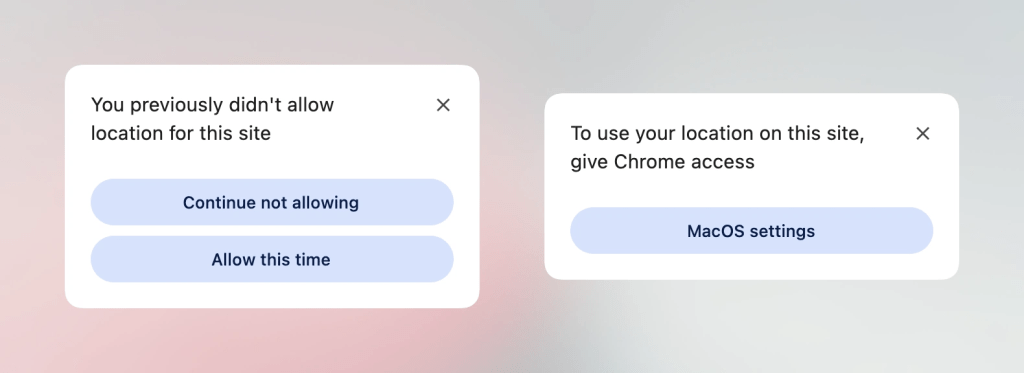
Implementing geolocation has traditionally required managing asynchronous JavaScript API calls, handling complex hardware states (GPS, cellular, Wi-Fi), and dealing with rigid browser permission dialogs that are notoriously difficult to reset or restyle.
The proposed <geolocation> element standardizes this workflow into native markup. While it introduces unique styling restrictions and currently remains restricted to Chrome, developers can easily deploy it using progressive enhancement strategies alongside the legacy JavaScript Geolocation API to ensure uninterrupted service across all browsers.
3. MicroLighter and the ::highlight() API
Heavy JavaScript-based syntax highlighters have long been a performance tax on content-heavy sites. Dave Rupert’s MicroLighter changes the paradigm by utilizing the browser’s native Custom Highlight API. By applying styles via ::highlight(), syntax highlighting is offloaded directly to the browser’s rendering engine, drastically reducing script execution time and memory footprints.
4. Extracting CSS Grid Metadata into Custom Properties
In one of the most clever CSS tricks of the season, Temani Afif demonstrated how developers can pass CSS Grid structural data directly into CSS custom properties. By mapping row counts, column counts, and individual cell X/Y indices, developers can build reactive layouts that dynamically adjust styles based on a grid item’s precise position.
While this technique currently requires columns of equal widths, its implications for spatial awareness in CSS—such as calculating hover proximity—are profound.
5. The Class Prefix Selector (.something-*)
Attribute selectors have long been the fallback for targeting classes with common prefixes, but they come with a performance cost and verbose syntax:
/* Legacy Approach */
[class^="something-"]  /* ... */
[class*=" something-"]  /* ... */
[class*="something-"]  /* ... */
Bramus introduced a cleaner, highly performant native alternative via the class prefix selector:
/* Modern Proposal */
.something-*
  /* Matches any class starting with "something-" */
Given its simplicity and immediate utility, industry adoption and browser vendor buy-in are anticipated to move swiftly once formal standardization begins.
6. Granular Feature Detection with @supports (named-feature())
Feature queries have traditionally been limited to evaluating standard CSS properties and values. Bramus introduced the @supports named-feature() function—currently supported in Chrome—which allows developers to query highly specific browser behaviors that were previously black boxes, such as whether a browser correctly honors transforms on anchor-positioned elements. This promises to make defensive CSS writing significantly more robust.
7. Balancing Flex Items: flex-wrap: balance
Following in the footsteps of text-wrap: balance, the new flex-wrap: balance property automatically distributes flex items evenly across rows or columns, eliminating awkward trailing items on the final line of a flex container. Ahmad Shadeed’s deep dive into the property highlights its potential for creating cleaner, more visually harmonious component layouts without manual media query intervention.
Official Responses and Industry Debates
Dark Mode Toggles: Two-State vs. Tri-State
A spirited debate has emerged within the frontend community regarding dark mode implementation patterns:
- The Two-State Camp: Championed by Lea Verou, this approach toggles strictly between light and dark modes based on user preference or explicit action.
- The Tri-State Camp: Promoted by Bramus, this model explicitly incorporates three states: Light, Dark, and System (Auto), giving users granular control over whether their preference overrides operating system settings.
- The Hybrid Approach: As noted by Vale.Rocks, an "auto-until-overridden" two-state model offers a compelling middle ground, respecting system preferences by default while allowing manual overrides to persist seamlessly.
Implications for Developers and the Web Ecosystem
The aggregation of these updates signals a mature phase in web standards development. Rather than inventing entirely new layout paradigms, the latest round of CSS and HTML features focuses heavily on developer ergonomics, native performance, and fine-grained control:
- Reduced JavaScript Reliance: APIs like
::highlight(), native interest invokers, and native<geolocation>elements mean developers can offload complex UI behaviors—such as syntax highlighting and permission requests—back to the browser engine, resulting in faster load times and smaller JavaScript bundles. - Enhanced Layout Intelligence: Features like grid data extraction and
flex-wrap: balanceempower developers to build intrinsically responsive components that adapt intelligently to their content and spatial environment. - Closer Collaboration Between Spec Authors and Practitioners: The rapid prototyping and public dissection of proposals like the class prefix selector and
named-feature()by community leaders ensure that upcoming CSS specifications are thoroughly vetted for real-world utility before hitting stable browser releases.
As autumn arrives, the web platform stands equipped with sharper, faster, and more expressive tools than ever before. Developers are encouraged to experiment with progressive enhancement techniques today to build tomorrow’s resilient web applications.