










Introduction
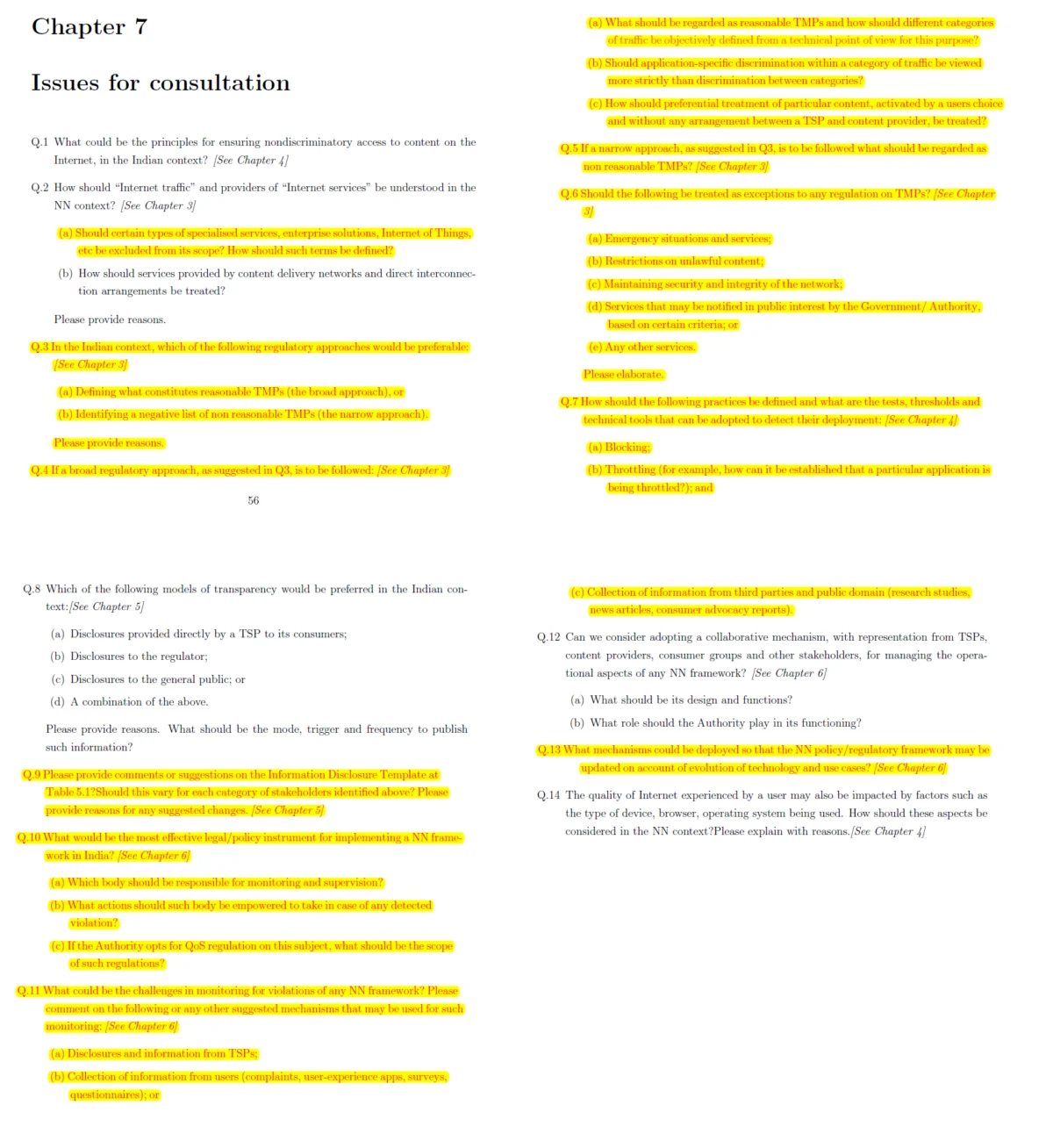
As the global streaming giant Netflix continues its aggressive expansion into emerging markets, its regulatory strategy has come under intense scrutiny. Recently, the company made a cautious foray into the Indian net neutrality debate by filing a partial response to the Telecom Regulatory Authority of India’s (TRAI) latest consultation paper. While the submission reinforces the company’s public stance against paid prioritization and traffic throttling, it also reveals a calculated, defensive posture regarding Content Delivery Networks (CDNs)—a critical component of Netflix’s infrastructure that has previously invited accusations of hypocrisy.
The Core Submission: A Selective Stance
In its formal response to the Indian regulator, Netflix reiterated its commitment to the foundational principles of an open internet. The company explicitly advocated for regulations that would ban paid prioritization, the deliberate blocking of content, and the throttling of internet traffic. For Netflix, these are the pillars of a fair digital ecosystem, ensuring that content providers—regardless of their size or influence—are not subjected to discriminatory "fast lanes" that could stifle innovation or limit consumer choice.
However, the bulk of the submission was not dedicated to these broader principles, but rather to a rigorous defense of Netflix’s proprietary CDN, known as "Open Connect." In the face of TRAI’s inquiries into the regulation of CDNs, Netflix argued that such networks are inherently beneficial. By decentralizing data storage and placing content closer to the end-user, Netflix claims its CDNs reduce costs and improve streaming speeds for both consumers and Internet Service Providers (ISPs).
Chronology of the Debate
The tension surrounding Netflix’s position is not new; it is the culmination of years of advocacy and regulatory friction.
- 2014: Then-FCC Commissioner Ajit Pai challenged Netflix, questioning the inherent conflict between its support for net neutrality and its use of Open Connect. Pai argued that the company was effectively creating its own "fast lane" by embedding servers within ISP networks.
- 2015: The U.S. adopted strong Open Internet rules, which broadly satisfied net neutrality advocates. Netflix remained a vocal supporter, with its advocacy often bordering on activism.
- 2016-2017: Following the election of Donald Trump and the appointment of Ajit Pai as FCC Chairman, the regulatory climate in the U.S. shifted drastically against net neutrality.
- March 2017: Netflix CEO Reed Hastings, when asked about the company’s engagement with Indian regulators, stated that the company was not seeking to engage in anything "controversial" or "significant."
- April 2017: Netflix files its response to TRAI’s consultation paper in India, marking a shift from vocal activism to a more guarded, bureaucratic participation.
The "Open Connect" Dilemma: Efficiency vs. Neutrality
At the heart of the controversy is Open Connect, an ingenious solution to the bandwidth challenges inherent in high-definition video streaming. By providing ISPs with free, pre-loaded hardware appliances containing the entire Netflix library, the company allows for local streaming rather than relying on distant, bandwidth-heavy international connections.
For ISPs, this is a boon; it solves the problem of network congestion caused by high-traffic video services. For Netflix, it is a competitive necessity for scaling in markets like India, where international bandwidth remains limited and expensive. However, critics—including former FCC officials—have pointed out the irony: while Netflix fights against ISPs charging others for priority access, Netflix itself has entered into deep, symbiotic relationships with ISPs that essentially prioritize their traffic through local caching.

In its TRAI filing, Netflix went to great lengths to preemptively address these concerns. The company provided a detailed annexure demonstrating how an Indian ISP could realize significant cost savings by adopting the Open Connect program. By framing the CDN as a mutually beneficial infrastructure investment rather than a commercial "fast lane," Netflix aims to insulate itself from the regulatory scrutiny that might otherwise threaten its business model in South Asia.
Analyzing the Gaps: What Remained Unanswered
While Netflix’s submission was articulate in its defense of its own infrastructure, it was notably thin on policy specifics. Analysts have observed that Netflix chose to skip more than half of the questions posed by TRAI in its consultation paper.
Specifically, while the company agreed that net neutrality should be governed by a representative stakeholder group, it failed to provide a roadmap for how such a group should operate or how it would enforce rules. Similarly, while Netflix acknowledged that ISPs should be transparent about their traffic management practices, it avoided answering questions on what specific metrics or data points ISPs should be legally required to disclose.
This omission is telling. By avoiding specific regulatory mechanisms—particularly regarding traffic management—Netflix is likely attempting to avoid painting itself into a corner. As the company continues to negotiate deals with ISPs in India, it prefers a regulatory environment that is broad and principle-based rather than one defined by strict, granular compliance mandates.
Implications for the Indian Market
Netflix’s shift from the vocal, activist posture it held in the United States to the more reserved, tactical approach seen in India reflects a maturation of its business strategy. As the company expands its footprint—opening a new office in Mumbai and investing heavily in local content—its priority has shifted from shaping global ideology to ensuring operational stability.
The company is currently in the process of rolling out Open Connect across major Indian cities, having already partnered with several key ISPs. Furthermore, its expansion into neighboring markets, such as the deployment of servers with Pakistan’s PTCL, underscores the importance of this infrastructure to its growth strategy in the region.

Regulatory challenges to CDNs in India could prove catastrophic for Netflix’s ability to provide a seamless user experience. Consequently, their lobbying efforts in Delhi are likely to remain focused on ensuring that "traffic management" remains a loosely defined term, allowing them to continue their current caching practices without being classified as a form of prohibited paid prioritization.
Conclusion: A Pragmatic Pivot
The evolution of Netflix’s stance on net neutrality reveals a fundamental tension in the digital age: the conflict between the desire for an open, non-discriminatory internet and the reality of modern technical infrastructure.
In the U.S., where the regulatory environment has become increasingly hostile toward net neutrality, Netflix has largely fallen silent, relying on its established relationships with ISPs to navigate the potential loss of federal protections. In India, a market where the company is still in its infancy, it is engaging just enough to ensure its infrastructure interests are protected, while carefully avoiding the political firestorms that accompany specific, controversial regulatory debates.
As TRAI moves toward a final determination, the industry will be watching closely. Whether Netflix’s "soft" approach to advocacy proves successful in shielding its CDN model remains to be seen. What is clear, however, is that for one of the world’s most powerful content providers, the era of pure, ideological activism has given way to a more pragmatic—and arguably more self-interested—era of regulatory management.



