










CAPE COD, MASSACHUSETTS — October is the undisputed crown jewel of the New England calendar. Across the rolling hills of Massachusetts, Vermont, New Hampshire, and Maine, the crisp autumn air carries the sharp, sweet aroma of heirloom apple varieties freshly pulled from local branches—McIntosh, Honeycrisp, Cortland, and Macoun. Agricultural authorities and culinary tourists alike routinely celebrate this regional harvest as some of the finest fruit produced anywhere on the planet.
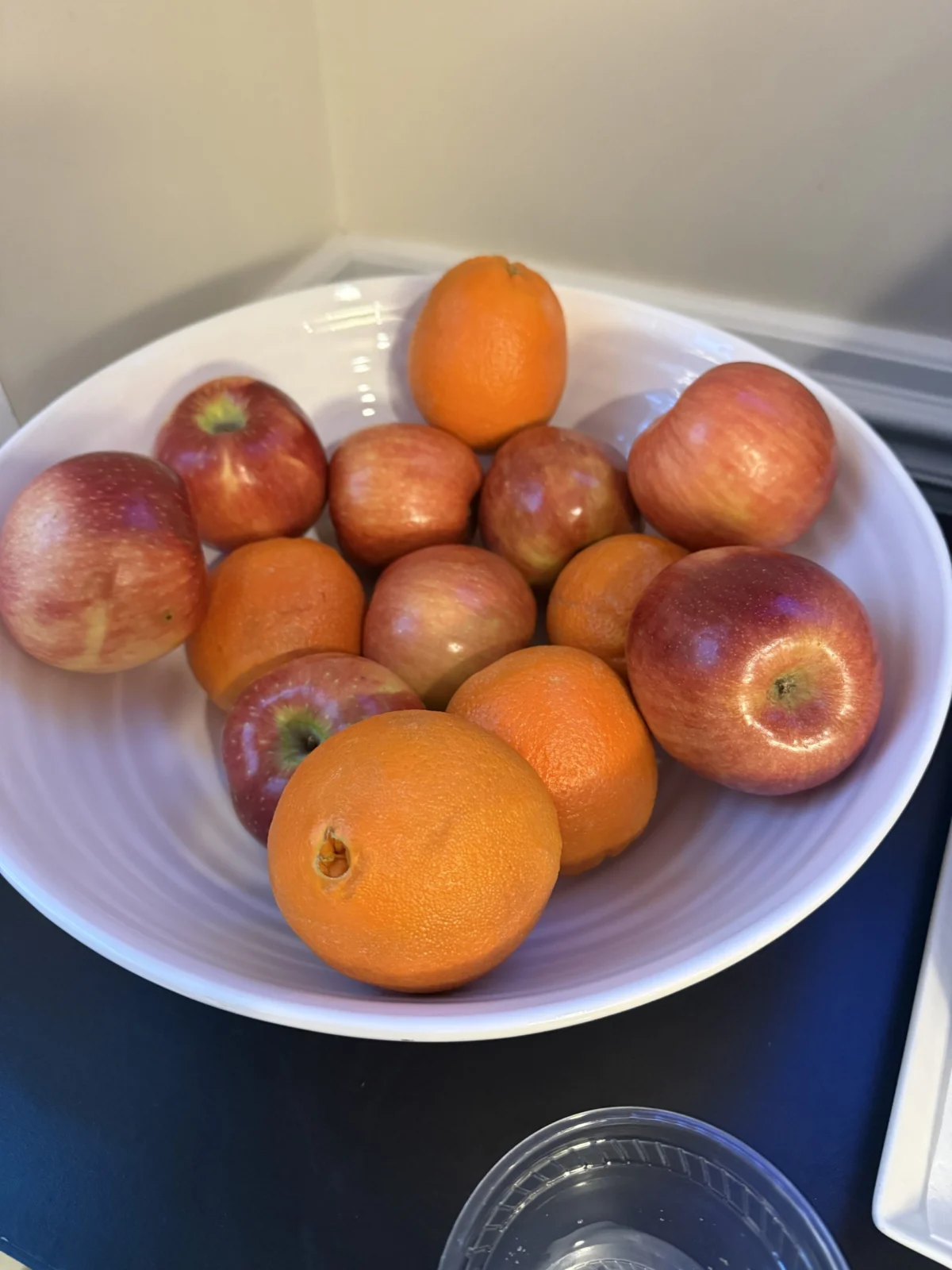
Yet, step inside the climate-controlled confines of a Cape Cod hotel gym during this very season, and a jarring paradox presents itself. Sitting quietly in a forlorn ceramic bowl, exposed to the hum of treadmills and the clatter of dumbbells, is an apple that tells an entirely different story. It is a fruit stripped of its geography, its season, and its flavor. It is an artifact of compromise: a specimen roughly nine months old, shipped from an orchard some 3,000 miles away, bearing the ghostly, wax-sealed sheen of industrial cold storage.
Why would any establishment source subpar, cross-country fruit during the peak of a world-class local harvest? The answer exposes a fundamental flaw in how institutional decision-making operates—not just in hospitality, but across corporate boardrooms, public agencies, and daily professional life. These apples are not hired to be good apples. They are hired to be symbols of convenience, markers of a checklist, and cheap, low-effort decorations.
Main Facts: The Anatomy of an Institutional Apple
The incident in the Cape Cod hotel gym serves as a micro-case study in systemic inefficiency and misaligned incentives. The core facts of the phenomenon are stark:
- The Seasonal Disconnect: High-quality, locally harvested produce is available within miles of the location, yet ignored in favor of long-distance logistics.
- The Temporal Gap: The fruit in question is not fresh; it has undergone months of atmospheric preservation to endure a 3,000-mile journey across the continent.
- The True Job Description: The apple’s function is purely ornamental and procedural. It fulfills an implicit guest-service quota ("gyms should have fruit") rather than an experiential goal ("provide nourishment and delight").
- The Economic Disconnect: Sourcing decisions bypass regional agricultural support networks in favor of centralized, uniform vendor contracts.
In examining this dynamic, observers note that the hotel’s procurement strategy is rarely the result of a malicious or anti-local agenda. Instead, it is the downstream effect of autopilot management—a structural preference for what is frictionless over what is excellent.
Chronology: From Blossom to the Hotel Bowl
To understand how a piece of fruit crosses a continent and sits aging under fluorescent gym lights, one must trace the timeline of modern commercial agriculture and institutional purchasing.
Month 0: The Harvest (Previous Winter/Spring)
Months before the hotel guest ever laces up their running shoes, this apple was harvested in a distant growing region—likely the Pacific Northwest or an international export hub. It was picked before reaching peak ripeness to ensure it could withstand the rigors of mechanical sorting and long-haul transit.
Months 1 to 8: The Suspended Animation
Rather than going straight to a market, the apple enters a controlled-atmosphere (CA) storage facility. Oxygen levels are drastically reduced, and carbon dioxide and temperature are meticulously regulated to put the fruit into a state of metabolic suspension. In this artificial winter, the apple forgets what season it is, halting its natural decay while slowly losing its structural integrity, complex sugars, and aromatic compounds.
Month 9: The Logistics Chain
Pulled from cold storage, the apple is graded, packed into corrugated cardboard boxes, and loaded onto refrigerated semi-trucks or railcars. It traverses thousands of miles of interstate highway, burning fossil fuels and accumulating a massive carbon footprint, all to arrive at a centralized food service distributor warehouse in the Northeast.
Day 1: The Arrival and Placement
The distributor delivers a mixed pallet of goods to the Cape Cod hotel—bulk paper towels, cleaning solutions, individually wrapped sugar packets, and a case of uniform, red, waxy apples. A hospitality employee, working from a standardized operational checklist, places a handful of these apples into a bowl by the gym door.
The cycle is complete. The apple has fulfilled its administrative destiny: it is present, it is yellow-tag compliant with corporate brand standards, and it is entirely devoid of life.
Supporting Data: The Economics of Convenience vs. Quality
While a single hotel gym apple may seem trivial, the underlying economic and operational data surrounding institutional food service and corporate habits reveals a massive systemic preference for the status quo.
| Metric / Factor | Local/Craft Approach | Industrial/Status Quo Approach |
|---|---|---|
| Distance Traveled | 10 to 50 miles | 2,000 to 3,000 miles |
| Time from Tree to Consumer | 24 to 72 hours | 6 to 11 months (via cold storage) |
| Primary Incentive | Taste, community reputation, delight | Predictability, contract compliance, low friction |
| Economic Impact | Reinvestment in regional farming | Support for multinational logistics conglomerates |
| Sensory Profile | Crisp, tart/sweet, aromatic, fresh | Mealy, bland, waxy, uniform |
According to supply chain analysts, large-scale institutional buyers—including hotel chains, hospital networks, and corporate cafeterias—routinely default to national vendors because of centralized invoicing. Buying apples from a local orchard requires establishing accounts with multiple regional farms, processing disparate invoices, and managing fluctuating seasonal availability.
From an administrative standpoint, a centralized vendor offering a flat-rate price for a year-round, uniform product requires zero cognitive load. The hidden cost, however, is paid in customer satisfaction, environmental impact, and the erosion of local economies. The system optimizes for the ease of the buyer, not the experience of the user.
Official Responses and Industry Perspectives
Reactions from hospitality experts, behavioral economists, and agricultural advocates highlight a growing tension between automated efficiency and human-centric design.
Hotel Operations Management:
Representatives from major hospitality groups defend standardized supply chains as a necessary pillar of brand consistency. "When a guest visits one of our properties in Boston, Miami, or Seattle, they expect a baseline level of predictability," says a mid-Atlantic regional hotel director who spoke on condition of anonymity. "Centralized procurement ensures safety standards, predictable margins, and liability protection. Introducing hyper-local, seasonal variance introduces operational complexity that our staffing models simply aren’t built to handle."
Behavioral Economists:
Critics from the behavioral science sector argue that this mindset is a symptom of institutional myopia. "When organizations stop asking why they do things, the how becomes a self-perpetuating religion," notes organizational theorist and author Seth Godin. "They put out an apple because gyms are ‘supposed’ to have apples. But because they haven’t named the actual objective—to make the guest feel welcomed, energized, or delighted—they settle for a synthetic substitute that actively degrades trust."
Regional Agricultural Advocates:
New England farming coalitions have long pushed back against institutional bypass. "We grow the best apples on earth right here in October," says a spokesperson for a Massachusetts apple growers cooperative. "When a local business imports subpar fruit from 3,000 miles away during our peak harvest, it’s not just a missed culinary opportunity; it’s a cultural disconnect. It tells the community that transactional convenience matters more than regional vitality."
Implications: Naming the Status Quo to Drive Change
The lifeless apple sitting in the corner of the Cape Cod hotel gym serves as a powerful metaphor for a broader malady in modern institutions: the unexamined status quo.
Most broken, inefficient, or soul-crushing systems persist simply because they remain unnamed. Untangling what an organization is actually trying to accomplish requires uncomfortable friction. It demands that leaders pause and interrogate their habits:
- Why are we doing this this way?
- Is this rule serving our ultimate mission, or is it just a vestige of an old procedure?
- Are we optimizing for the convenience of the institution or the delight of the human being on the receiving end?
Until these questions are asked, organizations will continue to default to the path of least resistance. They will ship mediocrity across thousands of miles, check the boxes on their operational audits, and wonder why their products, services, and cultures feel flat and uninspiring.
The journey toward improvement begins with awareness—a concept explored in frameworks like The Knot, which examines the invisible baggage institutions and individuals unconsciously carry around. Recognizing that you are stuck, or that your systems are optimized for the wrong outcomes, is the mandatory first step on the road to building something genuinely better.
Until then, the 3,000-mile-old apple will remain in its bowl: a monument to convenience, waiting for someone who knows the difference between a box checked and an experience delivered.



