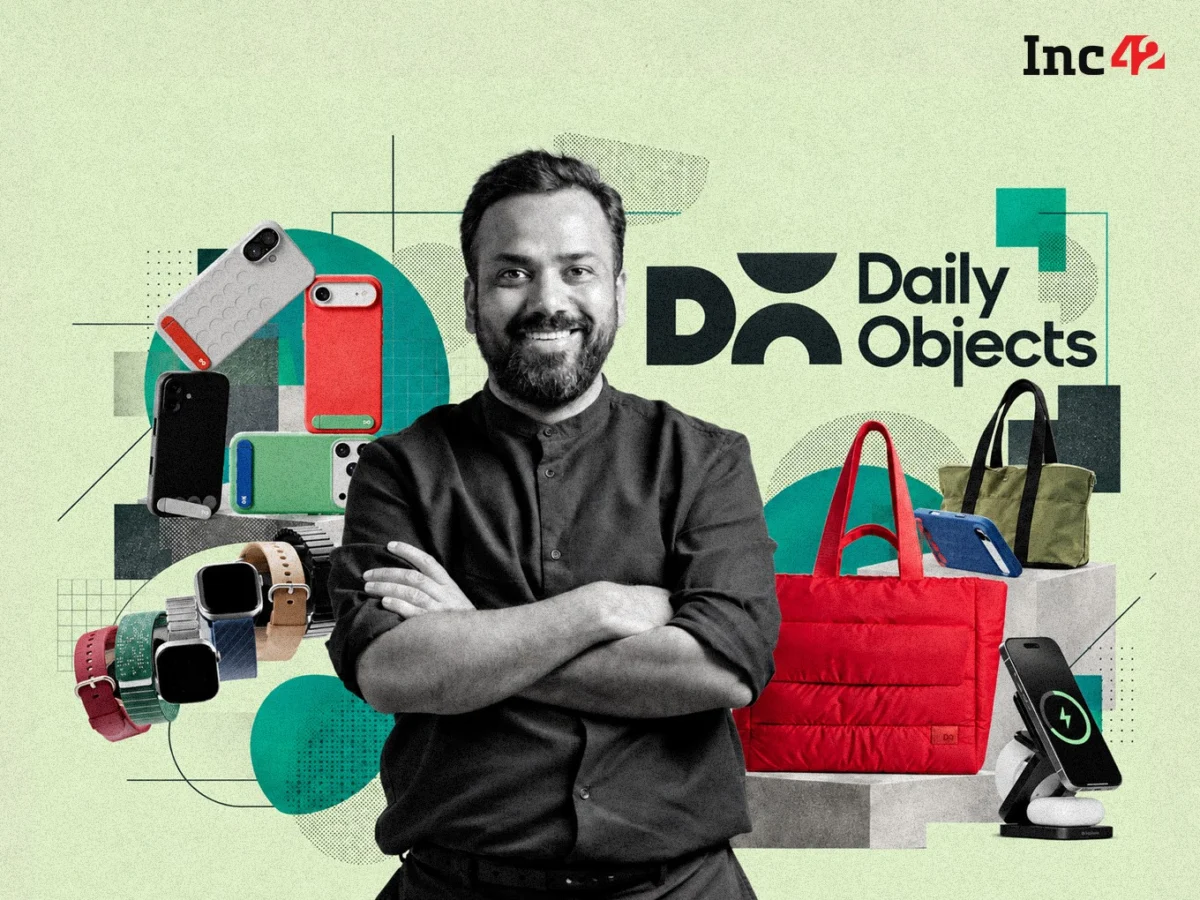
From Commodity to Coveted: How DailyObjects Engineered a ₹400 Cr D2C Success Story
New Delhi — In the early 2010s, purchasing a smartphone felt like a major milestone. Consumers would meticulously research processors, camera megapixels, and battery life, yet the final protective case was almost always an afterthought. Buyers routinely settled for generic, unbranded plastic shells bought from local vendors—cheap, commoditized items largely imported from manufacturing hubs in China.
Back then, the mobile accessories market in India was deeply unorganized. It was dominated by low-cost knockoffs of established international brands, offering zero design innovation and minimal regard for durability.
However, as smartphone adoption exploded across the country, consumer habits evolved dramatically. With Indians increasingly willing to shell out anywhere from ₹20,000 to over ₹50,000 for flagship devices, their relationship with their gadgets changed. Phones transitioned from mere communication tools to central fixtures of everyday life. Consequently, users began looking beyond basic drop protection, demanding aesthetic accessories that reflected their personal style, lifestyle, and identity.
Sensing this cultural and economic shift early on was Pankaj Garg. Founded in 2012 initially as a multi-category online business, Garg and his team would eventually pivot to redefine how India looked at everyday tech accessories—laying the groundwork for what is today known as DailyObjects.
1. Main Facts: The Blueprint of DailyObjects’ Surge
DailyObjects has evolved from a niche online retailer into one of India’s most prominent design-led Direct-to-Consumer (D2C) lifestyle brands. By centering its identity on meticulous craftsmanship, artistic collaborations, and utilitarian design, the company has achieved phenomenal financial milestones:
Revenue Trajectory: The company crossed the ₹200 Cr revenue mark in FY26, nearly doubling its top line year-on-year from ₹110 Cr in FY25. Looking ahead, DailyObjects has set an ambitious target of doubling this figure again to ₹400 Cr by FY27.
Funding and Backing: The brand is well-capitalized, having recently closed a massive ₹332 Cr ($34.3 Mn) Series C funding round co-led by Xponentia Capital Partners, Anicut Capital, and Axiom Asia Private Capital. This follows earlier investments from institutional heavyweights like Ronnie Screwvala’s Unilazer Ventures and 360 One Asset.
Product Diversification: What started as a smartphone-case company has successfully expanded into high-margin lifestyle categories, including premium backpacks, workspace accessories, and innovative modular charging systems. Bags alone now account for roughly 40–45% of total revenue.
Omnichannel Expansion: DailyObjects operates 13 exclusive brand outlets (EBOs), is present in over 300 Apple premium reseller stores, and is rapidly scaling its physical footprint with plans to reach 150–160 stores over the next five years.
2. Chronology: A Timeline of Strategic Pivots and Growth
The journey from a small online startup to a ₹200 Cr lifestyle brand was neither accidental nor instantaneous. It was shaped by deliberate, long-term strategic choices.
2012–2014: The Multicategory Experiment and the Great Pivot
Pankaj Garg launched DailyObjects in 2012 as a broad-based, multi-category e-commerce venture. However, recognizing the fragmented state of the mobile accessories market, the leadership team made a bold strategic gamble in 2014: they stripped away non-core categories like car accessories and streamlined operations to focus exclusively on smartphone cases.
Rather than chasing volume by selling cheap commodities, DailyObjects chose to differentiate through high-end aesthetics. The startup introduced designer phone cases, forged partnerships with independent artists, and elevated the humble phone case into a canvas for personal expression.
2014–2019: Building the Foundation and Independent Channels
During its first five years of hyper-focus on phone cases, DailyObjects made a counterintuitive distribution choice. While most D2C startups rushed to list aggressively on major e-commerce marketplaces to chase quick volumes, Garg’s team prioritized building their own direct-to-consumer digital channels.
Though a slower and vastly more demanding route—requiring heavy lifting in customer acquisition, brand building, and traffic generation—this strategy gave the company ultimate pricing control and direct relationships with its consumers. Backed early on by a ₹9 Cr infusion from Unilazer Ventures, the startup maintained rare fiscal discipline, operating profitably from its early stages and avoiding the trap of deep-discount-driven growth.
2021–2023: Expanding the Playbook (Bags and Charging Solutions)
With a loyal customer base locked in, DailyObjects began expanding its product portfolio horizontally, but strictly within the universe of its core demographic.
The Entry Into Bags (FY21): To capture a larger wallet share, the brand entered the bags and everyday carry market. Facing early hurdles where third-party manufacturers refused to service its small initial order batches, DailyObjects took manufacturing into its own hands. It launched an in-house production line starting with just two tables, which has since expanded into a full-fledged factory employing roughly 600 people in India.
The Charging Ecosystem (FY23): Leveraging a $10 Mn funding injection from 360 One Asset, DailyObjects stepped into tech-charging solutions. This paved the way for proprietary innovations like NODE—a modular wireless charging system engineered for modern consumers juggling multiple devices across home, work, and travel.
2024–2027: The Scale-Up, Offline Push, and International Horizons
Entering the mid-2020s, financial metrics accelerated dramatically. Revenue surged from ₹24.1 Cr in FY21 to ₹39.2 Cr in FY22, ₹84.4 Cr in FY24, and ₹110 Cr in FY25, culminating in over ₹200 Cr for FY26.
Armed with the recent ₹332 Cr Series C war chest, the company is aggressively taking its digital-first brand into physical retail, expanding deeper into India’s Tier II, III, and IV cities, and laying the groundwork for international expansion.
3. Supporting Data: Metrics That Define the Brand
A closer examination of DailyObjects’ unit economics reveals a business model built on high customer retention and rising basket sizes:
Rising Average Order Value (AOV): The company’s current AOV sits at approximately ₹2,600, registering a consistent year-on-year growth of about 10%. This upward trajectory is directly propelled by higher-priced lifestyle items like premium backpacks and charging stations.
Strong Retention Rates: DailyObjects boasts a lifetime repeat purchase rate of approximately 45%, proving that its design philosophy builds genuine brand loyalty rather than one-off impulse buys.
Geographic Shift: While metros remain strong, a staggering 35–40% of DailyObjects’ sales now originate from Tier III and IV cities, with another 20–25% coming from Tier II markets. This underlines a surging appetite in smaller Indian towns for design-forward, functional lifestyle goods.
Omnichannel Footprint & Retail Economics: Beyond its digital presence, the brand maintains a presence in 300 Apple premium reseller outlets and runs 13 exclusive brick-and-mortar stores. According to company leadership, these physical stores achieve profitability from their very first month of operation, with airport retail locations yielding operating margins close to 15% right out of the gate.
4. Official Responses and Leadership Insights
Reflecting on the company’s evolution, founder and CEO Pankaj Garg emphasizes that building a lasting brand requires patience in a market obsessed with overnight success.
"Building a brand in a category that consumers once barely thought about required us to look past short-term volume gains," Garg has noted regarding the decision to eschew marketplace reliance in the early years. By maintaining tight control over distribution and refusing to rely solely on deep discounting, the firm built an organic equity that competitors copying cheap Chinese imports could not replicate.
On the operational front, the decision to bring manufacturing in-house—particularly for its booming bag division—has been validated by quality control and unit economics. Garg highlights that taking manufacturing local was initially born out of necessity when external vendors rejected small batches, but it has since transformed into a massive competitive moat.
Looking toward the impending road to ₹400 Cr in FY27, management remains focused on balancing top-line expansion with fiscal prudence. Having posted a loss of ₹16 Cr in FY25 while scaling aggressively, the leadership team maintains that the business is currently operating close to break-even. They project that enhanced supply-chain efficiencies, a richer product mix, and mature retail footprints will expand operating margins from the current ~5% to between 15% and 20% over the next four to five years.
5. Implications: The Future of D2C Lifestyle in India
DailyObjects’ journey holds profound implications for the broader Indian Direct-to-Consumer ecosystem:
The Death of the Generic Commodity
The brand proves that virtually any product category—no matter how commoditized, unorganized, or low-involvement it appears—can be elevated into a premium, design-driven experience. By introducing artist collaborations and high material standards, DailyObjects turned a utilitarian piece of plastic into a fashion and lifestyle statement.
The Evolution of Omnichannel Real Estate
While many D2C brands view offline retail as a cash-burning necessity to build trust, DailyObjects’ model challenges this norm. By demonstrating that exclusive stores and airport outlets can achieve profitability in month one, the brand offers a masterclass in capital-efficient retail expansion. Furthermore, the fact that over 60% of demand now flows from Tier II, III, and IV cities signals a profound democratization of lifestyle aspirations across Bharat.
The Global Ambition
With the fresh capital from its Series C round, DailyObjects is evaluating systematic international expansion. Notably, the brand is already pulling in roughly 1,000 organic orders a month from the United States without any dedicated marketing spend. This suggests that Indian D2C brands are no longer just catering to domestic demand; they possess the design parity and manufacturing maturity to compete on a global stage.
As DailyObjects charges deliberately toward its ₹400 Cr milestone for FY27, its greatest test will be scaling its physical footprint and international ambitions without diluting the precise design ethos that got it here. If its past chronology is any indicator, this homegrown lifestyle brand is well-equipped to keep rewriting the playbook.