










CHARLOTTE, N.C. — In an era dominated by high-tech startups, venture capital burn rates, and software-as-a-service enterprises, the most lucrative business opportunities are sometimes sitting right under our noses—or, quite literally, next to our construction sites.
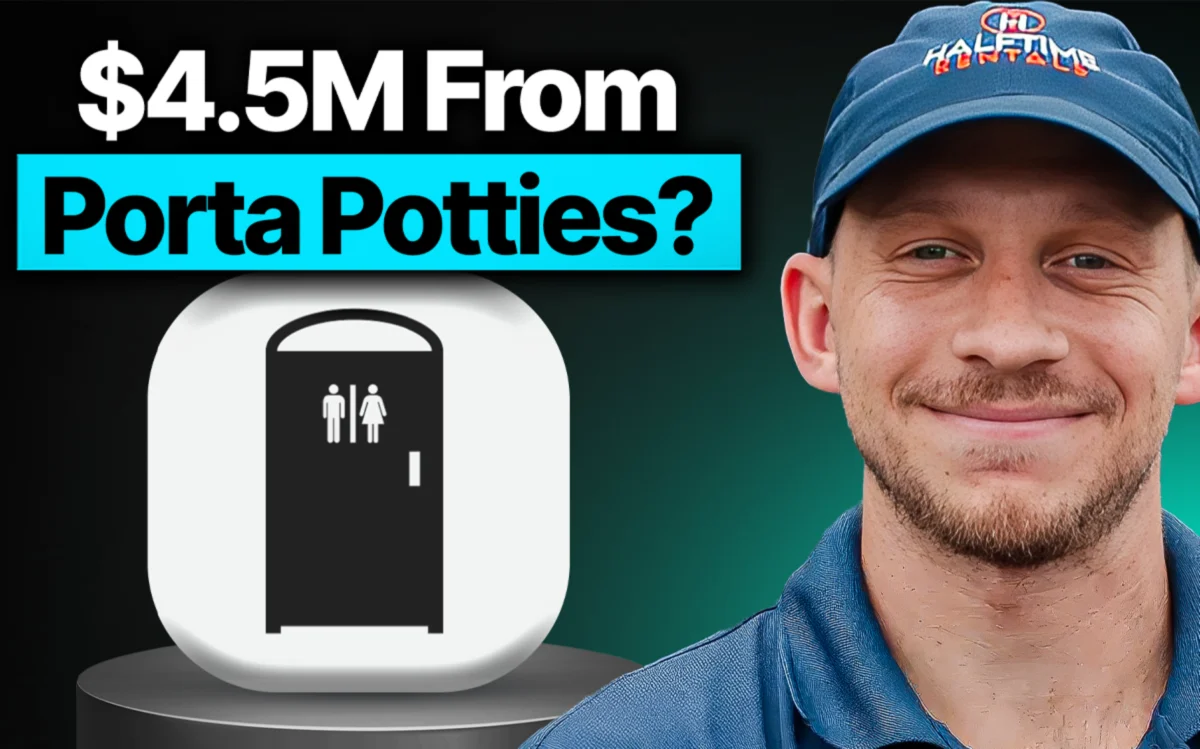
Chad Howard, a veteran of Procter & Gamble who spent a decade navigating the upper echelons of corporate America, traded his desk job for a fleet of sanitation trucks. Less than two years after its mid-2024 launch, his Charlotte-based portable toilet enterprise, Halftime Rentals, is projecting a staggering $4.5 million in annual revenue.
Operating with nearly 1,900 active units under lease, nine full-time service trucks, and a lean team of 15 employees, Halftime Rentals boasts an impressive EBITDA margin of roughly 30% over the past six months. Howard’s rapid ascent offers a masterclass in how traditional, unglamorous service industries can yield explosive growth when executed with operational rigor, uncompromising speed, and relentless customer focus.
Main Facts: The Anatomy of a High-Growth Blue-Collar Enterprise
The trajectory of Halftime Rentals challenges conventional assumptions about what constitutes a scalable modern business. While tech startups often struggle for years to achieve profitability, Howard’s venture achieved strong cash flow and rapid asset accumulation by capitalizing on structural inefficiencies in the localized sanitation market.
- Rapid Revenue Scale: Launched in mid-2024, the company is on pace to hit $4.5 million in annual revenue.
- Asset and Workforce Footprint: The business operates 1,900 units under lease, maintains a fleet of nine full-time service trucks, and employs 15 personnel.
- Robust Margins: Halftime Rentals has maintained an average EBITDA margin of approximately 30% over the past two quarters.
- Strategic Differentiation: By prioritizing 24/7 availability, aggressive digital marketing via Google Maps, and heavy employee-incentive structures, the firm has quickly captured significant market share in the greater Charlotte area.
Chronology: The Journey from Procter & Gamble to Sanitation
Howard’s path to the portable sanitation sector was neither direct nor obvious. For ten years, he built a conventional corporate career at Procter & Gamble, working across diverse functional roles and relocating across eight states. He was firmly on a path toward upper management.
The Seed of an Idea
The concept for a portable toilet venture came from Howard’s now-business partner, Austin. With a background in blue-collar search-fund analysis, Austin had deeply scrutinized the sanitation sector. He recognized the steady cash flows and high profit margins inherent in waste management and repeatedly pitched the model to Howard.
Initially, Howard dismissed the idea. Earning a strong corporate salary and climbing the P&G ladder made the prospect of jumping into a messy, hands-on service business seem counterintuitive. However, as the corporate grind lost its luster, and inspired by mentors over 50 who frequently voiced deep regrets about never betting on themselves, Howard’s perspective shifted.
The Six-Month Preparation Phase
By early 2024, Howard had successfully raised startup capital from friends and family. Rather than testing the waters part-time, he made the calculated decision to execute a clean break from corporate life.
He spent six months laying the groundwork—securing supplier relationships, analyzing regulatory frameworks, mapping out logistics software, and structuring financial models. When he officially pulled the trigger in the summer of 2024, he relocated to Charlotte and committed 100% of his time to the venture from day one.
The Hurricane Helene Turning Point
Just months after launch, Halftime Rentals was operating as a micro-startup with roughly 100 toilets and a single truck. Then, Hurricane Helene devastated western North Carolina.
On a Sunday morning in late 2024, while picking up units from a Carolina Panthers tailgate, Howard received a call from Home Depot’s corporate office. The retail giant urgently needed portable sanitation units deployed to stores across the greater Asheville disaster zone to facilitate emergency community support and store reopenings.
Though Asheville was two hours away and the logistical hurdles were immense, Howard recognized a defining moment. He quoted a premium price, secured immediate sign-off, and threw himself into a 24-hour operational sprint.

Working nearly 20-hour days, Howard financed multiple trucks in a single day, secured 500 new units, established a staging area in a community college parking lot, and slept out of an RV while managing the crisis. That single catastrophic event transformed Halftime Rentals from a local startup into a trusted regional infrastructure partner.
Supporting Data: Operational Excellence and Financial Leverage
The secret behind Halftime Rentals’ 30% EBITDA margin is not complex machinery or proprietary algorithms; it is disciplined execution of basic fundamentals. Howard quickly realized that traditional sanitation providers often suffer from poor communication, rigid operating hours, and subpar customer service.
Leveraging 24/7 Availability
One of the cornerstone strategies for Halftime Rentals has been its positioning on digital discovery platforms. Listed as open 24/7 on Google Maps, the company routinely captures high-value emergency contracts outside of normal business hours—orders that legacy competitors miss entirely because their offices are closed on weekends and evenings.
The Employee Incentive Engine
Understanding that drivers are the primary face of the enterprise, Howard implemented creative incentive structures to drive quality control and brand loyalty:
- The Review Program: Drivers earn a $25 Amazon gift card every time a customer leaves a Google review specifically mentioning their name. This has driven massive online visibility, with top-performing drivers earning thousands of dollars in bonuses.
- Quality Control Bonuses: Through unannounced "drop-in" inspections of serviced units, drivers can earn an additional $50 daily bonus for meeting rigorous cleanliness standards.
- Comprehensive Training: New hires undergo a week-long onboarding process shadowing veteran drivers, with trainers receiving financial incentives to instill high operational standards early.
Financially, the business model thrives on built-in market demand drivers. Construction, infrastructure upgrades, public events, and disaster relief ensure a perpetual baseline of economic activity that requires portable sanitation solutions.
Official Responses and Industry Implications
Industry observers note that Howard’s trajectory represents a broader cultural shift among millennial and Gen-X professionals. Increasingly, corporate veterans are bypassing traditional white-collar entrepreneurship to acquire or build cash-flowing, blue-collar service businesses—often colloquially referred to as "boring businesses."
Reflecting on his transition from the highly structured environment of Procter & Gamble to the unpredictable reality of clearing blockages and managing truck routes, Howard noted that the day-to-day challenges are vastly different, yet infinitely more rewarding.
"When you come from a massive corporation, you’re used to departments handling every little crisis," Howard explained in a recent podcast interview. "When you step into a lean service business, you are the department. The uncertainty is terrifying at first, but it forces you to learn speed, resilience, and adaptability in a way a boardroom never will."
Implications: The Future of Halftime Rentals and Blue-Collar Entrepreneurship
With Charlotte firmly established as his primary stronghold, Howard’s sights are now set on regional dominance. Over the next two to three years, he aims to double or triple the company’s footprint within the greater Charlotte metropolitan area before exploring expansion into broader Southeast markets.
Furthermore, Howard has expressed long-term interest in establishing a framework to help other disillusioned corporate executives transition into blue-collar entrepreneurship by launching localized iterations of Halftime Rentals in new territories.
Key Takeaways for Aspiring Founders
- Speed Kills the Competition: In emergency scenarios or everyday operations, the company that answers the phone first and executes fastest invariably wins the contract.
- Align Employee Success with Company Success: By tying financial bonuses directly to customer reviews and quality inspections, retention and service quality soar organically.
- Embrace the Unglamorous: High-margin opportunities frequently exist in unsexy, essential industries where incumbents have grown complacent and customer service standards are low.
As Halftime Rentals charges toward its $4.5 million revenue milestone, Chad Howard’s journey stands as proof that you do not need to invent the next big app to build a thriving enterprise. Sometimes, success is as simple as answering the call, doing the dirty work, and getting shit done.



