AWS Redefines Cloud Onboarding: A New Era of AI-Driven Simplicity and Streamlined Development
Main Facts
Amazon Web Services (AWS), the world’s preeminent cloud computing provider, has announced a radical paradigm shift in how developers, startups, and individual innovators onboard and interact with its cloud ecosystem. Historically celebrated for offering an unmatched breadth and depth of infrastructure services—ranging from foundational primitives like Amazon S3 and EC2 to advanced enterprise governance tools—AWS has increasingly become a complex landscape for those just starting out.
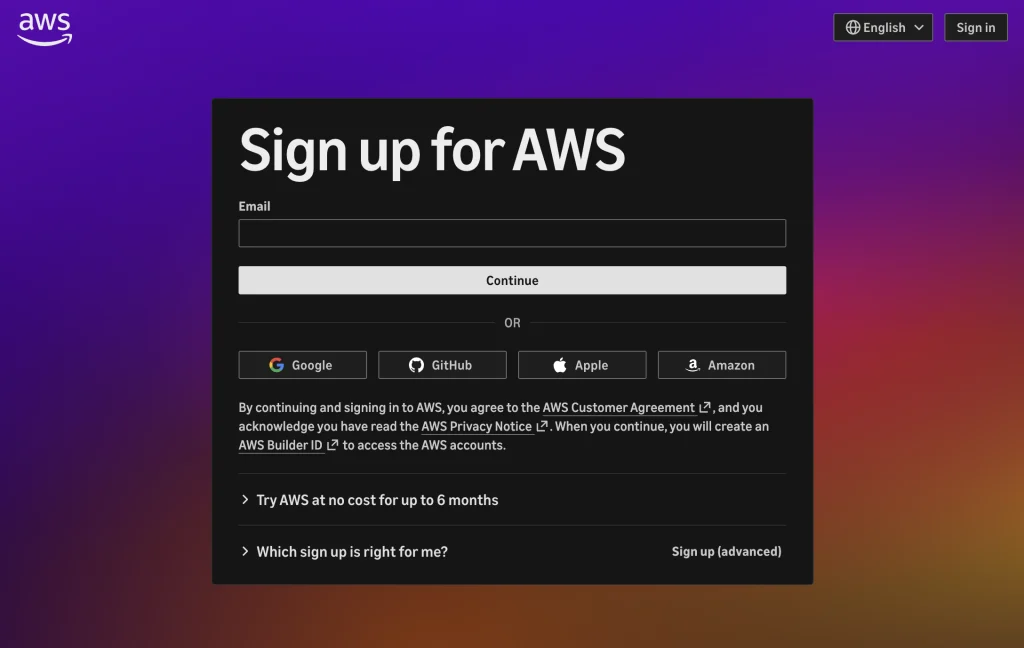
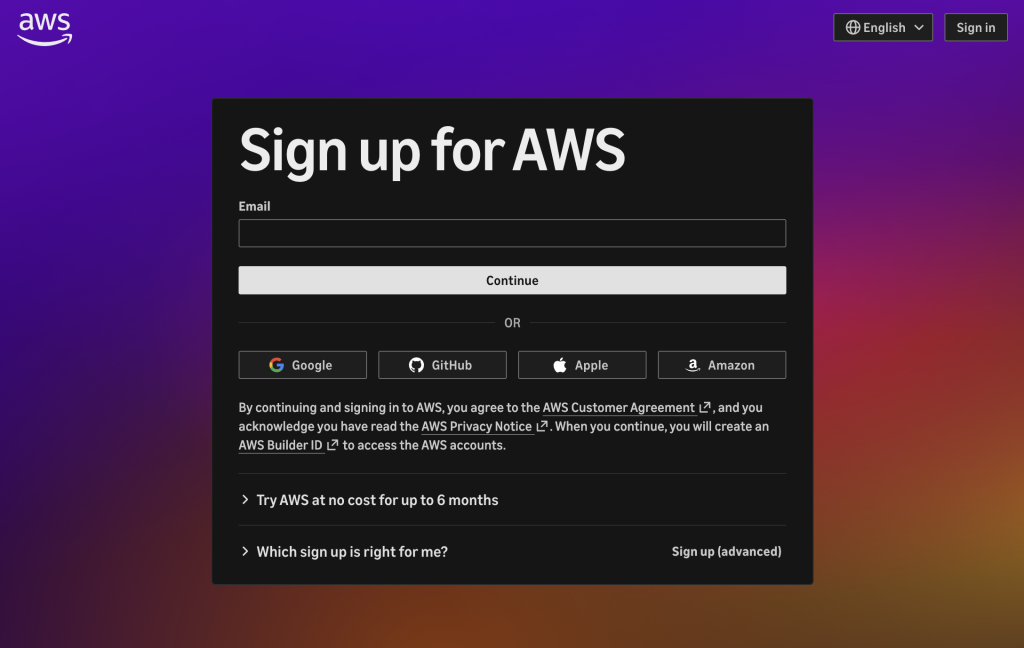
To bridge the gap between enterprise-grade power and the rapid-fire demands of the artificial intelligence era, AWS has introduced a dramatically simplified, AI-first onboarding experience. The new workflow eliminates traditional configuration hurdles, demanding zero upfront credit card information for most new users and granting $100 in free credits through the AWS Free Tier. Developers can now sign up instantly using external identity providers such as Google, GitHub, and Apple.
At its core, the new experience rethinks project management within AWS by organizing workloads into isolated, self-contained "projects." These projects bundle AWS accounts, automated security baselines, and straightforward team collaboration features that require no prior knowledge of complex permission matrices like AWS Identity and Access Management (IAM).
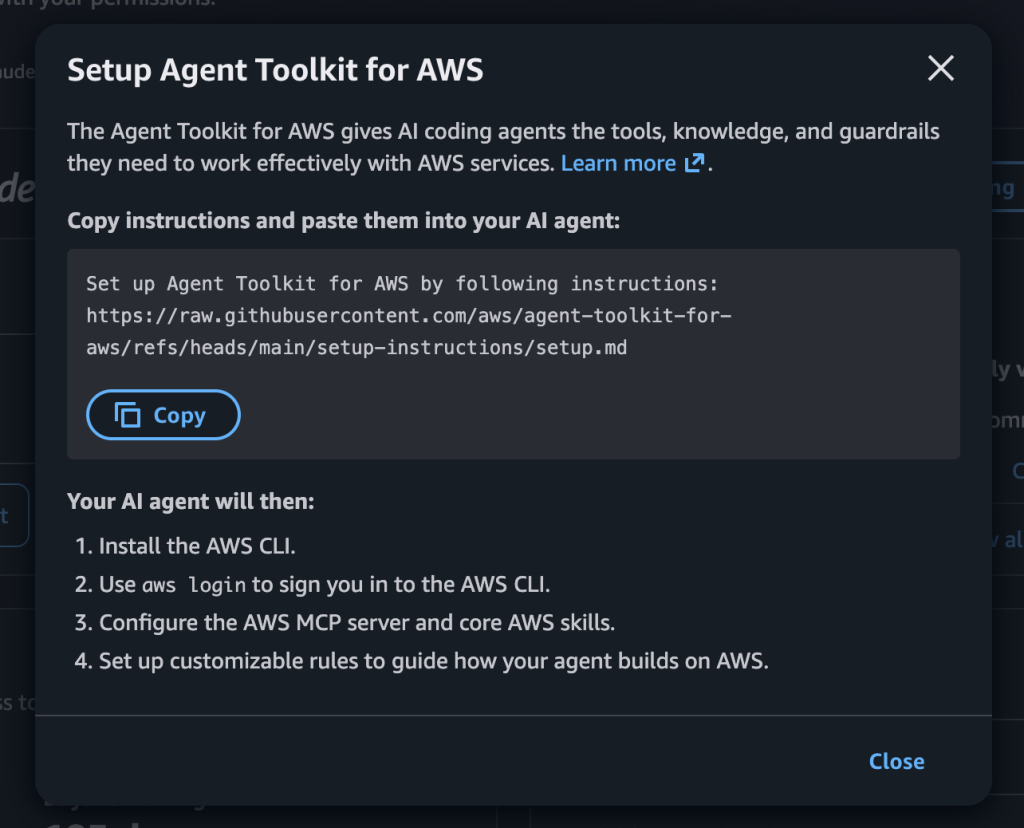
Furthermore, the system is natively integrated with modern coding agents. By pasting an initialization prompt into an AI coding assistant, developers can instantly configure the AWS Command Line Interface (AWS CLI) and the Agent Toolkit for AWS. The agent can then independently deploy resources, execute workloads, and manage resource permissions behind the scenes.
When projects scale beyond experimental phases, users can transition to a paid plan backed by strict monthly spend limits, starting at $20. Should a project approach its budget ceiling, AWS issues warnings before automatically pausing the workload to prevent unexpected charges. Crucially, as projects evolve into full-fledged commercial enterprises requiring multi-region deployment or complex governance policies, developers can seamlessly unlock advanced AWS features with zero migration overhead and zero downtime.
Chronology of AWS Evolution: From Foundational Primitives to AI-Speed Infrastructure
To understand the weight of this new announcement, it is essential to trace the historical trajectory of AWS and how shifting market demands have shaped its platform design.
The Genesis of Cloud Infrastructure
When AWS first emerged, its mission was democratized simplicity. It provided a handful of foundational building blocks—Amazon S3 for object storage, Amazon EC2 for virtual servers, and Amazon SQS for messaging. This minimalist toolkit allowed any individual with an internet connection and a coding idea to bypass physical data center constraints and start building applications immediately.
The Enterprise Expansion Era
As the platform gained traction, its user base expanded to include the world’s largest multinational corporations, financial institutions, and government agencies. These heavy-hitting customers brought rigorous demands. They required strict security compliance, granular networking controls, multi-region redundancy, advanced governance frameworks, and intricate cost-allocation mechanisms.
To satisfy these requirements, AWS steadily added depth and breadth to its service catalog. New AWS Regions proliferated across the globe, and internal ecosystems like AWS IAM, AWS Organizations, and custom VPC networking architectures became standard expectations for enterprise cloud deployment.
The Friction of Modern Development
While this enterprise-grade expansion solidified AWS’s market dominance, it inadvertently created a steep learning curve for individual builders, indie hackers, and developers operating at the accelerated pace of AI. Configuring a new cloud environment often meant spending critical initial hours navigating security policies, setting up billing alarms, managing IAM user roles, and wiring up command-line tools—friction points that stood directly in the way of shipping software rapidly.
The AI-First Pivot
Recognizing that modern developers expect instant gratification and frictionless tool integration akin to modern SaaS platforms, AWS leadership re-evaluated the user journey. The result is the current rollout: a strategic effort to reclaim the original spirit of accessibility while retaining the massive underlying scalability of the world’s most robust cloud infrastructure.
Supporting Data and Technical Architecture
The newly unveiled architecture relies on a streamlined hierarchy designed to abstract away infrastructure management without stripping away underlying control.
Financial Metrics and Budget Controls
Free Tier Allocation: New users receive $100 in trial credits upon signup. Additional micro-credits (such as an extra $20 upon deploying specific workloads like AWS Lambda functions) are frequently injected to encourage exploration.
Spend Limits: Paid plans introduce a predictable pricing ceiling starting at a minimum baseline of $20 per month.
Cost Protection Mechanism: Unlike traditional cloud architectures where unmonitored loops can result in thousands of dollars in surprise bills, the new system enforces a hard stop. If a project hits its designated monthly spend limit, AWS pauses the project instead of accumulating excess charges.
Granular Budgeting: Budgets are assigned on a per-project basis, allowing creators to allocate higher financial ceilings to production-bound workloads while restricting experimental ideas to minimal budgets.
Technical Workflow: Building an ID Generation API
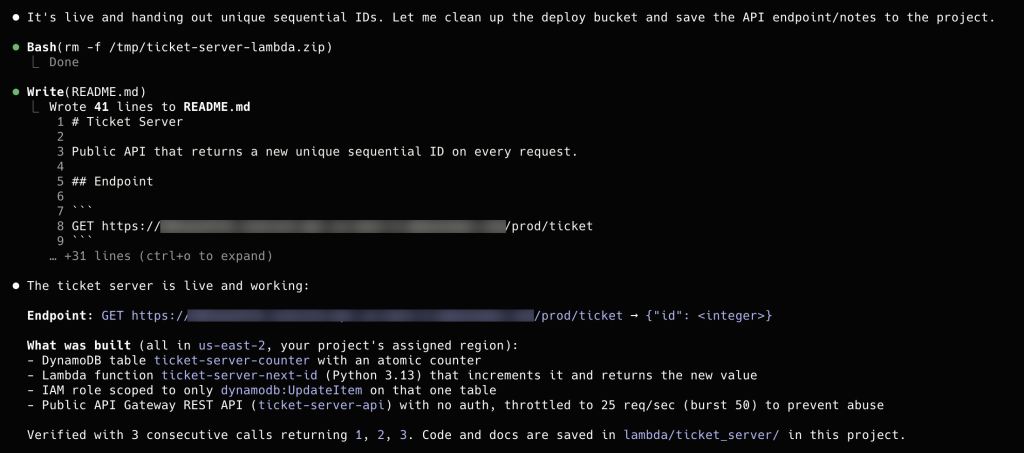
To demonstrate the practical execution of this architecture, early testers documented a test case building an API that returns a unique sequential ID on every request.
Authentication: The user signs up via a web browser using an existing Google account.
Agent Handshake: The system generates a specialized setup prompt. The user copies this prompt and pastes it directly into their coding agent.
Automated Toolchain Setup: The coding agent automatically installs and configures the AWS CLI, provisions the Agent Toolkit for AWS, authenticates the session, and generates a structured CLAUDE.md documentation file inside the project workspace.
Natural Language Deployment: The developer inputs a concise prompt: "Build an API that returns a new unique sequential ID on every request."
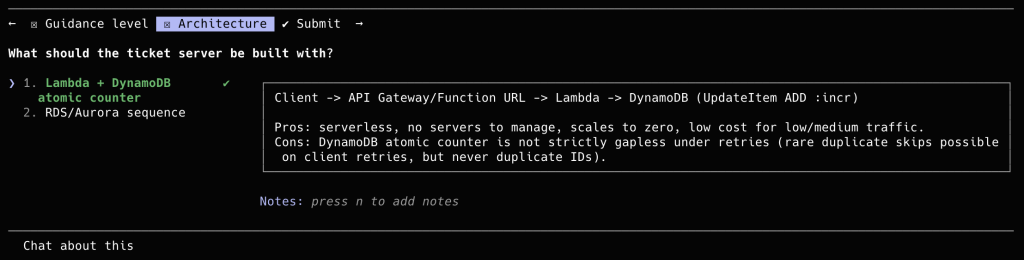
Infrastructure Provisioning: Without human intervention or manual IAM configuration, the agent selects, provisions, and wires together three distinct AWS services:
Amazon DynamoDB: To store and increment sequential state trackers.
AWS Lambda: To execute the serverless business logic.
Amazon API Gateway: To expose the serverless function to the public internet via a secure HTTPS endpoint.
Live Verification: Within minutes, the public endpoint is live, functional, and actively returning data, all while tracking credit utilization in real-time through a simplified web dashboard.
Official Responses and Industry Context
AWS leadership has framed this release as a direct response to continuous developer feedback regarding onboarding friction.
"We’ve heard from builders that they do not want to spend their first hours configuring an AWS environment. They want to build what they came to build, and we listened," noted engineering spokespersons during the preliminary rollout rollout phase. "AWS began as a place where anyone with an idea could start building, and this new simplified experience brings that starting point back, with sensible defaults so you can begin immediately."
Industry analysts have observed that this move is a necessary tactical evolution for hyperscale cloud providers. As platform-as-a-service (PaaS) alternatives, specialized serverless platforms (such as Vercel or Netlify), and developer-friendly clouds (like DigitalOcean or Heroku) have captured the hearts of early-stage developers through sheer ease of use, hyperscalers like AWS risked being perceived as too complex for prototyping.
By introducing sensible defaults, frictionless social logins, and native coding agent integrations, AWS is aggressively positioning itself to capture the lifecycle of software development from its absolute inception—ensuring that a developer who prototypes an AI app using an AWS project sandbox will simply flip the switch to advanced features rather than migrating to a competing platform when their startup scales.
Implications for Developers, Enterprises, and the Cloud Market
The introduction of this simplified, AI-integrated experience carries profound implications across the software development lifecycle and the broader technology sector.
1. Democratization of Enterprise Infrastructure
Historically, smaller development teams or solo founders faced a dilemma: either build on lightweight hosting providers that lacked enterprise-grade scaling options—forcing a painful migration later—or grapple with enterprise clouds from day one, wasting valuable engineering hours on configuration. This new experience dissolves that dichotomy. Builders get the velocity of a lightweight PaaS combined with the infinite horizontal scaling and deep feature set of AWS from the very first line of code.
2. The Deepening Integration of AI Coding Agents
By providing native prompts designed specifically for coding agents, AWS is acknowledging a fundamental shift in software engineering: humans are increasingly supervising AI agents that write, test, and deploy code. By optimizing its onboarding specifically for agentic toolchains, AWS is ensuring its infrastructure is fluent in the language of modern AI development.
3. Frictionless Team Collaboration
By abstracting IAM user management into simple email-based invitations tied strictly to project boundaries, AWS is removing one of the most common security pain points in early-stage startups: credential mismanagement and over-permissioned access keys. Developers can securely share workloads with co-founders, contractors, or stakeholders without exposing the broader root account or master billing profiles.
4. A Seamless Bridge to Enterprise Governance
Perhaps the most powerful implication for enterprise IT architects is the "no-migration" upgrade path. When an experimental internal project or student hackathon project suddenly gains viral traction or corporate backing, administrators do not need to rewrite infrastructure-as-code scripts or port databases to a new account structure. With a single click, the project can absorb the full weight of AWS Organizations, custom security policies, and multi-region redundancy. All previous configurations remain intact, providing a frictionless runway from garage startup to Fortune 500 enterprise.
As AWS continues its phased global rollout of this new experience, it stands to redefine expectations for cloud computing onboarding—proving that massive scale and absolute simplicity are no longer mutually exclusive.