










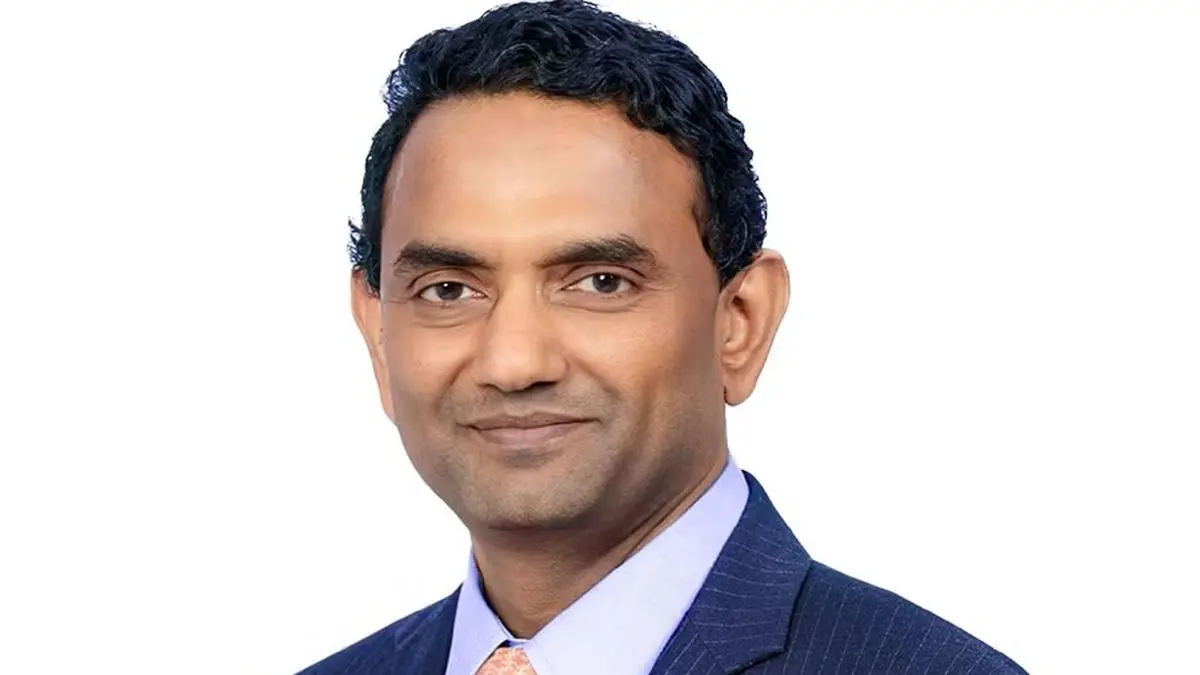
BENGALURU/MUMBAI: Tata Consultancy Services (TCS), India’s largest IT services exporter, is placing a massive, high-stakes bet on Artificial Intelligence (AI). In an exclusive interview with businessline, TCS Chief Executive Officer and Managing Director K Krithivasan doubled down on the company’s aggressive growth strategy, asserting that the technology giant’s resilient operating margins provide a dependable financial cushion to absorb any short-term capital expenditure shocks resulting from heavy tech investments.
While market analysts and Wall Street-equivalent brokerages have expressed minor reservations over lower-than-expected margin expansions, the leadership at TCS remains unwavering. Krithivasan emphasized that short-term financial headwinds are a necessary and calculated trade-off to secure long-term market dominance in the rapidly evolving global technology landscape.
1. Main Facts: The AI-Driven Transformation at TCS
The core of the narrative centers on a delicate corporate balancing act: scaling up next-generation AI capabilities while defending bottom-line profitability.
- Surging AI Revenues: AI-related initiatives have firmly taken root within the company’s business models, scaling rapidly to account for roughly 10 percent of TCS’s total revenue. Crucially, leadership notes that this segment is growing at a pace significantly faster than traditional IT services.
- Stable Margin Resilience: Despite heavy expenditures, TCS has maintained a stable operating margin of 24 percent. This has been partially supported and offset in recent quarters by favorable currency movements and operational efficiencies.
- Targeted Capital Deployment: The investments are not haphazard; they are strategically channeled into AI talent acquisition, specialized workforce development, corporate partnerships, mergers and acquisitions (M&A), maintaining higher workforce benches, and utilizing subcontractors to meet specialized client demands.
- The Leadership Stance: CEO K Krithivasan maintains that sacrificing fractional short-term margin growth is vital to building the foundational capabilities required to capture future market share.
2. Chronology: The Evolution of TCS’s AI Strategy
To understand where TCS stands today, it is essential to trace how the IT bellwether approached the generative and analytical AI boom over recent reporting cycles:
- Late 2023 – Early 2024 (The Awakening): As generative AI tools captured global enterprise interest, TCS initiated internal capability-building programs, training tens of thousands of employees on foundational AI and machine learning concepts. The focus was primarily on exploratory proofs of concept (PoCs) for clients.
- Mid 2024 to 2025 (Operationalization): TCS formally integrated AI into its service lines, moving past the hype cycle into commercial deployments. During this period, the company established dedicated AI/ML practices and partnered with major hyperscalers and technology providers. AI revenue began tracking visibly on the balance sheets, transitioning from a mere buzzword to a distinct revenue stream.
- Late 2025 – Early 2026 (Scaling and Structural Investments): Recognizing that traditional IT growth was beginning to plateau, TCS accelerated its strategic investments. The company expanded its focus toward niche talent acquisition and targeted M&A activities to plug capability gaps.
- Current Period (October 2026): In the latest financial disclosures and leadership commentary, TCS confirms that AI has officially crossed the 10 percent revenue threshold. Management publicly addresses Wall Street concerns regarding margin pressures, defending their aggressive, long-term capital allocation strategy.
3. Supporting Data and Financial Insights: What the Analysts Say
While TCS leadership radiates confidence, the financial markets and institutional research firms are analyzing the data through a more cautious lens. The tension between growth spending and margin expectations has sparked active debate among top-tier brokerages.

Nuvama Research Perspective
Nuvama Research highlighted in a recent note that while near-term margins are undeniably facing pressure, the underlying strategy of investing heavily for future growth is fundamentally sound. According to Nuvama, factors such as operating leverage and currency gains successfully offset some of the heavier cost burdens during the reviewed quarter.
“While near-term margins face pressure, we view investments for growth as the right strategy,” noted Nuvama Research, explicitly flagging forthcoming margin headwinds as the cost of securing future leadership in the AI space.
Anand Rathi Financial Services Perspective
Other brokerages have pointed out that while AI revenues carry materially higher margins in the mature phases of a project, the upfront costs are substantial. Anand Rathi shared a nuanced view in its institutional note:
“The associated costs will weigh before revenue conversion, with MHP expected to add approximately 50bps of margin dilution depending on closure timing.”
Street expectations had initially anticipated a more aggressive upward tick in TCS’s operating margins. However, because management has intentionally chosen to deploy capital into building a robust AI ecosystem—rather than artificially inflating short-term margins—the financial results reflect a deliberate prioritization of scale over immediate cost-cutting.

4. Official Responses and Leadership Commentary
During his conversation with businessline, K Krithivasan addressed the underlying economics of the firm’s technology pivot with characteristic clarity. He dismissed fears that margin performance was slipping out of control, pointing to the structural strength of TCS’s operating model.
"We believe the margin gives the cushion to aggressively grow and invest," Krithivasan stated. "And there will always be short-term impact because we have had to invest in terms of AI capability. But we stay close to our projected margin levels."
The CEO’s remarks underscore a broader philosophical shift within the Indian IT sector. Companies can no longer rely exclusively on traditional application development and infrastructure maintenance to drive double-digit growth. With clients aggressively demanding automation, predictive analytics, and generative AI solutions, service providers must frontload investments in talent and infrastructure or risk obsolescence.
TCS COO Aarthi Subramanian has similarly reinforced this view in parallel company communications, emphasizing that AI is acting as a powerful organic growth driver rather than a force cannibalizing existing revenue streams. Instead of replacing legacy services with cheaper, automated alternatives, TCS is leveraging AI to deliver higher-value, high-margin transformation projects for global enterprises.
5. Strategic Implications for the IT Sector
The path chosen by TCS has profound implications not just for the company itself, but for the broader global IT services landscape:
Redefining the "Margin Floor"
For decades, Indian IT giants have proudly guarded operating margins within strict bands (historically 25% to 28%). By indicating comfort with transient margin compression to fund the AI transition, TCS is effectively redefining what healthy capital allocation looks like in a post-digital era. Competitors like Infosys, Wipro, and HCLTech are watching closely; many are expected to adopt similar capital-intensive postures to avoid falling behind in the AI race.
The Talent and M&A Dynamics
To maintain a competitive edge, TCS is investing heavily in niche talent and subcontractors. This drives up labor and operational costs in the short run. However, companies that successfully lock in specialized AI engineering talent today will hold an insurmountable advantage tomorrow when enterprise clients launch enterprise-wide generative AI deployments.
Client Perception and Value Realization
Enterprise clients are increasingly moving past the experimentation phase of AI. They demand implementation partners who possess deep domain expertise, proprietary frameworks, and robust security protocols. By committing financial resources to build these capabilities, TCS is signaling to the market that it is positioning itself as a high-end strategic advisor rather than merely a volume-driven IT workforce provider.
Conclusion
As TCS navigates the transition from traditional outsourcing to an AI-first paradigm, CEO K Krithivasan’s message is unequivocal: short-term margin fluctuations are a minor price to pay for securing generational market leadership. Backed by a sturdy 24 percent margin cushion and a rapidly expanding AI revenue portfolio crossing the 10 percent mark, TCS is betting that its disciplined aggression will yield rich dividends, cementing its status as a titan of the global technology services industry for decades to come.



