San Francisco / Cupertino — The escalating corporate cold war between tech behemoth Apple and artificial intelligence pioneer OpenAI has taken a dramatic, litigious turn. In a explosive new court filing submitted as part of an ongoing trade secrets lawsuit, OpenAI has accused a former employee of exfiltrating more than a hundred highly sensitive, confidential files regarding an unreleased proprietary hardware device. The employee allegedly forwarded these documents to personal accounts on his final day at the company before returning to Apple.
The development represents a massive escalation in a legal battle that has increasingly blurred the lines between software development and consumer hardware ambitions. As both companies race to define the next generation of ambient computing and artificial intelligence integration, the stakes for protecting intellectual property have never been higher.
Main Facts of the Allegations
At the center of OpenAI’s recent legal motion is an intricate web of employee migration, forensic data recovery, and alleged industrial espionage. According to OpenAI’s filings, the individual in question is an engineer who originally worked at Apple, spent six months employed by OpenAI, and subsequently returned to Apple’s ranks.
OpenAI’s internal forensic investigation revealed that on June 2, 2026—which happened to be the engineer’s final day at the startup—the individual allegedly transferred over a hundred confidential files to personal storage accounts. The nature of the compromised data goes far beyond standard source code or routine business documents. The filing outlines:
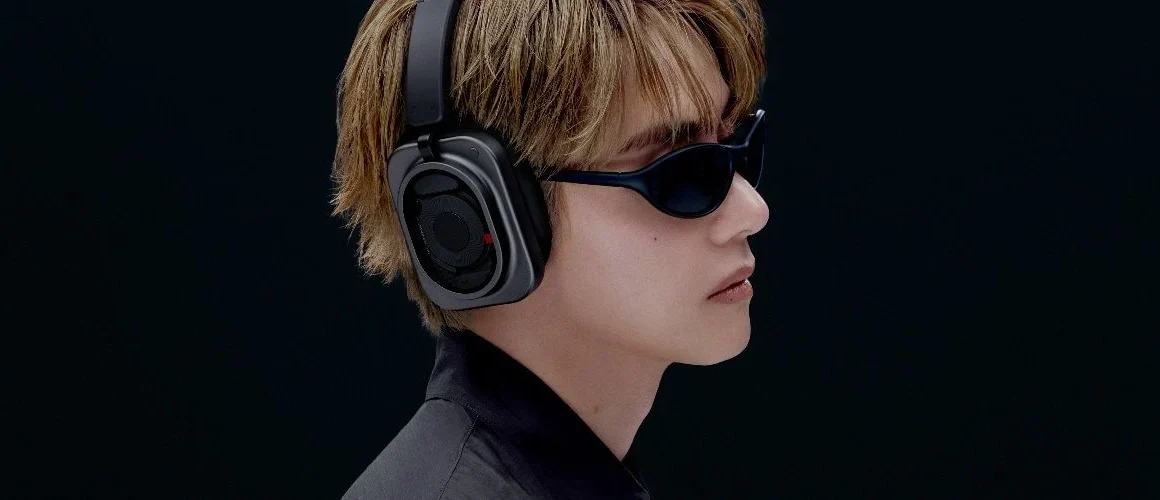
- Detailed Hardware Imagery: High-resolution design concepts and photographic renders of at least one unreleased, under-development OpenAI hardware device.
- Engineering & Manufacturing Specs: Deeply technical blueprints, hardware architecture layouts, and production data.
- Supply Chain Data: Vendor identities, manufacturing partner profiles, and project timelines.
- Material Science Specifications: Proprietary standards for cosmetic finishes, as well as complex engineering reports detailing the coating and environmental sealing of hardware components.
OpenAI further claims that this wasn’t merely a passive data hoarding exercise. According to the filing, the employee leveraged this insider knowledge to deliver a specialized presentation directly to Apple’s senior leadership—including Apple’s vice president of operations in Asia—outlining OpenAI’s strategic hardware roadmap. OpenAI contends that Apple is now actively using this purloined intelligence to fast-track its own competing AI-enabled hardware products.
Chronology of the Dispute
To understand how two of the tech industry’s most influential players arrived at a courtroom showdown, it is necessary to examine the timeline of events leading up to this latest revelation:
- Pre-2026: A steady pipeline of engineering talent flows back and forth between major Silicon Valley AI labs and consumer electronics giants like Apple, as both sectors vie for specialized hardware and software talent.
- June 2, 2026: The engineer completes a brief, six-month stint at OpenAI. On this final day of employment, the employee allegedly exfiltrates over a hundred confidential files concerning OpenAI’s secret hardware initiatives to personal accounts. Shortly thereafter, the engineer returns to Apple.
- July 2026: Apple initiates the legal offensive, filing a trade secret lawsuit against OpenAI that accuses former Apple employees of stealing proprietary secrets to give OpenAI an unfair market advantage.
- August 2026: Apple doubles down in court, releasing what it terms "shocking evidence" derived from early forensic analyses of a MacBook used by another former engineer who had previously jumped ship to OpenAI.
- October 2026: Tables turn dramatically. Powered by an ongoing and expanding internal forensic audit, OpenAI counters with its own explosive filing, detailing the June 2 data breach and accusing Apple of leveraging stolen hardware blueprints for its upcoming product pipeline.
Supporting Data and Forensic Evidence
The friction between OpenAI and Apple is rooted in the hard realities of modern digital forensics. In corporate litigation involving trade secrets, electronic discovery (e-discovery) and forensic artifact recovery serve as the bedrock of legal arguments.
OpenAI’s legal team emphasized that their discoveries were the result of a rigorous, ongoing forensic investigation launched in response to Apple’s initial summer lawsuit. When corporate networks are monitored for anomalous data transfers, endpoint detection and response (EDR) tools frequently flag abnormal outbound traffic, compressed archive creation (.zip or .tar files), and unauthorized uploads to cloud storage providers (such as Google Drive, Dropbox, or personal iCloud accounts) occurring immediately prior to employee departures.
While OpenAI has not yet publicly published the full algorithmic breakdown of its forensic logs, the specificity of the files described—ranging from mechanical engineering tolerances to microscopic coating reports—suggests that the data points to targeted extraction rather than accidental file syncing.
Similarly, Apple’s August forensic disclosures relied heavily on physical and digital artifacts extracted from employee laptops, attempting to prove a systemic effort by OpenAI to poach proprietary operational strategies. Both companies are now engaging in a tit-for-tat legal battle where the integrity of corporate data governance is being weaponized in open court.
Official Responses and Corporate Posturing
Faced with severe allegations of receiving stolen industrial secrets, Apple has vehemently denied any wrongdoing. In an official statement provided to Reuters, an Apple spokesperson dismissed the claims, asserting that the company has found zero evidence to corroborate OpenAI’s assertions.
"Apple has rigorous compliance policies and procedures in place to ensure that all new hires do not bring or use confidential information from previous employers."
Apple maintains that its internal hiring protocols feature strict firewalls designed to scrub incoming talent of any proprietary material belonging to competitors. The company insists that its ongoing push into AI-integrated hardware—rumored to include smart home displays, advanced wearables, and ambient computing devices—is entirely the result of its own internal research, development, and decades-long hardware expertise.
Conversely, OpenAI’s legal representation has expressed deep dissatisfaction with Apple’s internal audit. In its filing, OpenAI noted that it formally reached out to Apple to request formal assurances that the stolen intellectual property was neither in Apple’s possession nor utilized in product development. According to OpenAI, Apple has failed to provide those requested assurances, leaving the startup convinced that its proprietary trade secrets are actively circulating within Cupertino’s engineering divisions to shape future consumer products.

Broader Industry Implications
The legal feud between Apple and OpenAI transcends a standard corporate dispute; it serves as a watershed moment for the intersection of artificial intelligence and consumer hardware.
1. The Blurring Lines of AI and Hardware
For years, OpenAI was primarily known as a software and frontier model research lab, developing large language models like GPT-4 and exploring autonomous agents. However, the industry has rapidly shifted toward edge computing and ambient hardware. To truly realize the potential of generative AI, companies realize they must tightly integrate software with custom silicon and proprietary hardware form factors. OpenAI’s pursuit of native hardware devices places it on a direct collision course with Apple, the undisputed master of global hardware supply chains and consumer electronics design.
2. The Talent War and Non-Compete Complexities
Silicon Valley has long thrived on the fluid movement of top-tier engineering talent. However, when engineers move between competing giants—especially from hardware-centric ecosystems like Apple to software-first AI labs, and back again—the risk of intellectual property contamination sky-rockets. This high-profile lawsuit will likely prompt tech companies to tighten their exit protocols, enhance Data Loss Prevention (DLP) systems, and subject returning employees to unprecedented levels of post-employment compliance scrutiny.
3. Regulatory and Antitrust Scrutiny
As the case unfolds in federal court, it draws intense scrutiny from industry watchers and potentially regulatory bodies. The aggressive posture adopted by both firms signals that the race for AI supremacy will not be fought solely on the basis of model benchmarks or consumer pricing, but through aggressive legal maneuvers, patent thickets, and fierce protection of trade secrets.
As the litigation progresses, all eyes will remain on the presiding judge to see whether court-mandated forensic audits of Apple’s internal servers will be ordered. If OpenAI can successfully prove that stolen manufacturing blueprints directly influenced Apple’s upcoming product lineup, the ramifications for Cupertino could extend far beyond financial damages, fundamentally altering how tech giants onboard and vet engineering talent in the AI era.