







CUPERTINO, CALIFORNIA — In a quiet yet seismic shift for the consumer electronics landscape, Apple Inc. has officially broken years of industry speculation by releasing its latest developer briefing, highlighting a newly engineered foldable hardware architecture. Published on October 6, 2026, the updated developer portal documentation showcases what many analysts are already calling the most significant shift in mobile form factors since the inception of the original iPhone.
Moving away from the strictly rigid glass-and-aluminum rectangles that have dominated the market for nearly two decades, Apple’s newly detailed hardware paradigm introduces a flexible-screen device capable of seamlessly transitioning across multiple distinct postures. While the company has historically remained tight-lipped regarding its intentions to enter the foldable device market—frequently ceding the space to competitors like Samsung, Google, and Motorola—this recent documentation leaves little doubt that Cupertino is preparing to introduce a revolutionary entrant to the ecosystem.
Main Facts: A Paradigm Shift in iOS and iPadOS Form Factors
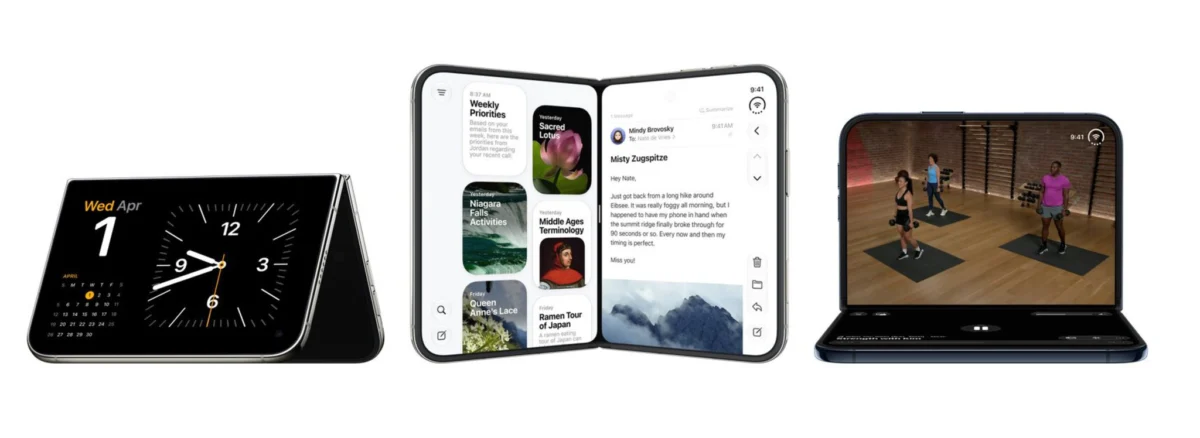
The centerpiece of the October 6, 2026 developer update is a comprehensive structural overview of a foldable smartphone that operates across three distinct functional postures: Tent Mode, Book Mode, and Clamshell Mode.
According to the technical assets provided by Apple, the device is designed to dynamically reconfigure its software interface based on its physical angle and orientation, bridging the gap between pocket-sized portability and expansive tablet-grade productivity.
- Tent Mode: In this configuration, the device rests on its folded edges in an inverted "V" shape, acting as an ambient computing hub. The exposed outer portion of the flexible display can serve as a persistent bedside or desktop display, showcasing rich widgets such as live calendars, global clocks, weather updates, and interactive notifications.
- Book Mode: Unfolded fully, the device transitions into a compact tablet format. Official interface guidelines demonstrate a sophisticated split-screen paradigm, pairing applications like Notes and Messages side-by-side. This mode capitalizes on the central crease-management technology, optimizing multi-window workflows that previously required a standard iPad.
- Clamshell Mode: When folded vertically, the device shrinks into a highly compact, pocket-friendly square. The preview imagery highlights fitness tracking integration, displaying a continuous workout video on the primary external screen while maintaining optimal ergonomics for one-handed operation.
The hardware utilizes a proprietary hinge mechanism designed to eliminate the prominent crease traditionally associated with foldable displays, paired with an ultra-thin glass (UTG) layer engineered to withstand hundreds of thousands of fold cycles without structural degradation.
Chronology: The Road to the 2026 Foldable Reveal
To understand the weight of Apple’s October 6 announcement, it is necessary to retrace the timeline of rumor, patent filings, and strategic restraint that has defined the company’s approach to foldable technology over the past decade.
2018–2020: The Patent Foundation
Long before commercial foldable phones gained mainstream traction, Apple’s research and development division began aggressively filing patents relating to flexible display panels, carbon-nanotube hinges, and self-healing screen coatings. During this period, competitors rushed early, often flawed, foldable devices to market. Apple, true to form, opted to observe, analyze consumer pain points, and wait for component durability to mature.
2021–2023: The iPad and Mac Rumor Mill
Industry insiders frequently suggested that Apple would bypass foldable phones entirely, opting instead to introduce a foldable iPad or MacBook hybrid. Supply chain analysts noted massive shipments of ultra-thin glass samples to Apple’s Cupertino headquarters, though executive leadership continuously declined to comment on future product roadmaps, focusing instead on perfecting silicon performance through the M-series and A-series architectures.
2024–2025: Software Foundations in iOS 18 and 19
Though the physical hardware remained hidden behind closed doors, software engineers began laying the groundwork for flexible displays within iOS and iPadOS. Features like advanced window management, dynamic rotation physics, and adaptive UI scaling introduced in iOS 18 and refined in iOS 19 provided developers with the necessary tools to build fluid, resizable applications—unbeknownst to the public at the time, these were foundational preparations for a foldable ecosystem.
October 6, 2026: The Developer Portal Milestone
The release of the October 6 developer guidelines marks the first official confirmation of Apple’s foldable initiative. By distributing design specifications, layout guidelines, and orientation states to the developer community months ahead of an anticipated commercial launch, Apple is ensuring that a robust ecosystem of optimized apps will be ready on day one.
Supporting Data: Technical Specifications and Market Context
The move toward a foldable form factor comes at a crucial juncture for the global smartphone market. Industry data highlights a plateau in traditional slab-smartphone upgrades, with consumers holding onto devices for longer periods. Foldable devices, however, represent a high-growth, high-margin sector that continues to attract affluent early adopters.
Market Projections and Hardware Metrics
- Market Share Shift: According to recent market research, foldable smartphones are projected to account for nearly 20% of the premium smartphone market ($800 and above) by the end of 2027. Apple’s entry is expected to accelerate this adoption curve dramatically.
- Durability Standards: Apple’s internal testing data, referenced in the developer portal, targets a minimum threshold of 300,000 fold cycles—equivalent to roughly 10 to 15 years of heavy, everyday use.
- Display Real Estate: When fully opened in Book Mode, the screen diagonal is rumored to measure approximately 7.8 inches, offering a viewing area comparable to a compact iPad mini while retaining the pocketability of a standard iPhone when closed.
- Thermal and Battery Distribution: To maintain a thin profile across both halves of the device, Apple has engineered a dual-cell battery architecture, distributing power evenly while utilizing a graphene-based thermal dissipation layer to manage heat during intensive tasks.
Official Responses and Industry Reactions
The tech sector has erupted with analysis, praise, and cautious anticipation following the publication of the October 6 developer update. While Apple executives have maintained their traditional posture of silence regarding unannounced commercial products, statements from key industry stakeholders and developer communities provide a clear picture of the prevailing sentiment.
The Developer Community
Developers have widely welcomed the transparency. In past hardware transitions—such as the introduction of Apple Silicon or the original iPad—late access to design guidelines often resulted in rushed application updates. By releasing foldable layout parameters ahead of time, Apple is signaling a collaborative approach to UI/UX adaptation.
“Having access to these postures—Tent, Book, and Clamshell—allows us to rethink how our productivity tools behave,” said Sarah Jenkins, lead UI architect at a major enterprise software firm. “This isn’t just about blowing up a phone screen; it’s about context-aware computing.”
Competitor Landscape
Rival manufacturers, who have spent the last five years iterating through multiple generations of foldable phones, have acknowledged the move as validation of the form factor’s long-term viability. Samsung representatives noted in a brief statement that “competition drives innovation, and the mainstream validation of flexible displays benefits the entire mobile ecosystem.” However, industry analysts suggest that competitors may face renewed pressure as Apple brings its legendary supply chain efficiency, brand loyalty, and integrated software ecosystem to the foldable arena.
Implications: What This Means for Consumers and the Future of Computing
The transition signaled by Apple’s October 6 developer update extends far beyond a single new device category. It represents a fundamental re-imagining of how humans interact with pocket-sized technology, carrying profound implications for software design, hardware manufacturing, and the broader tech economy.
1. The Death of the Rigid Form Factor Monopoly
For nearly two decades, the "slab" has reigned supreme. Every smartphone, regardless of manufacturer, has adhered to a remarkably similar physical template. By normalizing the foldable device, Apple is validating a future where our primary computing devices can physically transform to suit our immediate context—morphing from a private communication tool into an immersive media viewer or a collaborative workstation within seconds.
2. A New Era for iOS and iPadOS Convergence
For years, critics have debated the boundary lines between iOS (designed for touch-first iPhones) and iPadOS (geared toward multitasking tablets). The foldable form factor acts as a physical bridge between these two operating systems. Expect future iterations of Apple’s software to feature increasingly fluid, boundary-less transitions where an app running on an external screen instantly expands, restructures, and reorganizes its interface the moment the device is unfolded.
3. Supply Chain and Manufacturing Evolution
Apple’s entrance into the foldable market will trigger massive capital investment across the global supply chain. Demand for ultra-thin glass, advanced polymer layers, custom hinges, and specialized OLED panels will skyrocket. Furthermore, Apple’s stringent quality control standards will likely push component manufacturers to solve lingering industry challenges, such as crease visibility and long-term mechanical wear.
4. Economic and Cultural Impact
As Apple prepares to commercialize these designs, the cultural cachet of foldable devices will shift from a niche enthusiast novelty to an undisputed mainstream standard. Consumers can expect a ripple effect across media consumption, mobile gaming, and remote work applications, as developers race to build immersive experiences tailored specifically to flexible canvases.
Conclusion
The October 6, 2026 developer update is more than a routine documentation refresh; it is a clear window into the future of Apple hardware. By laying the technical groundwork for Tent, Book, and Clamshell postures, Apple has signaled that the era of the rigid smartphone is drawing to a close. As developers begin optimizing their applications for this new flexible frontier, the tech world waits with bated breath for the official hardware unveiling—an event that promises to redefine personal computing for the next decade.