







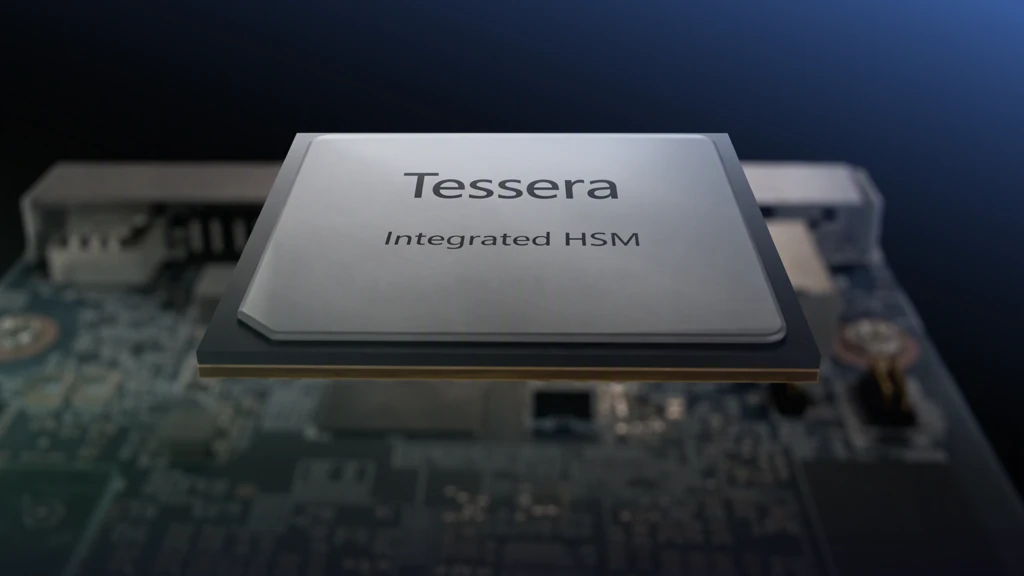
At the 2026 Open Compute Project (OCP) Global Summit, Microsoft unveiled Project Tessera, a transformative initiative aimed at standardizing and open-sourcing the architecture of Hardware Security Modules (HSMs). By evolving the Azure Integrated HSM into a collaborative, community-driven project alongside industry heavyweights like Marvell®, Oracle, and the Open Compute Project, Microsoft is signaling a paradigm shift: the era of proprietary, "black-box" security hardware is making way for a transparent, industry-wide standard.
The Genesis of Project Tessera: Main Facts
The core philosophy behind Project Tessera is the democratization of high-assurance hardware security. Historically, HSMs—the cryptographic anchors of digital trust—have been siloed, proprietary, and difficult to integrate into modern, cloud-native workflows.
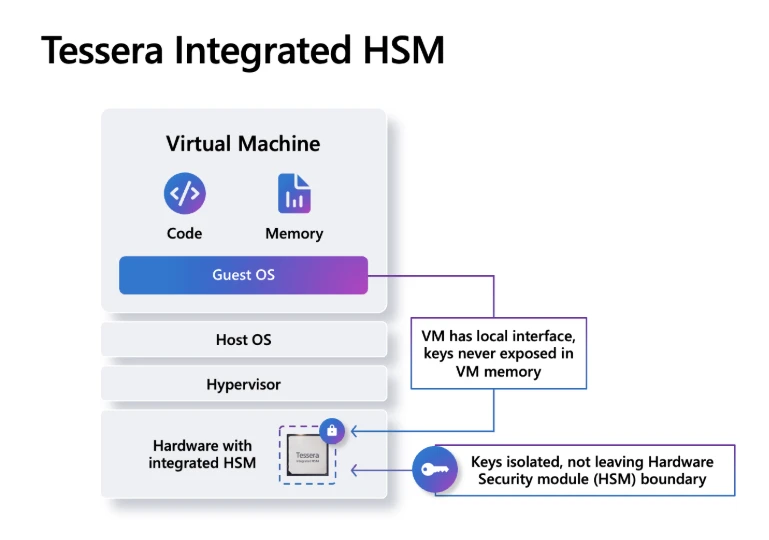
Project Tessera effectively "unpacks" the Azure Integrated HSM, providing the community with full access to specifications, protocols, drivers, software, and firmware. By making these components open source, Microsoft is not merely sharing code; it is fostering an ecosystem where hardware security can be audited, verified, and enhanced by a global community.
Key objectives of the initiative include:
- Total Transparency: Opening the entire stack, from silicon-level logic to software drivers.
- Quantum Resiliency: Ensuring that all cryptographic protocols are built with post-quantum standards in mind.
- Operational Simplicity: Reducing the complexity of key management by moving cryptographic operations closer to the compute workload.
- Industry Interoperability: Enabling heterogeneous environments where different HSM brands can communicate and share security domains seamlessly.
A Chronological Evolution of Trust
The journey to Project Tessera did not happen overnight; it is the culmination of years of internal development and external advocacy for open-source hardware.

The Foundation: Azure Integrated HSM
The path began with the deployment of the Azure Integrated HSM. Microsoft recognized that as cloud workloads grew more complex, the latency associated with centralized, network-attached HSMs became a bottleneck. Furthermore, the practice of caching keys in software—a common "workaround" to improve latency—created significant security gaps. The Azure Integrated HSM was designed to perform cryptographic operations directly at the workload level, keeping keys within a secure hardware boundary.
The Catalyst: The Caliptra Model
Microsoft’s work on Caliptra—a fully open-source silicon root-of-trust—served as the proof-of-concept for the current Tessera strategy. By seeing the widespread adoption of Caliptra across the hardware ecosystem, Microsoft confirmed that industry leaders are hungry for standardized, transparent security components. Project Tessera effectively applies the "Caliptra model" to the more complex realm of HSMs.
The Milestone: OCP Global Summit 2026
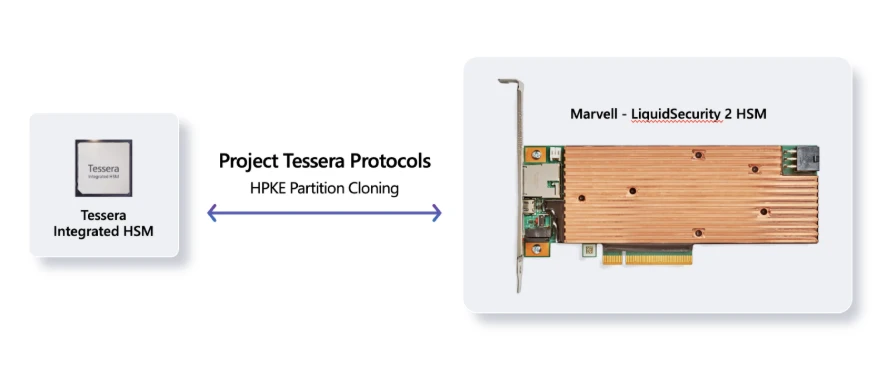
At this year’s summit, the transition was formalized. Microsoft, in partnership with Marvell, demonstrated the real-world utility of the Tessera protocols, showing how a Tessera-based HSM could perform partition cloning with a Marvell LiquidSecurity® 2 HSM. This demonstration marked the first time that two distinct, heterogeneous hardware platforms successfully operated within a unified, resilient security domain.
Eliminating Key Management Anti-Patterns
In the current landscape, many organizations struggle with "key management anti-patterns"—suboptimal practices born out of the necessity to balance performance with security. When centralized HSM infrastructure is physically removed from the compute resources, the network latency often forces engineers to make compromises.
The Pitfalls of Proprietary Silos
Common anti-patterns addressed by Project Tessera include:
- Key Caching: Storing keys in memory to speed up transactions, which exposes them to memory-scraping attacks.
- Fragmented Governance: Using different security domains for different parts of an application, leading to inconsistent audit trails.
- Proprietary Protocols: Relying on vendor-locked APIs that prevent interoperability, making it impossible to migrate security strategies as the business scales.
Project Tessera resolves these by bringing the HSM into the compute fabric. By providing an open-source, standardized implementation, it allows developers to maintain FIPS 140-3 Level 3 protection without sacrificing the performance of their cloud-native applications.
Supporting Data: Security and Performance Metrics
The shift to an integrated model is supported by clear performance advantages. In traditional setups, the network overhead for a simple signing operation can range from 10 to 50 milliseconds. By moving the HSM to the local bus or a workload-attached configuration, latency is reduced to the microsecond level.
Furthermore, the integration of post-quantum cryptographic (PQC) algorithms ensures that the "security shelf-life" of data remains high. As quantum computing threats loom, the industry must transition to algorithms that are resistant to Shor’s algorithm and other future-proofing threats. Project Tessera’s firmware is designed with "crypto-agility," allowing for the rapid deployment of new, quantum-resistant standards as they are ratified by NIST.
Official Perspectives and Industry Implications
The collaboration between Microsoft, Oracle, and Marvell underscores the urgency of this transition.
The Industry Response
"Collaborating with the OCP community allows us to address the most critical bottleneck in cloud security: the gap between hardware assurance and software agility," noted a lead representative from the Project Tessera working group. For organizations like Oracle, the ability to utilize an open, interoperable standard means that they can build secure database and cloud services that are not locked into a single hardware vendor’s roadmap.
The Role of Confidential Computing
Perhaps the most significant implication of Project Tessera is its extension into the realm of Confidential Computing. The project includes a minimal, unikernel-based firmware stack that can run within hardware-isolated environments (such as AMD SEV-SNP).
This is a game-changer. It means that even on systems without dedicated, physical integrated HSM hardware, organizations can achieve a high level of security by running the Tessera firmware within a confidential container. This "common firmware stack" ensures that whether a customer is using a high-end server with a physical HSM or a virtual machine in a confidential computing environment, the programming model, security policies, and cryptographic protocols remain identical.
Implications for the Future
The implications of Project Tessera are far-reaching for the cybersecurity ecosystem:
- Standardization of Hardware Security: By defining the protocols for HSM partition cloning and communication, Tessera creates a "lingua franca" for secure hardware. This will likely lead to a reduction in the "integration tax" that companies currently pay when trying to deploy multi-vendor security solutions.
- Increased Auditability: Because the firmware and specifications are open-source, security researchers and enterprise customers can perform deep-dive audits. This replaces the "trust us" model of proprietary firmware with a "verify for yourself" model.
- Acceleration of PQC Migration: The industry-wide adoption of the Tessera protocols will speed up the migration to post-quantum cryptography. By building these capabilities into the base layer of the HSM, the transition becomes a software update rather than a massive hardware replacement project.
- Democratizing High-Assurance Security: Small to mid-sized enterprises (SMEs) that previously could not afford the massive overhead of managing high-end, centralized HSMs can now leverage the Tessera open-source stack to secure their cloud workloads at a fraction of the cost and complexity.
Conclusion: The Path Forward
Project Tessera represents more than just a new piece of technology; it represents a commitment to a transparent and collaborative future. By inviting the Open Compute Project community to contribute to the silicon-level design, firmware, and protocols, Microsoft is ensuring that the standards of tomorrow are built by the collective expertise of the industry.
As the project evolves, the community expects to see additional silicon implementations and hardware designs hitting the market. For IT leaders and security architects, the message is clear: the era of proprietary, opaque hardware security is ending, and the era of open, interoperable, and quantum-ready hardware protection has begun.
For those looking to engage with the project, the Tessera Integrated HSM GitHub repository is now live, serving as the central hub for the initiative’s documentation, code, and community discussions. As the industry moves toward 2027 and beyond, Project Tessera will likely serve as the bedrock upon which the next generation of secure, cloud-native infrastructure is constructed.