






By Global Tech & Startup Journal
Published: November 2026
Main Facts: The Young Founder Navigating the Post-Exit Reality
In the hyper-accelerated world of modern digital entrepreneurship, few stories mirror the high-stakes gamble of early success quite like that of Maddox Schmidlkofer. At just 21 years old, Schmidlkofer has already experienced what many digital founders strive decades to achieve: an early, high-margin entrepreneurial win culminating in a lucrative six-figure business exit.
However, his journey offers a candid corrective to the romanticized narratives of continuous, compounding success frequently found in startup culture. Having built and sold an online gaming platform known as DuckMath for $120,000, Schmidlkofer immediately pivoted to a more complex consumer software venture: Tallow, a health and ingredient-scanning mobile application.
Despite generating revenue and acquiring an active user base, Tallow currently operates below the founder’s initial financial expectations, pulling in less than $2,000 per month against an August goal of $4,000. This performance discrepancy has forced Schmidlkofer to establish a strict operational deadline—October 31—serving as a critical crossroads to evaluate whether the app’s current trajectory warrants his continued time, capital, and emotional investment.
Chronology: From TikTok Inspiration to the App Store Crossroads
To understand Schmidlkofer’s current strategic dilemma, it is essential to trace the timeline of his experiments, breakthroughs, and pivots.
The Formative Experiments (Ages 16–17)
Schmidlkofer’s entry into software and content creation was catalyzed during his late teens. After observing a younger creator on TikTok construct an unblocked gaming website, Schmidlkofer realized he possessed the foundational coding skills—gleaned from an Advanced Placement (AP) computer science class—to replicate the feat.
Utilizing Google Sites for his initial prototype before transitioning to custom code, he quickly grasped the critical nexus between product development and audience acquisition. By posting short-form videos documenting his progress, he achieved his first viral traction. A watershed moment arrived when a single day of ad revenue yielded $240. This tangible validation prompted him to quit an existing internship and pursue online business full-time.
The Valley of Failed Projects
Rather than instantly scaling his initial success, Schmidlkofer embarked on a series of exploratory projects. Among them was Quackprep, an educational platform designed to help university students study via digitized, quiz-style previous exams. While Quackprep generated minor revenues, the friction associated with acquiring institutional content school-by-school limited its growth potential. Several other experimental projects yielded similar marginal results, reinforcing a vital entrepreneurial lesson: early momentum does not automatically transfer to distinct, unproven market sectors.
The DuckMath Breakthrough and Exit (2025)
Returning to his original unblocked gaming platform, DuckMath, Schmidlkofer concentrated intensely on distribution. By scaling his short-form video output across platforms, he successfully drove traffic that monetized through advertising at a rate of approximately $1,000 per day by the end of the summer.
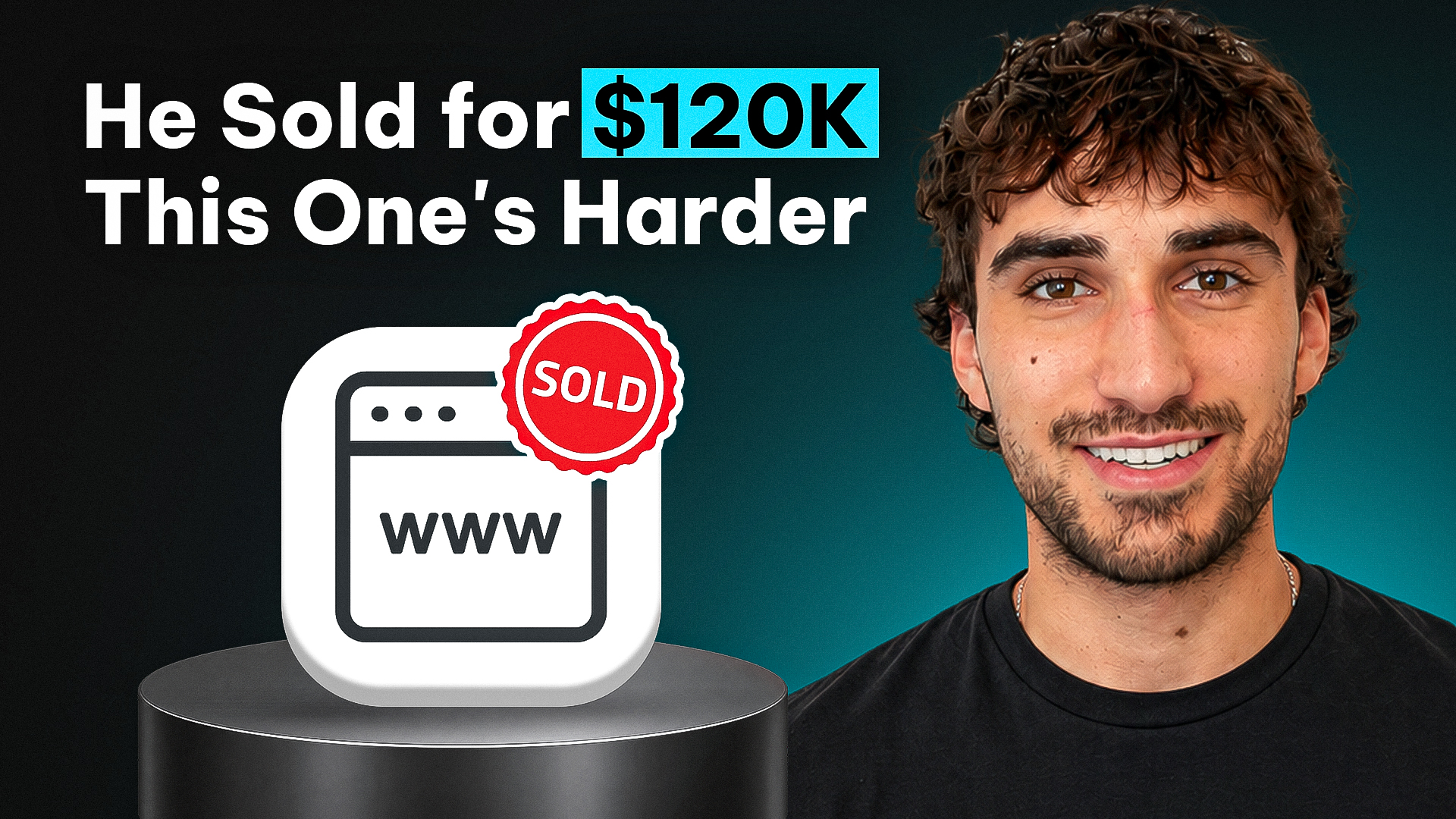
Recognizing that his personal interest in gaming had waned—and confronting structural hurdles inherent to content-based web properties, including variable platform policies and fluctuating ad yields—he listed the business for sale. By November 2025, he accepted a $120,000 acquisition offer. While the multiple was conservative relative to the daily revenue generated, the exit provided vital liquidity and independent validation.
The Launch of Tallow and Current Realities (Mid-2026)
Following a period of market analysis, Schmidlkofer launched Tallow on May 1, 2026. Designed as a consumer application that allows users to scan product ingredients and evaluate health metrics based on a distinct curatorial framework, Tallow entered a mature market dominated by entrenched players like Yuka. Despite achieving early traction, the app’s monthly revenue plateaued beneath his internal targets, prompting an ongoing reassessment of his go-to-market strategy.
Supporting Data & Economic Metrics
Schmidlkofer’s ventures provide a transparent window into the micro-economics of solo-founder operations in the digital economy. An analysis of his financial and operational metrics reveals both the advantages and vulnerabilities of lean startup methodologies:
- The DuckMath Exit Valuation: $120,000 (initially countered from a $100,000 offer), generated from a site peaking at roughly $1,000 per day in ad revenue during its strongest seasonal periods.
- Estimated Foregone Residuals: Schmidlkofer estimates that DuckMath could have passively yielded between $5,000 and $10,000 per month post-sale even with minimal maintenance, highlighting the hidden opportunity cost of early exits.
- Tallow Revenue Performance: Currently generating under $2,000 monthly, falling short of his August target of $4,000.
- Operational Overhead: Thanks to early-stage credits secured through innovation ecosystem events (such as Y Combinator-affiliated networks), Tallow’s baseline server and infrastructure costs remain negligible.
- Platform Fees: Operating under qualifying developer frameworks for Apple and Android app stores, Schmidlkofer benefits from a reduced 15% platform commission rate applicable to independent developers grossing under $1 million annually.
- Marketing Resource Allocation: Reflecting a fundamental shift in his operating philosophy, Schmidlkofer now dedicates approximately 80% of his daily working hours to marketing, user acquisition, and content distribution, rather than core product feature development.
Strategic Implications: The Dilemma of Partial Traction
The broader implications of Schmidlkofer’s narrative resonate deeply within the contemporary tech and creator economies. His situation dismantles the binary myth that startups either experience meteoric success or face immediate, undeniable failure. Instead, Tallow represents a challenging gray area: partial traction.
The Nuance of the October 31 Deadline
By establishing a strict revenue threshold ($4,000 monthly recurring revenue) by October 31, Schmidlkofer has gamified his operational runway. However, this deadline underscores a profound psychological hurdle for solo founders: the emotional switching costs associated with walking away from a growing, revenue-generating product simply because its velocity does not align with ambitious personal benchmarks.
When a project is entirely dead, the decision to pivot is straightforward. When a project generates thousands of dollars a month and maintains active, albeit slow, growth, the decision to pull the plug requires immense discipline.
The Marketing Burden in Consumer Apps
Schmidlkofer’s pivot toward spending 80% of his time on distribution validates a recurring industry truth: superior product quality alone is insufficient in saturated consumer markets. Competing against established incumbents with multi-million-user moats requires innovative, sometimes unorthodox, acquisition strategies.
His experimentation with high-curiosity short-form video topics—such as leveraging third-party investigative research (e.g., studies on commercial oil authenticity) to drive organic awareness—demonstrates how modern founders must act as media publishers first and software developers second.
The Influencer Partnership Paradox
Furthermore, Schmidlkofer’s analysis of competitor models reveals structural challenges regarding influencer-backed applications. Pairing an app with an established creator who commands proprietary audience trust offers an asymmetric distribution advantage.
However, structural barriers remain formidable: early-stage founders often lack the capital or leverage required to secure high-tier partners without surrendering disproportionate equity, which in turn can cap long-term enterprise value or create governance bottlenecks.
Conclusion
Maddox Schmidlkofer’s trajectory at age 21 encapsulates the realities of modern digital entrepreneurship. His early exit from DuckMath proved that methodical distribution strategies can yield significant financial rewards. Yet, his ongoing experiment with Tallow demonstrates that past success confers no immunity against the grind of user acquisition and market saturation.
Whether Tallow achieves its required velocity by the October 31 benchmark or becomes a stepping stone toward a future enterprise, Schmidlkofer’s journey offers a vital lesson for the startup ecosystem: knowing precisely when to aggressively scale, when to absorb lessons from partial traction, and when to gracefully walk away is perhaps the most critical skill an entrepreneur can master.