



Foldable smartphones have long existed in a state of productive tension. They are devices that bridge the gap between the utilitarian, pocketable flip phones of the early 2000s and the high-performance, multitasking powerhouses of the current decade. While Samsung’s Galaxy Z Fold series is primarily marketed as a professional productivity tool, a recent enthusiast-driven development has highlighted the device’s potential for nostalgic immersion.
A new, open-source application dubbed "Foldman" is currently making waves in the enthusiast community, effectively transforming the Galaxy Z Fold 8 into a modern-day Sony Walkman. By leveraging the unique form factor of Samsung’s latest foldable, the app creates a skeuomorphic interface that brings the tactile charm of cassette culture into the streaming era.
The Core Concept: Bridging Eras
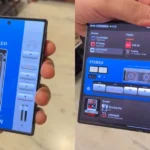
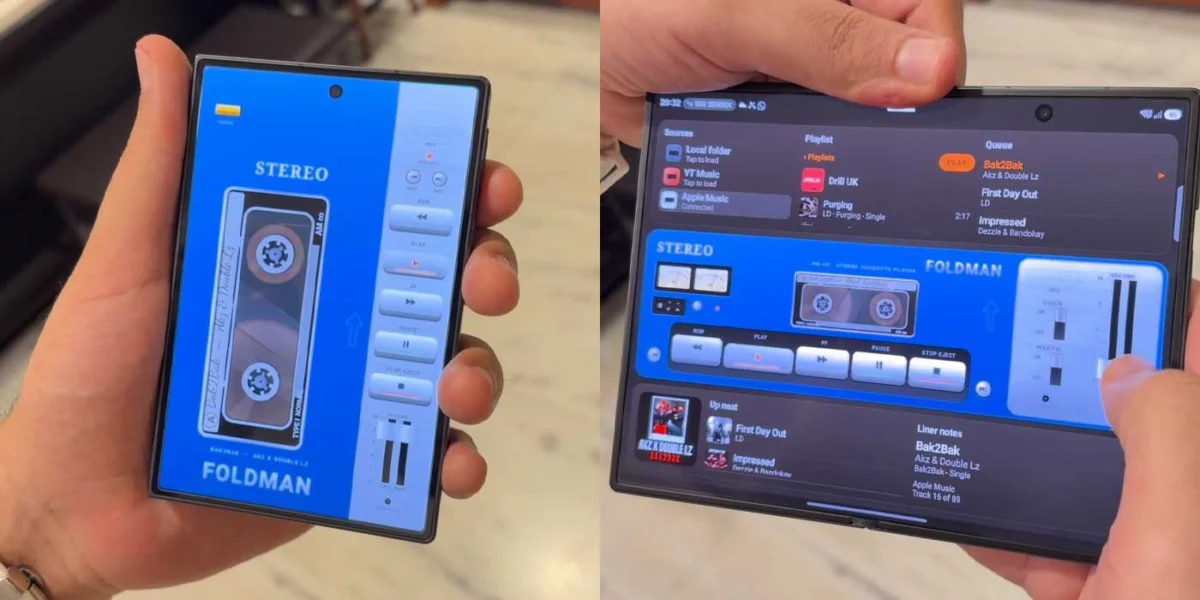
The Foldman project, which recently emerged on community forums, is a bespoke music player designed to mimic the aesthetic and functional experience of a 1980s portable cassette player. The brilliance of the app lies in its synergy with the Galaxy Z Fold 8’s hardware. The front cover display of the Fold 8 possesses a specific aspect ratio—tall and narrow—that mirrors the physical footprint of the iconic Sony Walkman.
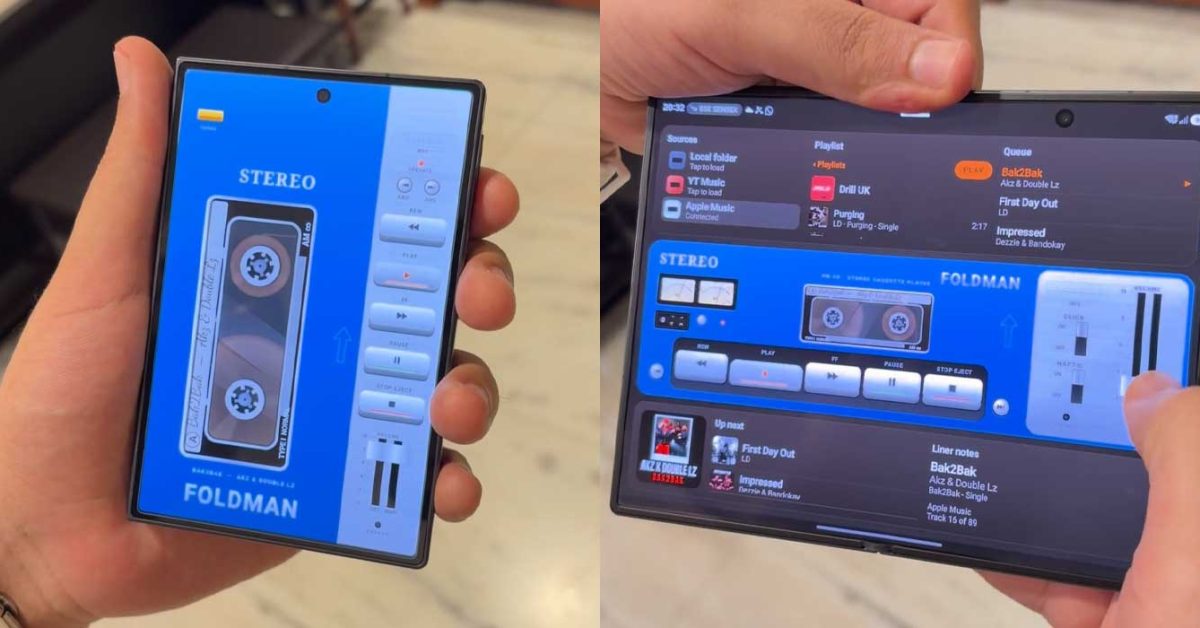
When the user holds the device in its folded state, the app presents a highly detailed, virtual tape deck. As music plays, the app renders a cassette tape with reels that spin in real-time. Unlike many digital players that rely on looping, generic animations, Foldman features a sophisticated tape counter and a mechanical reel simulation that actually transfers "tape" from one spool to the other, tracking the progress of the song with startling accuracy.
When the device is unfolded, the interface expands, transforming into a wider, stereo-system aesthetic that showcases the capabilities of the Z Fold’s internal display. It is a masterclass in interface design, blending high-definition OLED performance with the gritty, lo-fi aesthetic of magnetic tape.
A Chronology of the Foldman Development
The development of Foldman represents a classic case of community-led innovation. The journey of the app began as a niche project by a single developer on Reddit, who sought to leverage the Fold’s unique screen real estate for something more personal than a standard spreadsheet or video conferencing app.
- Initial Concept (Late September 2026): The developer identified that the "narrow" cover screen of the Galaxy Z Fold 8 was underutilized by music streaming services, which were largely designed for standard 20:9 smartphone displays.
- Alpha Release (Early October 2026): The first functional build was released to the Galaxy Fold subreddit. This version supported local storage files and provided the foundational "tape deck" visual skin.
- Expansion Phase (Mid-October 2026): Following positive feedback, the developer integrated support for YouTube Music and Apple Music, broadening the appeal beyond local audiophiles.
- Current Roadmap (Late October 2026): The developer is currently in the final stages of integrating Spotify’s API. Concurrently, efforts are underway to include support for self-hosted streaming services, such as Plex or Navidrome, allowing users to access their personal cloud-based libraries through the retro interface.
Technical Foundations and Feature Set
Beyond the visual flair, Foldman is a surprisingly robust player. At its heart, it functions as a bridge, pulling metadata and audio streams from established services and re-routing them through its proprietary, cassette-themed playback engine.
Key Features:
- Dynamic Visuals: The interface reacts to the physical state of the phone, shifting from a portable Walkman mode to a "component stereo" mode when the Z Fold is unfolded.
- Mechanical Accuracy: The tape reel movement is synchronized to the actual playback progress of the track, a detail that has drawn significant praise from early adopters for its attention to detail.
- Privacy-First Architecture: In an era where most apps are laden with telemetry and advertising, the developer has explicitly stated that Foldman is free, open-source, and devoid of trackers. This has built significant trust within the community.
- Platform Compatibility: Currently, the app integrates with YouTube Music and Apple Music, with Spotify support expected to roll out within days.
The Implications of Retro-Design in Modern Hardware
The success of Foldman points to a broader trend in mobile technology: the desire for "digital mindfulness." Modern smartphones are overwhelming, filled with notifications, AI assistants, and endless scrolling. A music player that mimics a dedicated, single-purpose device like a Walkman forces the user to slow down and focus on the listening experience.
Furthermore, the "wide-foldable" trend is fundamentally changing the way developers approach UI design. With the Galaxy Z Fold 8, Samsung has pushed for a wider front display that feels more like a traditional smartphone. This change in hardware ergonomics has inadvertently opened the door for apps that require a specific, non-standard shape to function properly. Foldman is effectively the first "killer app" that utilizes the Z Fold’s specific dimensions to provide a transformative user experience.
Official Responses and Risks
It is important to note that the Foldman project exists outside the sanctioned ecosystem of the Google Play Store. The developer has been transparent about the "early" nature of the build, acknowledging that there are "rough edges" in the user interface and potential bugs regarding audio buffering during streaming.
From a security standpoint, the tech industry maintains a standard warning: downloading APK files from third-party sources carries inherent risks. While the open-source nature of the code allows for community auditing, users are encouraged to exercise caution.
Samsung, for its part, has not commented on the app directly, though the company has historically embraced the "enthusiast" side of the Galaxy Fold community. By providing an open platform that allows for deep customization, Samsung allows these types of creative experiments to flourish, which arguably adds value to the Z Fold brand—a device that is increasingly becoming a playground for niche, creative software.

Future Prospects: Beyond the Walkman
Looking ahead, the developer has hinted at several features that could elevate Foldman from a novelty to a daily driver. The most requested feature is the addition of "tape degradation" effects, where the audio quality would subtly shift—perhaps adding a bit of analog hiss or "warble"—as the song plays, further deepening the illusion of an analog device.
Additionally, the integration of self-hosted streaming services is a major milestone. For users who maintain large libraries of FLAC files on private servers, Foldman represents a bridge between high-fidelity digital audio and the nostalgic aesthetic of the physical media era.
Conclusion: The Future is Analog
The Galaxy Z Fold 8 is, by all accounts, a futuristic device. It features cutting-edge processing, a state-of-the-art foldable display, and advanced AI integration. Yet, the popularity of the Foldman app proves that users are still seeking ways to connect with their technology on a more emotional, tactile level.
As smartphones become more standardized and "sterile," apps that lean into the history of consumer electronics will likely continue to thrive. Foldman is not just a music player; it is a reminder that even as we march toward a future of augmented reality and neural interfaces, there is still a profound joy in the simple, mechanical satisfaction of a tape reel spinning in the palm of our hands.
For the Galaxy Z Fold 8 owner, the device has just become more than a phone—it has become a time machine. Whether this project evolves into a mainstream app or remains a cherished community secret, it has already achieved something remarkable: it has made the digital world feel a little bit more human.