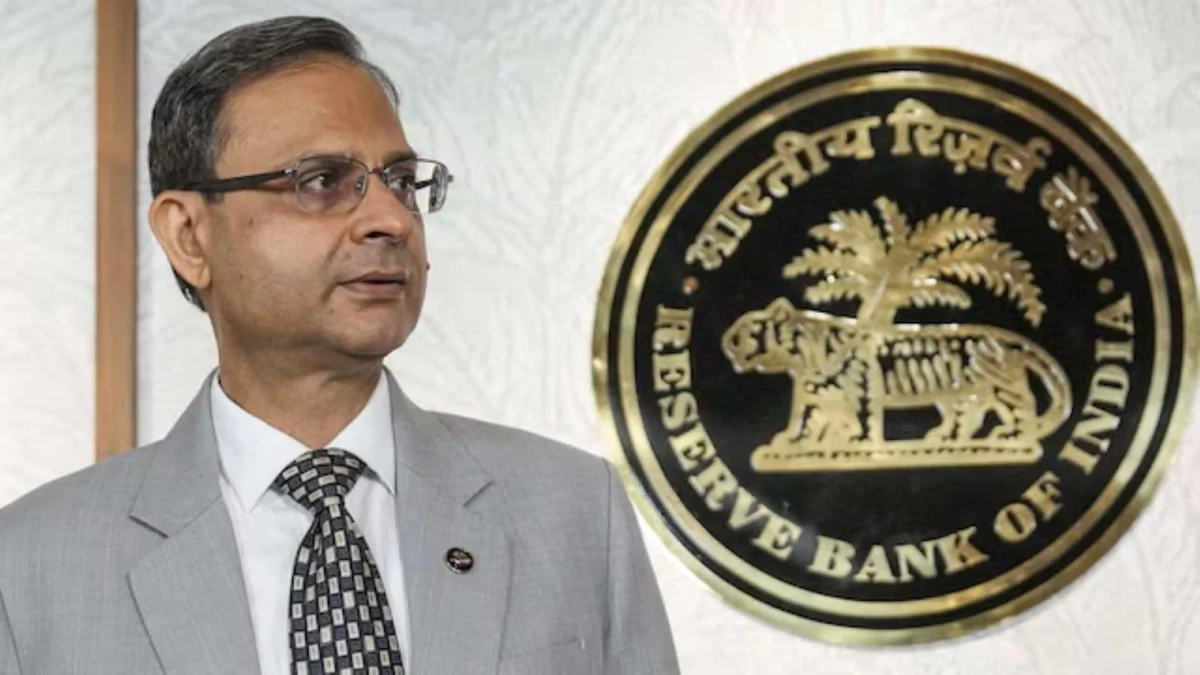
NEW DELHI — In a definitive statement that cuts through months of boardroom speculation and corporate maneuvering, Reserve Bank of India (RBI) Governor Sanjay Malhotra has reinforced that Tata Sons will be legally mandated to launch an initial public offering (IPO) and list on the country’s stock exchanges, provided it maintains its classification as an upper-layer Core Investment Company (CIC).
Speaking on Friday, October 23, at the prestigious NDTV World Summit 2026 in New Delhi, Malhotra laid out the strict regulatory parameters governing India’s financial architecture. While he steered clear of commenting directly on the intense internal debate and shareholder friction within the sprawling Tata group regarding its holding company’s proposed public float, his message to India’s corporate sector was unambiguous: regulatory compliance supersedes internal corporate structuring attempts unless they thoroughly alter the foundational nature of the entity.
The Governor’s remarks arrive at a critical juncture for the salt-to-software conglomerate, which has been locked in a high-stakes, multi-year strategic and legal chess match with financial regulators. The core of the dispute rests on whether Tata Sons can successfully evade the mandatory public listing timeline imposed on upper-layer Non-Banking Financial Companies (NBFCs), or if it must bow to the regulatory framework that views systemically important holding companies as potential systemic risks to India’s broader financial ecosystem.
Main Facts: The Regulatory Mandate and the Standpoint of the Central Bank
The fundamental regulatory showdown centers on a simple, immutable rule: systemically important upper-layer NBFCs must transition into publicly traded entities within three years of their formal classification.
Tata Sons was officially categorized as an upper-layer NBFC by the RBI in September 2022 under scale-based regulations designed to tighten oversight on large, systemically significant financial entities. Under these stringent norms, any company designated in the upper layer is legally required to tap the public markets and list its shares within a three-year window, bringing its governance, transparency, and financial health under direct public market scrutiny.
During his address at the World Summit, Governor Malhotra addressed hypothetical maneuvers by conglomerates attempting to bypass these stipulations through corporate restructuring. He stated unequivocally that as long as a holding company satisfies the central bank’s legal definition of an NBFC, qualifies as a CIC, and maintains direct or indirect access to public and institutional funds, the mandate stands.
"If it is in the upper layer, then it is required to list," Malhotra asserted during the session.
CICs are a specialized category of NBFCs whose primary business is acquiring shares and securities of group companies, acting as the ultimate umbrella for corporate empires. However, because these holding entities sit precisely at the apex of corporate pyramids—frequently borrowing substantial sums from banks and corporate bond markets while leveraging the balance sheets of underlying operating companies—the RBI views them as potential transmission channels for financial contagion.
Malhotra elaborated on the rationale behind the stringent oversight: "NBFCs and CICs, like for example, Tata Sons and others… are required to be registered with us because they sit on top of group companies. They can raise funds and use the balance sheets of their group companies to repay them. The funds of the public, whether it is through banks, corporate bonds, or other means, are at risk when these CICs do this kind of activity. It is for these reasons that these CICs… are required to be registered and regulated."
Chronology of Events: From Classification to Regulatory Stalemate
To fully understand the gravity of Governor Malhotra’s statements, it is vital to trace the timeline of events that has brought India’s most storied conglomerate on a collision course with its primary financial regulator:
- September 2022: The Reserve Bank of India classifies Tata Sons as an upper-layer NBFC under its Scale-Based Regulation (SBR) framework, automatically triggering the three-year countdown for a mandatory stock market listing.
- March 2024: In a proactive move to sidestep the listing requirement, Tata Sons formally applies to the RBI to surrender its CIC registration. To substantiate its case, the holding company embarks on an aggressive debt-repayment drive, clearing its books of external debt to shed its NBFC characteristics.
- August/September 2025: Following a detailed evaluation of its financial posture and statutory obligations, the RBI formally rejects Tata Sons’ application to surrender its CIC registration, effectively locking the company back into the upper-layer NBFC category and reactivating the mandatory listing timeline.
- September 28, 2025: Deepening shareholder divisions, Tata Trusts—which control approximately 66% of Tata Sons—put forward an alternative restructuring proposal. They suggest merging two key operating entities, Tata Electronics Systems Solutions and Tata Consulting Engineers, directly into Tata Sons. The trusts argue that this structural amalgamation would transform the company into an operating-cum-holding entity, stripping away its exclusive CIC/NBFC identity and nullifying the listing mandate.
- October 23, 2026: RBI Governor Sanjay Malhotra publicly clarifies at the NDTV World Summit that restructuring plans will not exempt an entity from listing requirements if it continues to meet the functional and structural criteria of an upper-layer CIC.
Supporting Data and Structural Realities: Why Tata Sons Is Caught in the Crosshairs
The regulatory tension is fueled by the sheer scale and economic footprint of Tata Sons. As the principal investment holding company for the Tata group, it holds equity stakes in multi-billion-dollar corporate giants spanning steel, automobiles, information technology, aviation, consumer goods, and green energy, including Tata Consultancy Services (TCS), Tata Motors, Tata Steel, and Titan.
The Shareholding Divide
The debate over whether to take Tata Sons public has exposed a profound philosophical rift between its primary institutional stakeholders:
- Tata Trusts (The Opposition): Holding roughly 66% of the equity in Tata Sons, the philanthropic trusts established by the Tata family have consistently opposed a public market debut. Chairman Noel Tata has internally and publicly warned that a public listing would fundamentally alter and potentially "destroy its character," diluting the unique philanthropic mission and long-term nation-building ethos that the trusts were designed to protect. To circumvent the exchange rules, the trusts have championed structural mergers that would dilute the financial investment company profile.
- The Shapoorji Pallonji Group (The Proponents): Owning an 18.37% stake in Tata Sons, the Shapoorji Pallonji (SP) family group has taken a diametrically opposed stance. For the cash-strapped SP group, monetizing its massive stake through a public listing represents a critical financial objective. SP Group Chairman Shapoorji Pallonji Mistry has publicly characterized the listing not merely as a commercial transaction, but as a "social and moral imperative" to unlock fair market value for minority shareholders.
Financial Mechanics and Systemic Exposure
From the RBI’s perspective, the absolute valuation and historical prestige of the Tata name are secondary to systemic financial stability. When a holding company possesses direct access to public capital markets, raises institutional debt, and interlocks its financial health with systemically important operating entities, it ceases to be a purely private family enterprise in the eyes of the regulator.
By rejecting Tata Sons’ application to surrender its registration in late 2025, the central bank signaled that financial engineering—such as paying down short-term debt or minor portfolio realignments—is insufficient to bypass rules designed to bring transparency to the upper echelons of India’s shadow banking and investment sector.
Official Responses and Strategic Implications
Governor Malhotra’s recent remarks are significant not only for what they confirm, but for what they deliberately leave unresolved. While the Governor made it abundantly clear that structural workarounds will face intense regulatory scrutiny, he refrained from commenting on whether the RBI would explicitly accept or reject the specific merger proposals floated by Tata Trusts in late September 2025.
The Regulatory Uncertainty
Legal and financial analysts note that the ball remains squarely in the boardrooms of Tata Sons. The company must decide whether to test the RBI’s resolve by formally submitting the Tata Electronics and Tata Consulting Engineers merger scheme for a "no-objection certificate," or prepare for the monumental logistical and financial undertaking of an initial public offering.
An IPO of Tata Sons would undoubtedly rank as the largest and most complex public offering in Indian corporate history. Given that the holding company’s net asset value runs into trillions of rupees—driven largely by its massive holding in crown jewel TCS—valuing and listing Tata Sons would create a financial titan on Dalal Street, fundamentally shifting market dynamics.
Broader Implications for India’s Conglomerates
Beyond the immediate fate of the Tata group, Governor Malhotra’s steadfast posture carries profound implications for India’s other multi-layered conglomerates. Over the past decade, the RBI has systematically tightened the regulatory noose around shadow banking, NBFCs, and CICs to insulate commercial banks and public retail investors from hidden corporate leverage.
By maintaining a hardline stance on Tata Sons, the central bank is establishing a formidable regulatory precedent:
- No Exemptions for Prestige: Corporate pedigree and historical legacy do not grant immunity from modern financial regulations.
- Substance Over Form: Regulatory classifications will be determined by an entity’s actual financial posture, balance-sheet dependencies, and systemic footprint, rather than technical restructuring exercises designed solely to evade oversight.
- Heightened Transparency: The era of opaque, closely held mega-holding companies dominating India’s financial landscape without public market accountability is drawing to a close.
Conclusion
As the countdown ticks forward, Tata Sons stands at an unprecedented crossroads. The tension between the philanthropic vision of Tata Trusts and the market-driven demands of minority shareholders like the Shapoorji Pallonji group has transformed into a high-stakes constitutional debate between corporate autonomy and central bank regulation.
Governor Sanjay Malhotra’s remarks at the NDTV World Summit 2026 have removed any lingering ambiguity. For Tata Sons, the path forward is stark: either satisfy the stringent transformation criteria required to completely shed its CIC identity, or prepare to ring the opening bell on the stock exchanges. As India’s financial watchdog tightens its grip on systemic risk, the ultimate decision will reshape not only the future of the Tata empire, but the regulatory governance of corporate holding structures across the nation.