





Introduction and Main Facts
In a significant strategic expansion of its cloud-based artificial intelligence capabilities, Amazon Web Services (AWS) has announced the public preview of Amazon Bedrock Managed Agents powered by OpenAI. Revealed in a weekly update by principal developer advocate Channy Yun, this new offering brings a customized version of OpenAI’s Agents API directly into the AWS ecosystem. Engineered to be fully AWS-native, the integration allows developers, enterprises, and AI engineers to build, deploy, and scale sophisticated AI agents optimized for OpenAI models while leveraging the robust security, identity management, permissions, and governance controls already established within their AWS environments.
The launch addresses a growing enterprise demand for flexibility in model selection combined with unified cloud infrastructure. Rather than forcing organizations to manage disparate third-party environments for advanced model orchestration, AWS is bridging the gap between proprietary frontier models and native cloud governance.
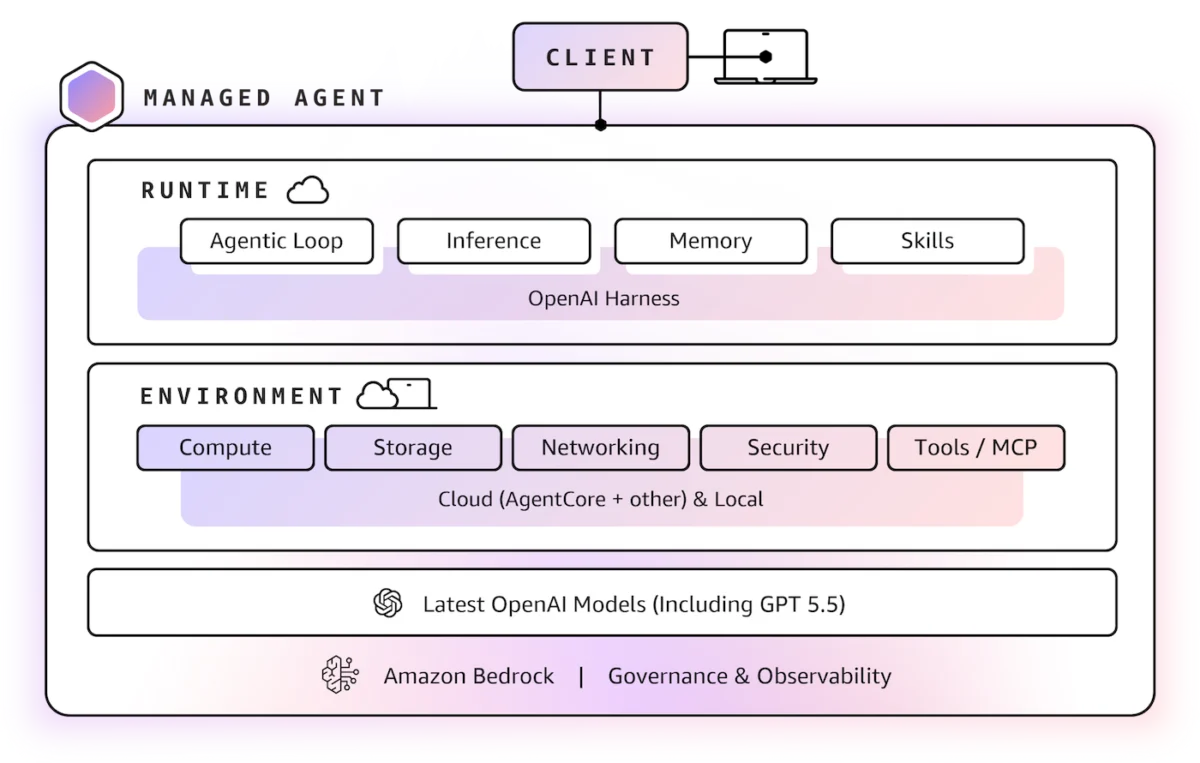
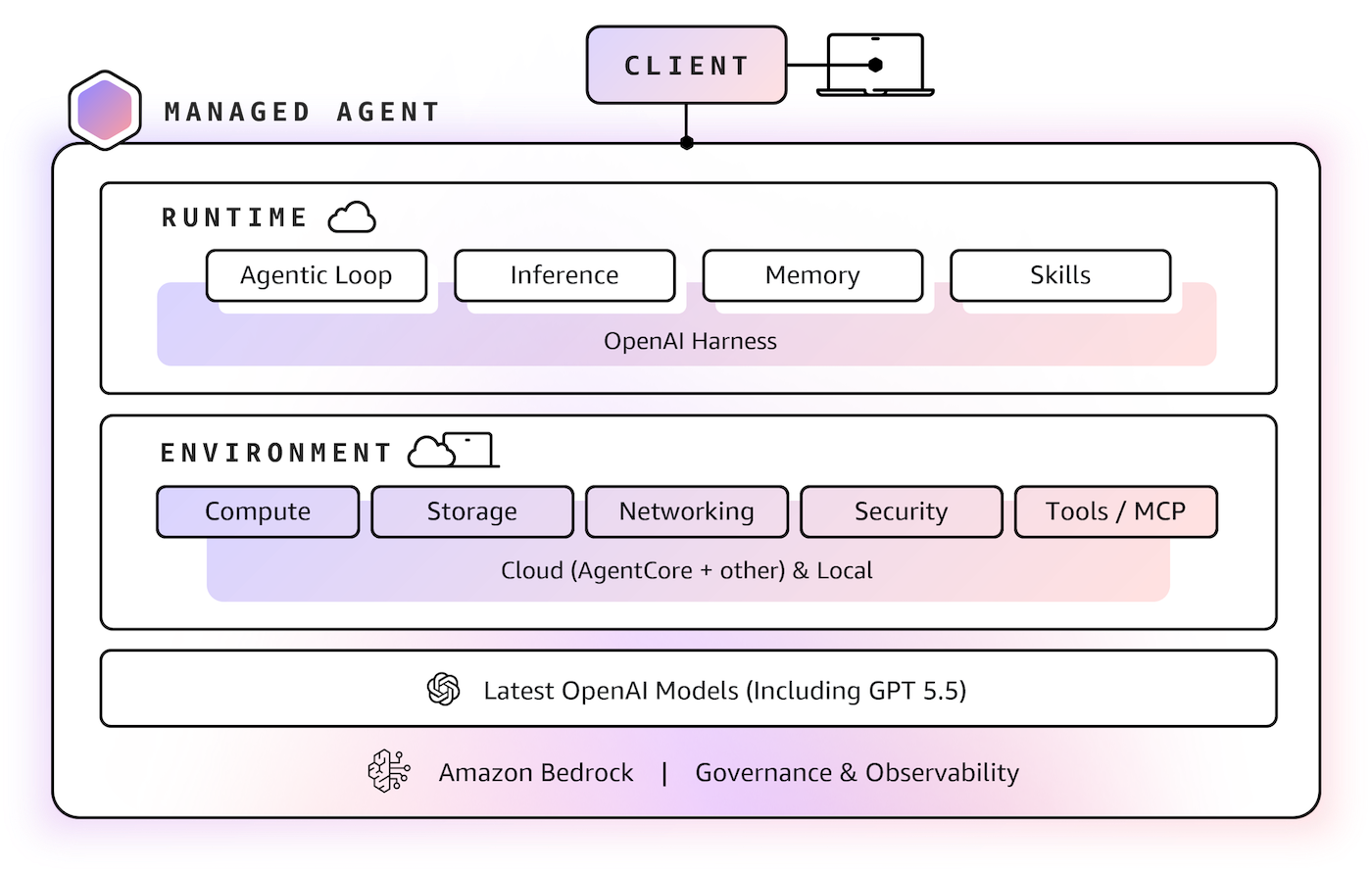
Alongside the Bedrock Managed Agents preview, AWS continues to broaden its portfolio of accessible frontier models, offering developers granular control over execution environments. Users can choose between self-hosted compute setups—utilizing existing development machines, custom containers, or external environments—and the fully managed Amazon Bedrock AgentCore Runtime, which provides seamless managed runtime sessions and configurable storage directly within the user’s AWS account.
Chronology of Recent AWS AI and Infrastructure Updates
To understand the trajectory of AWS’s product development, it is helpful to examine the timeline of recent infrastructure announcements, ecosystem expansions, and product lifecycle modifications leading up to late September and early October 2026:
- Late April 2026: Initial architectural blueprints and framework designs for deep-integrating third-party APIs into AWS Bedrock begin surfacing within developer previews, signaling a shift toward multi-model interoperability.
- September 29, 2026: AWS updates its Product Lifecycle Changes documentation, setting formal timelines for service availability modifications, maintenance shifts, and sunset schedules to help enterprise clients plan infrastructure migrations proactively.
- Early October 2026: AWS officially rolls out the public preview of Amazon Bedrock Managed Agents powered by OpenAI, accompanied by architectural documentation, execution environment guidelines, and expanded frontier model options on the Bedrock platform.
- Ongoing (Fall 2026): Preparations accelerate for upcoming developer-focused gatherings, including regional AWS Community Days and the flagship annual conference, AWS re:Invent, where further generative AI breakthroughs and infrastructure updates are anticipated.
Supporting Data, Architecture, and Technical Specifications
The technical framework of Amazon Bedrock Managed Agents is designed to blend the conversational and autonomous reasoning capabilities of OpenAI’s agent architectures with the enterprise-grade reliability of Amazon Web Services.
Execution Environment Flexibility
Developers are not locked into a single hosting paradigm. The service supports two primary execution pathways:
- Self-Hosted Compute: Ideal for development and specialized local workflows, this option allows teams to hook agents into existing developer machines, private data centers, or customized container clusters.
- Amazon Bedrock AgentCore Runtime: A fully managed serverless-style execution layer that manages runtime sessions out-of-the-box, providing automated scaling, secure communication tunnels, and configurable storage allocations tied directly to enterprise AWS accounts.
Governance and Security Integration
Because the service is built natively on AWS, agents deployed through the Bedrock Managed Agents framework immediately inherit standard cloud security protocols:
- AWS Identity and Access Management (IAM): Granular control over what resources, databases, and APIs an agent can access.
- AWS CloudTrail and CloudWatch: Comprehensive logging and monitoring for audit trails, ensuring enterprise compliance and transparency in agent-driven workflows.
- VPC Security: Isolation of network traffic to prevent unauthorized data exfiltration during multi-step agent tool use.
Service Lifecycle and Product Evolution
As AWS introduces cutting-edge capabilities, it simultaneously refines its older product catalog to maintain optimal performance across its global cloud infrastructure. According to the September 29, 2026 lifecycle update, AWS continues its rigorous cadence of managing service deprecations. Services transitioning into Maintenance mode cease accepting new customers ahead of hard cutoff dates, while those entering Sunset or End of Support phases are given structured migration pathways and alternative architecture recommendations to ensure minimal disruption to mission-critical enterprise operations.
Official Responses and Developer Community Reactions
The introduction of OpenAI-powered managed agents within the AWS ecosystem has generated substantial discussion across the global cloud architecture and developer communities.
Industry analysts view the move as a pragmatic acknowledgment of enterprise realities. While AWS has heavily championed its proprietary Amazon Nova foundation models alongside strategic partnerships with companies like Anthropic (via investments in Claude), enterprise customers frequently demand multi-model strategies. By accommodating OpenAI’s specialized agent framework natively, AWS removes friction for development teams that prefer OpenAI’s reasoning frameworks but require AWS compliance and data residency guarantees.

In his weekly briefing, Channy Yun emphasized the importance of community feedback during this public preview phase. AWS has encouraged developers to test the Bedrock Managed Agents documentation, experiment with the AgentCore Runtime, and share implementation feedback through the AWS Builder Center—a centralized digital hub designed for builders to collaborate, troubleshoot, and share reusable cloud solutions.
Furthermore, community leaders are directing attention toward upcoming educational milestones. With regional AWS Community Days and the upcoming AWS re:Invent conference on the horizon, developers expect deeper dives into how managed agents will scale to handle complex, multi-modal enterprise automation tasks.
Implications for Enterprise Architecture and the Future of Cloud AI
The deployment of Amazon Bedrock Managed Agents carries profound implications for how organizations design, govern, and scale autonomous artificial intelligence systems.
1. The Rise of Multi-Model Enterprise Strategies
For years, cloud providers encouraged platform loyalty, pushing developers to build exclusively within a single vendor’s AI ecosystem. The integration of OpenAI’s API framework into Amazon Bedrock signals a maturation of the cloud market toward interoperability. Enterprises no longer have to choose between their preferred model provider and their preferred cloud infrastructure; they can couple advanced reasoning models with enterprise data lakes, secure object storage (Amazon S3), and serverless compute (AWS Lambda) under a unified roof.
2. Shifting from Chatbots to Autonomous Agents
Traditional generative AI implementations focused primarily on conversational interfaces—answering prompts based on retrieved documentation. The shift toward managed agents represents a leap into execution. These agents can plan multi-step workflows, invoke external APIs, query databases, and execute complex business logic autonomously. By managing these agents within a secure cloud runtime (AgentCore), AWS lowers the operational barrier for enterprises looking to automate complex back-office operations safely.
3. Compliance, Governance, and Trust
Autonomous AI agents present unique security challenges, notably around prompt injection, accidental data exposure, and unauthorized API calls. By baking AWS-native governance—such as IAM policies and VPC boundaries—directly into the agent management layer, AWS provides a blueprint for enterprise-grade AI safety. Companies can audit agent behavior using existing enterprise monitoring tools, ensuring that regulatory frameworks (such as GDPR, HIPAA, and SOC 2) remain strictly enforced even as AI autonomy increases.
Looking Ahead
As the public preview period progresses, organizations are encouraged to evaluate their AI architectures, test self-hosted versus managed runtime environments, and participate in upcoming developer events. Whether attending virtual startup sessions, connecting on the AWS Builder Center, or preparing for announcements at re:Invent, cloud builders stand at the threshold of a deeply integrated, highly versatile era of artificial intelligence development.