


The promise of artificial intelligence is often framed in terms of efficiency, productivity, and the democratization of intelligence. Yet, behind the sleek interfaces of the latest AI agents lies a reality of staggering consumption. Recent revelations from the Cloudflare Connect 2026 Conference in San Francisco have pulled back the curtain on the sheer scale of compute costs currently underpinning the industry, leaving many in the enterprise world breathless—and more than a little concerned.
Pete Steinberger, the founder of the AI digital assistant OpenClaw and a recent high-profile hire at OpenAI, shocked attendees when he casually revealed that he had spent $10 million on AI tokens in a single month. While OpenAI is currently positioned as the industry’s vanguard, the revelation serves as a stark reminder that the “agentic” future of computing comes with a price tag that remains, for many, entirely unsustainable.
The Chronology of a High-Stakes Revelation
The incident occurred during a candid exchange at the 2026 Cloudflare Connect conference. Steinberger, appearing on stage alongside Cloudflare CEO Dane Knecht, discussed the evolving architecture of AI agents. The conversation took a sharp turn toward the fiscal realities of large-scale AI deployment.
Knecht, observing the sheer magnitude of resources being deployed, remarked that Steinberger appeared to have “a virtually unlimited token budget, which not all of us in the room have.” The comment was not merely a playful jab; it highlighted the growing divide between the resource-rich AI labs and the average enterprise attempting to integrate similar technology into their workflows.
Steinberger’s response was characteristically pragmatic, if not unsettling: “What people don’t always understand is not all of that is useful.” This admission—that a significant portion of a $10 million monthly spend might be essentially wasted or non-productive—is perhaps the most damning indictment of current AI development cycles. It suggests that the industry is currently in a "brute force" phase, where optimization is sacrificed at the altar of raw scale.
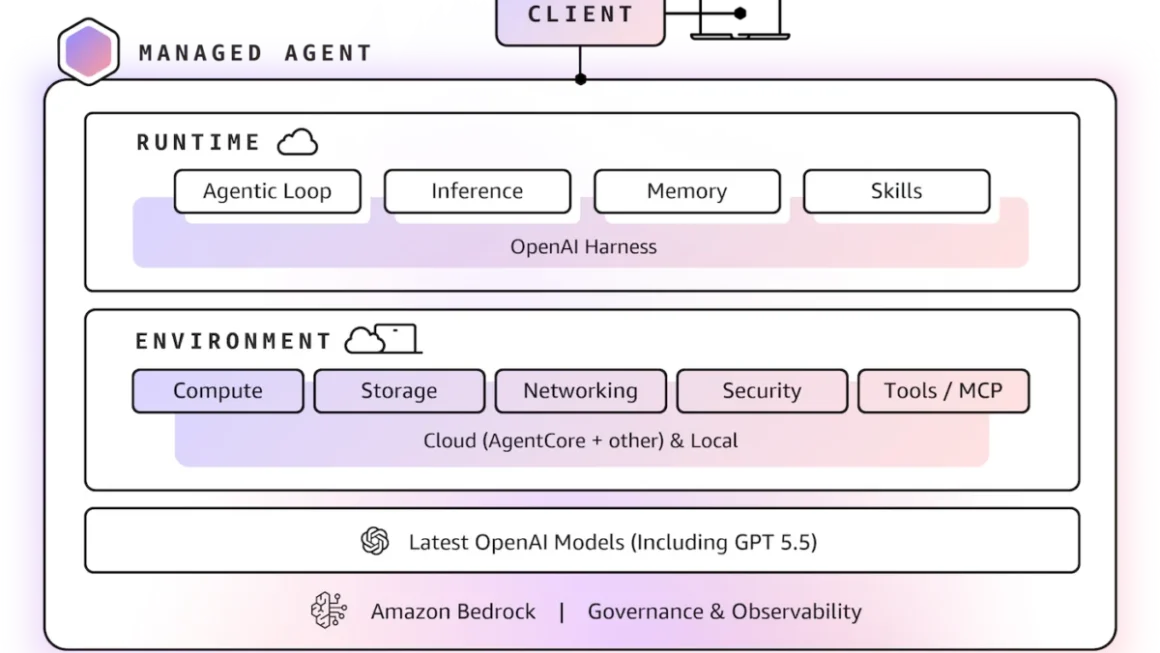
Following this, Steinberger questioned the current reliance on local infrastructure for AI processing. “Why is this still using my computer? Shouldn’t this all be in the cloud?” he mused. While his question reflects the industry’s push toward thin-client, cloud-reliant architecture, it raises secondary concerns regarding privacy, data sovereignty, and the hidden, ballooning costs of massive cloud-compute architectures.
Supporting Data: The Anatomy of Token Costs
To understand the magnitude of a $10 million monthly token bill, one must look at the mechanics of Large Language Models (LLMs). Tokens are the basic units of text—roughly three-quarters of a word—that models process. When an agent is tasked with a complex workflow, it doesn’t just process a single query; it engages in a recursive cycle of reasoning, planning, and tool-use.
The Inflation of "Agentic" Costs
Traditional chatbot interactions are relatively inexpensive, often measured in fractions of a cent. However, "agentic" AI—the focus of OpenClaw and similar tools—operates differently. An agent might call an API, read a document, write code, run that code, encounter an error, and iterate until the task is complete. Each step in this loop consumes tokens. If an agent performs a hundred iterations to complete a simple task, the token count inflates exponentially.
The Infrastructure Paradox
Steinberger’s push for cloud-native AI is, from a technical perspective, a push for centralized intelligence. By moving the burden of computation from the local device to a massive, centralized server farm, developers can leverage high-performance clusters. However, this creates a "black box" of costs. When an enterprise scales, the bill is not linear; it is often compounding. As CFOs are now discovering, a model that performs well in a pilot program can become a financial black hole when deployed across a workforce of 10,000 employees.
Official Responses and Industry Sentiment
The industry response to the “$10 million month” has been a mix of professional reticence and private alarm.
For OpenAI, the revelation is a double-edged sword. On one hand, it confirms the immense technical ambition of the company, signaling to investors and the market that they are pushing the boundaries of what is possible. As the firm approaches a highly anticipated IPO, the ability to demonstrate "massive usage" is often interpreted as a proxy for market dominance and platform stickiness.
However, for the broader tech ecosystem, the statement has catalyzed a necessary debate regarding the sustainability of the current AI model. Financial analysts, who were already tracking the "real cost of agentic AI," have begun to adjust their forecasts. The consensus is shifting away from the "growth at all costs" mentality of 2024 and 2025 toward a more measured approach that prioritizes token efficiency and model distillation.
Implications for the Enterprise
The implications of Steinberger’s confession are profound for CIOs and CFOs. As AI moves from a "novelty" to a "utility," the lack of visibility into token consumption is becoming a primary risk factor.
1. The Death of the "Unlimited" Budget
The era of open-ended R&D for AI projects is closing. CFOs are now implementing strict "token budgets" for departments, similar to how they manage cloud storage or SaaS licensing. Companies are increasingly demanding tools that offer better observability, allowing them to track exactly where their tokens are being spent and identifying "runaway agents" that consume resources without delivering value.
2. Privacy vs. Performance
Steinberger’s call for cloud-only processing brings the issue of data privacy to the forefront. If all interactions must happen in the cloud to benefit from these high-token-cost models, then the privacy of enterprise data becomes entirely dependent on the security of the provider. This poses a significant hurdle for highly regulated sectors, such as banking, healthcare, and defense, which may be forced to opt for lower-token-cost, local-only models—even if they are less "intelligent."
3. The Move Toward Efficiency
The market is already responding to the cost crisis. A new sub-sector of the AI industry is emerging, focused entirely on "Token Optimization." These startups are building middleware that pre-processes queries, summarizes data to reduce token count, and caches responses so that the model doesn’t have to "re-think" the same problems repeatedly. The goal is to achieve 90% of the performance at 10% of the cost.
Conclusion: The Path Forward
The $10 million figure is a signal of the AI industry’s current state of maturity. It is a period of intense, often profligate, experimentation. Just as the dot-com era of the late 1990s saw companies burning through cash to build the "information superhighway," the AI industry is currently burning through compute to build the "reasoning superhighway."
However, history suggests that the market will eventually correct this excess. While Steinberger’s spend may be a testament to the cutting-edge capabilities of OpenAI, it is unlikely to be a sustainable blueprint for the average business. As the novelty of agentic AI wears off and the reality of the balance sheet sets in, the industry will pivot toward efficiency.
For now, the story of OpenClaw serves as both a cautionary tale and a glimpse into the future. It highlights that while AI agents are undoubtedly transformative, their true value will only be realized when we learn to harness that intelligence without needing a king’s ransom to power it. The race to the IPO is on, but the race to true, sustainable AI profitability is only just beginning.