







As the digital marketing landscape continues to evolve at a breakneck pace, staying ahead of the curve requires more than just tracking metrics—it demands a fundamental reassessment of how we build trust, retain audiences, and deploy artificial intelligence. From LinkedIn’s untapped potential for credibility to the sophisticated AI-driven advertising ecosystems of Meta and TikTok, the current environment favors those who prioritize authentic connections over algorithmic shortcuts.
This report synthesizes the most critical updates from the industry, offering a comprehensive look at the strategies defining success in 2026 and 2027.
I. Building the "Trust Loop": Leveraging LinkedIn for Credibility
In an era where consumer skepticism is at an all-time high, marketers are increasingly struggling to verify their expertise. The common practice of scattering testimonials across various websites often fragments a brand’s credibility, making it difficult for prospects to validate claims.
The Power of Verified Reputation
Industry expert Judi Fox suggests a paradigm shift: the "LinkedIn Trust Loop." By strategically utilizing your LinkedIn recommendations URL, you create a centralized hub of verified professional testimony. Unlike anonymous website reviews, LinkedIn recommendations are inextricably linked to a real person’s profile, job title, and professional history. This creates a chain of verification that is nearly impossible for AI-generated content to replicate.

Implications for Client Acquisition
For service providers and B2B marketers, the goal is to guide potential clients to this "Trust Loop" early in the sales cycle. When a prospect views a recommendation tied to a verifiable industry peer, the psychological barrier to booking a discovery call drops significantly. In a digital world crowded with synthetic content, your professional network remains your most potent asset.
II. The Future of Content: Why Long-Form YouTube Still Reigns
While short-form content dominates the headlines for its reach, Adam Ivy, founder of the YouTube Revenue Lab, argues that long-form content is the superior engine for building sustainable customer relationships.
Moving Beyond the "Distracted Scroll"
The central thesis is simple: focused attention beats distracted scrolling. Short-form videos may go viral, but they often vanish from a consumer’s mind within days. Long-form videos, when built for retention, act as a permanent asset that continues to attract views and generate leads years after the initial upload.
The Anatomy of High-Retention Content
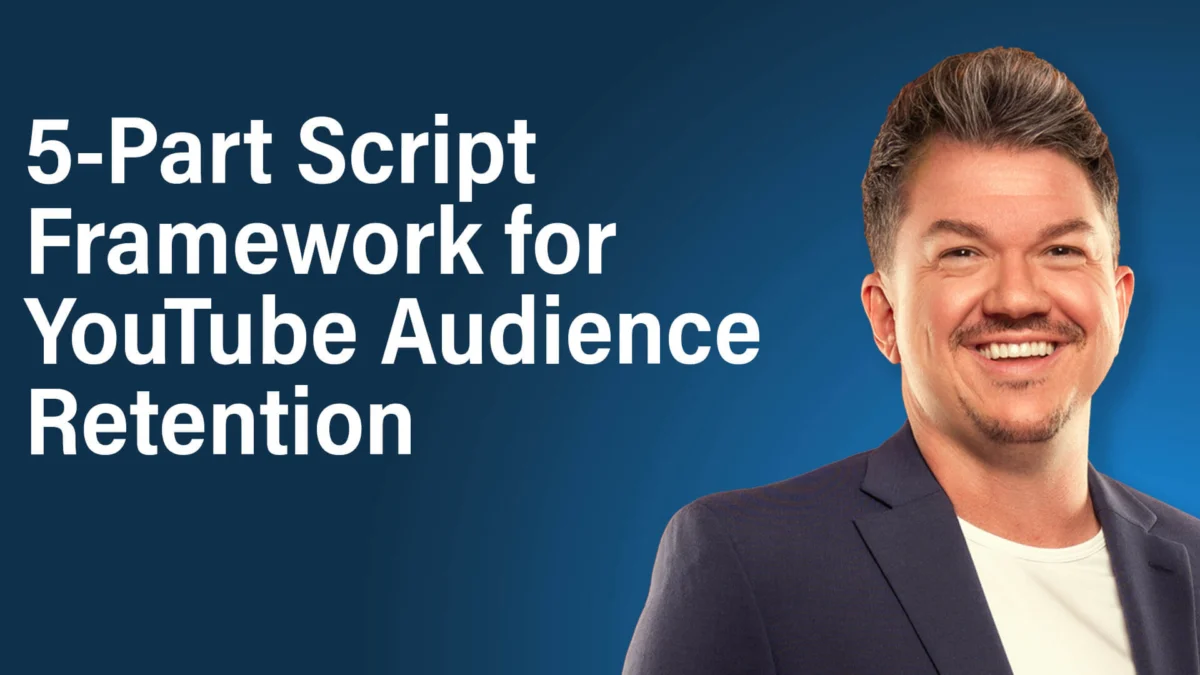
Ivy’s framework for keeping viewers engaged focuses on five key pillars:
- The Emotional Hook: The opening seconds must establish empathy, proving to the viewer that you understand their specific pain points before you even offer a solution.
- Narrative Flow: Avoiding the "numbering trap." While numbered lists are popular, they can often lead to premature drop-offs. A more effective approach uses fluid, thematic transitions that keep the audience curious.
- Strategic Engagement: Comments should be treated as signals of active viewing. Encouraging interaction that isn’t overtly "salesy" builds a community rather than a customer list.
- The Invisible Lead Magnet: Integrating calls to action (CTAs) organically—and utilizing "thank you" page retargeting—allows brands to nurture prospects without disrupting the viewing experience.
- The "Momentum Exit": The biggest mistake creators make is the long, meandering goodbye. A sharp, high-energy conclusion that pushes the viewer immediately into the next video is essential for maintaining session time.
III. AI Integration: From Prompting to Workflow Automation
The competitive advantage in AI has shifted. Knowing how to write a prompt is now the baseline; the true edge lies in building complex, multi-tool workflows.
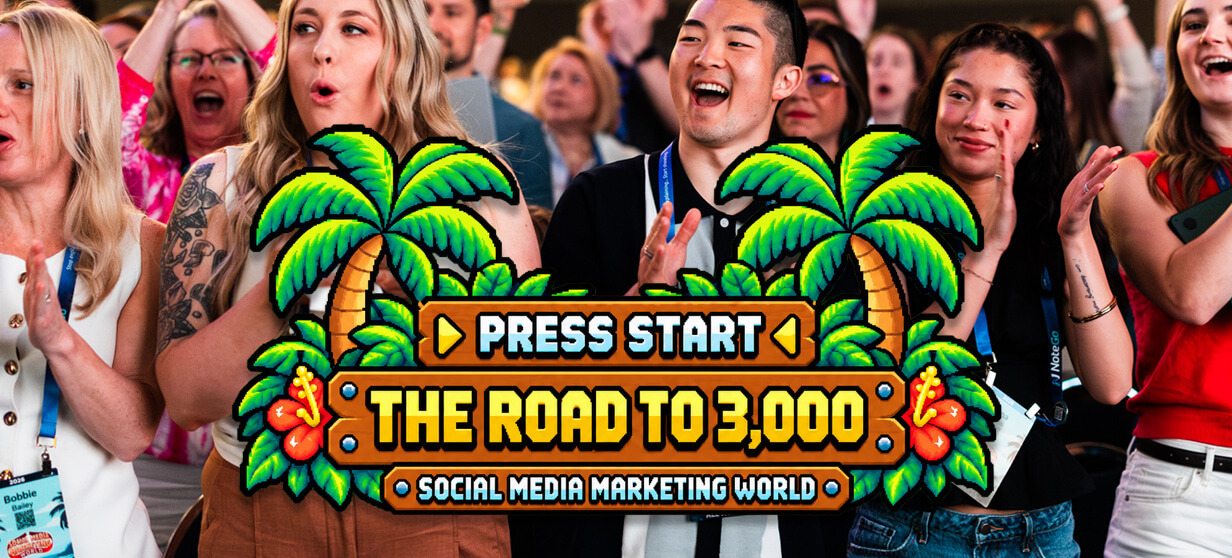
The "Road to 3,000" Lessons
Recent experiments conducted by Social Media Examiner in their "Road to 3,000" docuseries highlight the practical application of AI in day-to-day operations:
- Skill-Based AI Training: Instead of manually scheduling content, marketers should use feedback loops to "teach" AI models how to perform specific tasks. When the AI errs, correcting it in real-time refines its output, eventually automating the process entirely.
- Cross-Platform Synergy: Advanced workflows often require pairing tools. For instance, using a text-based AI like Claude to act as a project manager, instructing a multimodal model like Gemini to analyze audio or visual assets, creates a "team" of AI agents that can solve problems a single tool cannot.
- Transparency as Content: The most compelling content in the B2B space right now is "open-source" building. Sharing the process—including the failures and the AI-driven adjustments—builds a level of audience trust that polished marketing assets cannot match.
IV. Chronology of Major Platform Updates
The landscape of major social platforms has seen rapid structural changes, particularly regarding AI integration and commerce.
- Instagram’s Creative Expansion: Instagram has evolved its "Edits" app to include a robust carousel workflow. By allowing creators to mix photos, videos, and custom cutout stickers, Meta is aiming to keep production entirely native to the platform, reducing reliance on third-party design tools.
- The iOS Interface Dilemma: Adam Mosseri (Head of Instagram) has highlighted the technical friction between native iOS tab bars and the app’s internal navigation. While Apple has enabled image support in tab bars, issues with color rendering and swipe-gesture interference remain, signaling an ongoing tug-of-war between OS-level design and platform-specific needs.
- Meta’s Agentic AI Advertising: Meta is moving beyond simple ad automation. Their new suite of tools allows for "conversational commerce," where AI assistants can handle everything from audience discovery and video generation to in-conversation checkout.
- Reddit’s Lead Gen Pivot: Reddit is aggressively moving into the B2B space with "Max Campaigns" and deep CRM integration, allowing advertisers to move beyond simple brand awareness toward quantifiable pipeline performance.
- TikTok’s Commerce Ecosystem: TikTok is mirroring Meta’s moves, expanding its "Agentic AI" to handle the full customer journey. With the introduction of "Buy Direct" and "Shopping Assistant," TikTok is positioning itself as a closed-loop ecosystem where discovery and purchase happen without the user ever leaving the app.
V. Implications: Preparing for the Future
The convergence of these trends suggests a clear trajectory for digital marketing in the coming year.
1. The Death of the "Salesy" CTA
As platforms like TikTok and Instagram bake AI-powered commerce directly into the chat interface, the traditional "click-the-link-in-bio" funnel is becoming obsolete. Marketers must transition to "conversational" funnels where the offer is presented at the point of interest, not as an interruption.
2. The Rise of the "Human-Agent" Hybrid
The most successful marketers will be those who view AI as a "junior partner." The human element remains essential for high-level strategy, emotional resonance, and ethical oversight, while the "agentic" AI handles the heavy lifting of scheduling, data processing, and preliminary campaign optimization.

3. Community Over Reach
The emphasis on "who is watching" rather than "how many" is a direct reaction to the noise of the current internet. As algorithms become more sophisticated, they will favor content that generates high-intent engagement. Brands that build niche communities—rather than chasing broad, low-quality reach—will be the ones that survive the coming shift in platform economics.
4. Professional Verification
As generative AI makes it easier to create "fake" success stories, the value of third-party, verifiable social proof (like the LinkedIn Trust Loop) will skyrocket. Brands that lean into transparency—documenting their workflows, their failures, and their real-world client outcomes—will naturally rise to the top of the search and social hierarchies.

Conclusion
The digital marketing landscape is currently undergoing a "great reset." The tools of 2024—generic content, cold outreach, and manual workflows—are being replaced by intelligent, automated, and hyper-transparent strategies. Whether you are leveraging LinkedIn for professional credibility, YouTube for long-term audience retention, or Meta and TikTok for AI-driven commerce, the theme remains the same: Authenticity is the ultimate differentiator.
By focusing on verified trust, deep content, and strategic AI workflows, marketers can stop chasing the algorithm and start building an asset that compounds in value over time. As we look toward major industry gatherings like AI Business World and Social Media Marketing World in 2027, the focus will undoubtedly be on those who have mastered this new, more efficient, and more human-centric way of doing business.