










Cupertino, California — In a major evolution for the digital economy, Apple has announced a sweeping set of monetization updates designed to transform how developers sell, scale, and distribute subscriptions across its ecosystem. Announced on September 16, 2026, these tools—set to roll out alongside iOS 27, iPadOS 27, macOS 27, and tvOS 27—mark one of the most significant overhauls to the App Store’s commerce engine in years.
At the core of the update are two distinct capabilities: Bundles and Suites, which allow developers to package multiple subscriptions into a single purchase, and Multiseat Purchasing, which opens up seamless bulk and group purchasing channels for small businesses, teams, and educational institutions. Together, these features address longstanding developer requests for more flexible pricing structures, cross-developer collaborations, and frictionless B2B and group sales.
Main Facts
The latest App Store updates introduce powerful new frameworks designed to maximize subscriber lifetime value (LTV), lower customer acquisition costs, and bridge the gap between individual consumers and organizational buyers.
- Bundles and Suites:
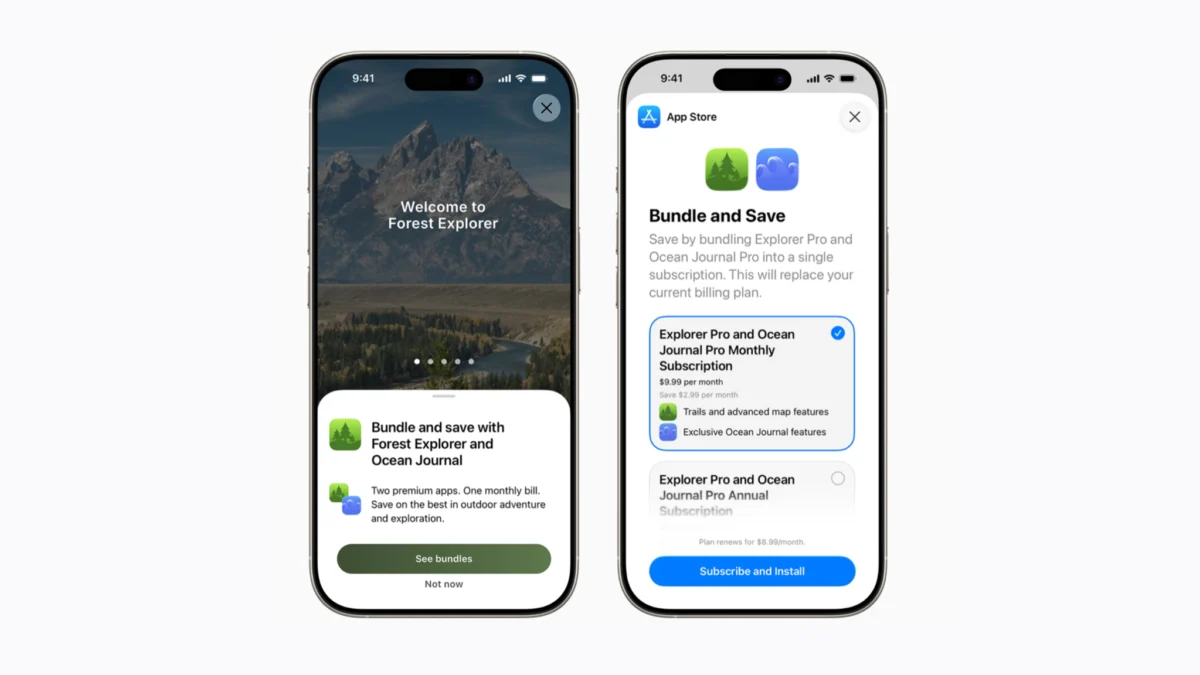
- Bundles allow a consumer to purchase multiple subscriptions through a single transaction. This can encompass multiple apps from a single developer, or span entirely different apps created by multiple, independent developers.
- Suites allow developers to offer a single subscription that grants users access to a cohesive set of apps within their own portfolio.
- The App Store handles the unified purchase experience, automatically displaying all included apps so users can instantly download and access their content.
- Multiseat Purchasing:
- Volume Purchasing enables organizations utilizing Apple Business Manager and Apple School Manager to buy subscription seats in bulk via a single In-App Purchase and assign them through mobile device management (MDM) providers.
- Group Purchases empower individual subscribers to buy multiple seats in one transaction and invite others to join, with Apple managing the entire invitation and seat-assignment flow.
- Technical Prerequisites: Developers must ensure their applications utilize StoreKit 2 to handle Apple In-App Purchases in order to leverage these new tools.
- Rollout Timeline: Multiseat purchasing is enabled by default in App Store Connect as of September 16, 2026, with Volume Purchasing launching officially on October 22, 2026, and Group Purchases following in the winter. Bundles and Suites will become available later this year with the public release of iOS 27 and its companion operating systems.
Chronology of the Announcement and Rollout
The groundwork for these features has been a long time coming, heavily requested by the developer community as mobile applications transition from simple single-purpose utilities to sprawling software suites and enterprise-grade tools.
- June 2026 (WWDC26): Apple initially previews the concepts behind cross-developer bundles and multi-user group purchasing during Worldwide Developers Conference sessions, driving immense interest within the app development community.
- September 16, 2026: Apple formally opens access to the features. Multiseat purchasing options go live by default in App Store Connect, allowing developers to configure or opt-out of settings immediately. Developers are instructed to implement StoreKit 2 and can begin submitting request forms for Bundles and Suites configurations.
- October 22, 2026: Official launch date for Volume Purchasing, enabling institutional buyers via Apple Business Manager and Apple School Manager to execute bulk corporate and educational transactions.
- Late 2026 (Winter): Group Purchases roll out to the public, introducing consumer-facing multi-seat invitations. Concurrently, Bundles and Suites officially launch alongside iOS 27, iPadOS 27, macOS 27, and tvOS 27.
Supporting Data and Technical Architecture
To understand the scale of this update, one must examine the underlying framework mechanics and structural shifts in how apps will be packaged and sold.
The Power of StoreKit 2
Apple’s mandate that apps utilize StoreKit 2 is a crucial technical pillar of this rollout. StoreKit 2, introduced in earlier iterations of iOS, provides modern, Swift-friendly APIs with asynchronous data handling, robust cryptographic receipt validation, and native management of subscription statuses. By requiring StoreKit 2 for Bundles, Suites, and multiseat configurations, Apple ensures that entitlement verification—especially across multi-developer collaborations and organizational seat assignments—remains secure, instantaneous, and fraud-resistant.
Breaking Down Bundles vs. Suites
The distinction between Bundles and Suites offers developers unprecedented flexibility in product marketing:
| Feature Type | Scope | Developer Ownership | Target Audience |
|---|---|---|---|
| Suites | Multiple apps sharing a single subscription | Single developer / publisher | Consumers seeking a cohesive toolset (e.g., a productivity suite of writing, spreadsheet, and presentation apps). |
| Bundles | Multiple subscriptions packaged together | Single developer or multiple independent developers | Consumers looking for curated cross-app value (e.g., a fitness tracker app bundled with a nutrition-planning app from a separate creator). |
The Economics of Multiseat Purchasing
Historically, software developers targeting teams had to build complex, web-based licensing portals, bypassing the App Store entirely due to the lack of native group billing infrastructure. With Group Purchases and Volume Purchasing, Apple brings this entire revenue stream directly into App Store Connect.
- Administrative Friction Removed: Small teams, project collaborators, and family-like work units can pool resources or have one team member cover the cost without navigating corporate procurement departments or IT departments.
- Granular Developer Control: Developers retain complete autonomy. While multiseat purchases are enabled by default, teams can disable the feature entirely or selectively manage availability across standard consumer App Store channels, Apple Business Manager, and Apple School Manager depending on their target market strategy.
Official Responses and Developer Guidance
Apple has heavily emphasized support documentation and developer evangelism to ensure a smooth transition into this new era of commerce.
In official communications, Apple representatives noted that the initiative aims to tear down artificial barriers between isolated apps. By allowing independent creators to pool their audiences—such as a specialized camera app partnering with a cloud-storage utility—smaller studios can compete more effectively with major tech conglomerates through strategic alliances.
Furthermore, Apple’s developer documentation highlights the ease of onboarding:
"To get started, review our Bundles and Suites page, which includes eligible configurations, technical requirements, and how to submit a request form… This opens your subscription to users who don’t fit the traditional single-subscriber model: a work team splitting the cost of a productivity app, a small business outfitting a handful of employees, or a group of collaborators sharing access to a creative tool."
Educational resources, including specialized WWDC26 technical videos (such as session 210 for Bundles and Suites and session 391 for group/organization sales), are currently streaming on the Apple Developer website to walk engineering and product teams through the integration process.
Implications for the App Ecosystem
The rollout of Bundles, Suites, and Multiseat Purchasing is poised to reshape the digital marketplace in several profound ways.
1. New Horizons for Indie Developers and Partnerships
For years, large enterprises and massive media conglomerates held a distinct advantage in the subscription economy because they could offer sprawling portfolios of apps under a single umbrella. Independent developers were forced to rely on standalone marketing or costly third-party web funnels.
With multi-developer Bundles, boutique indie studios can form coalitions—pooling their subscriber bases, cross-promoting each other’s software, and offering bundled discounts that rival those of legacy software giants. This lowers customer acquisition costs (CAC) and drives organic discovery directly within the App Store.
2. A Paradigm Shift in B2B and Team App Sales
By introducing native group billing and integration with Apple Business Manager, Apple is making a direct play for the lucrative small-to-medium business (SMB) software market. Previously, if a five-person design agency wanted to use an iOS-first creative app, each employee had to maintain an individual subscription, or the studio had to orchestrate complicated enterprise deployment contracts.
Now, a single team lead can purchase a multi-seat tier instantly via an In-App Purchase. Apple manages the seat distribution and invitation flow natively, removing the administrative overhead that previously locked mobile-first developer tools out of collaborative office environments.
3. Elevated User Experience and Reduced Churn
Consumers are increasingly suffering from "subscription fatigue"—the psychological and financial burden of managing dozens of micro-transactions across separate apps. By streamlining these purchases into unified Suites and developer-curated Bundles, users gain a clearer overview of what they are paying for. The App Store’s transparent purchase sheets, which clearly outline every app included in a bundle, build consumer trust and are expected to lower churn rates by delivering higher perceived value per dollar spent.
Looking Ahead
As developers rush to adopt StoreKit 2 and submit their configuration requests ahead of the iOS 27 launch, the digital marketplace stands on the precipice of a more collaborative, flexible, and economically robust era. By empowering creators to build together and making it easier for groups to buy together, Apple has laid the foundation for the next decade of application monetization.



