









In the modern digital landscape, the concept of "rank tracking" has undergone a radical transformation. For enterprise-level organizations, monitoring keyword positions is no longer a simple task of checking a handful of terms across a single search engine. It has evolved into a massive, multi-dimensional intelligence operation. To remain competitive, enterprises must now monitor millions of data points across diverse devices, localized geographies, and a fractured search environment that includes AI Overviews, featured snippets, and local packs.
This paradigm shift requires tools that move beyond basic vanity metrics. Enterprise-grade rank-tracking software must now function as a critical node in a company’s broader data stack, feeding actionable intelligence into CRMs, business intelligence (BI) dashboards, and executive reporting suites.
The Shift from Basic Monitoring to Enterprise Intelligence
At an enterprise scale, the requirement is not just to see where a page ranks, but to understand why it ranks and what that position means for the bottom line. Basic rank trackers, designed for smaller websites, fall short when faced with the complexity of high-traffic domains, multi-region configurations, and the rapid volatility of generative AI.
True enterprise-grade software is built for high-volume data ingestion. It provides real-time or near-real-time refresh rates, granular location targeting (down to zip code or coordinate levels), and, most importantly, seamless integration with existing organizational systems. When ranking data is siloed, it is merely a metric; when integrated with web analytics and CRM data, it becomes a compass for revenue, allowing teams to draw a direct line between a shift in search position and an uptick in the sales pipeline.

How to Evaluate Enterprise-Grade Solutions
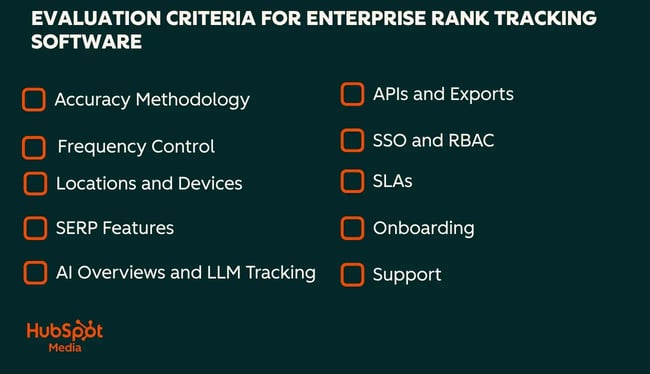
Selecting the right platform is a high-stakes process. A poor choice can result in massive data silos and significant technical debt. Organizations should evaluate vendors based on a rigorous set of criteria:
1. Accuracy Methodology
Do not settle for marketing buzzwords. Ask vendors for a formal methodology document. How do they handle IP rotation? Do they use residential proxies or data center IPs? How is personalization and localization managed to ensure the data accurately reflects what a user in a specific region sees?
2. Frequency and Customization
While daily tracking is the standard, enterprise environments often require agility. Can the platform support hourly or on-demand crawls for high-stakes events like product launches or PR crises? The ability to set custom crawl schedules for specific campaign groups is a non-negotiable for large-scale operations.
3. AI Overviews and LLM Tracking
Generative AI has fundamentally changed the Search Engine Results Page (SERP). An enterprise-grade tool must now monitor AI Overview appearances, capture the URLs cited within these summaries, and store historical snapshots of generative search behavior. Without a library of prompts to track how your brand appears across systems like ChatGPT, Perplexity, and Gemini, your SEO strategy is incomplete.
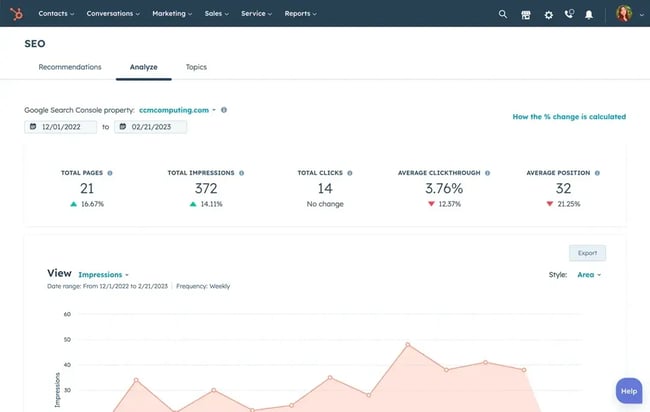
4. Governance and Security
Enterprise environments demand strict security. Features such as Single Sign-On (SSO), Role-Based Access Control (RBAC), and comprehensive audit logs are essential. Permissions must be scopeable by team, market, or campaign to ensure that data access aligns with organizational governance policies.
Industry Leaders: A Comparative Overview
Several platforms have established themselves as leaders by addressing these complex enterprise demands.
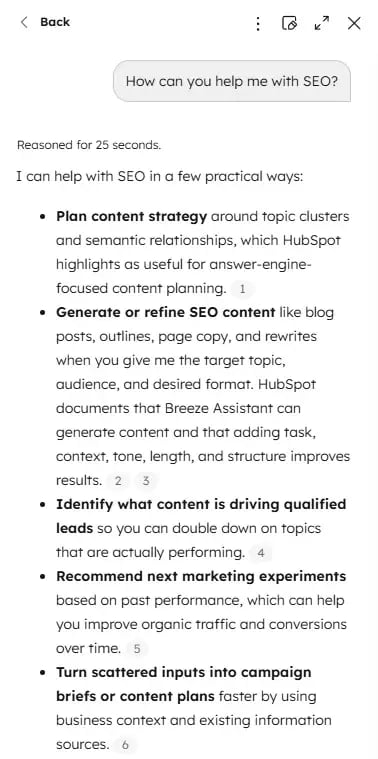
HubSpot’s SEO Marketing Software & Content Hub
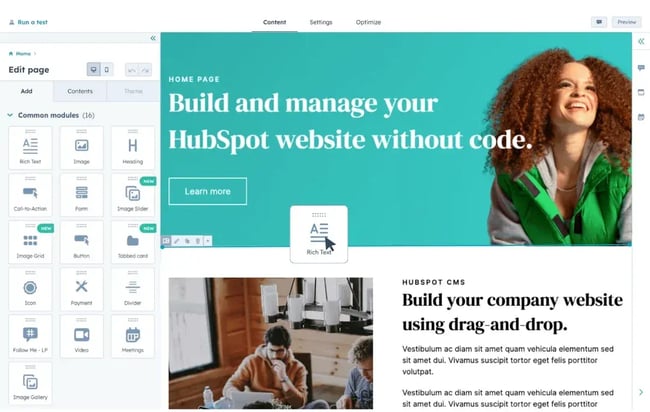
HubSpot distinguishes itself through its unified ecosystem. By housing SEO tools within the same platform as its CRM and Content Hub, HubSpot eliminates the "manual bridging" of data.
- Key Advantage: The integration of SEO recommendations directly into the authoring workflow. Content teams receive guidance on schema, meta-tags, and readability as they write, rather than waiting for a post-publication audit.
- The "Breeze" Factor: The platform’s AI assistant, Breeze, empowers junior team members to perform complex SEO tasks, ensuring that best practices are scaled across large content teams without requiring constant oversight.
HubSpot AEO Grader
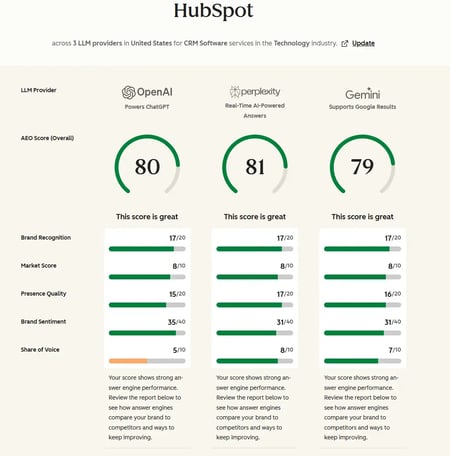
For organizations struggling to quantify their presence in AI-driven search, the AEO Grader is a standout. It scores brand performance across AI platforms based on recognition, sentiment, and depth. While it is currently a free, manual-cadence tool, its ability to provide competitive intelligence on how AI characterizes your brand versus your rivals is unparalleled.
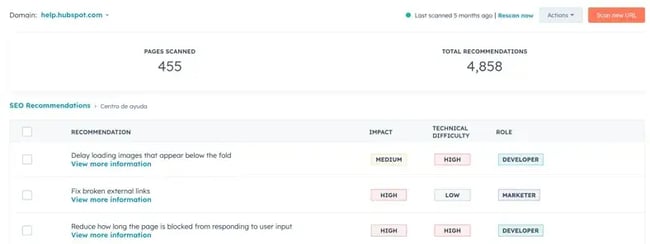
Semrush One
Semrush remains a gold standard for its massive data infrastructure. By combining its traditional SEO toolkit with an AI Visibility Toolkit, it allows enterprise teams to maintain a 360-degree view of their digital footprint. Its maturity in competitive intelligence makes it a top choice for teams that need deep, historical trend analysis to inform their GTM strategy.
Profound
Profound is purpose-built for the AI era. Unlike legacy tools that have "bolted on" AI features, Profound was designed from the ground up to track how brands appear in generative AI responses. It is the premier choice for organizations that prioritize narrative control and brand visibility in the evolving "answer engine" landscape.

The Strategic Importance of Integration
One of the most common pitfalls in enterprise software procurement is focusing exclusively on the "feature count." In reality, a platform with a more modest feature set that integrates flawlessly with your company’s data warehouse or BI tools will always outperform a "feature-rich" tool that operates in a vacuum.
If your organization uses Snowflake, Tableau, or Salesforce, your rank tracker should act as a data source for these systems, not a separate island. Before signing a contract, demand documentation on API rate limits, webhook capabilities, and pre-built native connectors.
Competitive Intelligence at Scale
At the enterprise level, tracking competitors goes beyond keyword rank. It is about understanding your "Search Share of Voice."
- Share of Voice: Track your domain’s presence across topic clusters rather than isolated keywords. A 12-month trend line in share of voice is significantly more valuable than a single-day snapshot.
- Pixel Position Analysis: Organic rank #1 is no longer the ultimate goal if paid ads, AI Overviews, and local packs have pushed your result below the fold. Pixel position tracking provides the actual vertical distance from the top of the page, offering a clearer picture of real-world visibility.
- Affiliate and Partner Monitoring: Large enterprises often face cannibalization from their own partners or resellers. Segmenting your tracking to monitor these affiliates alongside your own properties is essential for maintaining brand equity and controlling the customer journey.
Implications for Future-Proofing
The future of search is increasingly generative and fragmented. The "ten blue links" are rapidly becoming a secondary experience for many users. Consequently, the role of the enterprise SEO team is shifting from "keyword management" to "answer engine optimization."
To survive this transition, organizations must prioritize:
- Data Centralization: Break down the silos between SEO, Sales, and Marketing.
- Scalable Content Ops: Use platforms that enforce brand voice and schema consistency at the template level.
- Proactive Governance: Treat SEO data with the same security rigors as customer data.
Conclusion: The "Non-Negotiable" Reality
Rank tracking software is no longer a discretionary expense for the marketing department; it is a fundamental business intelligence requirement. Whether your organization chooses to leverage the unified power of the HubSpot ecosystem, the deep historical data of Semrush, or the specialized AI focus of Profound, the objective remains the same: to gain a transparent, accurate, and actionable view of your digital presence.
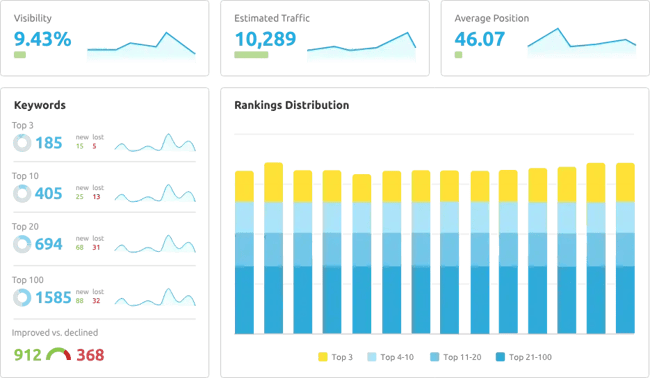
In an era where AI-driven answers are reshaping purchase decisions before a customer even lands on your website, failing to track your presence across these new surfaces is a risk no enterprise can afford to take. The right software does more than just track numbers—it provides the strategic clarity required to lead in an increasingly competitive and automated digital marketplace.