










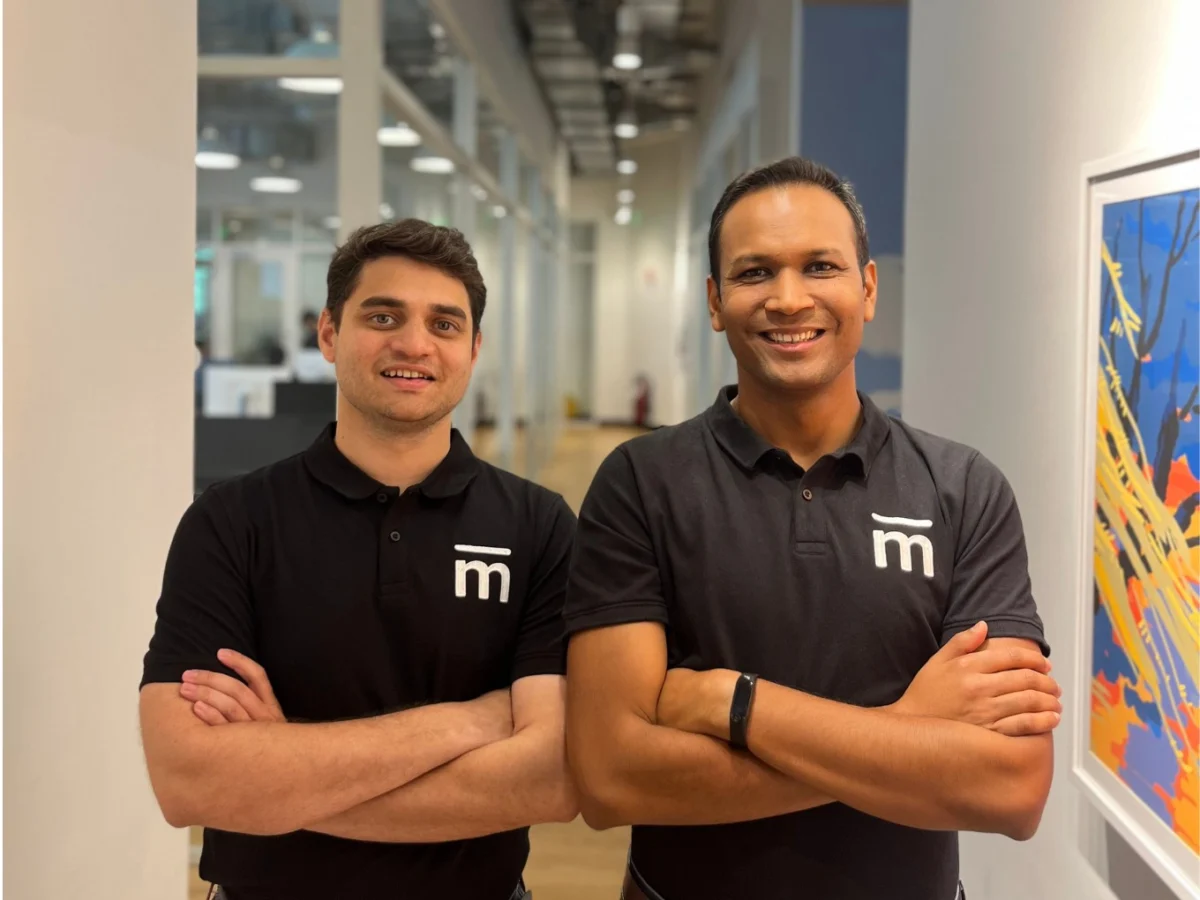
The Indian startup ecosystem, despite its rapid expansion and global prominence, continues to grapple with a paradoxical challenge: a severe shortage of skilled, industry-ready talent. While the demand for innovative leadership and agile operational expertise has never been higher, traditional academic institutions have often struggled to pivot their curricula to meet the mercurial needs of the startup world. Enter Bengaluru-based Mesa School of Business, which has just secured a significant ₹110 Cr ($11.4 Mn) in a Series A funding round to address this very friction point.
The latest capital infusion, comprised of both equity and venture debt, pushes the startup’s post-money valuation to approximately ₹385 Cr ($40 Mn). This milestone marks a pivotal moment for the institution, which was founded in 2023 with the specific mandate of creating a pipeline of talent tailored for the needs of the startup economy.
The Financial Breakdown: A Strategic Injection
The Series A round was anchored by a robust ₹85 Cr equity investment, co-led by Dharana Capital and Mesa’s existing backer, Elevation Capital. This continued support from Elevation underscores investor confidence in Mesa’s unique "industry-integrated" pedagogical model.
Complementing the equity portion, the company secured an additional ₹25 Cr in venture debt from prominent lenders InnoVen Capital and Alteria Capital. According to co-founder Ankit Agarwal, this mix of funding is strategic; it provides the immediate liquidity required for operational expansion while minimizing equity dilution. The fresh capital is earmarked for a multifaceted growth strategy: strengthening the leadership team, deepening integration of artificial intelligence (AI) across its curriculum, forging more robust partnerships with the startup ecosystem, and launching a new suite of professional courses.
A Chronology of Growth: From Vision to Valuation
The journey of Mesa School of Business has been characterized by rapid, hyper-focused development. Founded in 2023 by Ankit Agarwal and Varun Limaye, the institution emerged from the observation that while premier management schools produce capable corporate managers, they often fail to cultivate the specific "founder’s mindset" and operational agility required in the high-stakes world of venture-backed startups.
Shortly after its inception, the school gained early traction, securing ₹34 Cr in a seed round led by Elevation Capital. That round saw participation from some of the most influential names in the Indian startup ecosystem, including CRED’s Kunal Shah, Meesho’s Vidit Aatrey, and Urban Company’s Abhiraj Bahl. This initial validation allowed Mesa to launch its flagship startup leadership programs, creating a proof-of-concept that resonated with students seeking alternatives to traditional MBA pathways.
In just under two years, Mesa has evolved from a boutique educational experiment into a structured business school. By focusing on non-technical roles—which comprise roughly 80% of startup job descriptions—Mesa has successfully carved out a niche that traditional business schools have largely ignored.
The Pedagogical Model: Disruption Through Industry Integration
Mesa’s approach to education is fundamentally distinct from the rigid, theory-heavy curricula of traditional universities. The school operates on a premise that the most relevant knowledge is currently locked away in the minds of those building startups, not in outdated textbooks.
Eliminating the Faculty Gap
One of Mesa’s most striking departures from traditional academia is its refusal to employ full-time, career-academic faculty. Instead, the school acts as a conduit between industry and students. The curriculum is designed and delivered by a rotating roster of startup founders, C-suite executives, and specialized industry practitioners. Agarwal notes that over 2,000 industry professionals have engaged with Mesa students, providing a level of real-world insight that traditional institutions simply cannot replicate.
Curriculum Structure
Mesa currently operates three distinct full-time programs, each tailored to a specific stage in a student’s career journey:
- Post-Graduate Program: Designed for experienced professionals looking to pivot into the startup ecosystem. This accounts for roughly 40% of the school’s revenue.
- Undergraduate Program: A comprehensive four-year curriculum aimed at building a foundation for long-term entrepreneurial success, contributing 35-40% of revenue.
- The "Forge" Program: A one-year, intensive program for fresh graduates, focused on rapid upskilling for early-career roles, representing approximately 20% of the revenue mix.
The pricing of these programs reflects their high-intensity, career-focused nature. The post-graduate program commands a fee of ₹25.4 Lakh, while the Forge program starts at ₹15.4 Lakh. The undergraduate degree, spanning four years, is priced at ₹48 Lakh.
Supporting Data: Evidence of Impact
Mesa’s growth metrics suggest that its model is not only popular but effective. The startup has reportedly seen a 2.5X annual growth rate over the past two years. While it has not yet reached overall profitability, Agarwal indicates that the school’s individual programs are nearing operational breakeven, a testament to the sustainability of its business model.
Alumni Success and Startup Incubation
The impact of the institution is perhaps best measured by the outcomes of its graduates. Mesa claims to have produced approximately 300 alumni across its first three cohorts, with graduates successfully securing placements in over 120 startups. These roles are predominantly concentrated in high-impact areas, including founders’ offices, product management, strategic partnerships, account management, and venture capital.
Financially, the return on investment for students appears strong, with the experienced-professional postgraduate program reporting average salaries in the range of ₹26-28 LPA.
Beyond placement, Mesa has actively nurtured an internal entrepreneurial culture. The school has incubated over 50 student-led startups, which collectively report an annual revenue of ₹50 Cr. By providing equity-free grants and dedicated incubation support, Mesa is effectively acting as a feeder for the very ecosystem it aims to serve.
Official Responses and Strategic Vision
In an interview with Inc42, co-founder Ankit Agarwal emphasized that the "talent paucity" in the Indian startup sector is not a lack of raw intelligence, but a lack of structured pathways and industry-specific networks.
"If you want to go and work in a startup, there is no one place which sort of builds the right network," Agarwal stated. He argues that traditional institutions lack the incentive to update their curriculum at the speed of technological change. By positioning Mesa as an agile, constantly evolving institution, the founders believe they can bridge the gap between "getting a degree" and "being job-ready."
The move to integrate AI into the curriculum is a response to the changing nature of work itself. By teaching students how to leverage AI tools for productivity and strategic analysis, Mesa intends to keep its graduates ahead of the curve in an increasingly automated professional landscape.
Implications for the Future of Business Education
Mesa School of Business is part of a broader, global shift toward alternative, outcome-based education. Its rise comes at a time when the "university status" is being challenged by industry-specific, competency-based learning.
The Competitive Landscape
Mesa is not alone in this space. It faces competition from entities like Gurugram-based Masters’ Union, which recently secured full university status from the Haryana government, further legitimizing the industry-led model. Other players, such as upGrad, Great Learning, and Masai School, continue to aggressively capture the re-skilling and upskilling market.
However, Mesa differentiates itself through its deep, on-campus integration and its specific focus on the startup lifecycle. While companies like upGrad often focus on digital upskilling for mid-career professionals, Mesa’s hybrid of an "in-person" university experience combined with a "startup-bootcamp" curriculum targets a specific demographic that values network and hands-on experience over traditional academic credentials.
What Lies Ahead
The successful Series A raise positions Mesa to scale significantly. With plans to deepen its footprint within the startup ecosystem, the school is likely to become an increasingly important node in the hiring pipelines of India’s most successful unicorns and soonicorns.
As the startup ecosystem matures, the demand for "generalist" leaders—those who can navigate product, sales, operations, and strategy—will only grow. If Mesa can maintain its momentum and continue to attract high-caliber industry experts to its classrooms, it may well become the standard-bearer for a new era of business education in India—one where the curriculum is written by the very people who are building the future.
In conclusion, the ₹110 Cr funding round is more than just a capital injection; it is a signal that the market is ready to move beyond the traditional MBA. For students looking to bypass the ivory tower and jump straight into the heart of the startup engine, Mesa is proving to be a compelling, albeit expensive, fast-track to the C-suite.



