










At an age when most young adults are still navigating undergraduate lecture halls and figuring out their career paths, 21-year-old entrepreneur Maddox Schmidlkofer has already experienced the dizzying highs of a six-figure online business exit and the humbling realities of building a startup from scratch.
Appearing in a recent episode of the Niche Pursuits podcast, Schmidlkofer sat down to discuss the complicated aftermath of an early entrepreneurial win, the realities of walking away from a successful website, and the grueling friction of scaling his current consumer health application, Tallow. His story offers a remarkably candid look at the modern digital economy—one where early success does not guarantee immunity from the daily grind of user acquisition, market competition, and difficult strategic pivots.
Main Facts: The Entrepreneur and the Enterprises
Maddox Schmidlkofer’s entrepreneurial portfolio bridges two distinct eras of digital business: passive, ad-driven content websites and active, subscription-based consumer applications.
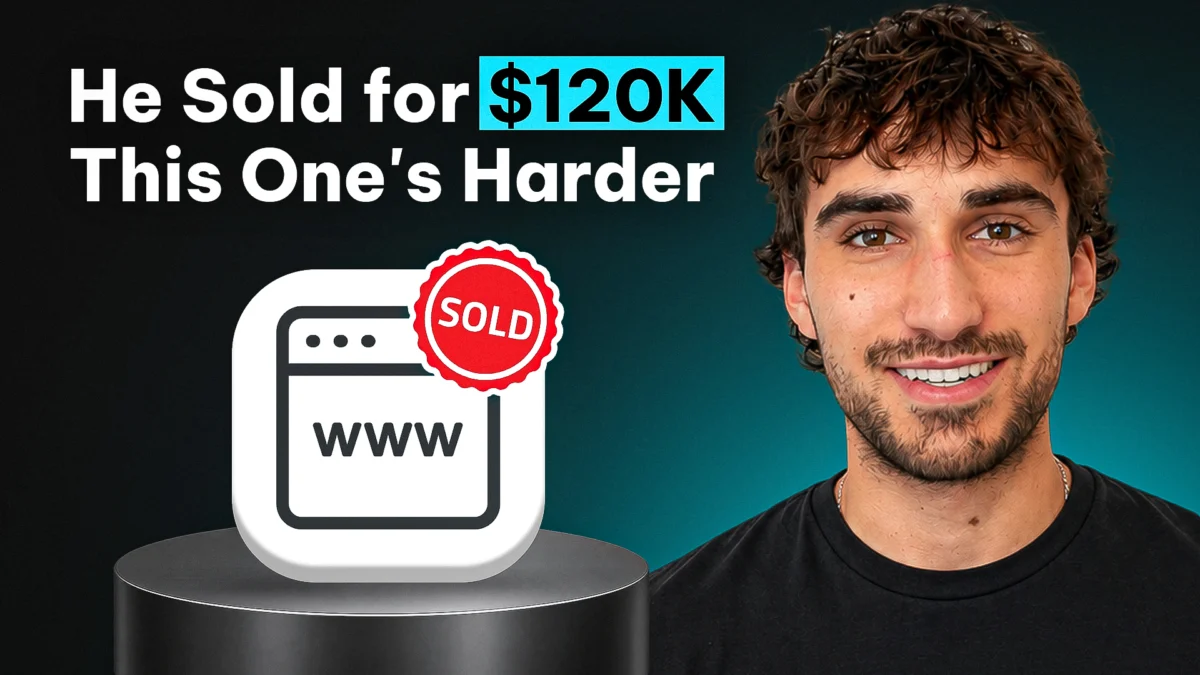
- The Breakthrough Asset: At 17, Schmidlkofer built DuckMath, an unblocked online gaming site targeted at students. By aggressively leveraging short-form video marketing, he scaled the site to generate roughly $1,000 per day in ad revenue before selling it for $120,000 in November 2025.
- The Current Venture: Launched on May 1, 2026, Tallow is a consumer-focused mobile application that allows users to scan food and household items to evaluate their health-related ingredients and overall product quality.
- The Financial Reality: Despite pulling in thousands of dollars in monthly revenue within months of launch, Tallow has fallen short of Schmidlkofer’s aggressive growth expectations, prompting a critical evaluation of whether to pivot or pull the plug.
Chronology: From a TikTok Inspiration to a High-Stakes Deadline
The Early Experiments and the First Taste of Success
Schmidlkofer’s journey into entrepreneurship began around age 16 or 17. Inspired by a younger creator on TikTok who had successfully built an unblocked gaming site, and armed with basic coding knowledge picked up from an Advanced Placement (AP) computer science class, Schmidlkofer decided to try his hand at the model.
Working first with Google Sites before transitioning to custom code, he began publishing short-form videos to drive traffic. The strategy quickly paid off. A single day generated $240 in revenue—a watershed moment that proved digital monetization was not merely theoretical. Promptly quitting an ongoing internship, Schmidlkofer redirected his full focus toward online business, though his initial path was far from a straight line.
False Starts and Valuable Lessons
In the wake of his early digital experiments, Schmidlkofer launched several secondary projects that ultimately failed to gain serious traction. Among them was Quackprep, a platform designed to help college students study using previous examinations in an interactive quiz format.
While Quackprep generated nominal revenue, Schmidlkofer quickly realized that scaling it would require solving a labor-intensive, school-by-school content acquisition problem. Other side projects similarly plateaued. Rather than viewing these as wasted efforts, Schmidlkofer credits his early missteps with teaching him the hard lessons of product-market fit and the vital importance of organic distribution.
The DuckMath Breakthrough and Six-Figure Exit
While exploring alternative ideas, Schmidlkofer’s original gaming site, DuckMath, had continued to generate passive income in the background. By the end of the summer, he decided to dedicate his full attention to the platform’s distribution.
By immersing himself in short-form video trends and significantly increasing his publishing volume, Schmidlkofer unlocked rapid growth. By late summer, DuckMath was consistently pulling in approximately $1,000 per day from advertising revenue.
However, despite the cash flow, Schmidlkofer decided to exit the project. Having lost personal interest in gaming, and recognizing the structural vulnerabilities of an ad-supported gaming site—such as copyright risks and limited buyer pools—he entertained acquisition offers. After starting with a $100,000 bid, he successfully negotiated the price up to $120,000, finalizing the sale in November 2025. In hindsight, Schmidlkofer admits mixed feelings about the exit, noting that the site could have easily continued generating $5,000 to $10,000 monthly in passive income to fund future ventures.
Launching Tallow and the October 31 Decision Point
Following the DuckMath exit, Schmidlkofer spent months conceptualizing his next move before officially launching Tallow on May 1, 2026. Entering a crowded health-tech market already anchored by established players like Yuka, Schmidlkofer positioned Tallow as a distinct alternative with unique ingredient-scoring criteria and user features.
Yet, consumer app economics proved vastly different from ad-driven gaming websites. At the time of the podcast interview, Tallow was generating less than $2,000 per month—falling significantly short of Schmidlkofer’s internal goal of $4,000 in monthly recurring revenue by late August.
Consequently, Schmidlkofer has drawn a hard line in the sand, establishing October 31 as a definitive decision point. If Tallow fails to hit its growth milestones by that date, he plans to sunset the project and move on—proving that even a growing, revenue-generating startup can be shelved if it fails to meet the stringent opportunity cost thresholds of a solo founder.
Supporting Data and Economic Realities
Running a modern direct-to-consumer mobile application involves a starkly different financial and operational blueprint compared to web-based content models. Schmidlkofer’s experiences highlight the micro-economics of bootstrapped app development:
- Low Infrastructure Costs: Thanks to introductory credits secured during a visit to a Y Combinator event, Tallow’s baseline server and operating costs are virtually negligible in its early stages.
- Platform Fee Relief: Both Apple and Android offer reduced platform commission rates of 15% (down from the standard 30%) for qualifying independent developers generating under $1 million annually—a relief that helps protect early margins.
- The High Cost of Friction: Beyond server bills and platform fees, hidden losses quickly accumulate for indie developers. For instance, early App Store optimization issues—where searches for "Tallow" erroneously directed users to unrelated results with a "Did you mean Talo?" prompt—cost Schmidlkofer an estimated $500 in lost conversions during a critical growth phase.
- The Marketing Time Sink: Transitioning from passive web content to a consumer app forced a dramatic shift in Schmidlkofer’s daily routine. He now estimates that 80% of his working hours are dedicated entirely to marketing, content creation, and search discovery rather than product feature development.
Strategic Implications: Navigating the Creator-App Economy
Schmidlkofer’s trajectory with Tallow illuminates broader structural trends within the modern digital economy, particularly the challenges faced by solo founders competing against influencer-backed juggernauts.
The Power and Peril of Influencer Partnerships
One of the most profound realizations from Schmidlkofer’s current venture is the dominance of influencer-backed consumer apps. Founders who partner with established creators inherently bypass the grueling months of organic audience building by plugging directly into pre-existing trust networks.
While Schmidlkofer remains open to bringing on an influencer partner—potentially via equity sharing—he highlights a classic Catch-22: early-stage apps lack the leverage to attract top-tier influencers, yet achieving the scale required to attract them demands the very distribution those influencers provide.
The Science of Organic Discovery
Lacking a massive initial marketing budget, Schmidlkofer has had to master non-traditional search and social discovery. By capitalizing on timely, high-interest public research—such as third-party testing reports revealing discrepancies in commercial avocado oil products—he builds short-form video content around urgent consumer anxieties. Tallow is then naturally positioned as the preventative tool to verify product safety, transforming news cycles into customer acquisition funnels.
Conclusion: The Ultimate Entrepreneurial Skill
Maddox Schmidlkofer’s journey defies the simplistic startup narratives often glorified on social media. His story proves that a six-figure early exit does not magically clear the path for consecutive home runs. Building Tallow has required confronting fierce competition, razor-thin margin leaks, and the psychological weight of unmet growth expectations.
As the October 31 decision deadline approaches, Schmidlkofer’s willingness to walk away from a growing, revenue-generating app underscores an invaluable lesson for founders at any stage: knowing when to fiercely persist, and when to pragmatically pivot, may ultimately be an entrepreneur’s most valuable asset.



