










HOUSTON — In an era dominated by venture-backed tech startups, hyper-growth SaaS platforms, and digital-first enterprises, the modern entrepreneurial dream is frequently associated with Silicon Valley. Yet, a growing faction of seasoned professionals is leaving the digital sphere behind in search of something tangible.
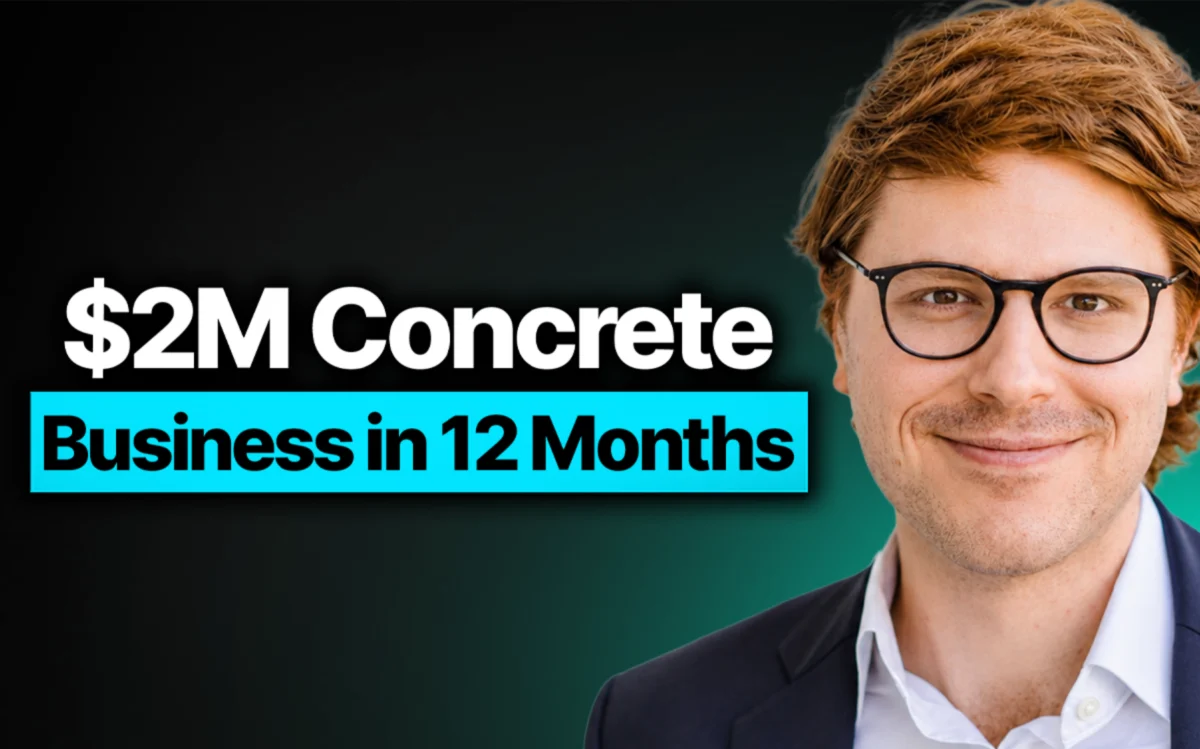
Jeff Price, a former fintech founder and corporate strategist with an MBA from Rice University, traded the high-stakes, high-burn world of venture capital for a decidedly "boring" blue-collar industry. In just 12 months, Price scaled Texas Slab Guys—a Houston-based concrete contractor—to a staggering $2 million annual revenue run rate.
His journey offers a masterclass in modern operational efficiency, proving that old-school trades, when paired with pragmatic artificial intelligence and relentless reliability, can yield extraordinary financial returns.
Main Facts: The Anatomy of a Rapid Scale
The ascent of Texas Slab Guys is defined by a unique fusion of high-level corporate acumen and traditional trade execution.
- The Pivot: After raising $2 million for a fintech venture that failed to achieve its targeted financial milestones, Price pivoted toward traditional business acquisition. After a nearly completed acquisition deal fell through, he identified a massive market gap in Houston’s concrete industry.
- The Scale: Operating in a metropolitan area that boasts more concrete per capita than any other in the Americas, Texas Slab Guys surpassed a $2 million annual revenue run rate in its first full year.
- The Tech Stack: Rather than viewing artificial intelligence as a gimmick, Price deployed custom-built AI applications via Replit and an automated voice agent to streamline administrative bottlenecks, capture missed leads, and qualify prospective clients.
- The Core Advantage: While competitors relied on complex marketing strategies, Texas Slab Guys won market share simply by answering the phone, showing up on time, and executing basic customer service fundamentals.
Chronology: From Venture Capital to the Job Site
Price’s path to the concrete industry was anything but linear. It was shaped by calculated risks, failed deals, and trial-by-fire operational lessons.
The Corporate and Startup Years
Before launching Texas Slab Guys, Price built a robust resume in corporate finance and strategy. He co-founded a fintech startup that successfully secured $2 million in early-stage funding and later worked at a Series B startup that had raised more than $30 million. However, despite the excitement of the startup ecosystem, the financial and lifestyle outcomes did not align with his long-term goals.
The Search for a "Boring" Business
Seeking greater control over his professional destiny, Price spent months researching brick-and-mortar blue-collar businesses. He contacted thousands of business owners, narrowing his targets to a handful of potential acquisitions. When a major deal fell through at the eleventh hour, it proved to be a blessing in disguise: it introduced him to the structural demand of the concrete industry in Houston.
A Rough Start and Early Mistakes
The launch phase was far from smooth. Price concluded his initial operational period with less than $200,000 in revenue, admitting he made nearly every mistake in the book. His greatest early hurdle wasn’t the technical execution of pouring concrete, but rather finding and retaining dependable subcontractors. Once he restructured his team around reliability, communication, and mutual trust, momentum shifted dramatically during the first half of the operational timeline.
Supporting Data: The Metrics of Modern Blue-Collar Success
The rapid financial trajectory of Texas Slab Guys underscores the viability of tech-enabled local service businesses.
- Revenue Milestone: Reached a $2 million annual run rate just 12 months after officially launching operations from scratch.
- The $15,000 ROI Proof: A single missed call—intercepted by an AI voice agent while Price was busy with another client—turned into a $15,000 project with direct costs of only about $3,000. The lead originated from a customer who had failed to reach five other local concrete competitors.
- Overhead Efficiency: By utilizing an AI voice agent costing roughly $100 a month and self-built custom quoting tools, Price managed administrative overhead while systematically eliminating wasted travel time on unverified leads.
- Productivity Compounding: Rather than replacing human labor, AI tools systematically saved small blocks of time daily, resulting in compounding operational efficiency over weeks and months.
Strategic Innovation: Removing Friction with AI
A core pillar of Price’s success story is his pragmatic approach to artificial intelligence. While many business owners panic about AI displacing human jobs, Price views it strictly as a "force multiplier."
Custom Quoting and Lead Qualification
Driving across sprawling metropolitan areas like Houston to provide estimates for unvetted prospects drains valuable time and resources. To combat this, Price used natural language prompts in Replit to build a custom quoting system.

The software acts as a gatekeeper, gathering critical project parameters before an in-person meeting is scheduled. This system ensures that every site visit is made with a highly qualified prospect, drastically cutting down on wasted fuel and labor hours.
The $100/Month AI Voice Agent
Perhaps his most lucrative tech integration is an automated AI voice agent designed to pick up calls when human team members are unavailable. The agent captures essential customer details, summarizes the dialogue, and texts an immediate recap to Price.
By ensuring that no phone call goes unanswered—a notorious failing point for traditional contractors—Texas Slab Guys consistently captures overflow work from competitors who lack basic customer intake responsiveness.
Premium Positioning and Customer Service
Rather than entering a race to the bottom by competing strictly on low pricing, Price positioned Texas Slab Guys as a premium service provider.
The company utilizes high-strength 5,000 PSI concrete, which allows homeowners to drive on their newly poured driveways much faster than standard installations permit. This material upgrade is paired with a frictionless customer experience: clear communication, punctual arrivals, and spotless job sites.
This commitment to quality creates a powerful secondary marketing loop. Satisfied residential clients frequently introduce Texas Slab Guys to commercial opportunities—such as concrete work for local medical and dental practices—generating high-value B2B projects entirely through word-of-mouth reputation and organic social proof shared across Instagram, TikTok, and Facebook.
Implications: The Future of Trade Businesses
The success of Texas Slab Guys signals a broader shift in how modern entrepreneurs view traditional industries.
1. The Resurgence of Blue-Collar Entrepreneurship
As competition in digital spaces like e-commerce, content publishing, and SaaS grows increasingly fierce, boring brick-and-mortar industries offer defensive moats. Physical infrastructure, local geography, and hands-on labor cannot be easily disrupted by overseas competitors or sudden algorithm changes.
2. Democratization of Automation
Price’s ability to build custom quoting software without a traditional computer science background demonstrates how accessible modern tools have become. Solopreneurs and small business owners no longer need expensive development agencies to build functional automation; simple no-code and AI-assisted programming environments level the playing field.
3. Redefining Entrepreneurial Success
Beyond the financial metrics, Price’s transition from high-stress venture-backed startups to a localized trade business reflects a fundamental re-evaluation of lifestyle design. For many modern operators, true success is no longer measured solely by venture valuation, but by schedule control, the ability to coach children’s sports teams, and freedom of time.
Ultimately, Jeff Price’s journey proves that the most lucrative business opportunities often lie hiding in plain sight—waiting for someone willing to combine traditional grit with modern operational intelligence.



