





Introduction: The Next Evolution of Multimodal Intelligence
For years, Google has meticulously laid the groundwork for a unified artificial intelligence ecosystem. Under the broad umbrella of its Gemini architecture, the tech giant has systematically integrated text, images, audio, video, code, and autonomous agents into a single orbit. However, the announcement at Google I/O 2026 marks a paradigm shift in how artificial intelligence transitions from mere comprehension to active creation and editing.
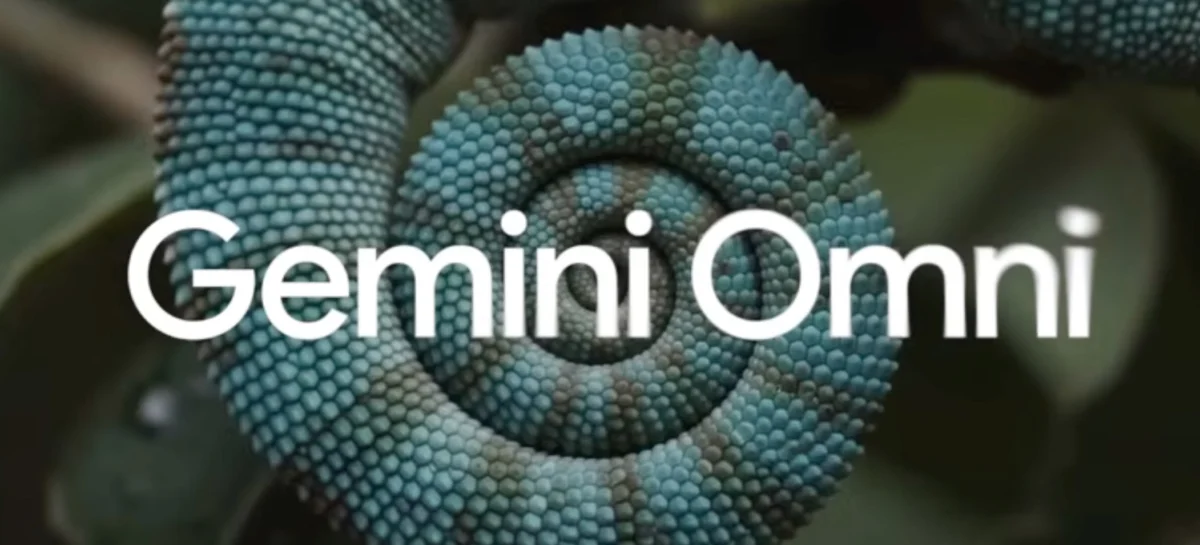
Enter Gemini Omni, Google’s ambitious new model family designed to generate and manipulate media from mixed, multimodal inputs. Rather than serving as a minor iteration of existing chatbot technology or standing as a standalone video generator, Omni represents a concerted effort to collapse several fragmented creative workflows into a singular, cohesive system.
At the vanguard of this rollout is Gemini Omni Flash, a model specifically tailored to revolutionize video generation and conversational editing. By marrying Gemini’s advanced reasoning capabilities with high-fidelity media production, Google is aiming to solve one of the most persistent bottlenecks in generative AI: the frustrating inability to edit and refine outputs without starting from scratch.
Main Facts: What is Gemini Omni and How Does It Work?
Gemini Omni is defined by Google as the intersection where “Gemini’s ability to reason meets the ability to create.” In practical terms, it is a multimodal creation model that accepts diverse inputs—including text, high-resolution images, rich audio tracks, and reference video clips—and processes them simultaneously to output or modify video content.
Unlike traditional text-to-video generators that operate as isolated "slot machines," producing a single, unchangeable clip based on a prompt, Omni is engineered from the ground up to support iterative, conversational editing.
Core Capabilities of Gemini Omni
- Conversational Video Editing: Users can bypass complex timeline editors, masking layers, and manual effect adjustments. Instead, they interact via natural language to modify existing footage. Prompts can range from altering a character’s clothing to shifting camera angles, moving entities into entirely different environments, or inserting dynamic visual effects.
- Multi-Reference Grounding: Omni allows users to anchor their creative outputs using a combination of character sheets, aesthetic style guides, base videos, and audio references. This drastically reduces the guesswork inherent in standard generative models.
- Physics, Motion, and Context Awareness: Google has heavily emphasized the model’s grasp of physical rules—such as gravity, fluid dynamics, kinetic energy, and spatial continuity. The model is built to maintain scene logic and character consistency across multiple turns of conversation.
- Educational and Professional Explainers: Beyond cinematic surrealism, Omni can transform dense technical descriptions or data points into engaging visual explainers, such as claymation-style models of cellular structures or stop-motion physics demonstrations.
- Personal Avatars and Voice Integration: Initial releases incorporate Google’s avatar infrastructure, allowing creators to generate videos utilizing their own synthesized voices and digital likenesses.
Chronology: Rollout Strategy and Availability
Google’s deployment strategy for Gemini Omni Flash provides a clear window into its immediate target audience: content creators, everyday consumers, and casual producers, rather than enterprise developers.
- Google I/O 2026 Announcement: Google officially unveils the Gemini Omni architecture and details the capabilities of Gemini Omni Flash.
- Immediate Consumer Deployment: Gemini Omni Flash rolls out globally to Google AI Plus, Pro, and Ultra subscribers through the native Gemini application and the Google Flow environment.
- Creator Ecosystem Integration: Simultaneously, the model is made available at no cost to users aged 18 and older via YouTube Shorts Remix and the YouTube Create app, signaling an aggressive push into social media content creation.
- Developer and Enterprise Horizon: Google has confirmed that dedicated API access for developers and enterprise customers will follow in the coming weeks, with pricing and comprehensive documentation slated for a subsequent release.
Supporting Data and Technical Distinction: Omni vs. Veo
To fully understand Gemini Omni, it is vital to contextualize it alongside Google’s existing media generation frameworks, most notably Veo.
While Veo established Google as a dominant competitor in the standalone text-to-video generation space, it remains primarily a generation engine. Gemini Omni, by contrast, is a broader multimodal framework. While its initial model, Gemini Omni Flash, focuses heavily on video, the overarching architecture is designed to scale across other output modalities, including advanced audio generation and complex image manipulation in future iterations.
Furthermore, the integration of advanced safety mechanisms addresses the inherent risks of sophisticated media manipulation. Google has embedded SynthID invisible watermarking directly into Omni-generated assets. Additionally, Google DeepMind has confirmed that all content produced or edited via the Gemini app, Google Flow, or YouTube will carry standardized C2PA Content Credentials, offering platforms and viewers a reliable verifiable trail of digital provenance.
Official Responses and Industry Context
The announcement of Gemini Omni has elicited significant discussion across the technology and creative sectors. Industry analysts point out that while OpenAI’s Sora and competing models from Runway and Pika Labs established high benchmarks for initial visual fidelity, they historically struggled with the downstream editing process.
Google’s executive team has emphasized that the core philosophy behind Omni is "control through conversation." During the Google I/O showcase, product leads reiterated that creators do not merely want tools that surprise them with cinematic clips; they require systems that respect intent, preserve narrative and visual continuity, and allow for granular, iterative revisions.
Competitors are watching closely. The convergence of image, video, audio, and avatar workflows into a single interface mirrors broader industry trends toward unified "omnigenerative" platforms. However, Google’s massive distribution network—spanning the Gemini app, Google Workspace, and YouTube—gives Omni an immediate pipeline to hundreds of millions of active users.
Implications: The Shift Toward Creative Systems
The introduction of Gemini Omni carries profound implications for multiple industries, ranging from digital marketing and education to professional filmmaking and software development.
1. The Transformation of Content Creation
For independent creators and small marketing teams, Omni lowers the barrier to producing high-end multimedia content. By allowing users to feed rough storyboards, reference images, and voice tracks into a single pipeline, the time required to conceptualize and iterate on a video project shrinks from days to minutes.
2. Educational and Technical Communication
The ability to generate accurate, context-aware explainers opens new frontiers for educators and technical writers. Complex phenomena—ranging from astrophysical mechanics to cellular biology—can be translated into dynamic visual formats through simple conversational prompts, revolutionizing how complex ideas are communicated.
3. The New Standard for Creative Control
As generative AI matures, the metric for success is shifting away from isolated "one-shot" generation spectacles. Tools like Gemini Omni establish a new baseline: AI must act as a collaborative partner—a digital director, editor, and physics simulator rolled into one.
4. Safety, Misinformation, and Ethical Challenges
Despite the inclusion of SynthID watermarks and C2PA credentials, the capability to effortlessly edit high-definition video and synthesize personal avatars poses ongoing challenges for platform moderation. The ease with which realistic digital media can be altered will continue to test the boundaries of consent, copyright, and digital trust.
Conclusion
Gemini Omni is Google’s clearest declaration yet that the era of isolated, single-modality AI tools is drawing to a close. By focusing heavily on conversational editing, multi-reference grounding, and physics-aware context, Google is attempting to turn generative video from a novelty slot machine into a reliable creative system.
While real-world testing will ultimately determine whether Gemini Omni Flash can live up to its polished stage demonstrations, the direction is unmistakable. The next frontier of artificial intelligence is not just about what the model can generate on its own, but how seamlessly it can collaborate with human creators to shape, refine, and bring their visions to life.