











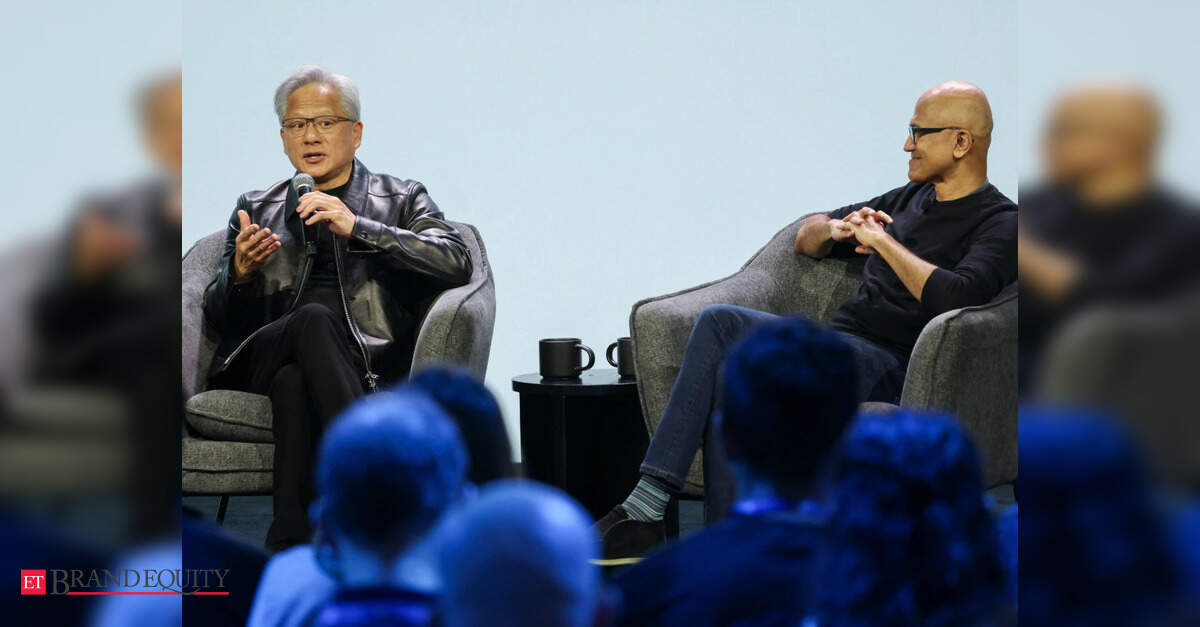
In a high-stakes move that promises to redefine the relationship between personal computing and artificial intelligence, Microsoft has officially unveiled a suite of advancements designed to transition complex AI processing from the cloud to the desktop. During a pivotal event in San Francisco, Microsoft CEO Satya Nadella and Nvidia CEO Jensen Huang showcased the new "Surface Laptop Ultra," a machine engineered to serve as a secure, high-performance hub for AI agents.
This strategic shift represents more than just a hardware refresh; it is a fundamental architectural transition. By empowering local hardware to handle sophisticated tasks—such as autonomous coding and complex business analytics—Microsoft is signaling an end to the era where the "cloud" was the only viable destination for heavy-duty AI compute.
Main Facts: The New AI Frontier
The core of Microsoft’s latest announcement centers on two pillars: security and capability. To address the inherent risks of AI agents—autonomous software capable of executing tasks on behalf of users—Microsoft introduced Microsoft Execution Containers. This security framework acts as a sandbox, preventing AI agents from accessing sensitive user data or executing unauthorized system-level tasks without explicit permission.
The partnership with Nvidia is the engine behind this transition. The new Surface Laptop Ultra is powered by Nvidia’s latest RTX Spark chips, designed specifically to manage heavy AI workloads locally. This development is a direct challenge to Apple’s "Apple Intelligence" initiative, which also seeks to harmonize on-device processing with privacy-conscious computing.
For the enterprise, the benefits are clear: Pavan Davuluri, Microsoft’s Executive Vice President for Windows and Devices, announced that IT departments will now have the ability to enforce strict administrative rules over how AI agents operate on individual employee machines. This ensures that even as local machines gain more autonomy, they remain firmly within the regulatory perimeter of the corporate network.
A Chronology of the Shift
The road to this week’s launch has been a multi-year collaborative effort between Microsoft and Nvidia. The trajectory of this partnership illustrates the rapid maturation of AI from a theoretical concept to a desktop utility:
- Two Years Ago: Microsoft first floated the concept of running AI tasks on PCs, primarily as a cost-saving measure to reduce the reliance on expensive Azure cloud compute. At the time, the software ecosystem was nascent, even if the hardware potential existed.
- The Intermediate Phase: As generative AI exploded in popularity via ChatGPT and other platforms, the focus shifted from "cost-saving" to "speed and security." Microsoft and Nvidia began deep-level engineering to optimize Windows to recognize and utilize Nvidia’s RTX architecture.
- The Hardware Bottleneck: During the last 18 months, the industry faced a severe memory-chip crunch. The cost of high-bandwidth memory (HBM) surged, significantly inflating the cost of AI-capable hardware.
- The Present: With the launch of the Surface Laptop Ultra and the introduction of Execution Containers, Microsoft and Nvidia are effectively declaring that the "Local AI" era has officially arrived, despite the inflationary pressures on the hardware itself.
Supporting Data: The Cost of Intelligence
While the technological leap is significant, the economic reality is more complex. Analysts are pointing toward a growing "affordability gap" in the AI hardware market.
Nvidia’s own pricing trajectory highlights this volatility. The company recently increased the price of its "DGX Spark" AI desktop machine by approximately 75%, bringing the retail price to $6,950. This surge is largely attributed to the scarcity of high-capacity memory, specifically the 128-gigabyte configurations required to run large language models (LLMs) effectively on a local machine.
Anshel Sag, an analyst at Moor Insights & Strategy, notes the irony of the current situation: "Two years ago, the software wasn’t ready, but the hardware was. Now the software is ready and the hardware is too expensive to actually run it locally. It is becoming a situation where only those with the budget can afford to run sophisticated AI locally."
This creates a bifurcated market. Enterprises with deep pockets can deploy "Local AI" to secure their data and bypass cloud latency, while smaller businesses and individual consumers may find themselves priced out, forcing them to remain reliant on cloud-based, subscription-model AI services.
Official Responses and Strategic Vision
During the San Francisco event, the dialogue between industry titans was notably collaborative, focusing on the concept of "AI Sovereignty."
Satya Nadella, CEO of Microsoft:
"We needed to make the desktop the most secure place for agents to execute. The cloud is incredible for massive training, but for execution—for the day-to-day work of an employee—the desktop must become the primary, trusted environment."
Jensen Huang, CEO of Nvidia:
By integrating Nvidia’s RTX Spark chips into the Surface line, Huang is positioning his company to dominate a segment previously held by Intel and AMD. For Nvidia, this is a strategic move to ensure that every AI-enabled laptop acts as a mini-datacenter, further cementing the necessity of their proprietary silicon in the global compute stack.
Pavan Davuluri, Microsoft:
"We are giving IT administrators the keys to the castle. With Execution Containers, we are ensuring that the promise of AI—which is autonomy—does not become a security nightmare for the modern enterprise."

Implications: The Battle for the Desktop
The implications of this shift are profound, impacting several sectors of the tech industry:
1. The Cloud vs. Edge Debate
Microsoft is essentially cannibalizing a portion of its own Azure cloud revenue to secure a larger stake in the PC market. By moving workloads to the local machine, they are shifting the hardware cost to the consumer while keeping the user locked into the Windows ecosystem. This is a brilliant defensive play against Apple, which has long marketed its "unified architecture" as the premier way to handle AI tasks.
2. The Security Paradigm
Security is the primary barrier to the widespread adoption of AI agents. If an agent has access to a user’s calendar, email, and coding environment, a single breach could be catastrophic. Microsoft’s focus on "Execution Containers" is an attempt to define the industry standard for safe AI. If they succeed, Microsoft could control the security protocol for all local AI agents, regardless of whether they are developed by OpenAI, Anthropic, or others.
3. The Hardware Lifecycle
For Intel and AMD, the move toward Nvidia-heavy configurations is a significant threat. If the "AI PC" becomes synonymous with "Nvidia GPU-powered PC," the legacy CPU manufacturers will need to innovate rapidly to keep their integrated graphics and NPUs (Neural Processing Units) relevant.
4. The Digital Divide
Perhaps the most concerning implication is the widening digital divide. If high-performance local AI is restricted to hardware costing upwards of $7,000, the "AI-enhanced professional" will become a distinct class of worker. This hardware-software convergence could lead to a two-tier economy where productivity gains from AI are accessible only to those who can afford the initial capital expenditure of expensive, memory-heavy hardware.
Conclusion
The launch of the Surface Laptop Ultra and the rollout of Microsoft Execution Containers marks the beginning of the "Local AI" era. Microsoft and Nvidia have successfully moved the goalposts, transforming the PC from a simple productivity tool into a secure, autonomous agent hub.
However, the success of this vision hinges on more than just code. It depends on whether the market can normalize the costs of the hardware required to power these innovations. As companies like Anthropic, OpenAI, and Nvidia integrate these new tools, the desktop is once again becoming the center of the computing universe—a place where security, power, and autonomy converge. Whether this future remains an exclusive luxury for the enterprise or becomes a ubiquitous standard for all users will be the defining technology story of the next five years.



