










By [Author Name]
Published: October 2026
Main Facts
The modern digital advertising landscape is defined by automation. Artificial intelligence and machine learning models now dictate how campaigns discover audiences, optimize bids, dynamically generate ad copy, and select landing page destinations. Platforms like Google Ads heavily promote these AI-driven features—ranging from Performance Max and AI Max Search campaigns to automated asset generation—as the ultimate shortcut to higher conversion volumes and maximized return on ad spend (ROAS).
However, a critical blind spot exists in modern intent-driven search architecture: advertisers are focusing too heavily on what to target while neglecting what to exclude.
Historically, digital marketers relied on basic negative keywords and placement exclusions to filter out irrelevant traffic. For example, adding "cheap" as a negative keyword prevented an ad from triggering when that specific term appeared in a search query. In the era of intent-based, semantic AI search, this tactic is no longer sufficient. An AI-powered search engine can deduce a user’s underlying transactional intent even if the typed query lacks specific trigger words. A budget-conscious consumer looking for an inexpensive laptop case might simply search "laptop cases," bypassing traditional keyword filters entirely while still presenting zero conversion potential for a luxury brand.
To combat budget waste and brand dilution, modern advertisers must implement strict AI guardrails. By leveraging advanced Google Ads features—such as Text Guidelines, Asset Optimizations, URL Exclusions, and account-level automated asset controls—advertisers can explicitly instruct algorithms on who to avoid. Furthermore, managing features like Optimized Targeting and Audience Expansion requires a methodical, data-backed approach to ensure that machine learning engines train on high-intent conversion data before expanding into broader, riskier networks.

Chronology of Evolution: From Static Keywords to Dynamic AI Guardrails
To understand why exclusion strategies have become so complex, it is necessary to examine how Google Ads targeting has evolved over the past decade.
- The Era of Exact Match and Basic Negatives (Pre-2018): Search advertising was largely transactional and literal. Advertisers built rigid keyword lists, mapped exact terms to specific ad groups, and used negative keywords as a blunt instrument to block irrelevant queries. Machine learning played a minimal role in day-to-day delivery.
- The Rise of Smart Bidding and Responsive Ads (2018–2022): Google began shifting control from human operators to algorithms. Responsive Search Ads (RSAs) introduced dynamic copy generation, allowing Google’s AI to mix and match headlines and descriptions. Advertisers relinquished control over exact ad variations, prompting the first wave of demand for better brand-safety controls.
- The Performance Max Paradigm Shift (2021–2024): Google launched Performance Max (PMax), a goal-based campaign type that centralized access to all Google inventory (Search, Display, Discover, Maps, Gmail, and YouTube) through a single black-box AI model. Advertisers could no longer see exact search queries or control specific placements easily, making broad targeting the default setting.
- The Advent of AI Max and Advanced Text Guidelines (2025–Present): As generative AI permeated search experiences, Google rolled out AI Max Search campaigns and granular text guidelines. Recognizing that black-box automation frequently mismatched brand messaging—such as pairing luxury products with discount-seeking intent—Google introduced advanced suppression tools, allowing marketers to program specific semantic guardrails, messaging restrictions, and negative text definitions directly into the AI training loops.
Supporting Data & Technical Analysis: Navigating the Google Ads Interface
Implementing effective AI guardrails requires a deep dive into often-obscure settings within the Google Ads dashboard. Advertisers who leave default settings intact risk squandering up to 20% or more of their monthly ad spend on unvetted, low-intent traffic.
1. Text Guidelines and Asset Optimization in Performance Max
When deploying Performance Max or AI Max Search campaigns, Google dynamically generates ad copy and directs traffic to various landing pages across your domain. Without supervision, the algorithm might position a premium, artisan product next to discount-oriented terminology.
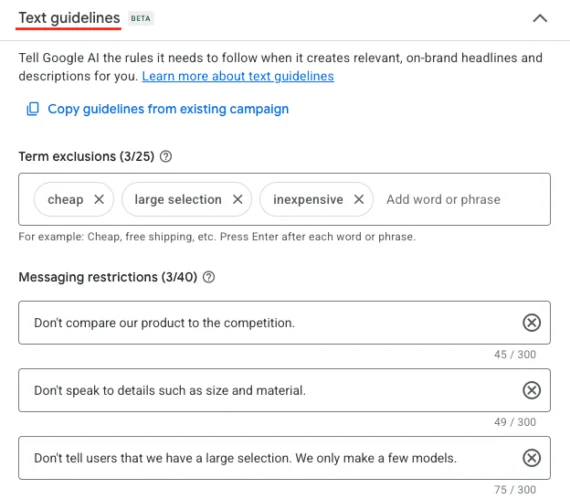
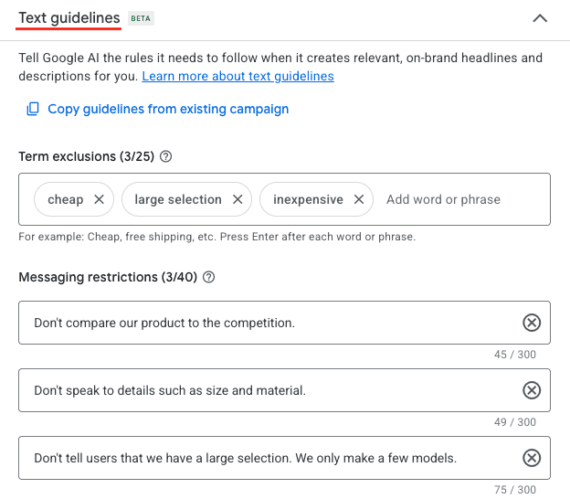
By utilizing Text Guidelines, advertisers can establish strict behavioral boundaries for the AI. For instance, a brand selling high-end, limited-batch laptop cases can explicitly input term exclusions (such as "cheap," "inexpensive," or "large selection") and enforce messaging restrictions (e.g., prohibiting comparisons to lower-cost competitors).
Similarly, Asset Optimizations allow marketers to disable automated image and video enhancements that fail to meet brand compliance standards, while URL Exclusions prevent the AI from driving high-intent traffic to clearance or outlet pages when marketing premium inventory.
2. Unearthing Account-Level Automated Assets
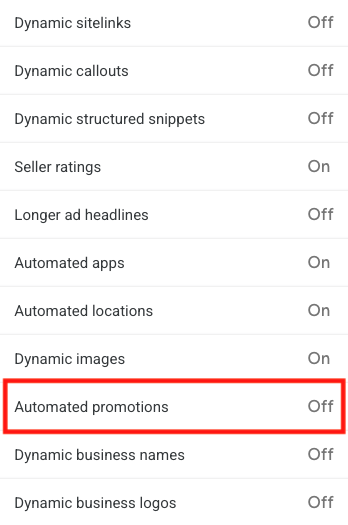
Tucked deep within the Google Ads interface lies a feature with massive potential impact: Account-level automated assets. By default, Google enables automated extensions—including dynamic sitelinks, callouts, images, and newly introduced automated promotions that pull discounted items directly from an advertiser’s product feed.
To audit and control these automated features, advertisers must navigate the platform using the following path:
- Log in to the Google Ads account.
- Select the relevant account level or campaign view.
- Locate the asset management section in the navigation menu.
- Access Advanced Settings to review the live status of account-level automated features.
If left unchecked, Google may dynamically pull brand logos, names, or unverified promotional pricing that contradicts overarching marketing strategies. Advertisers can review what the AI has independently generated by visiting the "Assets" link in the left-hand navigation and applying the filter "Added by: Google AI."
3. The Timing Trap: Optimized Targeting and Audience Expansion
By default, Search campaigns automatically target Google Search Partners and the Display Network unless manually opted out. Likewise, Demand Gen and Video campaigns apply Optimized Targeting and Audience Expansion out of the box.
While Google notes that campaigns can yield higher conversion rates with optimized targeting enabled, turning these features on prematurely can devastate a new campaign’s efficiency. If an algorithm is given permission to expand audiences before it has ingested a statistically significant volume of true conversion data, it will scatter budget across irrelevant prospecting pools. The golden rule for modern advertisers is clear: Train the AI first with hard conversion data, and only enable broad audience expansion once the core model is stable.
Official Responses and Industry Perspectives
Digital marketing agencies, enterprise brands, and platform representatives have increasingly debated the friction between algorithmic efficiency and brand control.
Google Ads product development teams consistently defend automated features, asserting that machine learning models require broad exploratory freedom to discover untapped consumer segments that human planners might overlook. Official documentation frequently emphasizes that features like automated assets and optimized targeting reduce manual overhead while capturing macro-trends in user behavior.
Conversely, independent PPC auditors and enterprise media buyers have raised persistent concerns regarding brand safety and "black-box" expenditure. Industry analysts argue that while Google’s AI excels at pattern recognition, it lacks qualitative brand awareness. Without rigorous human intervention through negative constraints and text guidelines, algorithms frequently prioritize volume over margin—driving high volumes of low-value clicks that inflate conversion metrics while eroding profitability. Leading agency executives now advocate for a "trust-but-verify" methodology, where automated engines are heavily sandboxed during their initial learning phases.
Implications for Digital Marketers and Enterprise Brands
The shift toward AI-dominant advertising ecosystems fundamentally alters the daily responsibilities of digital marketers. The core competency of a PPC specialist is no longer writing exhaustive keyword lists or manually adjusting keyword match types; instead, it has evolved into algorithmic management and constraint engineering.
- Strategic Shift from Expansion to Curation: Advertisers must master the art of negative conditioning. Knowing who not to target is now more commercially valuable than discovering broad new keyword variations.
- Resource Allocation and Continuous Auditing: Because Google frequently rolls out new automated features enabled by default, organizations must institute weekly or monthly audits of account-level automated assets. Failing to do so can result in unauthorized brand representation, unintended promotional discounting, and misaligned landing page traffic.
- Budget Protection via Data Discipline: Premature use of broad targeting features will continue to drain marketing budgets. Brands must enforce strict data thresholds—allowing algorithms to ingest verified, first-party conversion data—before unlocking optimized targeting or audience expansion modules.
Ultimately, artificial intelligence in Google Ads is a powerful engine, but it requires a human hand on the steering wheel. By aggressively defining guardrails, setting rigorous text guidelines, and auditing automated assets, advertisers can harness the predictive power of machine learning without sacrificing brand integrity or financial efficiency.



