










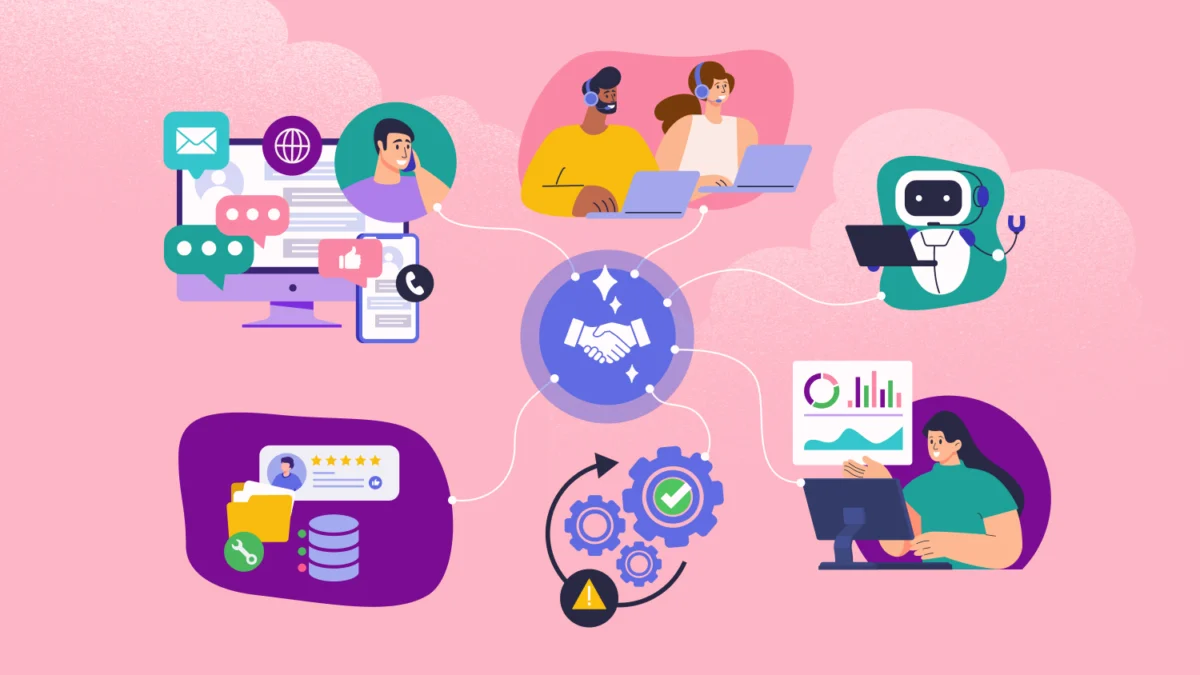
SAN FRANCISCO — In a sweeping announcement poised to redefine enterprise customer service, Salesforce has rolled out a massive wave of innovation for its flagship Service Cloud. Aimed at dismantling the operational silos that have long plagued customer support operations, the new capabilities merge native contact center infrastructure, autonomous AI agents capable of self-optimization, real-time human agent assistance, and comprehensive hybrid workforce management into a single, unified ecosystem.
For global enterprises struggling to piece together disjointed solutions from multiple vendors for voice, digital channels, artificial intelligence, and customer relationship management (CRM), Salesforce’s latest release represents a fundamental shift. By anchoring these disparate elements onto a singular native foundation, the tech giant is offering a blueprint for what it terms the "agentic future" of customer service.
Main Facts: The Pillars of Salesforce’s Service Cloud Evolution
The newly announced features span several core technological pillars designed to overhaul how businesses interact with customers and manage their support staff:
- Global Native Contact Center Expansion: Salesforce’s native contact center—which natively unifies voice, digital channels, CRM data, and AI agents—is expanding internationally. General availability (GA) launches across more than 30 European countries this October, followed by Australia and New Zealand in November.
- Conversational Deployment via AI Coding Assistants: Organizations can now build out contact center configurations "headlessly" using AI coding tools like Claude or Cursor, bypassing the need for deep technical expertise in specific UI platforms.
- Self-Optimizing Autonomous AI Agents ("Casey"): Salesforce’s autonomous help agent, Casey, is receiving advanced self-optimization updates. The AI can autonomously analyze historical interaction data, identify automation bottlenecks, build new resolution flows, and test them against real scenarios—all subject to human approval.
- Real-Time Human Empowerment & Slack Swarming: The Service Rep Assistant analyzes customer sentiment and case context dynamically. Meanwhile, an open beta of agentic Slack swarming automates cross-departmental collaboration, spinning up dedicated Slack channels with relevant experts and context without forcing reps to switch applications.
- Unified Workforce Engagement Management (WEM): A centralized dashboard powered by Salesforce Moirai forecasting intelligence allows leaders to track hybrid workforces, manage real-time schedule adherence, and forecast labor needs through natural language dialogue.
- Simplified Packaging and Pricing: Salesforce has consolidated its platform offerings into streamlined Core, Advanced, and Max editions. These bundles include Service Cloud, Contact Center, WEM, Slack integration, Tableau Next, and embedded Flex Credits to simplify procurement.
Chronology of Rollouts and Global Expansion
The deployment of these features follows a structured timeline designed to bring enterprise-grade capabilities to international markets over the final quarter of the year:
- Mid-October: Salesforce’s native Contact Center goes live across more than 30 European nations, including the United Kingdom, Ireland, Germany, France, Italy, Spain, Switzerland, Denmark, Finland, Portugal, and Sweden. This rollout is engineered to comply strictly with regional data residency, sovereignty, and regulatory frameworks. Concurrently, Rich Communication Services (RCS) becomes generally available, introducing app-like multimedia capabilities to standard message threads for both marketing and support.
- November: The regional expansion continues as the native contact center launches in Australia and New Zealand. Simultaneously, Casey’s advanced self-optimization capabilities roll out globally, allowing businesses to leverage automated agent improvements informed by real operational data.
- Ongoing (Current Beta): Agentic Slack swarming enters its open beta phase, empowering enterprise support teams to pilot automated, cross-functional collaboration tools.
Supporting Data and Real-World Impact
Salesforce’s push toward a unified, AI-first contact center architecture is underpinned by early success stories from prominent global brands. For years, the industry standard has relied on a patchwork of software vendors. According to Salesforce, these integration seams create critical bottlenecks that make deploying reliable AI systems exceptionally difficult.
Early adopters of the unified Salesforce approach are already reporting substantial operational efficiencies:
- Compass Working Capital has successfully reclaimed 6,000 hours a year previously lost to administrative and routing friction, returning that time directly to human representatives.
- Global apparel and lifestyle brands Wolverine Worldwide and Canada Goose have integrated their customer service operations and contact centers directly onto the Salesforce infrastructure, streamlining omnichannel interactions.
Furthermore, the new tiered editions—Core, Advanced, and Max—come pre-loaded with substantial Flex Credit allocations (500,000 for Core, 1 million for Advanced, and 2.75 million for Max). These credits provide businesses with the instantaneous capacity required to scale AI workloads across enterprise operations without unpredictable incremental costs.
Official Responses and Strategic Vision
Industry analysts note that enterprise software buyers are increasingly exhausted by the hidden costs and maintenance overhead of "stitched-together" architectures. Salesforce executives emphasize that the company’s latest release directly addresses this market fatigue.
"Most contact centers today are built from separate vendors for voice, digital, AI, and CRM, and those integration points create bottlenecks that make deploying AI especially hard," leadership noted in the official rollout statement. "You can’t build an agentic future on a fractured foundation."
By introducing features like headless skill building—which allows developers and administrators to configure contact center logic conversationally using developer tools like Claude or Cursor—Salesforce is significantly lowering the barrier to entry for complex system modifications.
On the autonomous front, the introduction of self-optimizing capabilities for the AI agent Casey represents a philosophical shift in how enterprise software maintains its value. Traditionally, AI maintenance required constant human intervention to audit performance, rewrite prompts, and adjust routing logic. By shifting this burden to the AI itself—while maintaining a mandatory human-in-the-loop approval safeguard—Salesforce aims to solve the problem of post-launch performance degradation.
Implications for the Future of Enterprise Customer Service
The broader implementation of these tools carries profound implications for the customer service landscape, touching on workforce dynamics, data compliance, and operational economics.
1. The Redefinition of Hybrid Workforce Management
As autonomous agents handle an increasingly large share of tier-one customer inquiries, contact center leadership faces a unique visibility challenge. Human staff handle increasingly complex, emotionally charged, and high-stakes escalations, while AI handles the high-volume baseline. Without unified visibility, traditional workforce management tools often result in severe understaffing, agent burnout, and spiraling labor costs. Salesforce’s integration of Customer Signals Intelligence into a centralized Command Center gives leaders real-time insight into live sentiment shifts, allowing for predictive staffing models driven by the Moirai intelligence engine.
2. Regulatory Compliance in Global Deployments
Expanding native contact center capabilities across more than 30 European nations simultaneously highlights Salesforce’s strategic focus on data sovereignty. As regulatory scrutiny regarding customer data privacy intensifies globally—exemplified by stringent European frameworks—enterprises require architectures that do not compromise local compliance requirements for the sake of centralized cloud convenience.
3. Convergence of Human and Autonomous Workflows
The integration of agentic Slack swarming points to a future where organizational boundaries within enterprises blur in the face of customer demand. When a customer service representative is confronted with a complex, multi-departmental issue, the traditional workflow involves placing the customer on hold, opening internal tickets, or sending disjointed emails to specialists. By automating the creation of secure, context-rich collaboration channels populated by both human experts and specific AI tools, Salesforce is drastically shrinking "mean time to resolution" (MTTR).
4. Simplified Procurement and Deployment Models
By consolidating major functionalities—including contact center infrastructure, advanced analytics via Tableau Next, collaborative workspaces via Slack, and enterprise-grade security—into single-tier editions, Salesforce is signaling an end to complex, modular add-on pricing strategies. This consolidation makes advanced technological adoption viable for mid-market companies that previously lacked the resources to integrate disparate enterprise solutions.
As these capabilities roll out through the final quarter of the year, organizations worldwide will have the opportunity to test whether a truly unified, agentic contact center foundation can finally eliminate the operational friction that has defined customer service technology for decades. For teams wanting a deeper dive into the platform’s capabilities, Salesforce has made all Service Cloud sessions from its recent Dreamforce conference available on demand.



