








The ecommerce landscape is undergoing a structural transformation, shifting away from static web storefronts toward a dynamic, hyper-connected, and autonomous ecosystem. This week’s product releases and strategic alliances paint a clear picture of where retail technology is headed: toward agentic commerce, localized same-day logistics, embedded cross-border financial frameworks, and AI-driven personalization that bridges the gap between digital intent and physical execution.
As merchants scramble to adapt to changing consumer behaviors and emerging artificial intelligence capabilities, technology providers are rolling out integrated tools designed to minimize friction at every stage of the buyer journey—from initial product discovery to final delivery and customer retention.
Main Facts: The New Tools Reshaping the Merchant Stack
The latest round of product updates emphasizes automation, cross-channel data unification, and artificial intelligence integration. Key developments span several crucial sectors of the digital retail stack:

- Agentic Commerce and Checkout: Platforms like Constructor, Crossmint, and DaVinci Commerce have introduced groundbreaking toolkits allowing autonomous AI agents to discover, evaluate, and pay for products seamlessly. Constructor’s Stripe-powered Agentic Checkout and Crossmint’s Agent Commerce Toolkit allow AI assistants to complete full transactions without forcing users to navigate away from an active conversational interface.
- Fulfillment and Logistics: In Canada, Ecom Logistics has launched Ecom Now, bringing direct, same-day fulfillment to Shopify merchants in major metropolitan areas. Meanwhile, Zenkraft has introduced a Salesforce-native multi-carrier shipping app tailored specifically for agentic storefronts.
- AI-Powered Advertising and Marketing: Meta has expanded its Ads Creative Studio and Advantage+ suites with generative AI video tools and enhanced business memory. Simultaneously, Razorpay has partnered with OpenAI to bring ChatGPT Ads to the Indian market through its Razorpay Engage platform, and Typeform has launched an AI-native landing page builder.
- Payments and Financial Infrastructure: BigCommerce Payments by PayPal has officially expanded to the U.K., offering merchants a native, co-branded checkout experience. Additionally, a high-profile partnership between FedEx Dataworks and Stripe aims to lower cross-border friction for small- and medium-sized businesses (SMBs).
- Data, Attribution, and Brand Intelligence: Sellforte introduced its Incremental Pixel to bring causal measurement and marketing mix modeling to daily attribution. In addition, Kantar launched Experience Impact (powered by Qualtrics) to offer holistic brand intelligence, while Listrak and SiteVibes deepened their integration to synchronize real-time loyalty and behavioral data across multiple marketing channels.
Chronology of Recent Product Releases and Strategic Alliances
The rollout of these technologies underscores a fast-paced environment where software providers are racing to secure first-mover advantages in the AI and logistics spaces.
Early October 2026: Global Partnerships and Payment Expansions
- October 6, 2026: FedEx Dataworks and Stripe announce a major strategic partnership aimed at streamlining global commerce for SMBs by combining FedEx’s vast physical logistics network with Stripe’s robust digital financial infrastructure.
- October 7, 2026: SyncSpider rolls out B2Bware, a unified B2B portal designed to replace manual spreadsheets with real-time operational data synchronization. Concurrently, Kantar launches Experience Impact in collaboration with Qualtrics.
- October 8, 2026: Zenkraft debuts its native multi-carrier shipping app for Salesforce’s Storefront Next, offering automated delivery estimations and returns capabilities for agentic storefronts.
Mid-October 2026: AI Agents and Advanced Attribution
- Constructor and Crossmint: Both companies roll out infrastructure addressing the rise of AI shopping agents. Constructor launches its Stripe-backed Agentic Checkout, while Crossmint debuts its Agent Commerce Toolkit to enable universal card payments via autonomous software.
- Meta and Razorpay: Meta expands its generative AI commercial capabilities at Advertising Week New York, while Razorpay formalizes its collaboration with OpenAI to expand ChatGPT Ads across India.
- Shopify and Shop: Shopify updates its consumer-facing app, Shop, allowing cross-device cart synchronization, one-tap sign-ins, and pre-filled Shop Pay buttons during active browsing sessions.
Supporting Data: Understanding the Metrics of Change
To contextualize this wave of releases, industry analysts point to several underlying metrics driving merchant adoption:
- Geographic Reach of Same-Day Delivery: Ecom Now’s initial rollout targets high-density Canadian urban centers—Toronto, Montreal, Vancouver, and Calgary—where consumer expectations for rapid fulfillment are highest. Eligible orders placed before 12:00 PM local time are guaranteed delivery by 9:00 PM.
- AI Readiness Assessment: Shopware’s newly introduced Agentic Commerce Maturity Index utilizes a 25-minute, 24-question self-assessment framework. It categorizes merchant readiness across four core pillars: discovery, transactions, fulfillment, and operations, providing quantifiable benchmarks for businesses navigating the AI shift.
- Cross-Border and Payment Integration: The integration between FedEx Dataworks and Stripe leverages more than 50 distinct payment methods, addressing the multi-currency and localization hurdles that traditionally choke SMB expansion. Similarly, BigCommerce’s expansion of PayPal-powered embedded payments targets the mature U.K. ecommerce market, where native digital wallets heavily influence conversion rates.
Official Responses and Industry Perspectives
Tech executives and platform leaders have been vocal about the paradigm shift toward automated and conversational retail.

"By bringing fulfillment and last-mile delivery together in one unified experience, we are eliminating the friction that traditionally stalls local merchant growth," representatives from Ecom Logistics noted regarding the rollout of Ecom Now.
The shift toward AI-native infrastructure has also drawn commentary from financial and discovery technology leaders. Commenting on the integration of payment systems with conversational interfaces, industry observers note that consumers increasingly expect zero-click or single-prompt checkout experiences.
Furthermore, analytics providers like Sellforte emphasize the necessity of moving beyond traditional cookie-based tracking. The launch of the Incremental Pixel directly responds to the complexity of modern omnichannel marketing, where brands struggle to differentiate between correlation and true incremental lift caused by paid media investments.

Strategic Implications for Merchants
For merchants, brand owners, and digital marketing professionals, this week’s announcements signal several critical operational takeaways:
1. Preparing for the "Agentic" Consumer
As AI shopping agents and conversational tools (such as ChatGPT Ads and autonomous purchasing toolkits from Crossmint and Constructor) gain mainstream traction, merchants must optimize their product data structures. Traditional SEO and keyword stuffing will no longer suffice; businesses must adopt rich contextual data models—such as DaVinci Commerce’s Product Context Memory—to ensure that AI agents accurately understand SKU attributes, use cases, and consumer preferences.
2. The Imperative of Cross-Channel Data Unification
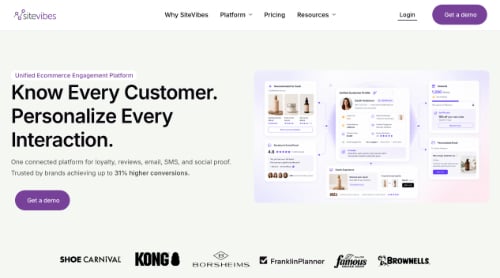
Siloed customer data is becoming an operational liability. Integrations like Listrak’s expansion with SiteVibes and SyncSpider’s B2Bware demonstrate that winning brands are those capable of merging real-time behavioral triggers, loyalty insights, and inventory levels into a single customer view. This synchronization allows for immediate, cross-channel automated responses via email, SMS, and web interactions.
3. Localization and Speed as Differentiators
With same-day delivery networks like Ecom Now expanding and advanced multi-carrier applications embedding themselves directly into enterprise architectures (such as Zenkraft on Salesforce Storefront Next), speed and transparency are table stakes. Merchants must leverage turnkey logistics applications rather than building custom integrations to maintain competitive edge in urban markets.
Summary
The convergence of AI agents, unified cross-channel attribution, and rapid local fulfillment marks a turning point for ecommerce in 2026. Merchants who proactively measure their AI readiness—using frameworks like Shopware’s Maturity Index—and adopt flexible, API-driven payment and logistics stacks will be best positioned to capture high-intent digital traffic in an increasingly automated marketplace.