










Main Facts
As the holiday season approaches, the modern professional’s life transforms into a high-stakes balancing act. The end-of-year rush demands a relentless pace: finalizing critical projects before leaving the office, catching up with family and friends, coordinating travel, and navigating bustling social gatherings. In an era where technology dictates the rhythm of daily life, the boundary between work and leisure has effectively dissolved. Smartphones, tablets, and personal computers are no longer confined to the office desk; they accompany us to airports, coffee shops, and living rooms alike.
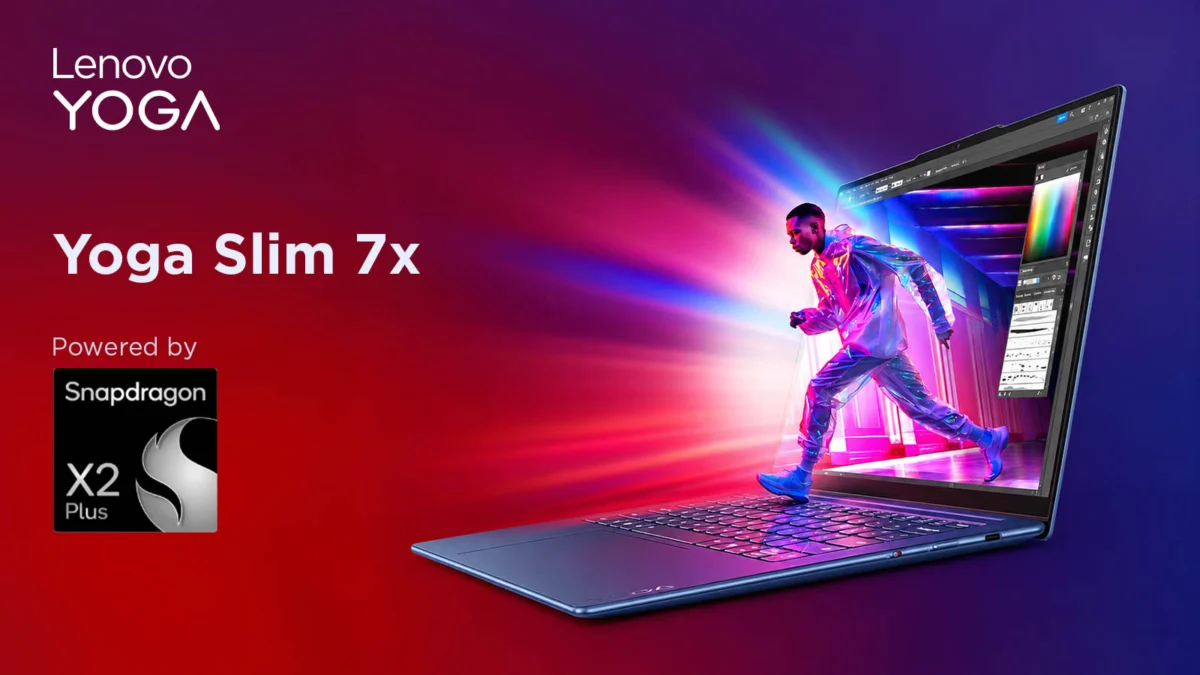
This lifestyle shift places unprecedented demands on personal computing hardware. Users no longer simply require a machine that boots up quickly; they demand a seamless, highly intelligent, and ultra-mobile ecosystem capable of adapting to fluid environments. Meeting this exact consumer demand, the technology sector witnessed a landmark introduction at CES 2026 with the unveiling of the Lenovo Yoga Slim 7x.
Positioned as a premier, ultra-mobile Copilot+ PC tailored for professionals, creators, and everyday consumers, the Yoga Slim 7x combines robust performance, exceptional battery life, and advanced on-device artificial intelligence within a remarkably thin-and-light chassis. At the heart of this machine lies the powerful Snapdragon X2 Plus processor, engineered specifically for future-ready computing architectures.
However, the true value of a contemporary computing platform extends far beyond raw hardware specifications. It lies in how seamlessly advanced technology translates into tangible, everyday experiences—ranging from effortless multitasking and localized AI capabilities to the energy efficiency required to maintain peak productivity while on the move.
Chronology of Innovation: The Evolution of the AI-Powered PC
To understand how we arrived at the sophisticated computing landscape of 2026, it is vital to trace the chronological milestones that shaped the modern personal computer.
The Shift from Desktop Anchors to Mobile Freedom (Late 2010s)
For decades, personal computing was defined by stationary setups. Even early laptops were bulky, power-hungry, and restricted by short battery life that tethered users to wall outlets. As remote work began to gain traction in the late 2010s, the industry recognized an urgent need for devices that could sustain full working days away from a desk without sacrificing processing power.
The Rise of Hybrid Work and Cloud Integration (2020–2022)
The global shift toward hybrid and remote work models permanently altered consumer expectations. Technology had to support video conferencing, heavy document editing, and constant connectivity on the go. During this period, the focus shifted toward thermal efficiency, lightweight materials, and integrated graphics. Yet, computing remained largely reactive—waiting for human inputs to execute tasks.
The Integration of Artificial Intelligence (2023–2024)
The advent of generative AI marked a tectonic shift in software development. Initially, AI tools were cloud-dependent, requiring robust internet connections and remote server farms to process natural language queries, image generation, and predictive text. While powerful, this model introduced latency, privacy concerns, and heavy battery drains.
The Copilot+ PC Revolution and Hardware Convergence (2025–2026)
The turning point arrived with the conceptualization of the Copilot+ PC category. By integrating dedicated Neural Processing Units (NPUs) directly into computer processors, chipmakers like Qualcomm enabled advanced, on-device AI capabilities. This brings us to the present day at CES 2026, where platforms like the Snapdragon X2 Plus empower hardware manufacturers like Lenovo and software pioneers like Microsoft to deliver a fully unified, intelligent, and highly mobile computing experience.
Supporting Data and Technical Architecture
To fully appreciate what the Lenovo Yoga Slim 7x achieves in practice, one must examine the underlying hardware and software synergy driving its performance.
Snapdragon X2 Plus: Power Beyond Performance
Traditional performance metrics—such as clock speed and core counts—no longer tell the whole story of a modern processor. In the age of AI, the ability to execute intelligent functions locally on the machine is essential for speed, security, and responsiveness.
The Snapdragon X2 Plus excels by combining high-tier computing performance with an advanced AI engine, allowing for swift and efficient multitasking. Because AI processing is handled directly on the device rather than offloaded to the cloud, users experience instantaneous smart features that integrate smoothly into their daily workflows.
Furthermore, power consumption remains the ultimate hurdle for mobile professionals. During the holiday season, a laptop might travel from a corporate office to an airport boarding gate, to a bustling café, and finally to a family living room. The Snapdragon X2 Plus provides exceptional power efficiency, ensuring that users retain the battery life necessary to complete projects without constantly hunting for a power outlet.
Lenovo’s Design Philosophy: Form Meets Function
The engineering behind the Lenovo Yoga Slim 7x bridges the gap between raw processing power and ergonomic mobility. Key structural and design elements include:
- Lightweight Build: Carefully crafted to minimize physical burden, making it exceptionally easy to pack and carry during hectic festive travel schedules.
- Vibrant OLED Display: Delivers breathtaking color accuracy, deep blacks, and sharp contrast, serving as an ideal medium for professional presentations, creative editing, cinematic viewing, and casual entertainment.
- Silent Operation: Engineered for fanless or ultra-quiet thermal performance, allowing users to work or consume media in quiet environments—such as libraries, shared workspaces, or living rooms—without distracting noise.
Microsoft and Windows on Snapdragon: Completing the Ecosystem
Hardware is only as effective as the software running on it. The Yoga Slim 7x leverages the Copilot+ PC platform, combining the Snapdragon X2 Plus with Microsoft’s latest AI innovations built natively into Windows.
Rather than treating artificial intelligence as a separate, standalone application, Microsoft has interwoven AI directly into the operating system’s core processes. This integration means that AI assists with daily tasks—such as organization, search, content creation, and workflow management—in a way that feels organic and unobtrusive. Additionally, the expanding ecosystem of Windows on Snapdragon ensures that users enjoy broad compatibility with the essential applications they rely on daily, offering total peace of mind and flexibility.
Official Responses and Industry Perspectives
Industry leaders have increasingly emphasized that the future of personal computing lies in ambient, unintrusive intelligence and extreme energy efficiency.
Qualcomm executives have frequently highlighted that the Snapdragon X series was architected from the ground up to address the unique demands of mobile professionals and modern creators. By focusing on heterogeneous computing—combining CPU, GPU, and high-performance NPUs—the company aims to deliver desktop-class performance within thin-and-light form factors that redefine battery endurance.
Similarly, Lenovo’s product development teams have noted that consumer feedback consistently points toward two non-negotiable desires: uncompromised mobility and all-day reliability. Through the integration of cutting-edge silicon and premium materials in the Yoga Slim 7x, Lenovo continues to address the pain points of the modern commuter and frequent traveler.
Microsoft’s ongoing expansion of the Copilot+ PC ecosystem underscores a shared vision across the tech sector: that AI should empower human potential by removing repetitive friction from daily digital interactions, all while maintaining strict user privacy through on-device processing.
Implications for Consumers and the Future of Computing
The introduction of devices like the Lenovo Yoga Slim 7x powered by the Snapdragon X2 Plus carries profound implications for both individual consumers and the broader technology market.
Transforming the Holiday Season and Beyond
For the average consumer navigating the chaotic holiday season, technology should act as an enabler of human connection, not a source of stress. When a laptop offers instant wake times, all-day battery life, silent operation, and intelligent task management, users can wrap up their professional obligations more efficiently. This translates directly to more uninterrupted time spent with family, traveling, or simply relaxing.
A New Benchmark for Mobile Productivity
In the professional sphere, the barrier between office work and mobile work has vanished permanently. Devices that require frequent recharging or struggle with heavy multitasking are increasingly obsolete. The combination of advanced on-device AI and extreme energy efficiency sets a new industry standard: users no longer have to choose between performance and portability.
The Shift Toward Sustainable, Intelligent Hardware
As artificial intelligence becomes ubiquitous, the computing industry is shifting toward hardware that can process complex AI workloads locally. This reduces reliance on energy-intensive data centers and ensures greater data privacy for users. The success of platforms like Windows on Snapdragon signals that consumer adoption of ARM-based, AI-driven PCs is accelerating, paving the way for a smarter, more sustainable technological future.
Ultimately, upgrading a personal computer is no longer just about seeking a marginal bump in processing speed. It is about investing in a smarter, more flexible, and highly efficient computing companion designed to keep pace with the demands of modern life—wherever the season may take you.
Disclaimer: This content is sponsored and does not reflect the views or opinions of IE Online Media Services Pvt Ltd. No journalist is involved in creating sponsored material and it does not imply any endorsement whatsoever by the editorial team. IE Online Media Services takes no responsibility for the content that appears in sponsored articles and the consequences thereof, directly, indirectly or in any manner. Viewer discretion is advised.



