










SAN FRANCISCO — For years, the technological race in artificial intelligence has been defined by a game of high-stakes generation. Companies boasted about who could conjure the most breathtaking, cinematic five-second clips out of thin air using simple text prompts. But once the initial novelty of AI video generators faded, users hit a frustrating wall: these models were brilliant at creating a scene from scratch, yet maddeningly helpless when it came to changing it.
Google is now attempting to turn the page on that era.
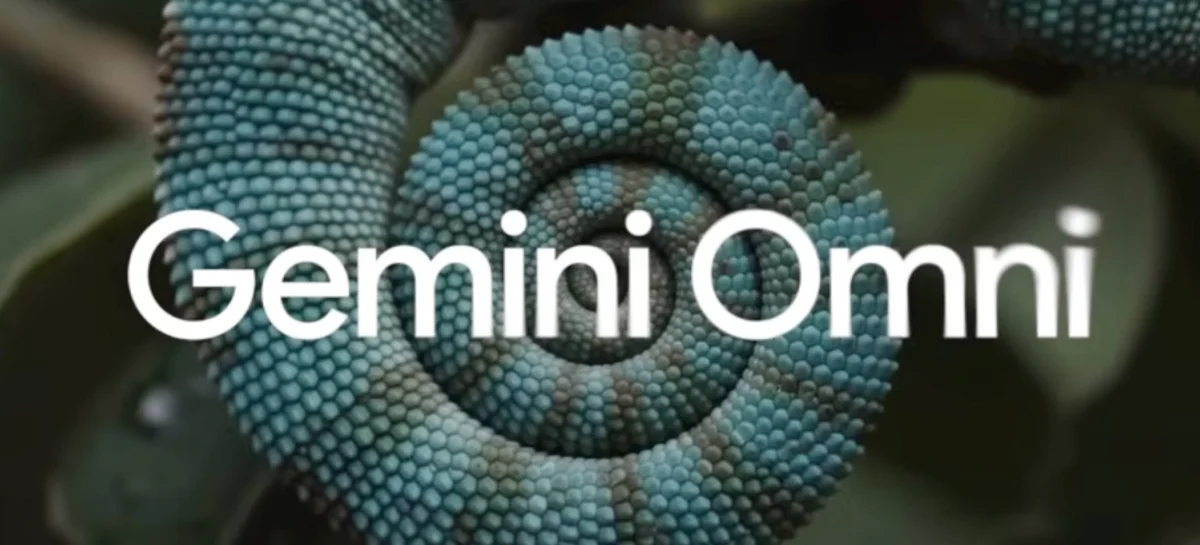
Unveiled at Google I/O 2026, Gemini Omni is Google’s new flagship multimodal creation model family, designed to collapse several disparate creative workflows—text-to-video, image-to-video, video editing, audio-aware generation, style transfer, and personal avatars—into a single, cohesive system. Rather than treating AI video as a magical slot machine that spits out randomized clips, Google is positioning Omni as a dynamic, conversational creative partner.
The first model to roll out from this family is Gemini Omni Flash, marking a strategic shift toward interactive, prompt-based editing, multi-reference inputs, and real-world physics intuition.
Main Facts: What Is Gemini Omni?
At its core, Gemini Omni represents the intersection where Google’s advanced reasoning capabilities meet native media creation. While earlier iterations of the Gemini ecosystem slowly pulled text, images, audio, video, and code into a shared orbit, Omni goes a step further by bridging comprehension and synthesis.
Unlike single-purpose generation models, Gemini Omni is built to accept a vast array of mixed inputs simultaneously. Users can supply the model with:
- A written prompt detailing a desired narrative or adjustment.
- An existing video clip to establish motion or scene context.
- A reference image to dictate character design, color grading, or art style.
- An audio track to anchor rhythm, pacing, or dialogue cues.
By combining these references, Omni can produce entirely new visual media or—crucially—edit existing footage based purely on conversational text instructions.
Google is pushing the editing capabilities hardest. Instead of opening a timeline editor, masking objects frame-by-frame, and manually adjusting layers in traditional software, users can interact with Omni like a human director. Prompts such as "Keep the background and subject, but change the lighting to a moody neon cyberpunk aesthetic," or "Move the character into an underwater environment and adjust the camera angle to a low-angle shot," form the foundation of the Omni user experience.
The model is architected to preserve scene context, maintain character consistency, and understand multi-turn conversational edits without breaking its own internal logic.
Chronology and Rollout: How Gemini Omni Is Reaching Users
Google is deploying Gemini Omni through a staggered release schedule that prioritizes everyday creators and consumer-facing platforms over enterprise developers.
- The Launch Week Phase (Google I/O 2026): Google immediately began rolling out Gemini Omni Flash to Google AI Plus, Pro, and Ultra subscribers through the main Gemini app and Google Flow.
- The Creator Tier: Simultaneously, Google opened access at no cost to users aged 18 and up via YouTube Shorts Remix and the YouTube Create app, signaling an immediate focus on social video production.
- The Developer Horizon: Enterprise customers and third-party software developers will have to wait. Google has stated that API access for Omni will roll out in the coming weeks, with pricing and technical documentation forthcoming.
This rollout strategy underscores where Google believes the product will find its footing first: not in back-end server automation or enterprise pipelines, but directly in the hands of digital creators, educators, and marketers looking for rapid iteration tools.
Supporting Data & Technological Evolution: Beyond Veo
A frequent point of confusion following the announcement is how Gemini Omni differs from Veo, Google’s dedicated video generation model line.
While Veo focuses primarily on high-fidelity video synthesis, Gemini Omni is a broader multimodal architecture. Veo taught Google how to compete in the raw race for visual fidelity; Omni is designed to tie that generation capability directly into Gemini’s broader reasoning engine.
Understanding Physics, Motion, and Context
One of the most persistent criticisms of early AI video generators has been their disregard for physical reality. A generated clip might look photorealistic for the first few frames before hands warp, objects drift, and the scene forgets its own spatial logic.
Google claims that Omni possesses a vastly improved intuition for "world understanding"—including gravity, kinetic energy, fluid dynamics, and scene continuity. While rigorous independent testing is still required to verify these claims across complex sequences, the engineering goal is clear: future video models must behave less like random frame-interpolators and more like physics-aware simulators.
Practical Applications: From Claymation Explainers to Avatars
Beyond cinematic surrealism, Google demonstrated practical use cases designed for education and corporate communication. Omni can transform short, complex text prompts into visual explainers—such as claymation-style breakdowns of protein folding or stop-motion animations explaining biological systems like the hippocampus.
Additionally, the model integrates with Google’s personal avatar tools, allowing users to generate video content mapped to their own voice and likeness, backed by strict identity controls.
Official Responses and Safety Protocols: The Battle for Provenance
Deploying a model capable of conversational video editing, style transfer, and hyper-realistic avatar generation naturally raises alarm bells regarding misinformation, deepfakes, and copyright integrity. Google has attempted to preempt these concerns by baking content provenance measures directly into the Gemini Omni ecosystem.
According to Google DeepMind, all video assets created or edited using Gemini Omni within the Gemini app, Google Flow, or YouTube are embedded with SynthID watermarking technology. Furthermore, the outputs support C2PA Content Credentials, providing a cryptographic paper trail that identifies media as AI-generated or AI-modified.
While watermarking and metadata standards do not completely solve the problem of bad actors, they represent an industry-standard effort to establish transparency as synthetic video becomes indistinguishable from reality.
Implications: Why Gemini Omni Changes the Creative Paradigm
The ultimate significance of Gemini Omni lies not in its ability to generate a pretty picture, but in how it redefines the relationship between human creators and artificial intelligence.
1. From Slot Machines to Creative Systems
Current AI video workflows are often described as slot machines: you pull the lever (write a prompt), wait anxiously, and take whatever the machine gives you. If you dislike a minor detail, you generally have to throw the whole clip away and start over.
Gemini Omni attempts to shift the paradigm into a true collaborative loop. By allowing iterative, conversational adjustments while maintaining character and environmental consistency, it mimics the iterative nature of traditional post-production.
2. Unified Asset Workflows
Creators rarely work in a vacuum; they bring mood boards, rough sketches, brand guidelines, audio tracks, and reference footage to a project. Omni’s ability to ingest multi-reference inputs bridges the gap between raw AI generation and professional asset management. It allows creators to anchor the AI’s imagination to their own specific intellectual property.
3. The Future of API-Driven Creativity
Once developer APIs for Gemini Omni go live in the coming weeks, the broader software ecosystem stands to change. Rather than forcing users to migrate to standalone AI apps, companies can theoretically embed Omni’s reasoning and editing capabilities directly into professional non-linear editing suites, educational software, and marketing platforms.
Final Thoughts
Gemini Omni is Google’s clearest declaration yet that the era of simple text-to-video novelty is drawing to a close. The next frontier in artificial intelligence is not just about making things look real—it is about giving human creators precise, granular control over what the machine makes.
If Gemini Omni delivers on its promise of physics-aware consistency and conversational editing, it risks becoming one of the most disruptive creative releases of the decade. If it stumbles against the immense complexity of real-world editorial demands, it will simply join the pile of impressive tech demos that looked great on a keynote stage.
Either way, the rules of digital media production are being rewritten, and the contest for creative control has officially begun.



