










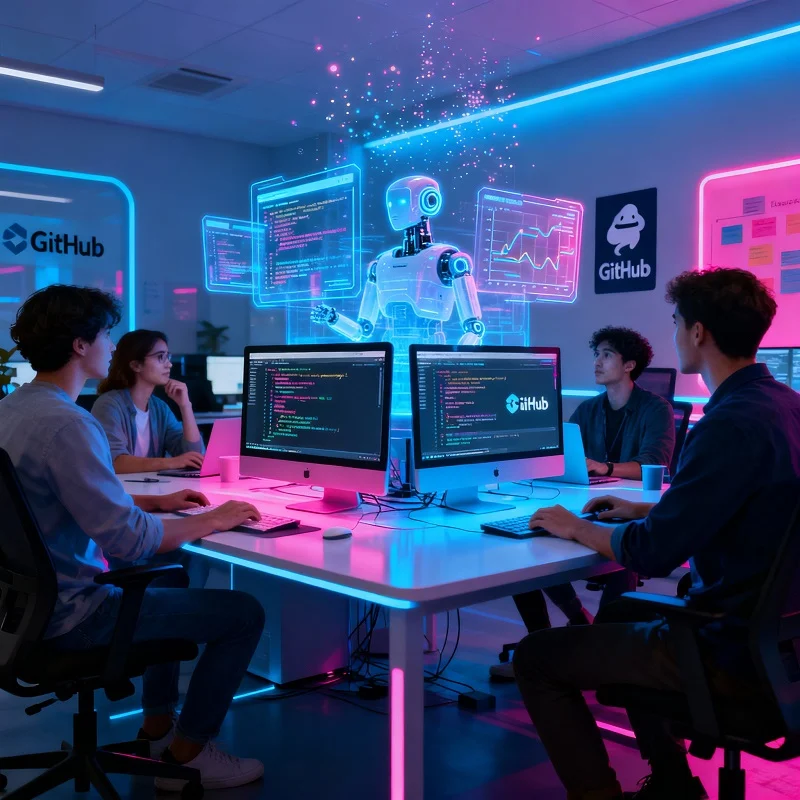
The landscape of software engineering is undergoing its most significant transformation since the advent of distributed version control. As codebases grow in complexity and distributed teams become the global standard, the traditional "local environment" model—plagued by "it works on my machine" syndrome and cumbersome setup rituals—is increasingly becoming a bottleneck. Today, GitHub is addressing these systemic inefficiencies with the launch of Copilot Spaces, a transformative service that integrates cloud-hosted development environments with a deeply context-aware artificial intelligence layer.
By merging the power of high-performance cloud infrastructure with the sophisticated, repository-wide intelligence of GitHub Copilot, this new offering represents a paradigm shift from simple code completion to holistic, team-based AI orchestration.
The Genesis of Copilot Spaces: A Chronology of Evolution
To understand the significance of Copilot Spaces, one must look at the recent trajectory of the developer ecosystem:
- 2021: The Dawn of AI-Assisted Coding. GitHub introduced the original Copilot, powered by OpenAI’s Codex, fundamentally changing how developers write boilerplate code.
- 2022–2023: The Rise of Cloud Development. Recognizing the friction in local environments, platforms like GitHub Codespaces gained traction, proving that moving the IDE to the browser/cloud could eliminate dependency hell.
- 2024: The Context Gap. As AI models grew, developers realized that "autocomplete" was insufficient. The industry hit a wall: AI needed to understand the entire architecture, not just the file currently open.
- 2025: The Launch of Copilot Spaces. GitHub officially announced the integration of contextual AI into the cloud-native workspace. This is the culmination of years of research into how developers interact with large-scale, enterprise-grade repositories.
Solving the "Context Switching" Tax: Core Challenges
Before the introduction of Copilot Spaces, the professional developer’s day was often interrupted by "micro-friction." Industry data suggests that software engineers spend upwards of 20-30% of their time on non-coding tasks, including environment configuration, environment debugging, and manual onboarding.
The Problem of Inconsistent Setups
In team-based environments, ensuring every developer has the same environment variables, SDK versions, and runtime configurations is a nightmare. A mismatch in local environments often leads to production bugs that are notoriously difficult to reproduce.
The Onboarding Hurdle
For new team members, the "time-to-first-commit" is a critical metric. In complex repositories, onboarding can take weeks as juniors struggle to map out architecture and understand legacy dependencies.
The Context-Switching Penalty
Developers frequently switch between tasks, branches, and projects. Every time they pivot, they must re-orient themselves within the codebase. Historically, AI tools have been "stateless" in this regard, failing to remember the specific architectural patterns of the project at hand.
Anatomy of Copilot Spaces: Features and Technical Implications
Copilot Spaces functions as an "instantly accessible" cloud environment. Unlike traditional cloud IDEs, the "Spaces" element adds a layer of AI orchestration that acts as a resident technical lead.
For the Solo Developer: The "Force Multiplier"
The primary benefit for the individual is the eradication of environment maintenance. With Copilot Spaces, a developer can spin up a production-grade environment in seconds. Because the environment is pre-configured, the developer can focus exclusively on feature implementation, while the AI provides:
- Predictive Refactoring: Suggestions that are aware of the entire project’s dependency tree.
- Automated Testing: Real-time generation of unit tests that adapt as the code structure changes.
For Teams: The "Unified Source of Truth"
For organizations, Copilot Spaces acts as a centralized brain. Features include:
- Shared Contextual Awareness: When a team member enters a Space, the AI already understands the project’s conventions, security protocols, and architectural history.
- Streamlined Code Reviews: The AI can summarize the impact of a pull request across the entire repository, not just the changed lines, significantly reducing the cognitive load on reviewers.
- Instant Onboarding: A new hire can enter a pre-configured Space and have the AI act as an interactive mentor, explaining how specific modules function and guiding them through the repository’s unique logic.
Strategic Adoption: A Guide for Engineering Managers
Adopting Copilot Spaces is not merely a tooling upgrade; it is an organizational transition. To maximize the ROI, engineering managers should follow a phased approach:
- Standardization of Infrastructure: Use the transition to define clear "base images" for your projects. If your infrastructure as code (IaC) is robust, your Copilot Spaces will be bulletproof.
- Context-First Development: Encourage developers to move away from local IDEs for high-context tasks. By shifting work to the cloud, you ensure that the AI has the broadest possible view of the data.
- Governance and Security: As with any cloud-based initiative, ensure that your enterprise’s security policies are mirrored in the cloud environment. Copilot Spaces allows for centralized policy enforcement, which is a major upgrade over the "Wild West" of local machines.
- Continuous Feedback Loops: Leverage the AI’s capability to provide analytics on code quality and complexity. Use the "Spaces" logs to identify areas of the codebase that are consistently confusing for developers—often signaling a need for refactoring.
The Road Ahead: The Future of Contextual AI
The evolution of Copilot Spaces suggests that we are entering an era of "Autonomous Software Engineering." Future iterations are expected to incorporate:
- Multi-Agent Coordination: Imagine a scenario where the AI doesn’t just assist with code, but manages the entire CI/CD pipeline, automatically triggering deployments and rollbacks based on code analysis.
- Cross-Repository Intelligence: Future versions will likely be able to pull patterns from across an entire organization’s library of repositories, effectively "learning" the company’s proprietary coding style and best practices.
- Proactive Security Audits: Instead of scanning code for vulnerabilities after the fact, Copilot Spaces will likely highlight potential security flaws as the code is being typed, preventing vulnerabilities from ever reaching the commit stage.
Implications for the Industry
The introduction of Copilot Spaces signals that GitHub is pivoting from a repository hosting service to an end-to-end "Development Lifecycle Engine." This has profound implications for the industry:
1. The Devaluation of "Environment Setup" Skills.
The skill of "getting things to run" is becoming commoditized. Future hiring will focus less on whether a candidate can configure a complex local environment and more on their ability to solve high-level architectural problems and collaborate effectively with AI agents.
2. The Rise of Global Talent Accessibility.
By removing the barrier of local hardware constraints and complex onboarding, companies can onboard talent from anywhere in the world, knowing they will be productive within minutes of accessing their Space.
3. Shift in Productivity Metrics.
Engineering leaders will need to redefine how they measure productivity. If the "coding" part of the job is accelerated by 40-50% via AI, the value of an engineer shifts toward design, strategy, and cross-functional communication.
Final Thoughts: A New Standard for Collaboration
GitHub Copilot Spaces is more than a technical convenience; it is a fundamental rethinking of the developer experience. By integrating contextual intelligence into the very fabric of the cloud-based workspace, GitHub has effectively solved the "fragmentation" issue that has hampered software development for decades.
For teams, this means a departure from the legacy problems of mismatched environments and the "context-switching tax." Developers are now empowered to do what they do best: solve complex human problems through technology, supported by an AI teammate that finally speaks the language of their specific project. As we look toward the future, the integration of deep context into the development flow will undoubtedly become the baseline for all software engineering, setting a new standard for speed, quality, and creative satisfaction in the digital age.



