










WASHINGTON — For nearly as long as commercial email marketing has existed, a fierce debate has raged over the ubiquitous subscription pop-up. While digital marketers and web publishers continually implement them to accelerate list growth, the user experience community has long condemned them as intrusive, aggressive, and universally disliked by consumers.
Yet, beneath the veneer of user friction lies a hard business truth: conversion rates rarely lie.
In August, digital publisher and marketer SugarRae published an exploratory deep dive addressing a foundational question in the industry: Do email subscription pop-ups actually work? Detailing her implementation across two distinct properties using the OptinMonster tool, the initial findings were unequivocal. Despite widespread anecdotal claims that audiences despise pop-ups, the quantitative results proved that they not only worked, but they worked exceptionally well at scaling subscriber counts.
However, a high-volume acquisition strategy instantly sparks a secondary, more profound question for any seasoned marketer: What about the quality of those leads?
Prompted by a subscriber query asking whether pop-up acquired contacts exhibit different engagement patterns compared to those acquired through passive, inline, or static landing page sign-ups, a new longitudinal study was born. Analyzing nearly five months of empirical data, the results challenge long-held assumptions about intrusive marketing tactics and offer a fresh look at the real-world value of pop-up subscribers.
Main Facts: The Anatomy of the Study
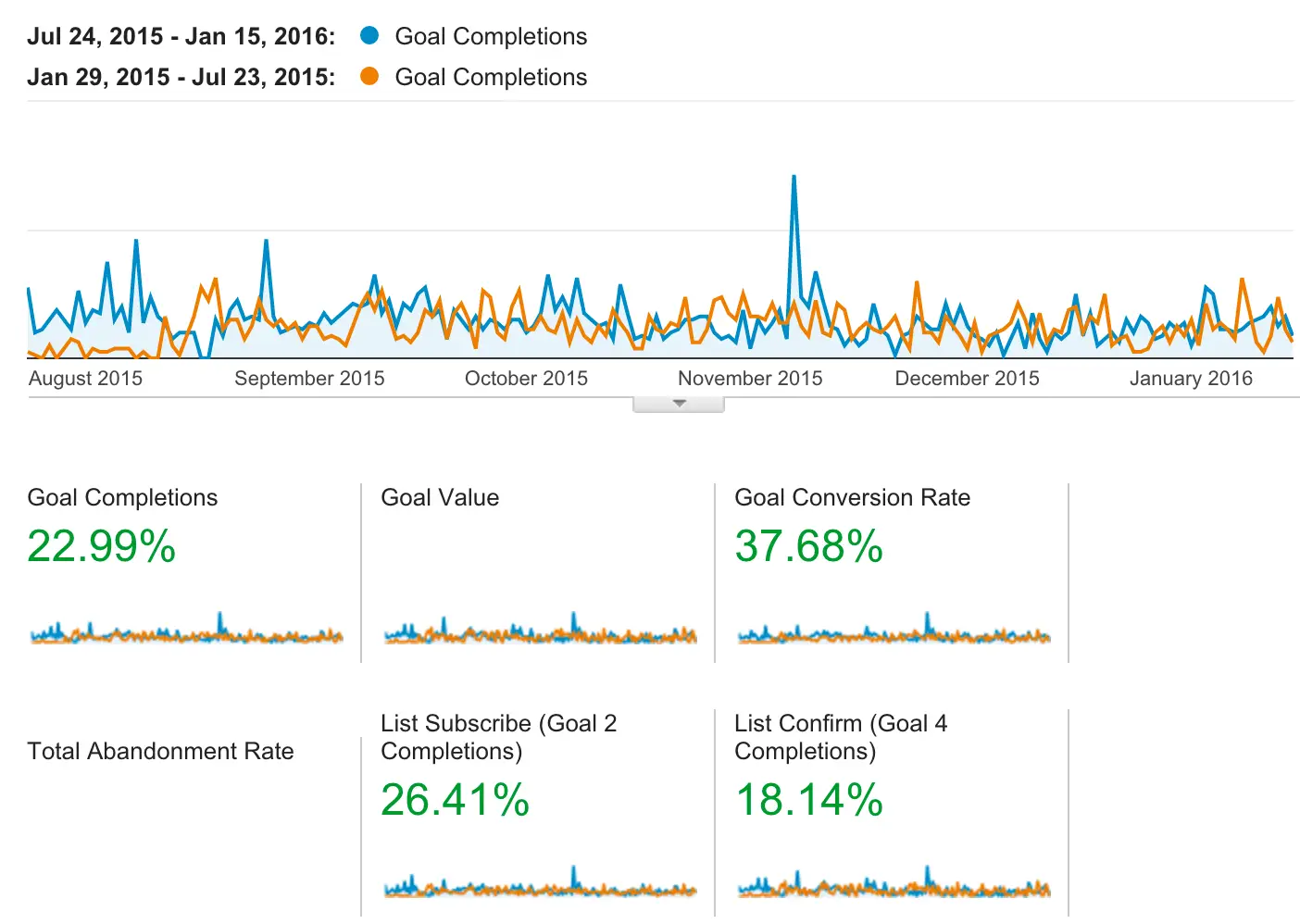
The core inquiry of the follow-up investigation focused on measuring long-term user behavior. Rather than evaluating immediate conversion spikes—which are easily manufactured through aggressive tactics—the study examined the lifecycle metrics of subscribers gathered between September 1, 2015, and January 15, 2016, for the Sound Bites newsletter.
The primary variables under evaluation included:
- Sustained Growth: Verification that initial signup and conversion rate bumps generated by pop-ups did not decay over a multi-month period.
- Engagement Indicators: Comparative analysis of confirmation rates, follow-up messaging open rates, zero-open rates, and immediate unsubscription patterns.
- Industry Benchmarking: Contextualizing these metrics against broader email marketing standards published by major service providers like Mailchimp and Constant Contact.
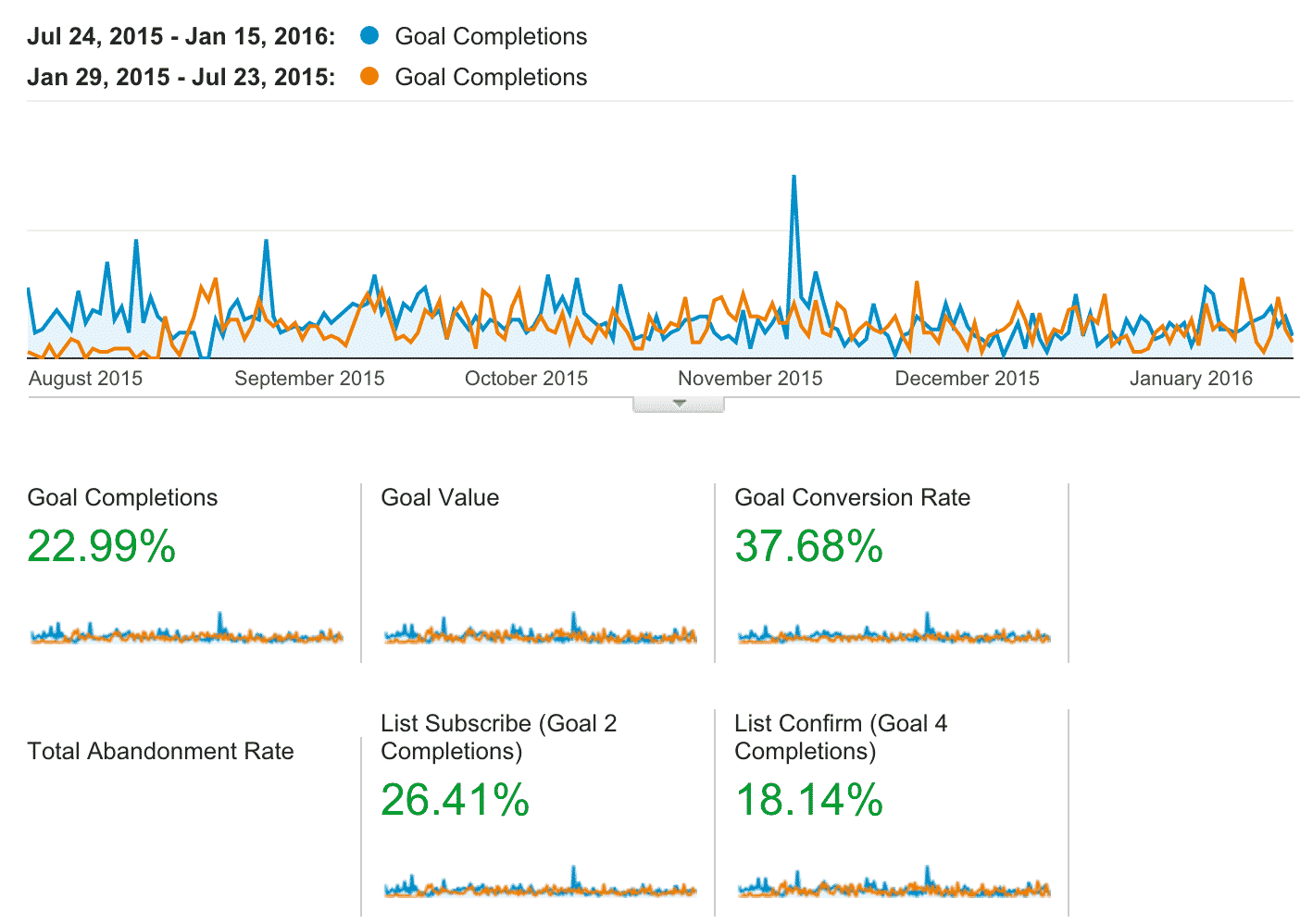
The baseline revelation of the data set was clear: the immediate surge in subscription volume achieved via OptinMonster did not trigger a corresponding decline in list health. The confirmation sequences remained robust, and the sustained traffic patterns captured via Google Analytics confirmed that interest remained stable across the board.
Chronology: From Initial Implementation to Long-Term Analysis
To fully understand the evolution of this data-driven case study, it is helpful to trace the timeline of events leading up to the long-term quality assessment.
Phase 1: The Initial Rollout (Summer 2015)
Facing stagnant organic list growth, the publisher deployed targeted email subscription pop-ups across two separate websites. Utilizing OptinMonster, the strategy aimed to test whether aggressive visual interruption could successfully bypass banner blindness. The immediate aftermath revealed an overwhelming surge in sign-ups, confirming the mechanical efficacy of pop-ups despite common consumer complaints.
Phase 2: The Subscriber Inquiry (Late Summer 2015)
Shortly after publishing the initial findings, an astute reader sent an email posing a critical qualitative challenge: “Have you found any difference in the quality and engagement of pop-up subscribers vs. subscribers obtained through other methods?”
At the time of publication, the data to answer this question comprehensively did not yet exist. Longitudinal tracking requires time—specifically, enough time for a newly acquired cohort to mature, receive a series of broadcasts, and demonstrate consistent reading or disengagement habits.
Phase 3: The Longitudinal Data Harvest (September 2015 – January 15, 2016)
Nearly half a year after the initial pop-up deployment, the publisher extracted a comprehensive dataset covering the late-summer through mid-winter period. Isolating the Sound Bites newsletter analytics, the study compared the behavior of users who engaged with the intrusive pop-up layer against those who opted in via standard sidebars, footers, or static content boxes.
Supporting Data and Comparative Metrics
In the world of email marketing, volume is a vanity metric; engagement is the true north. To evaluate whether pop-up subscribers were merely "drive-by" sign-ups who would immediately abandon the inbox or tune out the broadcasts, the study looked deeply at interaction metrics.
Open Rates and Overall Engagement
While specific percentage metrics fluctuated based on individual newsletter editions, the overarching trend across both cohorts revealed a fascinating parity. Pop-up acquired subscribers opened follow-up sequences, maintained consistent reading habits, and registered low churn rates at levels virtually indistinguishable from organic, non-pop-up subscribers.
Furthermore, when stacked against published industry benchmarks—specifically data sets provided by Mailchimp and Constant Contact—both segments (pop-up and traditional) outperformed baseline industry averages. This suggests that the underlying content quality and niche targeting of the properties acted as a powerful filter, neutralizing any presumed degradation in lead quality often attributed to pop-up forms.
The Hurdle of Conversion and Click Tracking
While open rates provided a clear picture of audience attention, measuring downstream monetization and granular click-through behavior presented structural hurdles.
The email service provider utilized during the study, Aweber, imposed technical limitations on how data could be segmented. The platform lacked a native, macro-level filter allowing publishers to easily segment subscribers by “clicked any link across the lifetime of the list.” Instead, segmentation required manual isolation of users who clicked individual, specific links within individual newsletters.
For instance, tracking the exact performance of a specific Pinterest case study meant auditing every historical newsletter referencing that asset—a data-gathering task that would yield only isolated click volumes rather than a holistic behavioral profile.
Compounding this was a technical hiccup involving Aweber’s native sales tracking functionality, which failed to properly integrate prior to the study’s launch. Consequently, direct revenue attribution tied specifically to the pop-up vs. non-pop-up cohorts remained elusive, though remediation steps were slated for subsequent months to bridge the analytics gap.
Official Industry Responses and Marketing Benchmarks
The findings of this internal case study mirror a broader ideological shift within the digital publishing and direct-response marketing sectors. For years, UX designers argued vehemently against interruptions, warning that intrusive elements alienate high-value users. However, conversion rate optimization (CRO) specialists counter that passive subscription forms suffer from catastrophic invisibility.
Major email service providers have historically maintained neutral stances, providing the tools for both aggressive overlays and passive inline forms while leaving execution strategies to the publisher.
According to aggregate benchmarks compiled by platforms like Mailchimp, average email open rates across general industries hover within a predictable band (typically between 15% and 25%, depending on the vertical). The fact that both the pop-up and standard cohorts in the Sound Bites study exceeded these benchmarks validates a core principle of modern growth marketing: Audience relevance overrides acquisition mechanics. If a visitor is genuinely interested in a niche topic, the slight friction of closing a pop-up modal is not enough to permanently sour their relationship with the brand.
Implications for Digital Publishers and Marketers
The ultimate takeaway from this longitudinal data review carries significant strategic implications for content creators, bloggers, and enterprise email marketers alike.
1. The Myth of "Low-Quality" Pop-Up Leads is Debunked
The most persistent fear among cautious marketers is that pop-ups attract accidental clicks, dummy email addresses, and disengaged consumers who mark every broadcast as spam. The data from this multi-month study suggests otherwise. When paired with compelling content, pop-up subscribers behave identically to those who sought out a subscription form voluntarily.
2. Form Follows Function: Prioritize List Growth Without Fear
For any digital property where building an owned audience (an email list) is a primary business objective, refusing to use pop-ups out of aesthetic or UX anxiety leaves substantial growth on the table. Because the data showed zero penalty to subscriber quality or engagement, the risk-reward calculation heavily favors implementation.
3. Context is King: Run Your Own Tests
While the empirical results from the Sound Bites newsletter provide a strong proof of concept, professional journalism and data analysis demand healthy skepticism. Publishing dynamics vary wildly across niches, traffic sources, and audience demographics. The author emphasizes that while these insights offer a clear roadmap, digital marketers must continuously execute their own split tests and cohort analyses to validate what works for their specific brand ecosystem.
As the digital landscape continues to evolve past reliance on algorithmic social media reach and volatile search engine traffic, owned media channels remain the ultimate insurance policy for creators. And if pop-ups remain the most effective catalyst for fueling that growth without sacrificing audience quality, the marketing industry will undoubtedly keep them front and center.



