










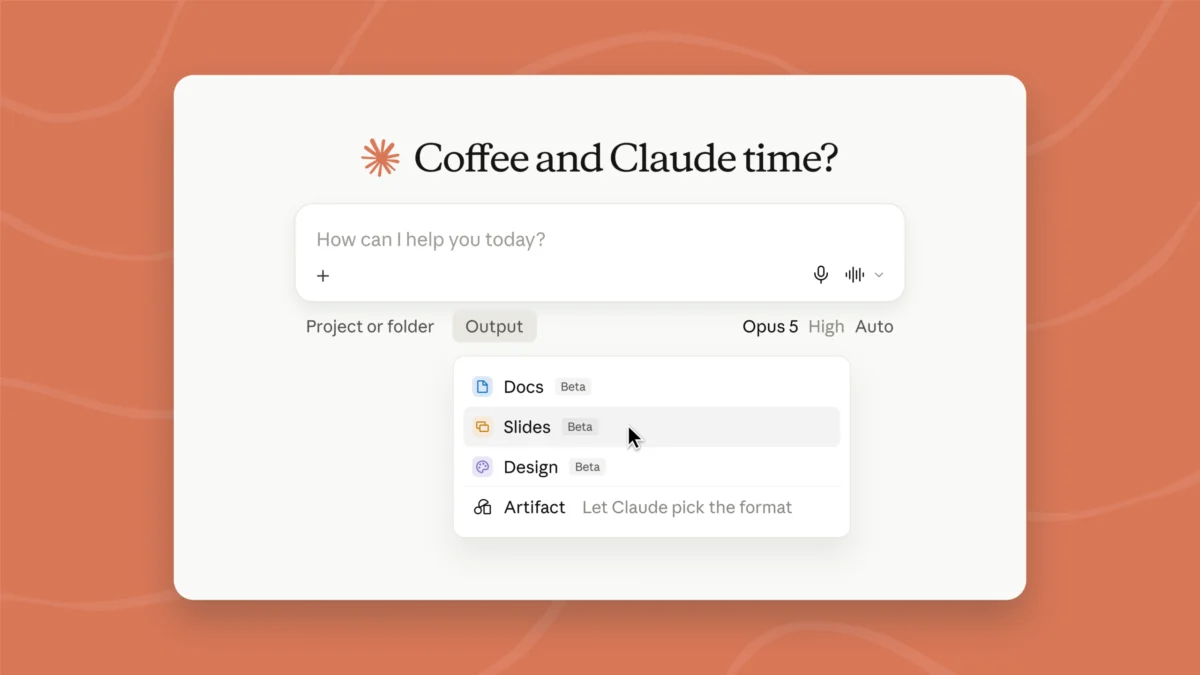
In a strategic maneuver that signals a new frontier in the battle for the digital workplace, Anthropic has unveiled "Claude Docs" and "Claude Slides." This development marks a significant shift for the San Francisco-based AI research company, moving its flagship assistant from a conversational chatbot into a full-fledged agentic platform designed to house the entire lifecycle of knowledge work. By enabling users to draft, edit, and refine complex documents and presentation decks directly within the Claude interface, Anthropic is positioning its AI not merely as a helper, but as the primary operating system for corporate productivity.
The Evolution of the AI Assistant: Main Facts
The core of this update is the integration of a rich-text editor directly into the Claude chat experience. While previous iterations of Claude allowed users to generate text—which they would then copy and paste into external applications like Microsoft Word or Google Docs—the new features remove that friction.
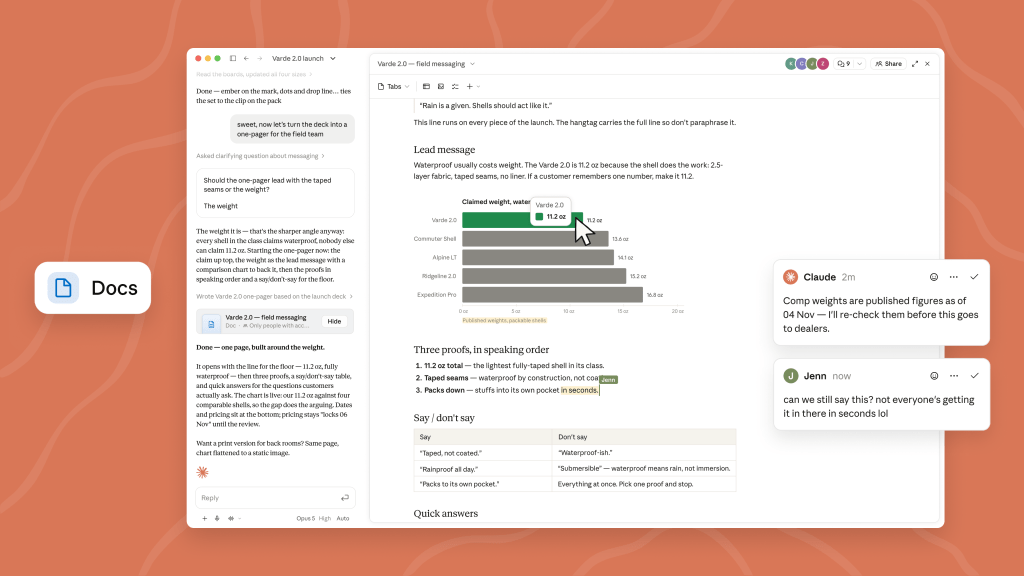
When a user prompts Claude to draft a proposal, a project outline, or a presentation deck, the assistant now initiates a collaborative process. Claude will engage the user with clarifying questions to refine the scope, tone, and structure of the document before generating the content. A key feature is the "commenting" capability, where Claude provides transparency by explaining the rationale behind its drafting choices, effectively acting as both a writer and a creative partner.
Once generated, these documents reside within the "Artifacts" tab, a persistent storage space within the platform. Users can export these files into standard formats, including PDF, Markdown, Microsoft Word, and Google Docs, or share them with colleagues for real-time collaborative editing. This ecosystem-within-an-ecosystem approach is designed to keep users engaged with Claude’s native interface for as long as possible, minimizing the "context switching" that typically defines modern knowledge work.
A Chronological Shift in AI Capabilities
The journey to this announcement has been marked by a rapid succession of feature releases that highlight Anthropic’s aggressive roadmap:
- The Early Chat Era: Initially, Claude was defined by its superior reasoning capabilities and its massive context window, which allowed it to digest long documents. It functioned primarily as an input-output engine.
- The Rise of Artifacts: The introduction of the Artifacts UI allowed Claude to display code, web designs, and text documents in a dedicated side-window, moving away from the linear "scrolling chat" format.
- The Integration of Design: Anthropic previously introduced "Claude Design" as a standalone tool for visual prototyping. This week, the company announced that Claude Design is now fully integrated into the primary chat interface, allowing for seamless toggling between text-based drafting and visual asset creation.
- The Unification of Cowork: Perhaps the most ambitious move is the integration of "Claude Cowork"—an agent capable of executing multi-stage, complex tasks—directly into the main chat stream. Now, the AI dynamically determines which "mode" or capability is required for a specific user request, abstracting away the technical management of the AI’s underlying tools.
The Strategic Battlefield: Supporting Data and Market Dynamics
The motivation behind these features is clear: "stickiness." In an era where every major AI vendor is fighting for screen time, the entity that becomes the default interface for work wins the lion’s share of enterprise budgets.
According to the 2026 Employee Workplace Technology Survey conducted by FDM CCS Insight, approximately 50% of employees utilizing generative AI in their daily routines do so specifically for the creation and editing of reports and documents. By capturing this 50%, Anthropic is attempting to build a moat around its user base.

However, the path to adoption is paved with significant hurdles. Analysts point out that Anthropic’s current implementation is in its infancy. For instance, there is currently no version history, nor are there granular access controls for Enterprise teams. Furthermore, for highly regulated sectors, the service remains unavailable for configurations using Customer-Managed Encryption Keys (CMEK) or Zero Data Retention (ZDR) protocols.
Usage of these tools is also bound by the platform’s strict token limits. As the complexity of a document increases—particularly when it requires synthesizing multiple source documents—the consumption of usage limits accelerates, which could prove a bottleneck for power users on Pro or Max tiers.
Official Perspectives and Expert Analysis
Industry experts are divided on whether this "platform-within-a-platform" approach will disrupt the incumbents.
Arun Chandrasekaran, a Distinguished VP analyst at Gartner, views this as a transition toward "agentic platforms." He notes, "The likely near-term outcome isn’t a wholesale replacement of alternative digital workplace tools, but it positions Anthropic as an entry point for workflows that were historically created in third-party applications." He specifically anticipates high demand for "template-driven" tasks, such as board decks and status reports, where Claude’s ability to pull data and synthesize it into a finished document provides immediate ROI.
Conversely, Jack Gold, principal analyst at J. Gold Associates, strikes a more cautious tone regarding user behavior. "The fundamental question is: if I am used to certain tools and they work for me, am I willing to change for the promise of working better? I am not sure that is a winning strategy," Gold noted. He emphasizes that Microsoft and Google have the advantage of "embedded gravity"—they are already where the work happens.
Maria Bell, senior research analyst at FDM CCS Insight, adds that while Microsoft and Google are bringing AI into established environments, Anthropic is effectively trying to import the productivity environment into the AI. "Anthropic has to offer an experience compelling enough for users to build new habits around Claude," Bell stated. "It’s not just about matching the features of Microsoft Word; it’s about offering a new way of working that feels like a leap forward rather than a migration."
Long-Term Implications for the Knowledge Economy
The implications of this move extend far beyond Anthropic’s bottom line. If successful, this could herald the end of the "file-centric" era of computing. In this future, the "document" is no longer a static file stored in a folder, but a dynamic, AI-generated output that can be constantly reshaped by natural language prompts.
1. The Death of the "Blank Page"
The most immediate impact is the eradication of the "blank page syndrome." By handling the heavy lifting of structure, formatting, and initial drafting, Claude changes the user’s role from a writer to an editor. This accelerates the velocity of knowledge production, allowing professionals to focus on high-level strategy rather than syntax and layout.
2. A War of Ecosystems
Anthropic is not fighting this battle alone. The industry has long speculated that OpenAI is building its own productivity suite for ChatGPT, aiming to challenge Microsoft’s Office dominance. As Claude, ChatGPT, and Gemini evolve into all-encompassing productivity platforms, the software market may see a bifurcation: those who use the "Office" suites for heavy-duty, legacy file management, and those who use "AI-native" platforms for the rapid creation and iteration of new work.
3. Enterprise Adoption Barriers
For enterprise clients, the transition to these tools will be slow. Corporations are notoriously risk-averse when it comes to document workflows. Until Anthropic can provide the robust security, compliance, and versioning capabilities that CIOs demand, these tools will likely remain the province of individual contributors, creative teams, and agile startups. The fact that the feature is disabled by default for Enterprise plans is a tacit acknowledgment from Anthropic that they have not yet met the stringent requirements of the C-suite.
4. The Future of Human-AI Collaboration
As the distinction between a chat interface and a document editor blurs, the role of the knowledge worker will continue to shift. We are moving toward a future where the primary skill of a professional is not the ability to operate software, but the ability to direct AI agents. If Claude can successfully "figure out" what a user needs—whether it be a slide deck, a code repository, or a legal brief—the underlying application becomes invisible.
Conclusion
Anthropic’s latest update is a bold declaration of intent. By integrating Docs and Slides, the company is signaling that the era of the "chat-only" assistant is over. Whether users will be willing to abandon the comfort of their established productivity suites remains the multi-billion-dollar question.
For now, the strategy is clear: Anthropic is not just trying to provide a better AI model; they are trying to provide a better way to work. As the company rolls out these features to its Pro and Max customers, the market will be watching closely to see if this shift toward agentic productivity is the beginning of a genuine paradigm shift or a bold experiment that struggles to gain traction against the entrenched giants of the tech industry.



