











For the modern founder, the email marketing dashboard is a landscape of high-stakes information. Every morning, thousands of entrepreneurs log in to see a cascade of numbers: open rates, click-through rates, bounce percentages, and revenue snapshots. Yet, for many, these metrics have become little more than vanity numbers—sources of fleeting anxiety or brief satisfaction that ultimately fail to inform a cohesive growth strategy.
The reality is that most of the data cluttering your screen is noise. To scale a business, you must move beyond passive monitoring and start treating your email analytics as a strategic compass.
The Evolution of Email Metrics: A Chronology of Change
To understand why your current analytics might be misleading, we must look at the historical context of email tracking.
Pre-2021: The Golden Age of Accuracy
For nearly two decades, the "Open Rate" was the industry gold standard. It was simple, reliable, and served as a direct indicator of subject line efficacy. If you sent 1,000 emails and 200 people opened them, you had a 20% open rate. It was the "speedometer" of the digital age.
2021: The Privacy Paradigm Shift
The landscape changed permanently when Apple introduced Mail Privacy Protection (MPP). By pre-loading emails on its servers to mask user IP addresses and browsing habits, Apple inadvertently inflated open rates across the industry. Suddenly, an "open" no longer guaranteed human intent. The speedometer was broken.
2024–Present: The Data-Driven Pivot
Today, the industry has shifted away from engagement-only metrics toward "Value Attribution." Forward-thinking founders no longer ask, "Did they see it?" They ask, "What did they do because of it?" This shift represents a transition from treating email as a broadcast channel to treating it as a revenue-generating asset.
The Broken Speedometer: Why Open Rates Deceive
The Open Rate is the most frequently cited, yet least reliable metric in modern marketing. Because of privacy software, machines now "open" emails alongside human subscribers.
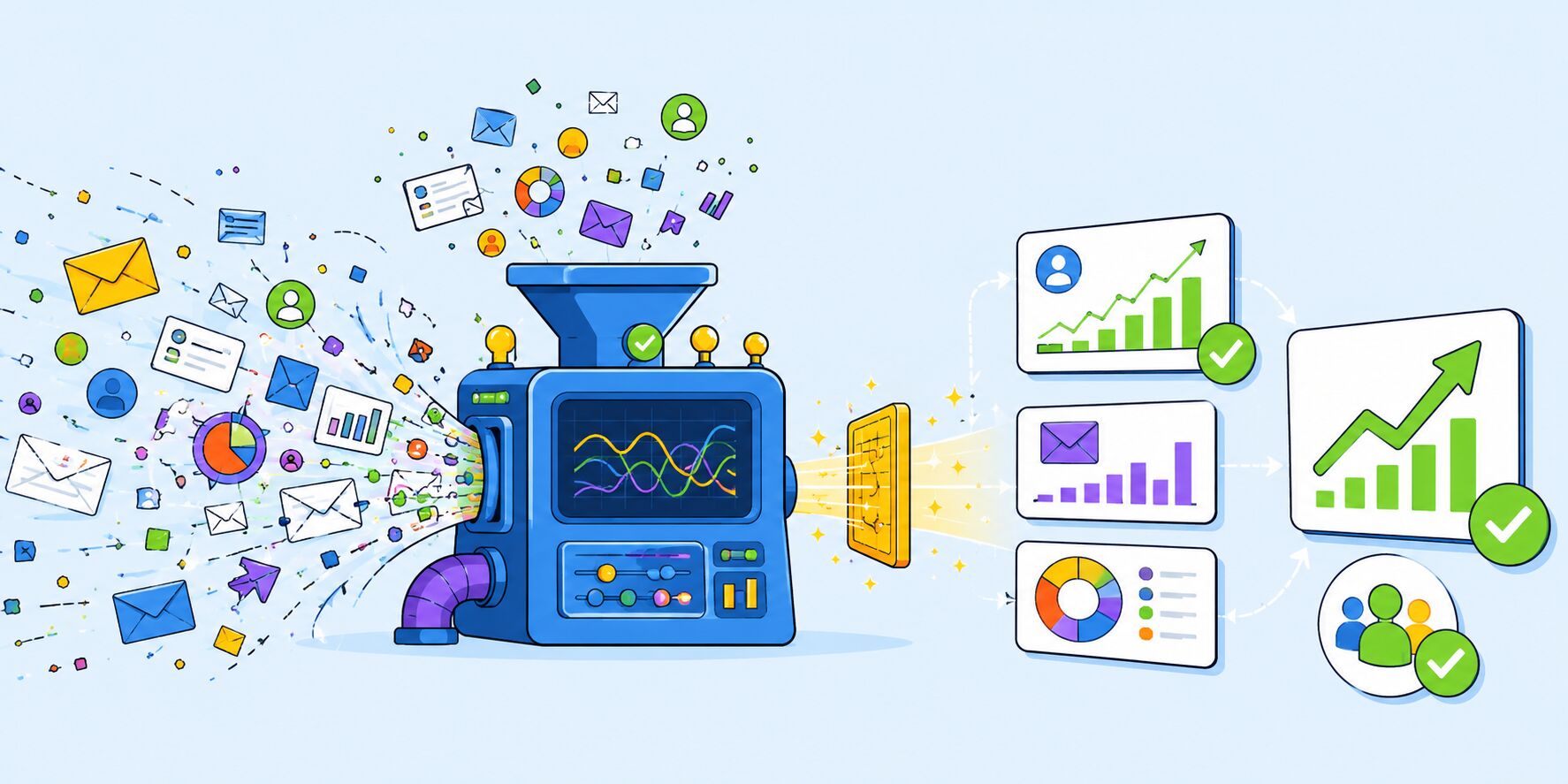
However, you should not discard this metric entirely. Its value has shifted from precision to direction. If your open rates are trending downward over a 90-day period, it is a lagging indicator of a larger issue—perhaps your sender reputation is suffering, or your subject lines have lost their competitive edge. Read it for the trend, not the specific percentage.
The Gold Standard: Why Click-Through Rates Never Lie
Unlike opens, clicks require intent. A human must physically interact with your content. This makes the Click-Through Rate (CTR) and its sibling, the Click-to-Open Rate (CTOR), the most honest numbers on your dashboard.
- The Diagnostic Duo: When you analyze these two together, you gain a diagnostic tool for your content strategy.
- High CTR, Low CTOR: This suggests your content is highly relevant, but your subject lines are failing to attract the right audience.
- Low CTR, High CTOR: This indicates your subject line is doing its job, but the body content fails to deliver on the promise made in the subject line.
By isolating these two metrics, you can pinpoint exactly which half of your funnel needs a rewrite.
Revenue Per Email (RPE): The Grown-Up Metric
Engagement is a vanity metric; revenue is a business metric. Revenue Per Email (RPE) strips away the noise and tells you exactly what your list is worth.
By dividing total campaign revenue by the number of emails delivered, you create a baseline for success. This metric forces a brutal honesty: that "clever" creative campaign you spent three days designing might be outperformed by a simple, automated abandoned-cart reminder. RPE helps you reallocate your time toward the efforts that actually impact your bottom line.
The Smoke Detectors: Managing List Health
There are three metrics that you should only worry about when they deviate from the norm. Think of them as your "smoke detectors"—you don’t stare at them all day, but you need to know immediately if they start ringing.
- Bounce Rate: A spike here indicates that your list hygiene is failing. If your hard bounce rate climbs above 1%, you are signaling to internet service providers (ISPs) that your list is outdated or scraped, which will jeopardize your deliverability.
- Unsubscribe Rate: A steady trickle (0.2%–0.5%) is not only normal; it is healthy. It represents the natural pruning of your list. A 0% unsubscribe rate is actually a red flag—it often means your unsubscribe link is buried or broken, which may drive users to hit the "Report Spam" button instead.
- Spam Complaints: The ultimate "teeth" of email marketing. Even a minor uptick above 0.1% can blacklist your domain. If complaints rise, the issue is almost always frequency or relevance.
Implementing the 15-Minute Monthly Ritual
Most founders fail at analytics because they treat it as an infinite task. Instead, implement a 15-minute monthly ritual. Use this framework to turn data into action:

- Review: Which campaigns generated the highest RPE? Which automations are the "silent earners"?
- Analyze: What were the commonalities in your top three performing emails?
- Decide: Choose exactly one thing to change for the following month. Do not try to overhaul your entire strategy.
- Iterate: If you change your subject line style, track the impact on the next three sends.
The goal is to move from being a spectator of your data to an architect of your results.
The Role of Modern Tooling
The challenge for many entrepreneurs is that their data is scattered. To effectively execute the 15-minute ritual, you need a platform that connects the dots between revenue, segments, and individual campaigns.
Platforms like Omnisend are designed to eliminate "spreadsheet archaeology." By providing real-time revenue attribution and allowing you to view campaigns and automated flows side-by-side, such tools enable you to see who is responding and who is drifting. For those looking to optimize their workflow, tools that offer seamless migration—moving flows, lists, and templates in days rather than weeks—allow you to spend less time managing software and more time steering your business.
Implications for Future Growth
The future of email marketing lies in the integration of data and intent. As privacy regulations tighten and consumer inboxes become more crowded, the winners will not be those who send the most emails, but those who send the most relevant emails based on actionable data.
Your email program should not be a task you check off a list; it should be a living, breathing component of your customer acquisition strategy. When you stop watching the vanity metrics and start focusing on the "smoke detectors" and the "revenue drivers," you transform your email marketing from a chore into a high-octane engine for growth.
Remember: Your dashboard is not there to be watched. It is there to be argued with. If you aren’t using your data to make one concrete change every month, you aren’t managing your email—you’re just watching it happen.
For founders ready to upgrade their email strategy, platforms like Omnisend offer specialized tools to streamline these analytics. As a benefit to our readers, use code FOUNDR50 for 50% off your first three months, and leverage their migration team to ensure a seamless transition.



