










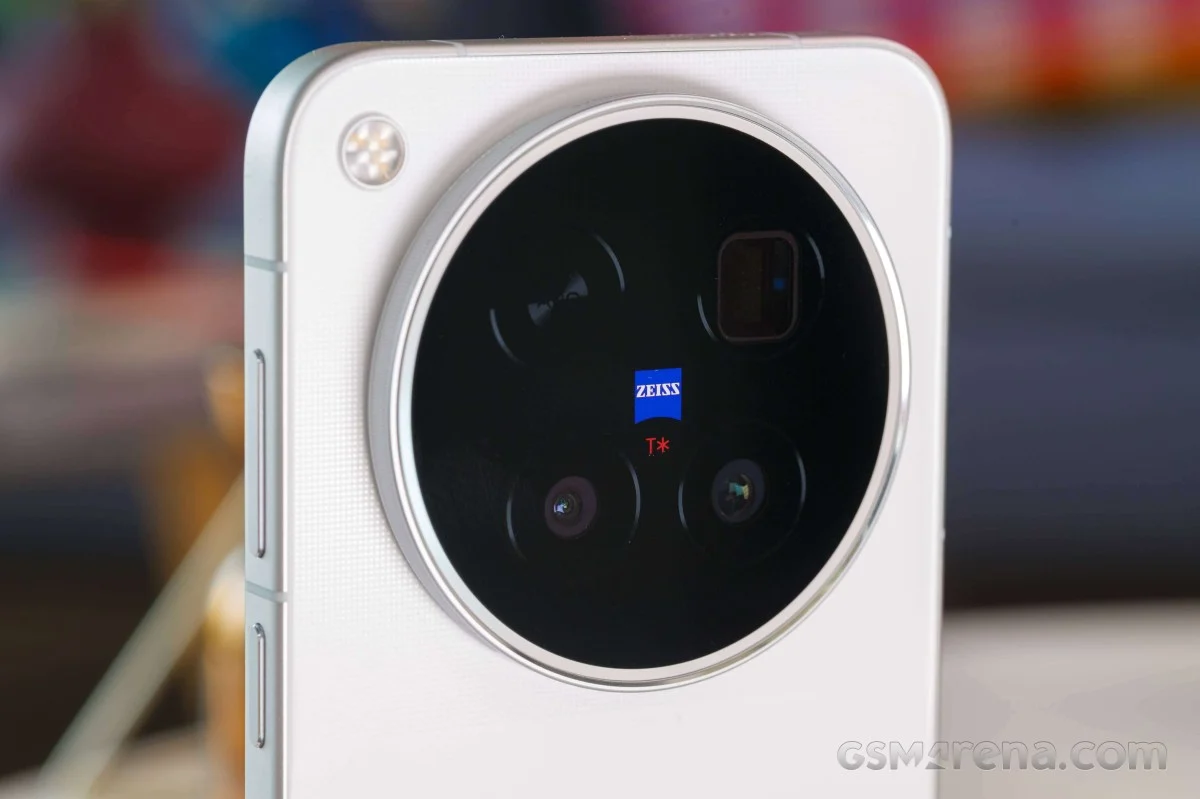
SHANGHAI — When major smartphone manufacturers roll out a flagship series, the accompanying launch events are rarely just about the hardware specs on a PowerPoint slide. They are carefully curated experiences designed to let journalists and creators push new devices to their absolute limits in the real world. Recently, we had the distinct pleasure of attending vivo’s grand X500 series unveiling in Shanghai, China.
True to form, vivo arranged a series of picturesque photo opportunities across the vibrant metropolis. With the newly minted vivo X500 Pro Max clutched firmly in hand, we set out across the city to explore its scenic routes, bustling streets, and striking architecture, capturing a fresh batch of camera samples along the way.
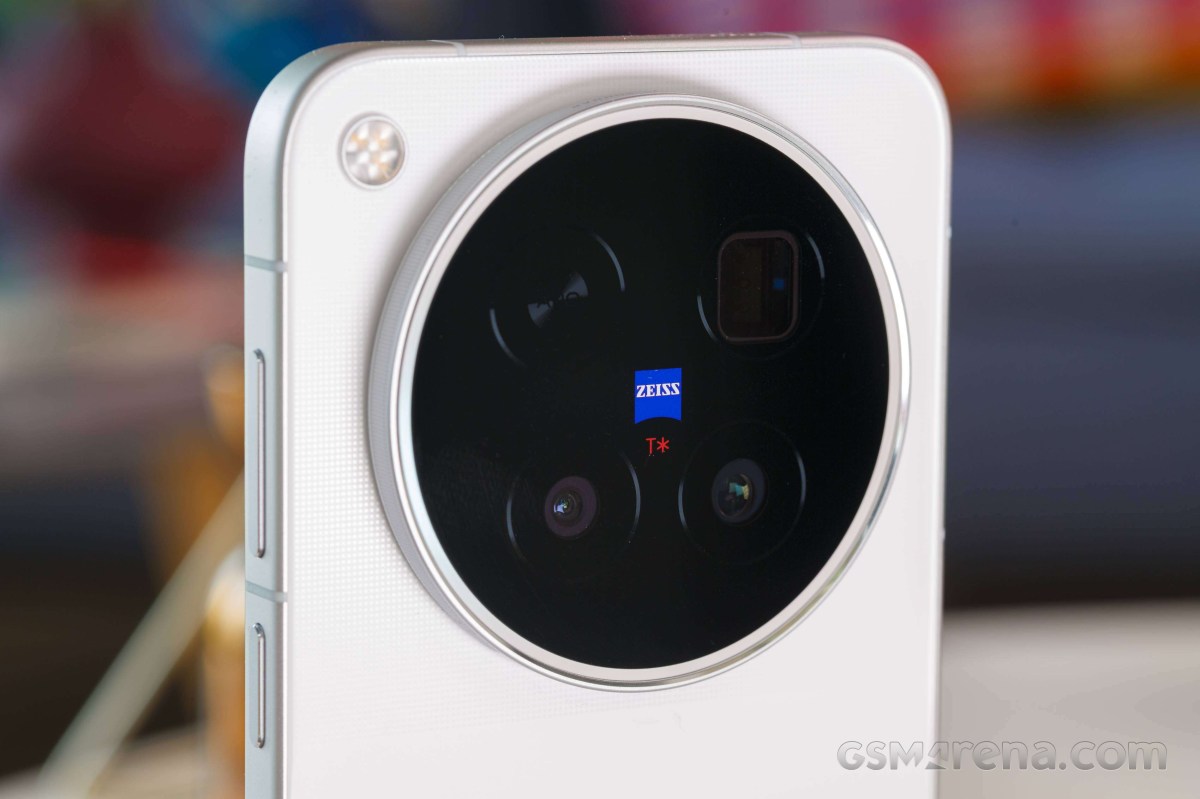
While we previously shared a selection of these images in our initial hands-on coverage, our collection proved too extensive to fit into a single piece. Consequently, we are rolling out an expanded gallery of real-world shots. Though this is not an exhaustive, laboratory-grade camera review of the X500 Pro Max, it serves as an invaluable window into the device’s everyday photographic capabilities, offering enthusiasts a clear look at vivo’s latest imaging prowess.

1. Main Facts: Inside the vivo X500 Pro Max Imaging Engine
Before diving headfirst into the visual samples, it is essential to understand the formidable hardware driving the vivo X500 Pro Max. Smartphone photography has evolved past simple megapixel counts, and vivo’s latest offering is a masterclass in modern sensor engineering and optical integration.

On the rear panel, the vivo X500 Pro Max houses an arresting triple-camera array that immediately signals its high-end ambitions:

- The Main Wide Camera: At the heart of the system is a massive 50-megapixel sensor sporting a 1/1.28-inch optical format. What sets this sensor apart is its integration of LOFIC (Lateral Overflow Integration Capacitor) technology. LOFIC promises—and delivers—drastic improvements in dynamic range, effectively managing harsh highlights and deep shadows in high-contrast scenarios. This powerhouse sensor sits behind a stabilized 24mm equivalent lens with a bright $f/1.6$ aperture, allowing ample light to hit the sensor even in challenging lighting conditions.
- The Ultra-High-Resolution Telephoto Camera: Moving beyond the primary shooter, vivo has equipped the Pro Max with a staggering 200-megapixel sensor built on a 1/1.4-inch optical format. Paired with an 85mm equivalent $f/2.7$ zoom lens, this telephoto setup is engineered to retain staggering levels of detail, whether shooting at native focal lengths or leveraging digital crop techniques.
- The Ultrawide Camera: Rounding out the rear configuration is a 50-megapixel sensor on a 1/2.75-inch format, paired with a 15mm equivalent $f/2.0$ ultrawide lens.
How does this stack up against the broader ecosystem? Industry observers will note that this configuration closely mirrors the powerhouse system found on the vivo X300 Ultra. While the X300 Ultra retains a slight upper hand in specific main and ultrawide parameters, the X500 Pro Max stands shoulder-to-shoulder with the absolute best computational photography powerhouses currently on the market.

2. Chronology of the Shanghai Field Test
To truly evaluate how a mobile imaging system performs, one must observe it across shifting temporal and environmental conditions. Our time with the vivo X500 Pro Max in Shanghai followed a deliberate progression, moving from wide-angle streetscapes to hyper-extended telephoto snapshots.

Morning and Afternoon: The 24mm Main Camera
Our testing commenced in the bright, diffused daylight of Shanghai’s urban core. Utilizing the primary 24mm $f/1.6$ shooter, we captured a series of dynamic cityscapes and street scenes.

The sensor’s natural response to light was immediately apparent. Operating primarily at low ISO settings (ranging from ISO 67 in bright sunlight up to ISO 240 under cloud cover) with lightning-fast shutter speeds (frequently dipping below 1/1000s), the main camera produced crisp, punchy images with natural depth of field. Even in trickier indoor or shaded transition zones—where ISO values bumped up to around 896—noise suppression algorithms kept grain remarkably well-managed without sacrificing fine textures.

Midday: Venturing Into Ultrawide Territory
Next, we transitioned to the 15mm $f/2.0$ ultrawide camera. While traditionally regarded as the "least impressive" powerhouse in contemporary multi-camera arrays due to physical space constraints, vivo’s 50-megapixel ultrawide held its ground admirably.

Shooting expansive plazas and towering modern architecture, the lens managed barrel distortion exceptionally well. ISO values remained remarkably constrained (hovering between 58 and 127 in daylight), ensuring edge-to-edge sharpness that avoids the muddy corners typically plaguing lesser ultrawide modules.

Late Afternoon to Dusk: Pushing the Telephoto Limits
The true stress test of the day came with the telephoto array. Armed with the 85mm $f/2.7$ primary zoom lens, we began capturing distant subjects across Shanghai’s sprawling landscape.

However, we did not stop at native optical reach. By creatively combining the native 85mm glass with digital zoom algorithms and external teleconverter lenses, we pushed the effective focal lengths to extraordinary extremes—testing intermediate steps like 135mm, 170mm, 242mm, 400mm, 800mm, all the way up to a mind-bending 1,600mm equivalent.

While shooting at extreme telephoto ranges inherently demands high ISO adjustments (reaching up to ISO 3803 in low-light corner cases) and slower shutter speeds, the optical stabilization and computational wizardry embedded in the X500 Pro Max ensured that subjects remained remarkably legible and structurally sound.
3. Supporting Data and Technical Breakdown of Camera Samples
To provide transparency into how the vivo X500 Pro Max operates under varied conditions, we have cataloged the technical metadata from our sample runs across the three primary focal lengths.

Main Camera (24mm / 48mm Crop Equivalents)
- Aperture: Fixed at $f/1.6$ across all standard main captures.
- Shutter Speeds: Ranged from a fast 1/1677s in bright daylight to 1/50s in dimmer interior environments.
- ISO Range: Maintained an ultra-clean floor at ISO 67 for well-lit outdoor scenes, scaling up to ISO 896 when light levels dropped.
- Resolution: Outputted crisp 4096×3072 pixel frames, showcasing rich detail and realistic color grading.
Ultrawide Camera (15mm Equivalents)
- Aperture: Fixed at $f/2.0$.
- Shutter Speeds: Standardized around 1/100s for daytime stability.
- ISO Range: Tight control between ISO 58 and ISO 127, highlighting the efficiency of the 1/2.75-inch sensor in capturing broad daylight without blowing out highlights.
Telephoto Camera (85mm to 1,600mm Equivalents)
- Aperture: Ranged from $f/2.7$ at native focal lengths to $f/2.8$ and specialized narrow apertures like $f/16.0$ or $f/4.0$ on custom teleconverter shots.
- Shutter Speeds: Generally anchored at 1/100s, with specialized long-reach shots dipping to 1/50s or pushing up to 1/265s.
- ISO Range: Widest variance, spanning from clean daylight readings at ISO 50 up to high-gain environments registering ISO 3803.
4. Official Perspectives and Ecosystem Integration
Vivo’s aggressive push into elite mobile imaging is no accident. During the Shanghai unveiling, company executives emphasized that the X-series is designed to bridge the gap between pocket-sized convenience and professional-grade cinematography.

The implementation of LOFIC sensor technology represents a major milestone in this journey. By tackling the age-old smartphone limitation of clipping highlights in bright skies or backlit environments, vivo is signaling that its devices are built for demanding creators who refuse to compromise on dynamic range.

Furthermore, vivo’s commitment to modularity and creator-focused accessories was underscored during the event. Alongside our extensive look at the X500 Pro Max standalone hardware, we also unboxed the device alongside its dedicated Creator Kit—a comprehensive suite of tools designed to transform the smartphone into a fully-fledged mobile production studio. (For a deep dive into the unboxing and unvarnished first impressions of the Creator Kit, be sure to check our dedicated hardware breakdown).

5. Market Implications: Where Does the X500 Pro Max Fit?
The release of the vivo X500 Pro Max and its exhaustive camera capabilities sends a clear ripple through the high-end smartphone market. As competitors race to dominate mobile zoom and sensor size metrics, vivo’s balanced approach—pairing high-megapixel resolution with advanced capacitor technology like LOFIC—addresses real-world pain points rather than merely chasing spec-sheet bragging rights.

For mobile photographers, content creators, and everyday enthusiasts traveling to dense urban environments like Shanghai, devices like the X500 Pro Max redefine expectations. When a single pocketable device can seamlessly transition from a sweeping 15mm landscape to a razor-sharp 1,600mm equivalent telephoto shot without completely degrading image integrity, the traditional barrier between dedicated mirrorless cameras and mobile phones narrows further.

As we conclude our initial field testing in Shanghai, one thing is abundantly clear: vivo’s X500 series is not just iterating on past success—it is aggressively setting a new benchmark for what a modern flagship smartphone can achieve through the lens. Stay tuned as we work toward our full, comprehensive review of the vivo X500 Pro Max in the coming weeks.



