










By International Sports Desk
July 20, 2026
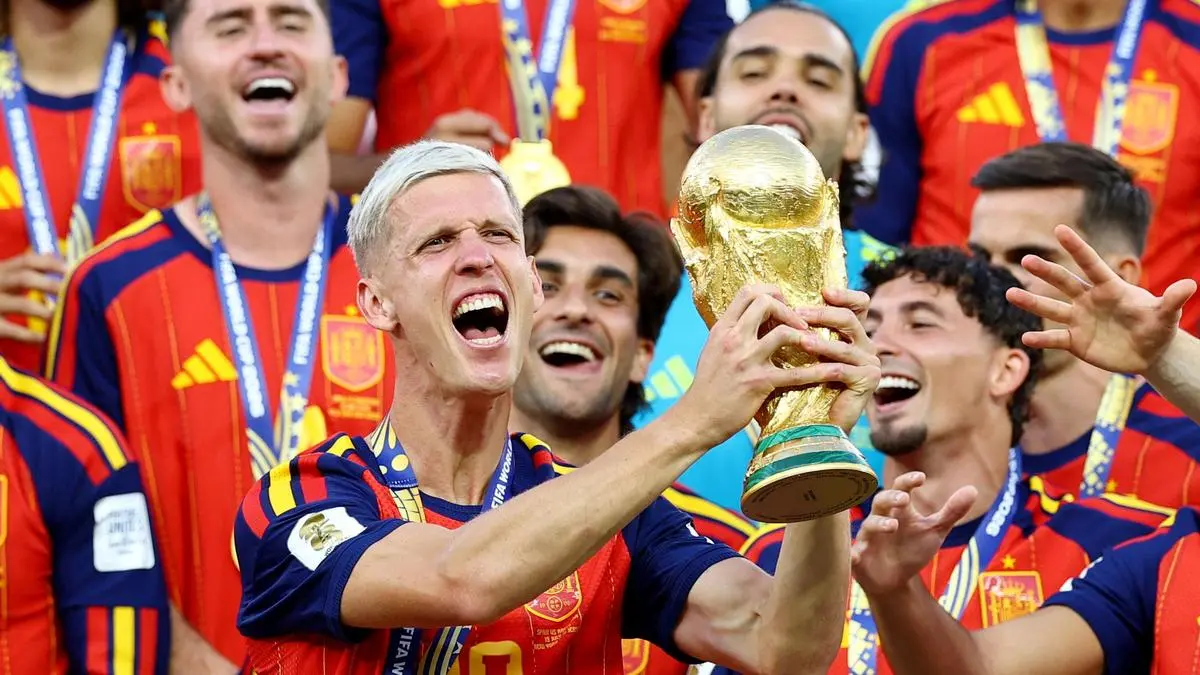
In an evening that will be etched into the annals of sporting history, Spain has ascended to the pinnacle of global football. On a sultry Sunday night at the New York/New Jersey Stadium in East Rutherford, a tactical masterclass concluded with a moment of pure, clinical brilliance. Ferran Torres, introduced as a substitute to inject fresh energy into a tiring side, found the back of the net in the 106th minute, securing a 1-0 victory over defending champions Argentina and cementing Spain’s status as the undisputed heavyweight of world football.
This victory is not merely a triumph of skill; it is a historic achievement that sees Spain become the first nation to simultaneously hold the FIFA World Cup titles in both the men’s and women’s categories. As the final whistle blew, the stadium erupted in a cacophony of celebration, marking the end of a tournament defined by its massive scale, unprecedented star power, and record-breaking statistics.
The Chronology of a Tactical Siege
The match was characterized by a lopsided narrative of control. From the opening kick-off, Spain exerted a suffocating grip on the midfield, dictating the tempo and forcing Argentina into a desperate, backs-to-the-wall defensive posture. Throughout the 90 minutes of regulation time, the statistical disparity was staggering: Spain unleashed 15 shots on goal, while Argentina failed to register a single attempt. Spain dominated the corner count 9-1, yet for all their territorial advantage, the Argentine defense—led by a Herculean performance from their goalkeeper—refused to break.
The tension reached a boiling point in the dying embers of regulation time. In a moment of high drama, Argentina’s Enzo Fernandez was issued a second yellow card following a reckless challenge that sent Spanish defender Pau Cubarsi cartwheeling through the air. The dismissal forced Argentina to contest the remainder of the match with only 10 men, a disadvantage that would ultimately prove fatal to their title defense.
Moments later, the wunderkind Lamine Yamal nearly etched his name into the history books. Lining up a free kick from 22 yards out, his curling effort seemed destined for the top corner. Only a miraculous, diving save from the Argentine keeper—his 10th of the match—kept the scoreline level. It was a performance of heroic proportions that kept the Albiceleste alive, forcing the contest into the grueling theater of extra time.
The deadlock was finally shattered at the dawn of the second 15-minute period of extra time. As a ball bounced invitingly inside the box, Ferran Torres reacted with the composure of a veteran, burying a clinical left-footed strike under the crossbar. The goal sparked scenes of euphoria among the Spanish contingent, leaving Argentina with no path back into the game.

A Tournament of Superlatives
The 2026 FIFA World Cup, hosted jointly by the United States, Canada, and Mexico, was an event designed to break barriers. As the final match of the 104-game marathon, this concluding fixture provided a fitting capstone to the largest tournament in FIFA history.
The expansion to a 48-team format was met with skepticism by purists, but the results were undeniable. The sheer volume of matches contributed to a staggering total of 308 goals scored throughout the tournament, shattering all previous records. The spectacle was not just in the play on the pitch, but in the infrastructure and global reach that the tournament achieved, drawing in viewers from every corner of the planet.
A Global Stage: The Intersection of Sport and Celebrity
The atmosphere inside the New York/New Jersey Stadium felt less like a sporting event and more like a gathering of the world’s most influential figures. The grandstands were a who’s who of global culture, bridging the gap between cinema, music, athletics, and politics.
Hollywood was out in full force, with icons such as Brad Pitt, Tom Cruise, Matt Damon, and Cillian Murphy rubbing shoulders with Daniel Craig and Jennifer Hudson. The NBA was represented by a veritable All-Star roster, including Stephen Curry, Victor Wembanyama, Kevin Durant, and LeBron James’ protégé Bronny James. Tennis legends Serena Williams and Carlos Alcaraz added to the prestige, while the NFL’s elite, including Patrick Mahomes and Saquon Barkley, observed the tactical chess match from the sidelines.
The presence of soccer royalty—Kaka, David Beckham, Didier Drogba, and Zinedine Zidane—served as a bridge between the legends of the past and the victors of the present.
The Entertainment Spectacle: A New Standard for FIFA
In a departure from traditional closing ceremonies, FIFA introduced a revolutionary 27-minute halftime break that transformed the final into a global concert. Post Malone headlined the pre-match ceremony, but the halftime show was the true cultural lightning rod. Featuring a medley of international superstars including Madonna, Shakira, Justin Bieber, and BTS, the performance was supplemented by the artistic contributions of Gustavo Dudamel and even the whimsical presence of Sesame Street characters. It was a clear signal from FIFA that the modern World Cup is as much about entertainment and soft power as it is about the sport itself.
Political Presence and Official Statements
The gravity of the occasion was underscored by the presence of U.S. President Donald Trump. His attendance and role in the trophy presentation highlighted the geopolitical significance of the host nation’s involvement. In an interview with Fox Sports prior to the match, President Trump maintained a neutral stance, though he offered a candid assessment of the Argentine icon, Lionel Messi.

"I won’t pick sides," the President stated. "I just think it’s very hard to bet against Messi. He’s great."
Despite the President’s admiration for the Argentine captain, it was not to be for the South American side. As Messi received his runners-up medal, the image of him shaking hands with President Trump, with FIFA President Gianni Infantino looking on, served as a poignant reminder of the cultural weight that the World Cup carries on the world stage.
Implications for the Future of Football
For Spain, this victory is the culmination of years of investment in youth academies and a tactical philosophy that prizes possession and technical fluidity above all else. By securing both the men’s and women’s World Cups, the Spanish Football Federation has set a new benchmark for excellence. They have effectively proven that their developmental model is the most successful in the modern game.
For Argentina, the loss marks a difficult end to a valiant campaign. Having defended their title with grit and resilience, the team will undoubtedly look back on the tactical limitations of their 10-man squad in the final minutes as the turning point of their tenure.
As the dust settles on the 2026 World Cup, the footballing world must come to terms with a new reality. The 48-team format is here to stay, and the integration of high-production entertainment into the sport’s most sacred event has proven to be a commercial triumph. Spain stands at the summit, a team that has navigated the biggest, longest, and most watched World Cup in history to claim the throne.
As the players lifted the trophy, the confetti raining down on the pitch served as a final, shimmering confirmation: the world of football has changed, and Spain, for this moment, owns the future.