








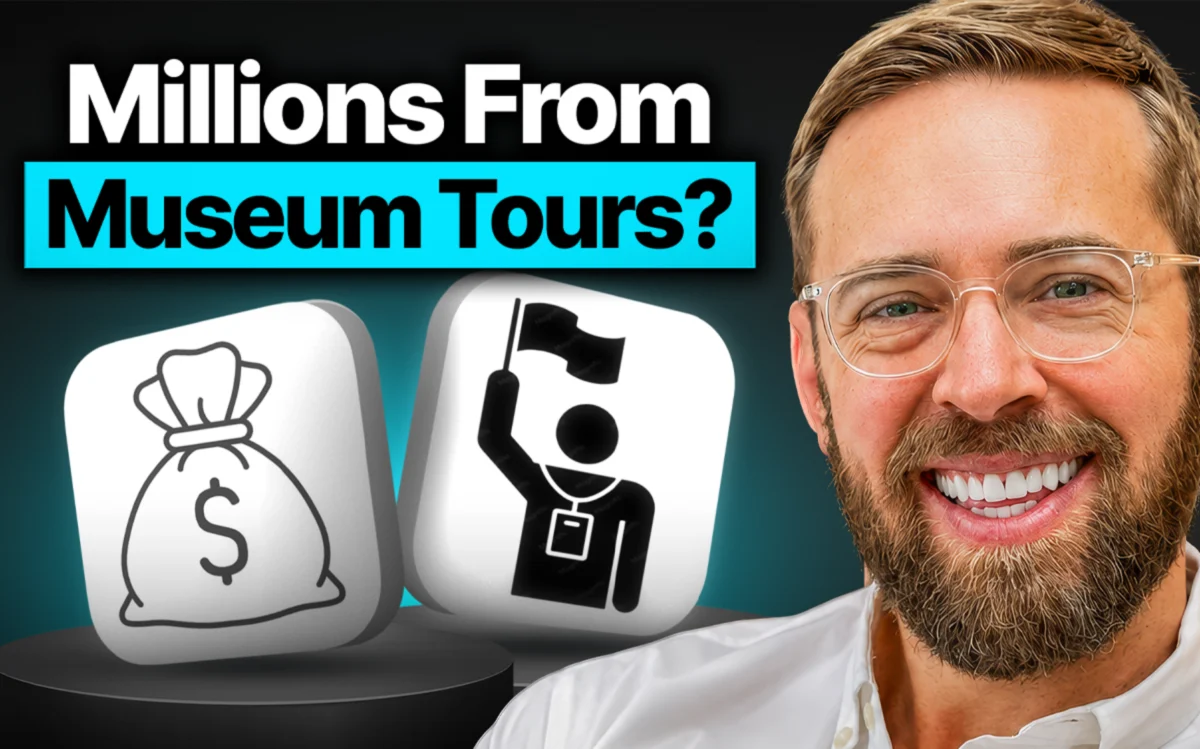
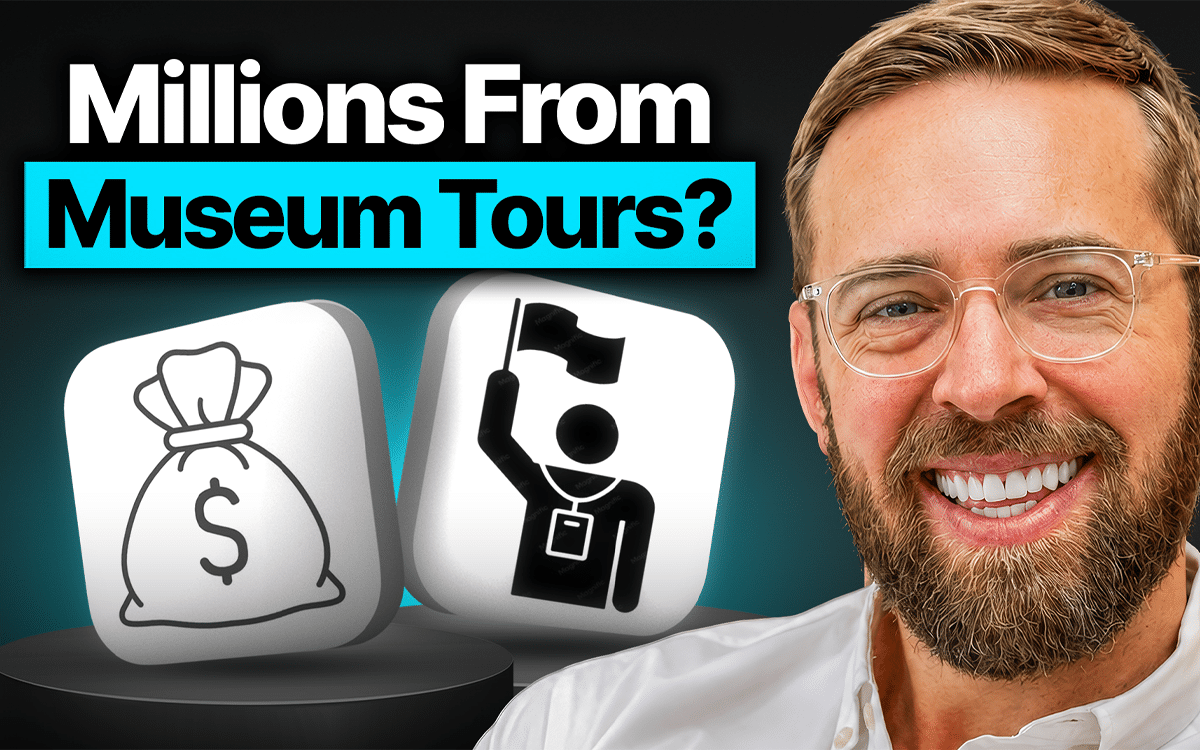
In the latest episode of the Niche Pursuits podcast, host Jared Bauman sits down with serial entrepreneur Nick Gray to deconstruct a career defined by turning unconventional personal passions into scalable, high-value assets. The conversation traverses a wide spectrum—from the multi-million dollar exit of the experiential brand Museum Hack to the burgeoning importance of personal digital infrastructure in the era of Artificial Intelligence and Generative Engine Optimization (GEO).
For entrepreneurs looking to build lasting authority, Gray’s journey offers a masterclass in how to identify "boring" or overlooked industries and inject them with enough novelty and structure to build a profitable enterprise.
The Genesis: How Museum Hack Transformed a Hobby into a $3M Exit
Nick Gray’s entrepreneurial journey did not begin in a boardroom; it began in the halls of the Metropolitan Museum of Art. After moving to New York City, Gray began hosting casual, informal tours for friends. He was neither an art historian nor a professional guide—a distinction he identifies as his greatest competitive advantage.
The Power of "Anti-Expertise"
While traditional museum tours often cater to art history enthusiasts with dry, academic recitations, Gray pivoted toward the audience that found museums inherently boring. He reframed the museum experience to focus on human-centric narratives: gossip, historical rivalries, financial scandals, and the bizarre, untold stories behind the masterpieces. By treating the museum as a venue for high-energy entertainment rather than a gallery for silent observation, he created a product that resonated with a younger, experience-hungry demographic.
Scaling Through Radical Hiring
The transition from a solo passion project to a multi-city company was fraught with the classic "founder trap"—the idea that the business could not survive without Gray himself. To break this cycle, he implemented a counterintuitive hiring strategy. Rather than seeking out subject-matter experts, he recruited performers, theater enthusiasts, and individuals with high natural energy. He prioritized personality and the ability to command a room over formal museum experience.
This model allowed Museum Hack to scale across major metropolitan hubs, including Washington, D.C., San Francisco, and Los Angeles. The company thrived in cities with a deep pool of freelance talent—individuals comfortable with performance, flexible schedules, and the dynamic nature of hospitality work.
Financial Maturity: Charging and Structural Growth
The shift from a "side hobby" to a professional business was catalyzed by the decision to charge. Initially, Gray was hesitant to monetize his passion, even offering full refunds to early participants simply because he enjoyed the process so much. However, he quickly realized that pricing was a signal of quality. Once customers paid a premium for the experience, their engagement shifted from passive to active, and the professionalization of the tour led to better word-of-mouth referrals.
The Exit Strategy
By 2019, Museum Hack had achieved significant scale, though it hit a growth ceiling at approximately $3 million in annual revenue. Despite the business being labor-intensive—a model often avoided by software-focused investors—Gray managed to orchestrate a successful exit.
In a testament to the trust he had built with his leadership team, the exit was structured as a full seller-financed deal. The incoming owners, who had been instrumental in the company’s growth, effectively bought the business out of its own future profits. This arrangement proved vital when the COVID-19 pandemic hit shortly after, forcing the company to pivot from physical tours to remote team-building experiences—a shift that ultimately increased profit margins and streamlined the business model.
Building Digital Assets: The Role of Books and Personal Websites
Following his exit, Gray turned his attention toward the "authority economy." He authored The 2-Hour Cocktail Party, a tactical guide for event hosting that serves as a blueprint for his methodology. While the book was a significant investment—costing roughly $60,000 in professional production and design—it served as a powerful tool for establishing brand identity and trust.
The New Frontier: PersonalWebsites.org
Gray’s latest venture, PersonalWebsites.org, addresses a modern dilemma: how individuals and founders position themselves in an era dominated by Google and AI search results. Gray argues that for too many professionals, their digital presence is fragmented across LinkedIn, social media, and third-party profiles.
A personal website is not just a digital business card; it is a "home base" that provides search engines and LLMs with clear, structured data about an individual. By owning one’s domain, a professional can control the narrative, present testimonials, and create a centralized hub that builds trust with potential clients and partners.
Supporting Data and Technical Implementation
During the podcast, Gray shared technical insights into why personal websites are becoming a high-priority asset for digital SEO. His team has moved toward a static site architecture, utilizing Payload CMS and the Astro framework. This shift resulted in near-perfect PageSpeed Insights scores, moving from the high 80s to 99.
This technical precision is not just about vanity metrics; it is about "entity clarity." When search engines can easily parse a person’s identity, their professional history, and their associations, they can more accurately categorize them as an authority. In a competitive digital landscape, this "surface area" of content ensures that when a potential client searches for a founder, they find a professional, curated, and authoritative representation of that person’s work.
Implications: The Future of Reputation and Authority
The conversation between Gray and Bauman highlights a profound shift in how business owners must approach their online presence. As Generative Engine Optimization (GEO) begins to influence how information is surfaced, the line between a company entity and a personal entity must be clearly defined.
Key Takeaways for Entrepreneurs:
- Entity Separation: It is critical to differentiate between the individual (the founder) and the business (the company). A personal website helps search engines distinguish between the two, providing distinct data points for both.
- The "Surface Area" Strategy: A personal website should not merely list a resume. It should include speaker reels, testimonials, endorsements, and deep-dive content that allows AI models to synthesize a complete picture of the individual’s expertise.
- Proactive vs. Reactive: Rather than waiting for a negative search result to necessitate "reputation management," founders should proactively build their own digital infrastructure.
- The Power of Utility: Whether it is a museum tour, a book, or a personal website, the most sustainable business models are those that solve a specific, tangible problem for the user while providing a structured, repeatable experience.
A New Era of Personal Branding
Nick Gray’s career path serves as a compelling case study for the modern entrepreneur. He has consistently demonstrated that the most valuable business assets are those that combine personal passion with a rigorous, scalable structure. As the internet becomes increasingly dominated by AI-driven discovery, the "personal website" is evolving from an optional vanity project into a mandatory pillar of professional reputation.
For those looking to replicate Gray’s success, the path forward is clear: identify a gap in the market, build a repeatable framework that doesn’t rely solely on the founder’s time, and establish a digital footprint that machines can easily interpret as an authoritative source of truth. As Gray notes, in the future, the most successful individuals will be those who curate their own digital narrative, ensuring that they are the primary source for their own story.