











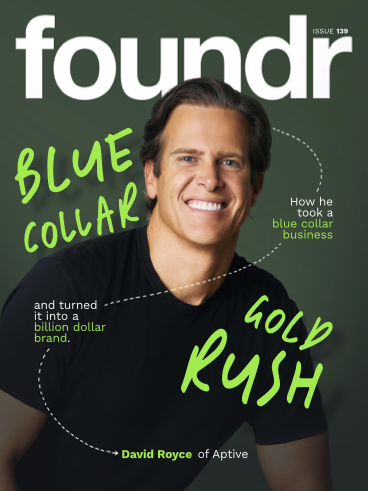
In the high-stakes world of modern entrepreneurship, the blueprint for success is often mythologized: it usually involves a polished tech pitch, a sleek Silicon Valley incubator, and a disruption of a digital market. David Royce, the founder and chairman of Aptive Environmental, suggests that this narrative is fundamentally flawed.
Royce, who built one of the largest residential pest control companies in North America, argues that true wealth is rarely found in the "sexy" industries that dominate the headlines. Instead, he has carved out a massive fortune in an industry his peers once deemed unworthy of professional attention. By prioritizing grit, operational discipline, and a contrarian approach to scaling, Royce has transitioned from a self-described "kid who wasn’t smart" to a titan of the American home-services sector.
The Foundation: Persistence as a Competitive Advantage
David Royce’s journey did not begin in a boardroom. It began on the doorsteps of suburban homes in California. As a college student, he entered the pest control industry—a move he describes as purely accidental.
His entry was marked by immediate, humbling failure. During his first week as a door-to-door sales representative in Sacramento, Royce failed to land a single sale. While his peers were closing deals and earning commissions, Royce was effectively performing hours of unpaid cardio. Most would have walked away, but Royce’s response was indicative of the mindset that would later define his career: he didn’t quit.

Instead, he spent his weekend in a bookstore, devouring sales literature and committing to 90 minutes of daily study. By the end of that summer, the "failure" had become the top sales rookie in a company of 200. This period solidified his foundational philosophy: "Persistence is genius in disguise."
A Chronology of Growth
The Early Lessons (Age 15–22)
Royce’s early work experience was marked by "unsexy" roles, including a stint at a McDonald’s franchise after being let go from a local pizza parlor. It was here that he learned the importance of standardized operating procedures—a lesson he would eventually apply to a multi-million-dollar organization.
The Pivot to Pest Control
While on track for a career in investment banking, a mentor challenged him: why work 100-hour weeks for someone else’s firm when he could leverage his sales expertise to build his own? With $300,000 saved from his summer sales commissions, Royce bypassed the traditional MBA route to launch his first venture.
The Scaling Scares (Year One)
Growth is not always a linear upward trajectory. In his first year, Royce nearly bankrupted his startup by succeeding too well. By selling 7,500 accounts—far exceeding his projected 5,000—he faced a massive cash-flow crunch. Because he had to pay his sales staff commissions upfront before the recurring revenue matured, he found himself in a liquidity trap. His solution? Radical transparency. He negotiated extended payment terms with his team, offering interest in exchange for patience—a gamble that saved the business and informed his future financial models.
The Asset Deal Strategy
Royce developed a unique exit strategy. Rather than selling his entire business, he focused on "asset deals," selling the customer base and service infrastructure to strategic buyers while retaining his core leadership team and sales force. This allowed him to repeatedly launch new companies, each time with better capitalization and a seasoned, cohesive team.
Data and Operational Excellence
Royce’s success was not a result of luck; it was a result of aggressive codification and data-driven management. When asked why Aptive grew seven to ten times faster than its competitors, Royce points to three pillars:
- A Machine-Like Sales Program: Aptive’s sales training became legendary. By teaching "option closes" and emphasizing non-verbal communication, Royce ensured that his reps were not just selling, but consulting. When veterans from competitor firms joined Aptive, their productivity increased by an average of 70%.
- Product-Market Insight: Having knocked on over 60,000 doors, Royce possessed a PhD-level understanding of homeowner pain points. He translated this into specialized service features that the larger, less agile competitors ignored.
- Technological Innovation: Long before it was standard for blue-collar businesses, Aptive invested heavily in proprietary software. By gamifying sales through a nationwide app, the company saw productivity spikes of up to 30% on tournament days.
The Culture of Ownership: Beyond Ping-Pong Tables
A common pitfall in high-growth companies is the belief that "culture" is synonymous with "perks." While Aptive’s headquarters features golf simulators and basketball courts, Royce is quick to distinguish between the "sugar" and the "protein."
"Perks are sugar," Royce notes. "They are not the protein."

The real driver of Aptive’s culture was, and is, financial alignment. Royce famously distributed 25% of the company to his employees. When the business reached over $500 million in annual revenue, this equity distribution resulted in life-changing payouts for his staff. For many, it meant the ability to pay off mortgages and support their families. By replacing corporate ping-pong tables with genuine ownership, Royce fostered a level of loyalty that is rarely seen in the service industry.
Official Insights: When to Stop Being the Hero
Perhaps the most challenging phase of Royce’s journey was the transition from CEO to architect. For over a decade, he trained his protégé to eventually take the helm. The transition taught him a critical lesson: a business is only as strong as its ability to function without its founder.
However, the path was not without its pitfalls. A notable failure occurred when the company hired a high-profile CFO from a billion-dollar tech firm. The hire, while impressive on paper, lacked the "ground-level" operational awareness required to navigate a sale process. The resulting missed forecasts cost the company a high-value exit opportunity.
Royce cites this as a core lesson in leadership: "Resumes don’t run companies. People do."
Implications for Future Entrepreneurs
The story of David Royce offers several key takeaways for the modern entrepreneur:
- Embrace the "Unsexy": As AI and automation continue to reshape the economy, the industries that require physical presence—like pest control, plumbing, and home maintenance—remain remarkably resilient. These sectors often boast higher margins than overcrowded tech verticals.
- Cash Flow is Reality: While revenue is a vanity metric, cash flow is the lifeblood of a growing business. Founders must plan for the "success tax"—the period where growth outstrips available capital.
- The Power of Mentorship: Royce’s career was ignited by a teacher in the sixth grade who believed in him and sustained by mentors who challenged his path. He now views his legacy not in dollars, but in the number of leaders he has helped develop.
- The Summit is a Moving Target: Royce warns against the trap of the "big exit." He suggests that entrepreneurship is less about the final payday and more about the character and expertise developed along the way. If a founder does not find joy in the climb, the summit will inevitably feel hollow.
Conclusion
David Royce’s trajectory—from an unfocused student to the founder of a billion-dollar empire—serves as a compelling counter-narrative to the "overnight success" stories of Silicon Valley. His career proves that there is no shortcut to greatness. Whether it is through the grind of door-to-door sales or the meticulous design of an organizational culture, success is the byproduct of doing the things that others are unwilling to do, for long enough to master them.
As the baby boomer generation prepares to retire, millions of blue-collar businesses are coming to market. For the next generation of entrepreneurs, Royce’s message is clear: look past the suit, look past the skyline, and find the opportunity in the work that actually needs to be done.