










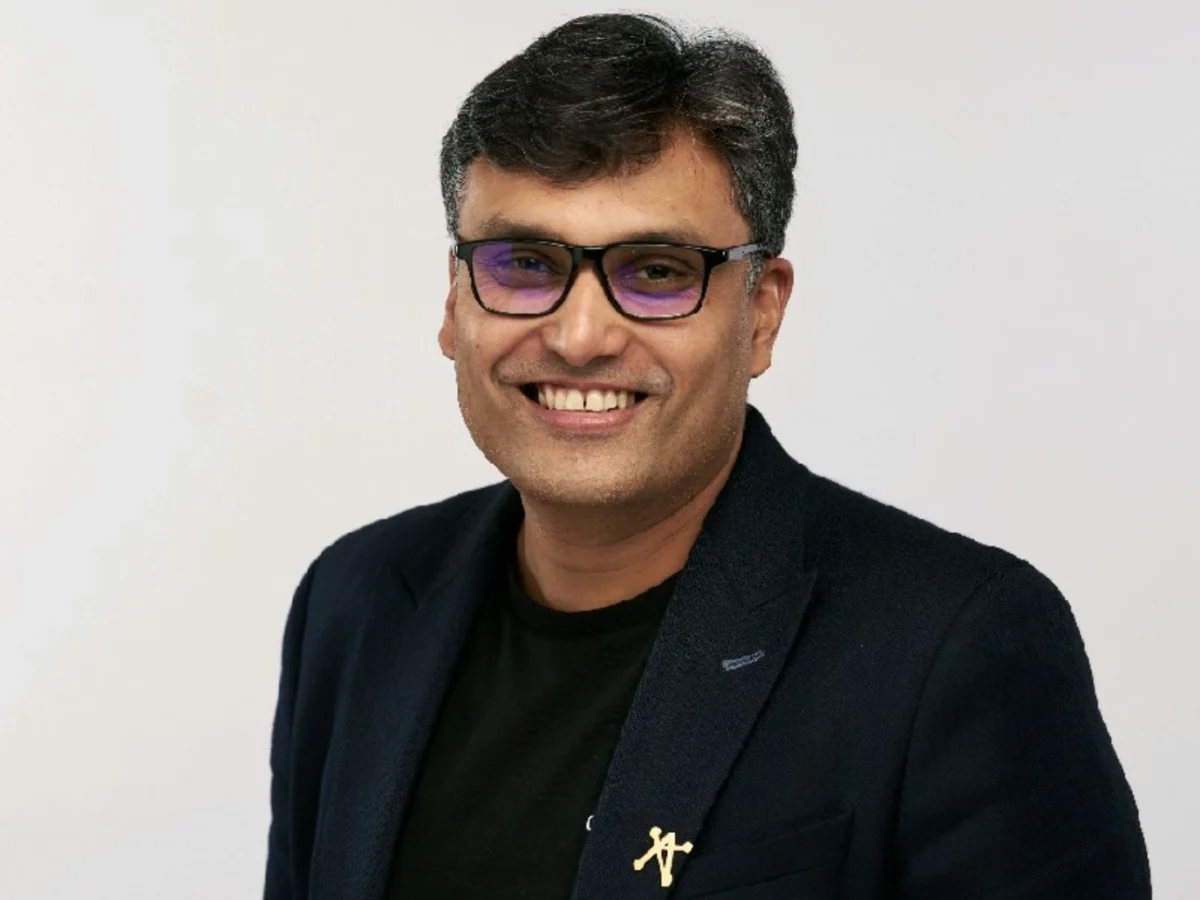
In a landmark development for the global healthtech ecosystem, CARPL.ai, an innovative SaaS startup specializing in medical imaging orchestration, has successfully closed a $10 million Series A funding round. The investment was led by the International Finance Corporation (IFC), the private sector arm of the World Bank Group, with significant participation from existing investor Stellaris Venture Partners and a group of undisclosed strategic investors.
This capital injection marks a pivotal moment for the Delhi NCR-headquartered firm as it seeks to solve one of the most pressing bottlenecks in modern medicine: the chaotic and fragmented landscape of artificial intelligence in radiology. By providing a "unified interface" for disparate AI models, CARPL.ai is positioning itself as the central nervous system for hospitals looking to modernize their diagnostic workflows.
The Core Challenge: The "Fragmentation Crisis" in Radiology
To understand the significance of CARPL.ai’s mission, one must look at the current state of hospital IT infrastructure. Over the past decade, the medical imaging field has seen an explosion of AI vendors—each promising to detect everything from lung nodules on X-rays to anomalies in MRI scans.
However, for a hospital, adopting these tools is rarely straightforward. Every AI vendor brings its own unique software requirements, API integration needs, and clinical workflows. Managing ten different AI tools often requires a hospital to juggle ten different interfaces, a scenario that is not only operationally expensive but clinically dangerous.
CARPL.ai serves as a comprehensive "App Store" for medical imaging. The platform allows healthcare providers to browse, test, and deploy commercial radiology AI models from a centralized marketplace. By doing so, it effectively removes the friction associated with integrating multiple vendors, allowing radiologists to interact with various AI tools within their existing Picture Archiving and Communication System (PACS) environments.
Chronology: From Concept to Global Scale
The journey of CARPL.ai is a study in rapid, strategic scaling.
- 2018: The Genesis: Founded by Dr. Vidur Mahajan, the startup began with a vision to bridge the gap between academic AI research and clinical utility.
- 2021: Formal Launch: After years of refining its technology stack and establishing partnerships, CARPL.ai officially launched its platform to the commercial market.
- 2023: Seed Traction: The company secured $6 million in funding from Stellaris Venture Partners and various angel investors, providing the runway to prove its model across diverse geographic markets.
- 2024: Series A Milestone: The $10 million infusion from the IFC marks the company’s transition from a regional player to a global infrastructure provider.
Today, the startup boasts a robust team of 80 employees across its offices in Delhi NCR, the San Francisco Bay Area, and Singapore. Its growth trajectory has been marked by an aggressive push into international markets, proving that the "AI fragmentation" problem is a universal pain point.
Supporting Data: An Ecosystem of Scale
The strength of CARPL.ai lies in its network effects. As of its latest disclosure, the platform hosts over 300 AI applications from more than 100 individual vendors. This diversity ensures that hospitals are not locked into a single ecosystem but can choose the "best-in-class" tool for each specific clinical need.
The company’s footprint is equally impressive, spanning:
- Geographies: North America, Latin America, Europe, the UK, the Middle East, India, Southeast Asia, and Australia.
- Key Institutional Partnerships: The client list includes the Singapore government, the Clinton Health Access Initiative (India), I-MED Radiology Network (Australia), RadNet (US), Fleury (Brazil), and Medica (UK).
These partnerships are facilitated by deep integrations with existing PACS providers, ensuring that CARPL.ai acts as a seamless layer over existing hospital hardware rather than a disruptive replacement.
Official Perspectives: Vision for the Future
Speaking exclusively with Inc42 following the funding announcement, Founder Vidur Mahajan outlined a clear roadmap for the newly acquired capital. The funds are earmarked for three primary pillars of growth:
- Product Evolution: Continued investment in the core technology stack to ensure higher accuracy, faster processing speeds, and broader integration capabilities.
- Global Market Expansion: Scaling the sales and delivery teams to capture greater market share in existing regions and penetrate emerging markets where AI diagnostic adoption is accelerating.
- Operational Excellence: Strengthening the delivery infrastructure to ensure that hospitals across the globe receive localized support and regulatory compliance assistance.
"Our goal has always been to make AI in radiology invisible," Mahajan noted. "When a doctor uses our platform, they shouldn’t feel like they are interacting with five different AI companies. They should feel like they are using one powerful, unified tool that makes their diagnostic process faster and more accurate."
Implications: The Future of Healthtech
The success of this funding round reflects a broader trend in the venture capital landscape. While general-purpose AI continues to capture headlines, the "vertical AI" sector—specifically healthtech—is seeing a flight to quality. Investors are moving away from speculative AI projects and toward infrastructure-level platforms that provide tangible, measurable clinical value.
1. The $37 Billion Opportunity
The Indian healthtech market is projected to be a $37 billion opportunity by 2030. Within this, AI-driven diagnostics are expected to account for a significant portion of value creation. CARPL.ai’s ability to attract the World Bank’s IFC as a lead investor signifies a shift in perception: medical AI is no longer a luxury, but a core component of essential public health infrastructure.
2. The Shift to Interoperability
The industry is moving toward a standard of "interoperability." Hospitals are increasingly wary of "walled gardens"—software ecosystems that make it difficult to migrate or integrate third-party tools. CARPL.ai’s marketplace model directly counters this, promoting an open ecosystem that benefits both vendors (who gain easier access to hospitals) and providers (who gain flexibility).
3. Investor Confidence Amid Market Volatility
The Series A round follows a string of successful raises in the Indian healthtech space, such as Mykare’s $3.2 million round and Gabit’s recent funding. Despite global macroeconomic headwinds, the healthtech sector remains resilient because it addresses fundamental human needs. The presence of both development-focused investors like the IFC and growth-focused VCs like Stellaris suggests that CARPL.ai is viewed as both a social impact driver and a high-growth commercial enterprise.
Conclusion: A New Era for Radiologists
As diagnostic volumes continue to climb globally, radiologists are facing unprecedented burnout. The promise of AI is to act as a "force multiplier," allowing doctors to screen more patients with higher precision. However, this promise has been hampered by the technical overhead of implementation.
By standardizing the deployment of medical imaging AI, CARPL.ai is doing more than just raising capital—it is effectively lowering the barrier to entry for life-saving technology. As the company moves into its next phase of growth, the global medical community will be watching closely to see if this unified platform model becomes the gold standard for clinical AI deployment worldwide.
With a footprint that already spans continents and a technology stack that integrates the world’s leading AI vendors, CARPL.ai has firmly established itself as a critical layer in the future of digital health. The coming years will be defined by how effectively they can scale this "centralized intelligence" to hospitals in every corner of the globe.