








Date: July 23, 2026
Estimated Read Time: 15 Minutes
In a significant leap for technical SEO and data accessibility, Lumar has officially launched its Model Context Protocol (MCP) server. This development marks a pivotal shift in how digital marketers and web teams interact with their website intelligence, effectively dissolving the barriers between complex crawl data and the generative AI assistants that power modern workflows. By allowing AI models like Claude, ChatGPT, and Cursor to communicate directly with Lumar’s infrastructure, the platform is ushering in an era of "conversational auditing."
The Evolution of Search Intelligence
For years, SEO professionals have navigated a fragmented landscape. The typical workflow involved running a crawl in Lumar, exporting massive datasets into spreadsheets, performing manual analysis, and then—often after a significant time delay—copying those insights into a separate chat window to generate reports or actionable summaries.
The launch of the Lumar MCP server eliminates this "copy-paste" friction. By utilizing the Model Context Protocol—an open standard designed to allow AI models to connect seamlessly to external data sources—Lumar is enabling users to treat their website health and AI Visibility data as conversational partners.
Chronology: From Static Reports to Dynamic AI Dialogues
The path to this release follows the rapid integration of Large Language Models (LLMs) into the daily SEO toolkit.
- Early 2025: Lumar began emphasizing "Generative Engine Optimization" (GEO), recognizing that website structures must be optimized not just for traditional search engines, but for the logical reasoning pathways of AI retrieval systems.
- Late 2025: The industry saw a push toward "agentic" workflows, where AI began taking active roles in managing software environments.
- Mid-2026: Recognizing the need for tighter integration, Lumar’s engineering team focused on the MCP standard. By bypassing the need for cumbersome API key management and manual data exports, they developed a secure, authenticated bridge that connects the Lumar platform directly to the user’s preferred LLM interface.
- July 23, 2026: The official launch of the Lumar MCP server, enabling real-time, bidirectional communication between Lumar projects and AI assistants.
Seven Strategic Applications for the Modern SEO
The Lumar MCP server is not merely a data-retrieval tool; it is an operational engine. Here are seven ways teams are leveraging this new capability to reclaim time and improve precision:

1. Automated Crawl Auditing
Instead of navigating through dozens of tabs, users can now task their AI with high-level auditing. A simple prompt such as, "Audit the latest crawl for [project]. What are the top issues and what has deteriorated since the last check?" allows the AI to synthesize health scores and volume-ranked issues instantly.
2. Conversational Analysis
The days of building complex filters are fading. With MCP, users can perform granular analysis using natural language. For example, requesting, "Show me every page over 3 seconds load time with a word count under 300, grouped by template," returns actionable data immediately, bypassing the need for manual data manipulation.
3. Accelerated Project Setup
Administrative bottlenecks—such as creating segments, custom metrics, or linking Jira tickets—can now be handled as a single, multi-stage task. By describing the desired outcome, the AI manages the multi-step process within the Lumar platform, significantly reducing the administrative overhead of managing large-scale web projects.
4. Cross-Project Visibility
For agencies or enterprise teams managing multiple domains, the MCP server provides a bird’s-eye view. Users can ask for a one-line health summary across their entire portfolio, flagging drops in performance across different sites simultaneously.
5. Managing AI Visibility (GEO)
As AI search becomes the dominant interface for discovery, tracking brand presence is critical. The MCP server allows users to track AI Visibility scores, compare performance against competitors, and identify content gaps in real-time.
6. Ecosystem Integration
The true power of the MCP server lies in its ability to connect disparate data points. By linking Lumar with other services, an AI can cross-reference slow-loading pages with Search Console traffic data to determine the actual ROI of fixing specific technical issues.
7. Stakeholder-Ready Reporting
Perhaps the most impactful use case is the translation of technical SEO jargon into business-centric language. By asking the AI to pull health data and AI Visibility scores, a user can generate a one-page summary for a CMO, focusing on traffic impact, revenue potential, and market positioning rather than technical minutiae.
Official Guidance and Security Protocols
Lumar emphasizes that while the MCP server provides immense utility, it must be used with a security-first mindset.
Data Privacy Concerns: Because crawl data passes through the AI provider to generate answers, Lumar advises users to verify the data retention policies of their chosen LLM. "Before connecting, only use an account and plan where the provider explicitly states your data won’t be used for training," the Lumar editorial team noted in their official release. They recommend that teams check with their internal security departments, particularly when dealing with proprietary or highly sensitive site architecture data.
Permissions and Authenticity: The system respects existing Lumar permissions. If a user does not have access to a project within the Lumar dashboard, the AI assistant will not be able to retrieve data for that project. Furthermore, all "write" operations—such as creating tasks or triggering new crawls—require explicit confirmation, ensuring that the AI acts only with the user’s approval.
Implications for the Future of Technical SEO
The shift toward MCP-enabled workflows signals a fundamental change in the role of the SEO professional. As AI takes over the "heavy lifting" of data aggregation and report generation, the role of the human expert shifts toward high-level strategy, creative problem-solving, and the orchestration of AI agents.
By connecting directly to the "Chain of Evidence" that makes up a website’s architecture, Lumar is ensuring that the AI models powering future search engines have a more reliable, structured, and accurate source of truth. As the digital landscape continues to pivot toward AI-generated answers, the ability to rapidly analyze and optimize for these models—using tools like the Lumar MCP server—will become the defining competitive advantage for digital brands.
Technical Implementation Summary
The setup process has been streamlined to accommodate various platforms:
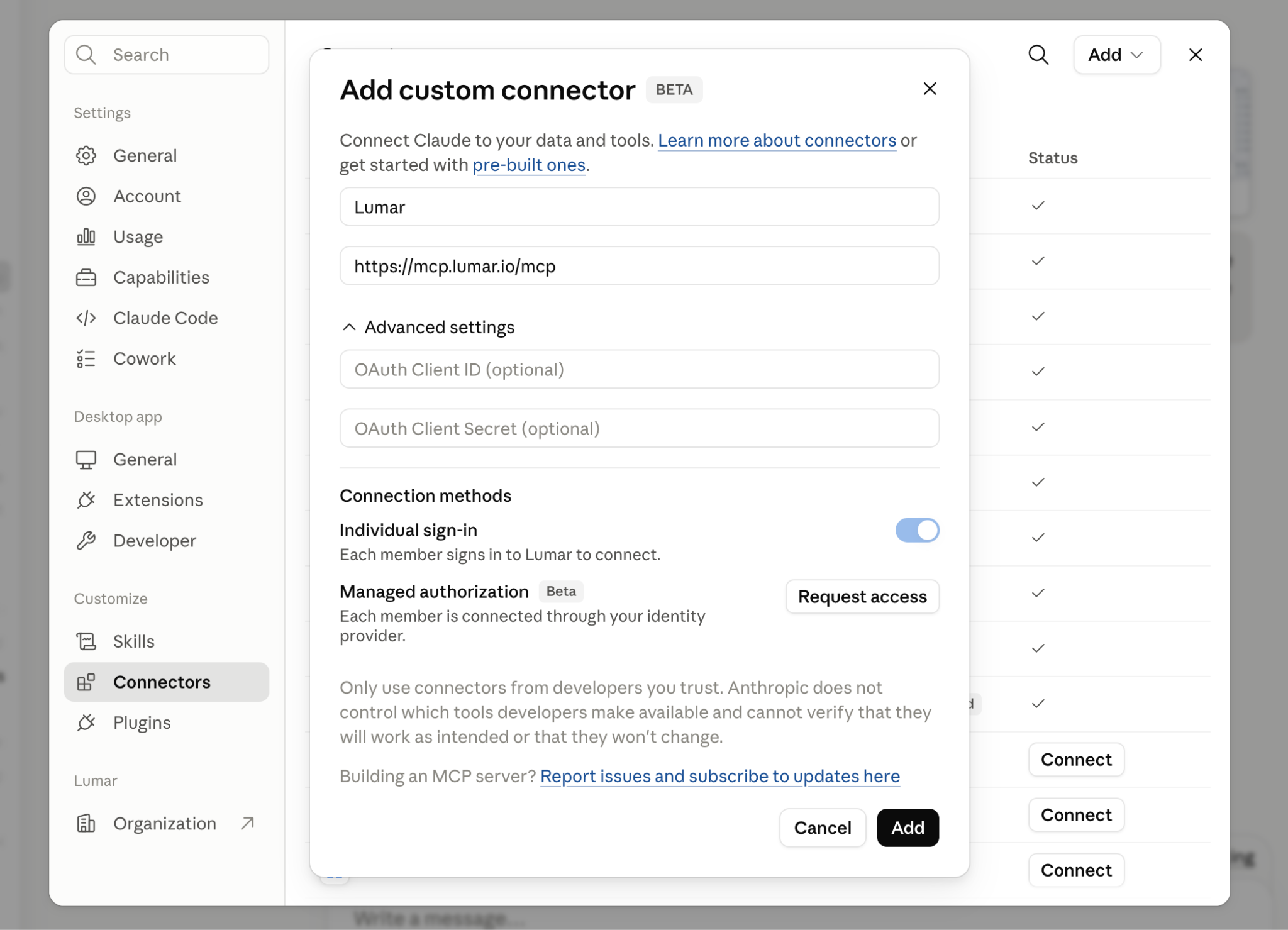
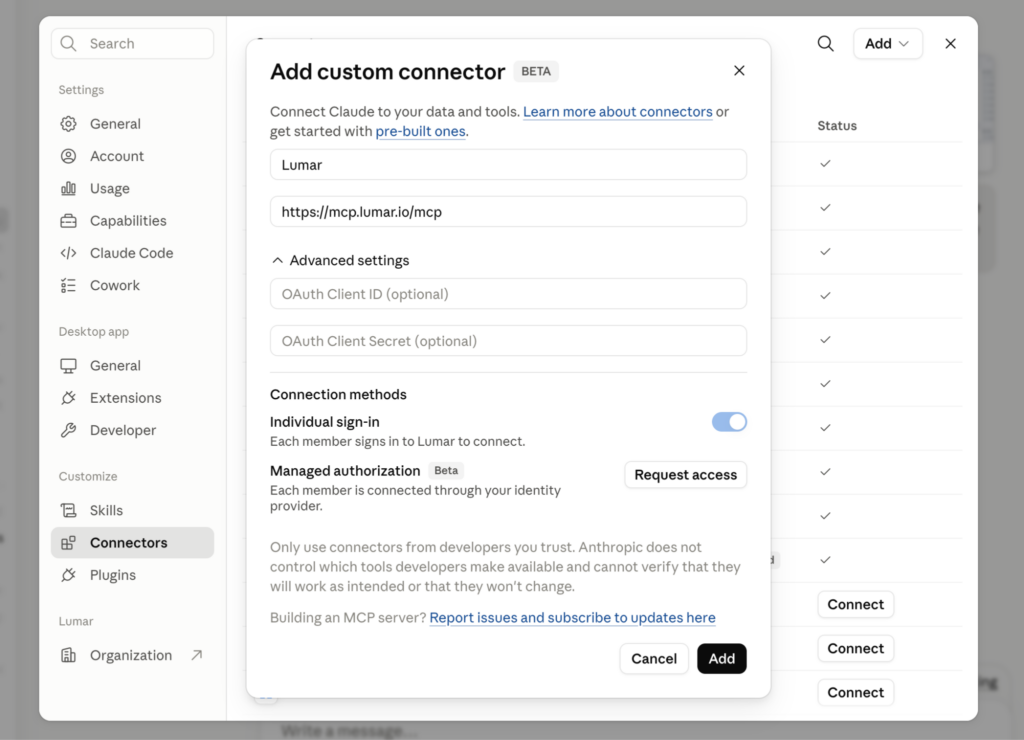
- Claude: Users can add Lumar as a connector in their settings. For Team or Enterprise accounts, administrators must authorize the connector first.
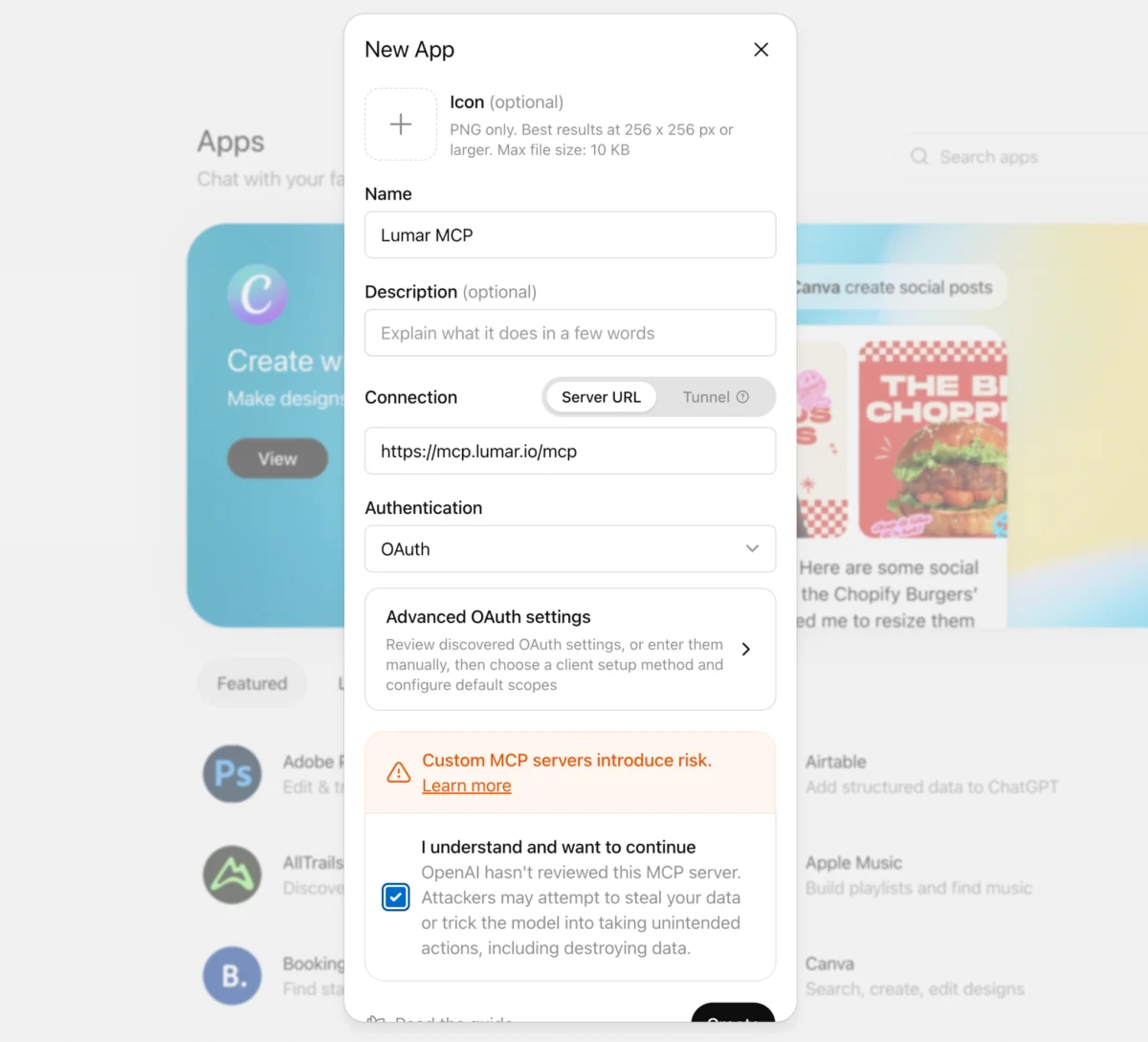
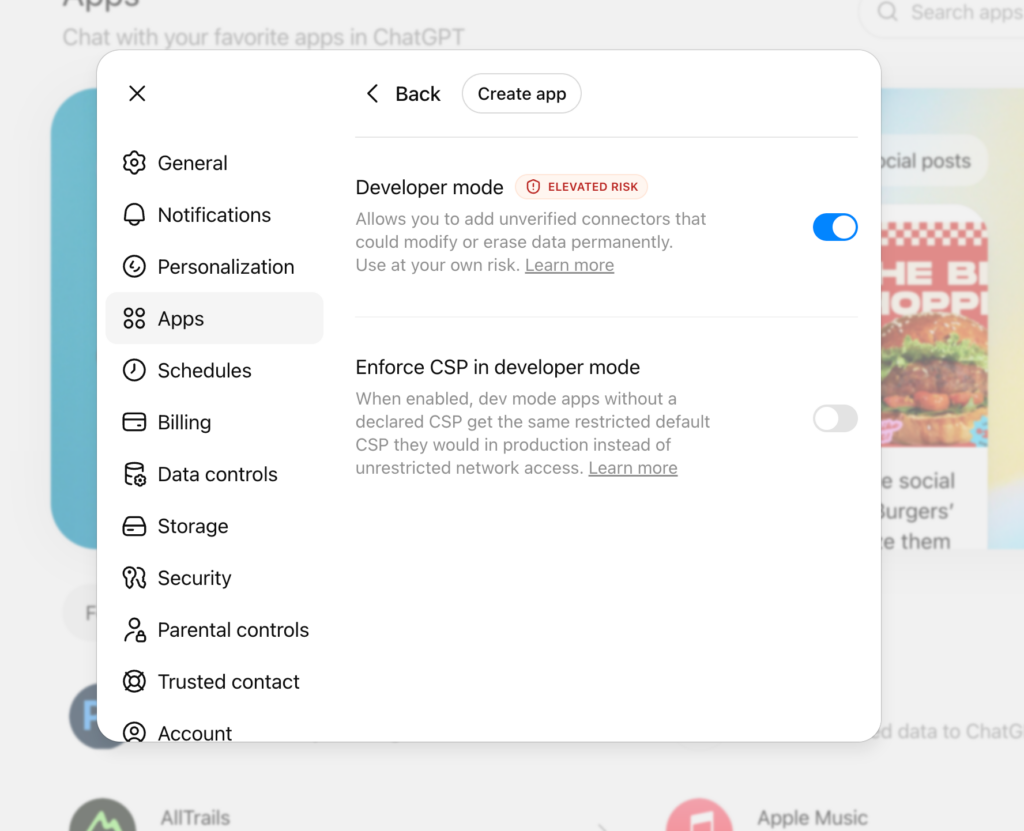
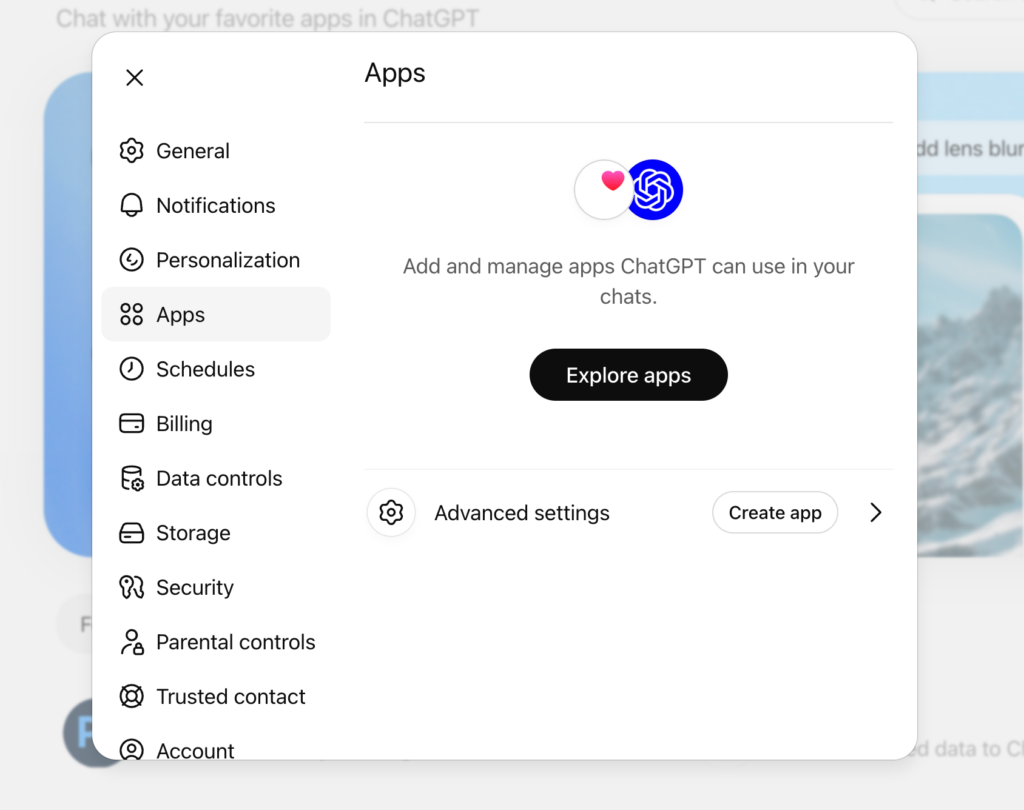
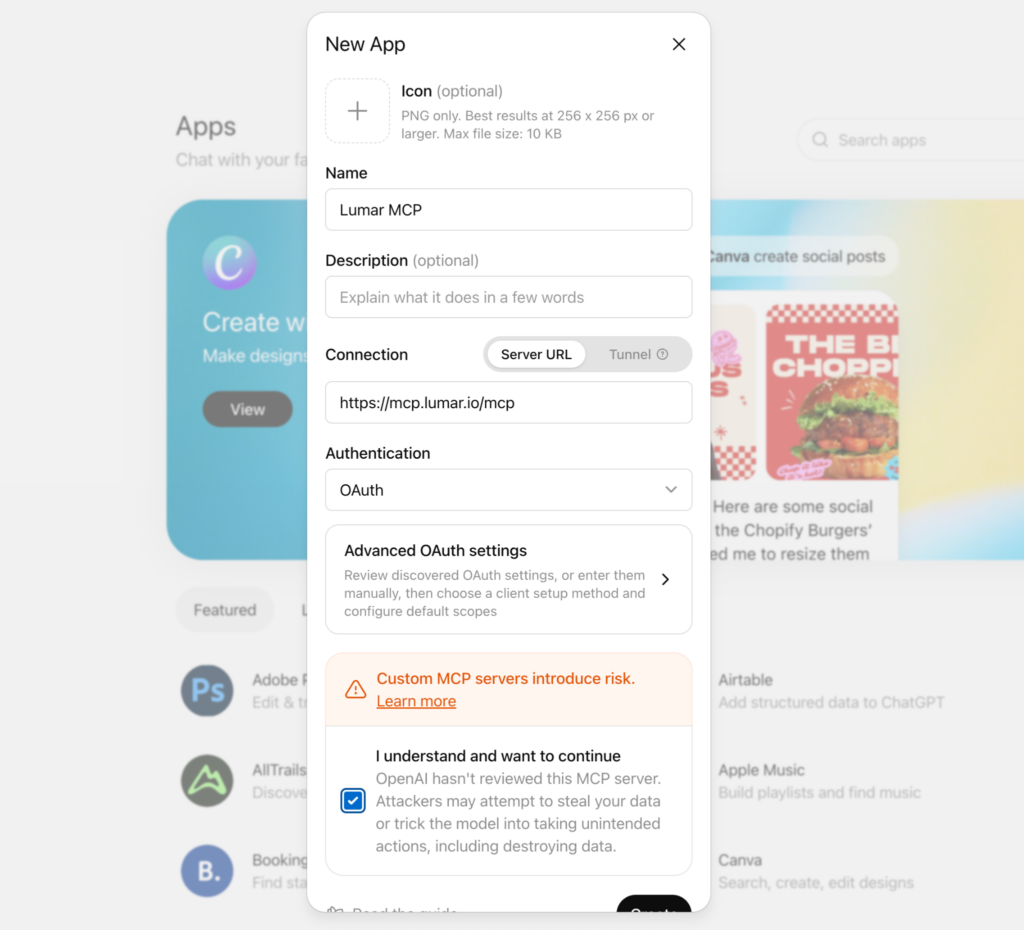
- ChatGPT: Lumar functions as an "App" within the platform. Users simply input the server URL (
https://mcp.lumar.io/mcp) and authenticate via their Lumar account. - Cursor: Designed for developers, the setup involves adding the Lumar MCP server URL to the MCP settings within the IDE, providing a seamless coding and auditing environment.
For other MCP-compatible tools, the standard URL remains consistent, ensuring that Lumar’s intelligence is portable across the growing ecosystem of AI-augmented software. As the technology matures, Lumar plans to expand these capabilities further, focusing on deeper integrations with project management tools and automated remediation workflows.
For those seeking to optimize their workflow, the Lumar editorial team encourages users to start with simple queries—such as listing projects or requesting a health summary—to build confidence in the AI-assisted environment before graduating to complex, multi-tool cross-referencing.