






By Search Industry Insights Desk
Published: October 2023
Main Facts
The rise of generative artificial intelligence (AI) in search engines—from OpenAI’s ChatGPT to Google’s Search Generative Experience (SGE) and Microsoft Copilot—has fundamentally disrupted traditional digital marketing metrics. For decades, Search Engine Optimization (SEO) professionals have relied on a relatively straightforward equation: track keywords, optimize pages, earn backlinks, monitor clicks, and attribute conversions through standard web analytics platforms like Google Analytics.
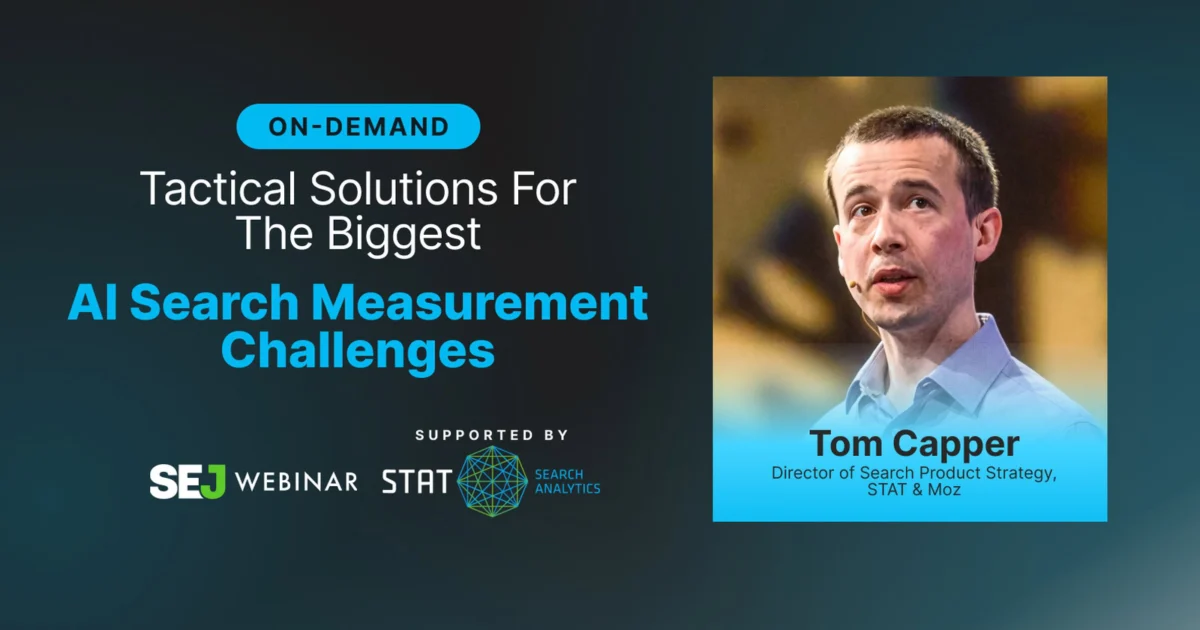
However, the advent of zero-click AI answers has broken this linear framework. As highlighted during a recent industry webinar titled Tactical Solutions For The Biggest AI Search Measurement Challenges, traditional key performance indicators (KPIs) are no longer sufficient. Tom Capper, Director of Search Product Strategy at STAT Search Analytics, addressed the core crisis: An AI search engine can recommend a product, service, or brand without ever linking to its official website.
When a consumer reads an AI-generated summary, receives a brand recommendation, and subsequently searches for the brand directly, visits a physical brick-and-mortar store, or purchases via a mobile app, standard analytics tools remain blind to the initial touchpoint. Traditional attribution models register this as "direct traffic" or a direct navigation, completely missing the crucial influence of the AI-generated recommendation.
Capper’s central thesis shifts the focus of SEO away from counting URL citations and toward measuring holistic brand visibility. According to the framework presented:
- Citations and Mentions are distinct. A brand can be prominently recommended in an AI answer text without its domain owning the supporting reference link.
- Traffic metrics are lagging indicators. Relying purely on click-through rates (CTR) creates a false narrative of failure in an ecosystem designed to answer queries directly on the search engine results page (SERP).
- Measurement requires triangulation. Marketers must combine prompt sampling, qualitative brand tracking, third-party source analysis, and post-purchase customer surveys to build a realistic picture of modern consumer journeys.
Chronology
The evolution of search engine evaluation has undergone a dramatic transformation over the past decade, culminating in the current measurement crisis. Understanding how the industry arrived at this juncture clarifies why legacy metrics are failing.
Phase 1: The Keyword-Centric Era (Pre-2018)
In the early days of modern search optimization, measurement was largely transactional. SEO teams built extensive keyword lists, mapped them to specific landing pages, tracked daily rankings on a 1–100 scale, and correlated rank fluctuations directly with organic traffic spikes. Search engines acted as directories, connecting a user’s query string to a list of external blue links. Clicks were the universal currency of success.
Phase 2: The Featured Snippet and Zero-Click Shift (2018–2022)
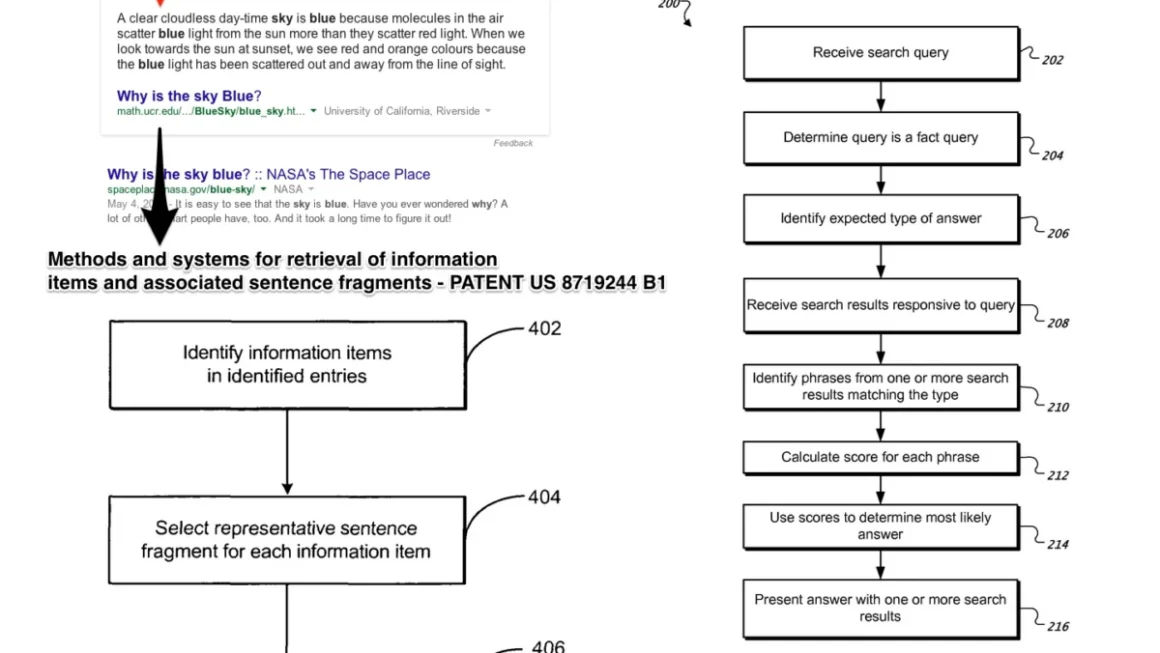
As Google introduced Knowledge Graphs, Featured Snippets, "People Also Ask" boxes, and direct answer modules, the SERP began absorbing user intent. Marketers noticed a decoupling of rankings from traffic: they could hold the number-one position while experiencing declining click-through rates because users found their answers directly on the results page. The industry coined the term "zero-click searches," but most organizations treated this as an anomaly or a localized challenge rather than a structural rewrite of search behavior.
Phase 3: The Generative AI Explosion (2023–Present)
With the rapid mainstream deployment of Large Language Models (LLMs) and conversational search interfaces, the intermediary role of traditional web links has been compressed or bypassed entirely. AI interfaces synthesize information across multiple sources, rendering traditional rank-tracking and click attribution models obsolete.
During the recent webinar session, industry leaders like Capper and Search Engine Journal (SEJ) Executive Editor Loren Baker explored how practitioners must adapt their reporting frameworks to survive this era of conversational, synthesized answers. Rather than waiting for analytics tools to catch up, forward-thinking search teams are overhauling their measurement playbooks right now.
Supporting Data and Technical Insights
To operationalize AI search measurement, practitioners must move past abstract theories and implement rigorous, data-backed methodologies. The webinar detailed several actionable techniques for capturing visibility in non-deterministic AI environments.
1. Disentangling Brand Entities from Source URLs
A common mistake among digital marketers is assuming that tracking domain citations equals tracking brand visibility. Capper illustrated this dynamic using a hypothetical automotive search query: a user asks an AI engine to recommend a family-friendly electric vehicle.
The LLM might explicitly recommend Audi as a top-tier choice within the conversational response text. However, the accompanying footnote citations might point exclusively to automotive review sites like Car and Driver, Edmunds, or MotorTrend.
- The Trap: If a brand’s analytics dashboard only monitors direct domain citations or backlink velocity, the marketing team will conclude that the AI engine ignored them entirely.
- The Reality: The brand successfully captured the consumer’s consideration set at the most critical moment of evaluation.
The Fix: Marketers must define and track "brand entities"—including parent companies, specific product lines, and sub-brands—separately from web domain citations. Competitors must be evaluated under the exact same entity parameters to maintain a fair comparative baseline.
+-------------------------------------------------------------------+
                   AI SEARCH EVALUATION MATRIX
+-----------------------------------+-------------------------------+
|       Brand Entity Mentions       |       Source Citations        |
+-----------------------------------+-------------------------------+
| • Measures recommendation share   | • Measures authority & trust  |
| • Tracks qualitative positioning  | • Identifies third-party hubs |
| • Primary KPI for AI visibility   | • Diagnostic tool for changes |
+-----------------------------------+-------------------------------+
2. Building Representative Prompt Samples
Because generative AI outputs are probabilistic and vary based on context, user history, localization, and model updates, monitoring a single prompt yields noisy, unreliable data. Capper compared this variability to managing location- and device-specific rankings in traditional local SEO.
To construct a robust prompt sample, search teams should:
- Avoid simplistic keyword dumps: Do not simply copy-paste a traditional keyword tracking list into an AI prompt tool.
- Leverage intent mining: Use existing "People Also Ask" data, customer service chat logs, and sales enablement FAQs to understand the nuanced phrasings real users employ.
- Incorporate persona variables: Factor in user intent variations such as geographic locations, budget constraints, technical proficiency, and specific use-case scenarios.
- Control the collection environment: Capper noted that STAT utilizes the live web interfaces of AI search engines rather than strictly relying on APIs, as API responses can occasionally diverge from what end-users actually experience on their screens.
3. Utilizing Citations as Diagnostic Tools
While citations should not serve as the primary headline KPI, they remain invaluable diagnostic instruments. When a competitor wins an AI recommendation, SEO teams should analyze the cited third-party web pages (e.g., industry roundups, review aggregators, forum discussions).
By investigating which external domains are feeding the AI engine, brands can execute targeted digital PR and content syndication campaigns to secure representation on those vital feeder sites. Marketers can then monitor whether improvements in third-party source visibility correlate with an upward trend in direct brand entity recommendations.
Official Responses and Expert Perspectives
The transition to AI-driven search has sparked intense debate among enterprise SEO leaders, data analysts, and executive stakeholders. During the interactive Q&A session moderated by SEJ’s Loren Baker, pressing questions were raised regarding how brands can justify marketing spend when traditional last-touch attribution models fail to capture AI influence.
Loren Baker on the Attribution Dilemma
Loren Baker pointed out the fundamental anxiety plaguing corporate boardrooms: “How can marketing teams connect AI visibility to customer journeys when multi-touch attribution tools cannot observe the earlier exposure?”
Tom Capper’s Triangulation Strategy
Capper responded by advocating for a cultural shift away from the illusion of absolute tracking precision. He argued that waiting for a single analytics dashboard to explain the entire customer journey is a fool’s errand. Instead, organizations must embrace a triangulation model:
- Leading Indicators: Track brand mention frequency, share of voice across AI prompt samples, and visual SERP positioning metrics (such as above-the-fold dominance versus raw rank number).
- Qualitative Thematic Analysis: Rather than obsessing over volatile sentiment scores—which often overreact to minor phrasing changes in neutral AI responses—focus on the underlying qualitative themes associated with brand mentions.
- Post-Purchase Attribution Surveys: Bridge the data gap by introducing targeted survey questions at checkout or onboarding, asking customers explicitly: "Did an AI recommendation, chatbot, or digital assistant help you discover or choose our brand today?"
By passing these survey responses back into enterprise analytics suites as custom dimensions, organizations can cross-reference self-reported discovery channels against traditional digital attribution models, revealing the hidden impact of conversational search.
Implications for the Future of Digital Marketing
The redefining of search metrics carries profound strategic implications for marketing agencies, in-house SEO teams, brand managers, and executive leadership.
1. The Death of Single-Channel Reporting
Digital marketing can no longer operate in isolated silos where SEO teams report purely on organic sessions, paid media teams report on cost-per-click (CPC), and brand teams focus exclusively on top-of-funnel awareness. Because AI search synthesizes web content, public relations, customer reviews, social media discussions, and structured data into a single unified answer, measurement must become equally holistic.
2. Shifting Agency and In-House KPIs
Performance bonuses and agency service-level agreements (SLAs) tied strictly to keyword rankings and organic traffic growth face inevitable restructuring. Forward-looking organizations are transitioning toward metrics that measure:
- Share of Model (SoM): The frequency with which a brand entity is recommended across a representative sample of AI search queries within a specific industry vertical.
- Ecosystem Footprint: The combined strength of direct brand mentions alongside the authority of third-party domains citing the brand.
- Assisted Conversion Lift: The correlation between rising AI brand visibility scores and increases in direct, branded, and offline sales channels.
3. The Next Frontier: AI Shopping and Agentic Commerce
The measurement challenge is expanding rapidly beyond informational queries into transactional commerce. As noted in subsequent industry programming—such as forthcoming webinars featuring seoClarity executives Chris Sachs and Aris Vrakas focusing on AI Shopping: Get Your Products Found in Google & ChatGPT—autonomous AI shopping agents are increasingly deciding which products consumers even see and consider.
In this agentic commerce era, merchants who fail to optimize their product feeds, structured data, and entity authority for AI consumption will find themselves entirely excluded from consumer consideration sets, regardless of how well their traditional landing pages are optimized.
Conclusion
The measurement crisis in modern search is not merely a technical glitch to be solved with a new software tool; it is a fundamental evolution in how humans discover information and make purchasing decisions. As Tom Capper emphasized, clinging to outdated metrics like click-through rates and simple domain citations will leave brands blind to the powerful currents of AI-driven influence.
By separating brand entity mentions from source citations, building robust and realistic prompt samples, using citations as diagnostic investigative tools, and supplementing analytics with post-purchase customer surveys, modern marketers can build a resilient measurement framework. Those who adapt to this new paradigm will not only accurately gauge their digital impact—they will secure a decisive competitive advantage in the age of conversational and agentic search.