









In the evolving landscape of web development, the boundary between static content and immersive, high-fidelity 3D environments has traditionally been guarded by a steep technical barrier. Developers often face a binary choice: either stick to the drag-and-drop convenience of visual site builders like Webflow, or sacrifice that editability for the raw power of custom-coded, heavy-duty WebGL engines.
"Ridgeline," a new hiking and photography project, challenges this dichotomy. By integrating live, elevation-accurate 3D terrain directly into a Webflow-native architecture, the project demonstrates that cinematic, real-time 3D experiences can coexist with the ease of a CMS-managed interface.
Main Facts: A New Standard for Alpine Immersion
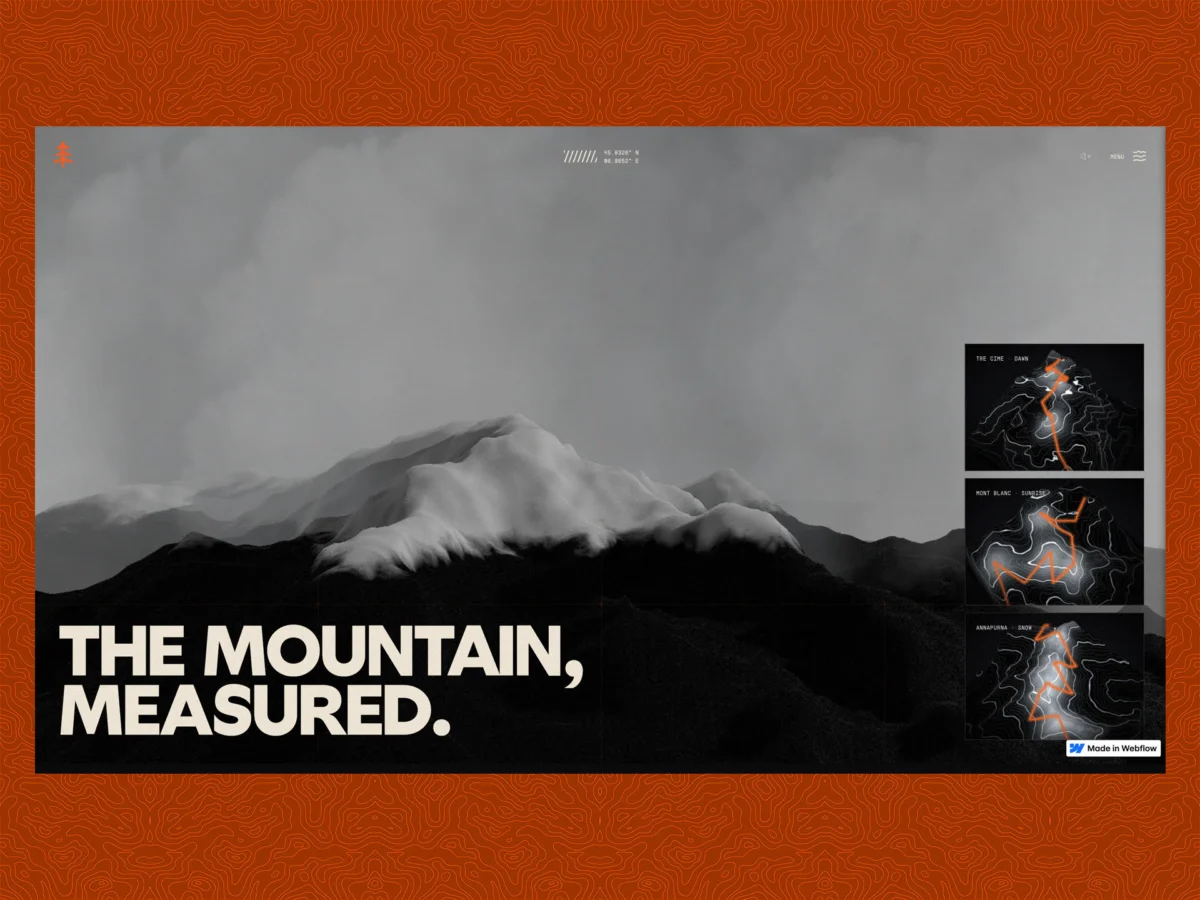
Ridgeline serves as a digital exploration of three iconic alpine treks: the stormy, high-altitude ridges of Tre Cime; the ethereal "blue hour" transition of Mont Blanc; and the stark, snowy isolation of the Annapurna range.
Unlike traditional web-based 3D, which often relies on pre-rendered video loops or "baked" sprite sheets to preserve performance, Ridgeline renders genuine 3D geometry live using Three.js. The terrain is derived from real-world Digital Elevation Models (DEMs), ensuring that the mountain slopes are geologically accurate.

Key project milestones include:
- Live Rendering: All terrain is rendered in real-time, not cached as video.
- Webflow-Native Workflow: The site remains fully editable within the Webflow Designer.
- Agentic Development: The entire infrastructure—from CSS and class management to complex WebGL shaders—was architected using Claude (Opus 4.8 and Fable 5) in conjunction with the Webflow Model Context Protocol (MCP).
- Performance Optimization: The site maintains a locked 60fps, even on complex animations, by offloading intensive GPU tasks and optimizing shader compilation.
Chronology: From Concept to Cinematic Trek
The development of Ridgeline was a rapid, week-long sprint defined by a strict mandate: "I don’t care if it’s a built-in component or external JS, I want to see it."
The First 48 Hours: Architecture and Data
The project began with a data-gathering phase. Using Strava GPS data (GPX) from a personal trek above Cortina, the creator cleaned the raw GPS spikes and mapped the trace onto true SRTM slope data. This established the "Dawn" scene. For the subsequent "Sunrise" (Mont Blanc) and "Snow" (Annapurna) scenes, synthesized routes were generated to maintain the aesthetic standard.
Mid-Week: The Integration Battle
The primary challenge was integrating a heavy WebGL bundle into the Webflow ecosystem. Initially, the developer weighed the pros and cons of using Webflow’s native "Code Components" versus a self-hosted JS embed. The decision to opt for an attribute-driven embed—where the designer defines the "where" in the Webflow interface and the code handles the "what"—was the turning point. This approach allowed the 3D assets to be "mounted" into designer-placed containers without sacrificing the ability to update layout or content in the Webflow Designer.

The Final Push: Smoothing the Seams
The final days were spent obsessing over the "seams"—the moments between user interaction and visual response. This included solving the "first-paint flash" issue, where raw HTML would briefly appear before the JS loaded, and implementing an audio-gating system that unlocks ambient sound only after a user gesture.
Supporting Data: Technical Implementation and Performance
The technical stack behind Ridgeline is a masterclass in modern web optimization. By utilizing Draco compression, the creator shrunk static meshes by a factor of 5–13x (reducing 11MB files to approximately 1MB), ensuring rapid asset delivery without sacrificing geometric detail.
The Shader Logic
The signature "survey-map" aesthetic is not a texture, but a custom fragment shader. By using fwidth() to derive anti-aliasing width in screen space, the lines remain crisp regardless of the camera’s zoom level. This allows the terrain to look like a high-end architectural map even when viewed from a distance.
The Performance Profiler
To maintain a 60fps threshold, the developer built a custom in-page FPS profiler. This allowed for precise "surgical" edits, targeting bottlenecks like frame-collapses and scroll-driven animations. The result was a dramatic improvement in performance metrics:

- Homepage Intro: Improved from 46fps (min 33) to a steady 60fps (min 56).
- Snow Scene: Optimized from 37fps to a locked 60fps.
- Summit Reveal: Eliminated a 1,000ms freeze by utilizing
compileAsyncto pre-warm shaders off the main thread.
Official Responses and Methodology
In describing the project, the developer emphasizes a "no free lunch" philosophy. "Perfect where it’s seen, pragmatic where it isn’t," is the guiding mantra. While some parts of the site—like the PJAX page-swapping—still involve a 110ms synchronous operation, this is hidden from the user by a "flood" transition effect, making the transition feel instantaneous.
The use of the Webflow MCP was transformative. By having an agent manage the site’s codebase, the developer could focus on high-level architecture. The project establishes a new standard: the Designer manages the structure, while the CDN (via R2-hosted JS) manages the behavior.
Implications: The Future of Web Design
Ridgeline is more than a portfolio piece; it is a blueprint for the next generation of web experiences.
1. The End of the "Developer vs. Designer" Binary:
By showing that complex 3D can be integrated into a visual builder, Ridgeline suggests that the future of the web lies in hybrid workflows. Designers no longer need to be coders to include sophisticated 3D, provided the underlying architecture is built to support "attribute-driven mounting."

2. Performance as a Design Choice:
The project proves that "cinematic" and "performant" are not mutually exclusive. Through intelligent use of off-thread shader compilation and CSS-transform optimizations, developers can deliver high-impact visuals that are accessible to users on varying hardware.
3. The Role of Agentic Workflows:
The use of Claude via the MCP demonstrates that AI can handle the "heavy lifting" of site maintenance, allowing for a week-long turnaround on a project that would have previously required a team of specialists. This will likely accelerate the pace of innovation in web development, as creators spend less time on syntax and more time on high-level problem solving.
Conclusion:
Ridgeline proves that the web is still capable of wonder. By stripping away the technical friction that usually bogs down 3D implementations, it paves the way for a more immersive, interactive, and beautifully crafted internet—one where the mountain is just a scroll away.