








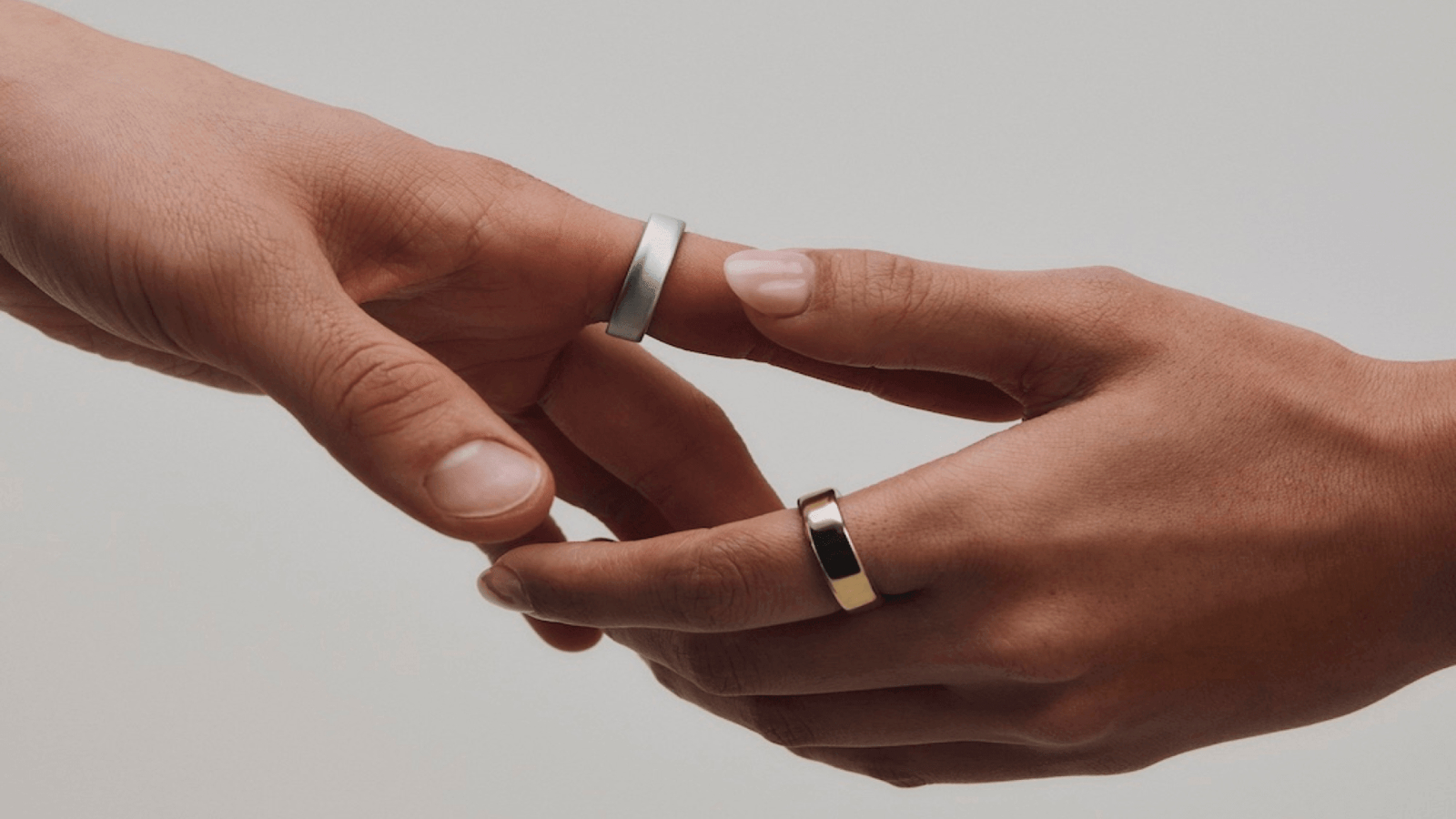
New Delhi – In the rapidly expanding world of wearable technology, few devices have achieved the cultural and commercial cachet of the Oura Ring. Praised for its minimalist design and touted as a revolution in personal health monitoring, the Finnish-born smart ring has become a staple for everyone from bio-hackers to professional athletes. However, a landmark lawsuit filed in San Francisco last week threatens to unravel the company’s carefully cultivated reputation, accusing the tech giant of “false advertising” regarding its core value proposition: the ability to accurately track sleep stages.
The litigation, brought forward by the Clarkson Law Firm, strikes at the heart of the multibillion-dollar wearable health industry. As Oura prepares for a highly anticipated initial public offering (IPO), the lawsuit raises fundamental questions about the limits of consumer-grade health technology and whether companies are overpromising on what can be achieved with a sensor worn on a finger.
The Core Allegation: “Sleep Happens in the Brain, Not on the Finger”
At the center of the dispute is the scientific validity of Oura’s sleep-tracking features. The lawsuit, filed on behalf of California resident Madison Surber—who purchased her device for over $500 in 2025—argues that Oura’s marketing is deceptive.
The complaint alleges that Oura has systematically misled consumers by claiming its rings are “built for accuracy” and capable of providing “unparalleled accuracy” in differentiating between wake, light, deep, and REM (Rapid Eye Movement) sleep. According to the plaintiffs, these claims are technically impossible for the device to fulfill.
“Sleep happens in the brain, not on one’s finger,” the complaint states, highlighting a critical distinction in sleep science. To accurately classify sleep stages, clinicians utilize polysomnography (PSG), the gold standard in sleep medicine. PSG requires a complex array of hardware, including scalp electrodes to monitor brain waves (EEG), sensors around the eyes to track eye movement (EOG), and leads to monitor muscle activity (EMG).
The lawsuit asserts that because the Oura Ring lacks these specific neurological and ocular sensors, it cannot objectively "see" sleep stages in the way a clinical sleep lab can. By charging a premium price for a device that mimics the language of clinical diagnostics, the plaintiffs argue that Oura has engaged in a bait-and-switch strategy that exploits consumers’ growing anxiety regarding their health and sleep quality.
A Chronology of a Growing Controversy
The path to this litigation was not sudden; it follows years of aggressive marketing and rapid market penetration by Oura.
- 2015: Oura launches its first-generation smart ring, positioning itself as a pioneer in the “smart ring” category, a niche that many major tech conglomerates struggled to capture.
- 2024 (June): Oura reaches a significant milestone, reporting that it has sold 2.5 million rings worldwide, cementing its status as the industry leader.
- 2025: Madison Surber purchases an Oura Ring for $513.68, citing the company’s marketing claims as the primary driver for her investment.
- 2026 (Early): Oura files a draft IPO prospectus with the U.S. Securities and Exchange Commission, signaling its intent to go public as a major player in the health-tech sector.
- 2026 (August): The total number of Oura rings sold climbs to over 5.5 million. Simultaneously, the Clarkson Law Firm files a class-action lawsuit in San Francisco, alleging that the company’s marketing of “95% sleep staging accuracy” is fundamentally misleading to the average consumer.
The Data Debate: Marketing Claims vs. Clinical Reality
The lawsuit specifically targets Oura’s marketing materials, which have boasted figures such as "79% accuracy" and more recently, "95% sleep staging accuracy compared to clinical sleep labs."
For the plaintiffs, these percentages are not merely optimistic—they are deceptive. They argue that Oura conflates "correlation" with "measurement." While the Oura Ring tracks heart rate, heart rate variability (HRV), movement, and body temperature, the lawsuit contends that these are indirect proxies rather than direct measurements.
In the world of sleep medicine, heart rate fluctuations and movement are known to occur during different sleep stages, but they are not exclusive indicators. For example, a person may be in a state of deep sleep while their heart rate is slightly elevated due to external factors, or they may be restless while in light sleep. The plaintiffs argue that by reducing complex neurological events to a simple algorithmic prediction based on peripheral physiological signals, Oura is providing a “best guess” rather than the accurate diagnostic data it promises.
Oura’s Defense: Validating the "Estimates"
In response to the allegations, Oura has maintained a firm stance, dismissing the lawsuit as meritless and reaffirming the integrity of its technology. In a statement provided to indianexpress.com, the company emphasized that its ring is not intended to be a medical diagnostic tool, but rather a wellness device.
“We dispute the allegations and will defend against them in the appropriate legal forum,” an Oura spokesperson stated.
The company defended its methodology by clarifying that it does not claim to function as a clinical sleep lab. Instead, Oura notes that it "estimates" sleep stages using a multi-sensor approach. The company points to a robust body of peer-reviewed, independent scientific evidence that suggests physiological changes—such as HRV and breathing patterns—are indeed associated with distinct, measurable shifts in sleep architecture.
“There is well-documented scientific evidence that sleep stages are associated with distinct, measurable, reproducible changes in physiology, which is why these signals are reliably used to classify sleep stages,” the company’s statement read. Oura further maintained that its algorithms have been “validated and compared favorably in multiple studies” against laboratory settings, arguing that while they are not a "substitute for a clinical sleep study," they provide accurate enough data to be useful for personal health management.
Broader Implications for the Wearable Industry
The outcome of this lawsuit could have profound implications for the multi-billion dollar wellness wearable market. For years, companies like Oura, Apple, Garmin, and Whoop have pushed the boundaries of what consumer tech can track. As these devices move from simple step-counters to sophisticated biometric monitors, the line between "wellness" and "medical diagnosis" has blurred.
1. Consumer Protection and Regulatory Scrutiny
If the courts rule in favor of the plaintiffs, it could force the Federal Trade Commission (FTC) and other international regulatory bodies to adopt stricter guidelines on how health-tech companies market their features. This might require companies to include prominent disclaimers on all packaging and advertising, clarifying that their data is for "informational purposes only" and not clinically validated for diagnostic use.
2. The Future of the "Smart Ring" Market
Oura has successfully occupied a space that even tech titans like Google and Samsung have struggled to dominate. A legal defeat could jeopardize the company’s IPO valuation, as investors often weigh the risk of class-action litigation against a company’s long-term growth potential. It may also open the door for competitors to pivot their marketing language to be more conservative, potentially shifting the industry away from "accuracy" metrics and toward "trend tracking."
3. The "Quantified Self" Movement at a Crossroads
This lawsuit highlights a growing skepticism among the public regarding the "quantified self" movement. While many users find value in tracking their sleep, the legal challenge suggests that the public is becoming increasingly aware of the limitations of these devices. If consumers feel they are paying hundreds of dollars for "data-driven placebo effects," the industry may face a significant trust deficit that could stifle adoption rates in the coming years.
Conclusion
The confrontation between Oura and the plaintiffs in the San Francisco court system is more than just a dispute over a $500 device. It is a fundamental inquiry into the ethics of the modern health-tech industry. As we increasingly rely on algorithms to tell us how we slept, how we recovered, and how our bodies are performing, we are forced to ask: where does the role of the medical professional end and the role of the algorithm begin?
For now, Oura remains the leader of the smart ring pack, moving forward with its IPO plans while preparing for a rigorous legal battle. For the millions of users currently wearing the ring, the debate serves as a reminder that in the quest for perfect health, the most sophisticated sensor may still be a long way from replacing the human brain. Whether the company’s "95% accuracy" claim is a groundbreaking innovation or a marketing illusion will ultimately be decided in the courtroom, but the ripple effects of this case will be felt across the wearable technology landscape for years to come.