NEW DELHI — In an era where the tech landscape is rapidly shifting toward artificial intelligence and immersive computing, Snap is making a bold, high-stakes bet on the future of hardware. On Wednesday, September 16, 2026, the parent company of Snapchat offered consumers and industry analysts a much clearer, more comprehensive glimpse into its highly anticipated augmented reality (AR) smart glasses, simply named Specs.
Carrying a steep price tag of $2,195, the consumer-focused wearable is slated to officially hit the market this fall, running on Snap’s proprietary Snap OS. Alongside the hardware preview, Snap pulled back the curtain on Specs Intelligence—an advanced, anticipatory AI assistant designed to integrate deeply into a user’s digital and physical life. Early adopters will get their first hands-on opportunity with the device at a special pop-up experience in Los Angeles, California, in October 2026.
This pivotal showcase follows an initial, somewhat underwhelming reveal earlier this year. When Snap first debuted the long-awaited glasses, public reception was mixed. Potential buyers expressed sticker shock over the $2,195 price point and criticized the bold, bulky, all-black frame design, which stands in stark contrast to more discreet, fashion-forward smart glasses on the market, such as the Meta-Ray Bans.
With its recent announcements, Snap is aggressively working to reframe the narrative. By pairing cutting-edge software with enterprise utility, entertainment ecosystems, and robust cellular connectivity, the company aims to prove that Specs is not merely an expensive novelty, but an indispensable daily computing tool.
Main Facts: What is Snap Specs and Specs Intelligence?
At its core, Specs represents Snap’s formal entry into standalone augmented reality hardware. Available in two distinct lens sizes—47mm and 52mm—the glasses are undeniably substantial. They are engineered to project digital information directly into the user’s field of view via Snap OS, blurring the line between physical reality and digital utility.

However, the hardware is only half the equation. The crown jewel of the upcoming ecosystem is Specs Intelligence, an AI assistant built to operate as an "anticipatory service."
- Personalized Context: Unlike traditional voice assistants that wait for isolated commands, Specs Intelligence is designed to connect directly with a user’s digital accounts, tools, and daily applications (such as Gmail and Slack). By understanding a user’s routines, relationships, and professional goals, the AI surfaces relevant information precisely when it is needed.
- Proactive Assistance: During product demonstrations, Snap showcased how the assistant can help users prepare for meetings by generating tailored questions and key reminders. For travel planning, Specs Intelligence can autonomously organize flights, hotels, and dining reservations while intelligently flagging potential schedule conflicts, such as overlapping work deadlines.
- Under the Hood: Snap revealed that Specs Intelligence is powered by a proprietary mix of hosted U.S. open-source models and localized large language models (LLMs).
- Privacy Guarantees: Addressing inevitable privacy concerns, Snap emphasized that it cannot view or access the personal content fed into the AI assistant. Crucially, the company stated that personal data harvested from connected accounts will not be utilized to train or fine-tune Snap’s AI models, nor will it be leveraged for targeted advertising.
Chronology of Events: From Skepticism to Strategy
To understand how Snap arrived at this pivotal September showcase, it is necessary to examine the timeline of the product’s rollout:
- Early 2026: Snap drops its initial teaser for its first consumer-facing AR glasses. The reveal draws immediate scrutiny. Tech enthusiasts question the high $2,195 price point, and fashion critics point out the heavy, prominent black frame design, comparing it unfavorably to lighter audio-first smart glasses.
- Throughout Spring and Summer 2026: Developers begin building native applications for Snap OS, laying the groundwork for an ecosystem capable of supporting productivity, entertainment, and enterprise software.
- Wednesday, September 16, 2026: Snap hosts a major product update event. CEO Evan Spiegel takes the stage to position Specs as a human-centric computing device. The company debuts Specs Intelligence, previews enterprise integrations, announces entertainment partnerships, and details a Verizon connectivity package.
- October 2026: Snap plans to open an exclusive pop-up experience in Los Angeles, California, allowing early adopters and select media to get their hands on the device ahead of its broader fall shipping window.
- Fall 2026: Official shipping and market release of Specs for consumers and enterprise partners.
Supporting Data and Ecosystem Expansion
To justify the $2,195 investment, Snap has built a comprehensive web of partnerships spanning entertainment, sports, telecommunications, and corporate enterprise.
1. Entertainment and Lifestyle Integration
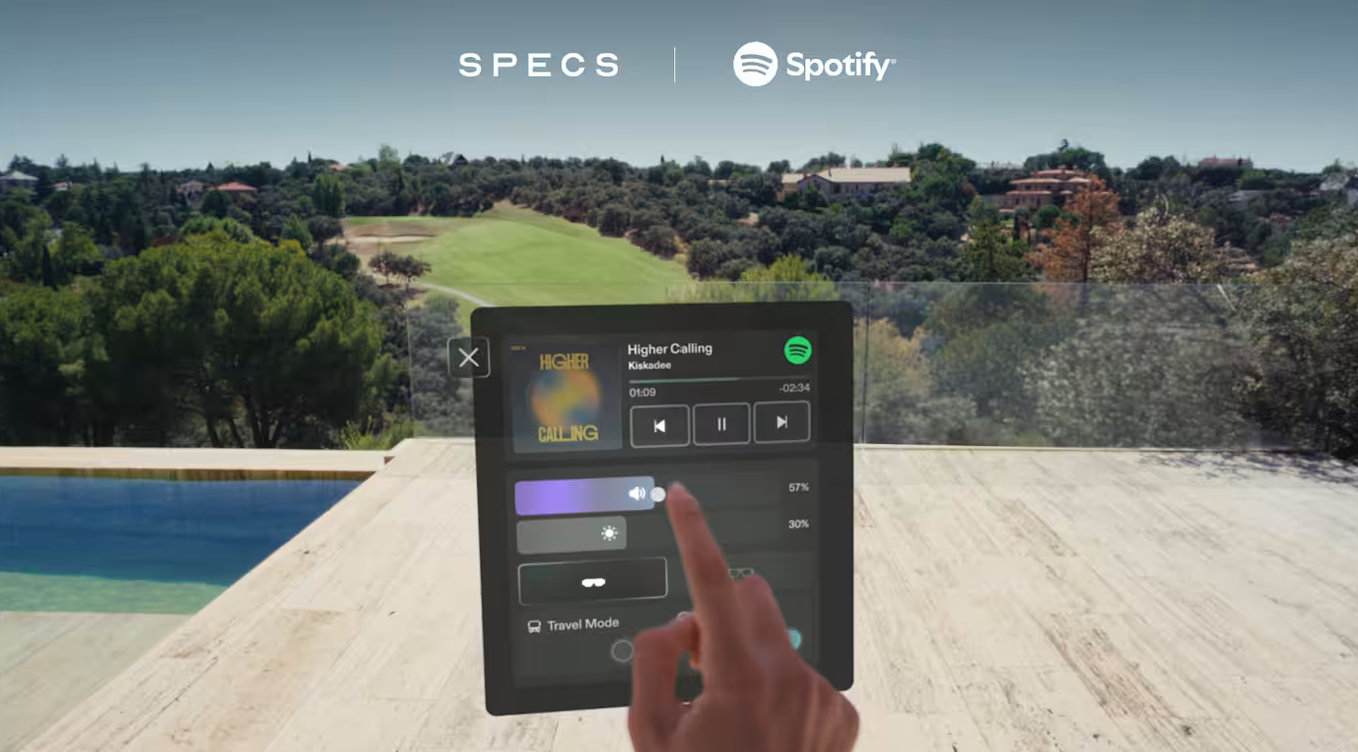
Recognizing that smart glasses must offer more than just productivity tools, Snap announced native media streaming capabilities. Wearers will be able to stream video and audio content directly through their glasses via major platforms, including HBO Max and Spotify.
Furthermore, in a unique sports-tech crossover, Snap announced an AR basketball training experience developed in partnership with the NBA and WNBA. Wearers can utilize the glasses’ spatial tracking capabilities to practice basketball drills and receive real-time feedback on their shooting form.

2. The Enterprise Push: Specs for Enterprise
In a clear signal that Snap is courting corporate dollars alongside consumer wallets, the company introduced Specs for Enterprise. This corporate integration program is backed by major heavyweights such as Amazon, Salesforce, and Nvidia.
Demonstration footage highlighted the practical applications of the hardware in industrial settings—such as an IT technician repairing complex hardware hands-free with real-time AR schematics projected into their field of view.
3. Cellular Connectivity via Verizon
To ensure Specs can function untethered from local Wi-Fi networks, Snap partnered with U.S. telecom giant Verizon to introduce an optional cellular connectivity package. Housed within a specially designed smart charging case, the service is priced affordably at $10 a month for existing Verizon subscribers and $20 a month for non-subscribers.
4. Software Availability
For users eager to test the software ecosystem before purchasing the hardware, Specs Intelligence is rolling out in preview on iOS devices starting September 16. Additionally, users can join a waitlist for the full early-access desktop experience optimized for Mac.
Official Responses and Vision
Speaking at the September event, Snap CEO and co-founder Evan Spiegel addressed the psychological unease surrounding the current tech zeitgeist, specifically regarding generative artificial intelligence and immersive virtual worlds. His comments served as a philosophical defense of Snap’s hardware philosophy.

"I will say it’s an interesting time to be launching a new computer because things in tech are pretty weird right now," Spiegel remarked to attendees.
"We’re being told that AI will take our jobs, that virtual worlds will replace the real one. Well, no, thank you. We do not accept that future. Making people irrelevant is not progress, and computers should make us more important, not less."
Spiegel’s comments underscore Snap’s strategic differentiation from competitors like Meta or Apple. While competitors often lean heavily into fully immersive virtual reality or closed walled gardens, Snap is positioning Specs as an assistive layer over the real world—empowering human agency rather than abstracting the user away from physical reality.
Implications: Can Snap Overcome the Hurdles?
The introduction of Specs Intelligence and the expansive partner ecosystem carries profound implications for Snap, the AR market, and the broader consumer electronics landscape.
1. The Pricing Conundrum
At $2,195, Specs occupies a precarious space. It is significantly more expensive than mainstream audio-based smart glasses, yet it undercuts bulky enterprise headsets like the Apple Vision Pro. Whether everyday consumers are willing to spend over $2,000 for an unproven form factor remains the central question. Snap is banking on the fact that deep AI integration, continuous cellular access, and hands-free productivity tools will convert skeptics.
2. The Hardware vs. Aesthetics Battle
Despite its advanced software features, the physical design of Specs continues to draw debate. While Meta has managed to normalize smart glasses by keeping them lightweight and visually indistinguishable from traditional eyewear, Snap’s bold, heavy-framed approach makes a distinct statement. The upcoming Los Angeles pop-up in October will serve as a critical crucible for public sentiment regarding the comfort and social acceptability of wearing the device in public.
3. Data Privacy as a Competitive Edge
By explicitly promising that personal data pulled from Gmail, Slack, and other linked accounts will not be used to train AI models or serve targeted advertisements, Snap is attempting to preemptively neutralize privacy backlash. In an era marked by intense scrutiny over data harvesting by tech monoliths, a privacy-first posture could become one of Snap’s strongest marketing assets.
Looking Ahead
As the fall release date approaches, all eyes will be on Snap. If Specs Intelligence delivers on its promise of proactive, context-aware assistance, and if the enterprise integrations gain traction, Snap could successfully pioneer a new category of human-centric computing. If not, the high price tag and bulky aesthetic may relegate Specs to a niche device for early adopters. Regardless of the outcome, Snap has firmly planted its flag in the future of augmented reality.